On Sept. 24, 1944, the Washington, D.C. Evening Star ran a remarkable op-ed by Rabbi Norman Gerstenfeld of the Washington Hebrew Congregation. Gerstenfeld was born in London, England, on Sept. 1, 1904. His father, also a rabbi, had been born in Rava-Russkaya, Galicia, in what is now Ukraine. Gerstenfeld benefited from the religious freedom that the United States offers which his father could only have dreamed of in his youth – he obtained a degree from American University and ordination from the Hebrew Union College in Cincinnati. His father, who had brought the family to America, was offered a teaching position at the Rabbi Isaac Elchanan Theological Seminary in New York, from which Yeshiva University would spring.
The younger Rabbi Gerstenfeld had arrived at the synagogue in D.C. as its assistant rabbi in 1935, and as he recollected, “I inherited an unattractive, inconvenient building and a congregation that for decades never attended and where decent people became afraid of taking temple responsibility and the history is full of fights and feuds.”
But the dynamic young spiritual leader brought a verve and energy to the community and led its revival. As the years passed, past battles paled in comparison to the World War he and his fellow Americans were waging.
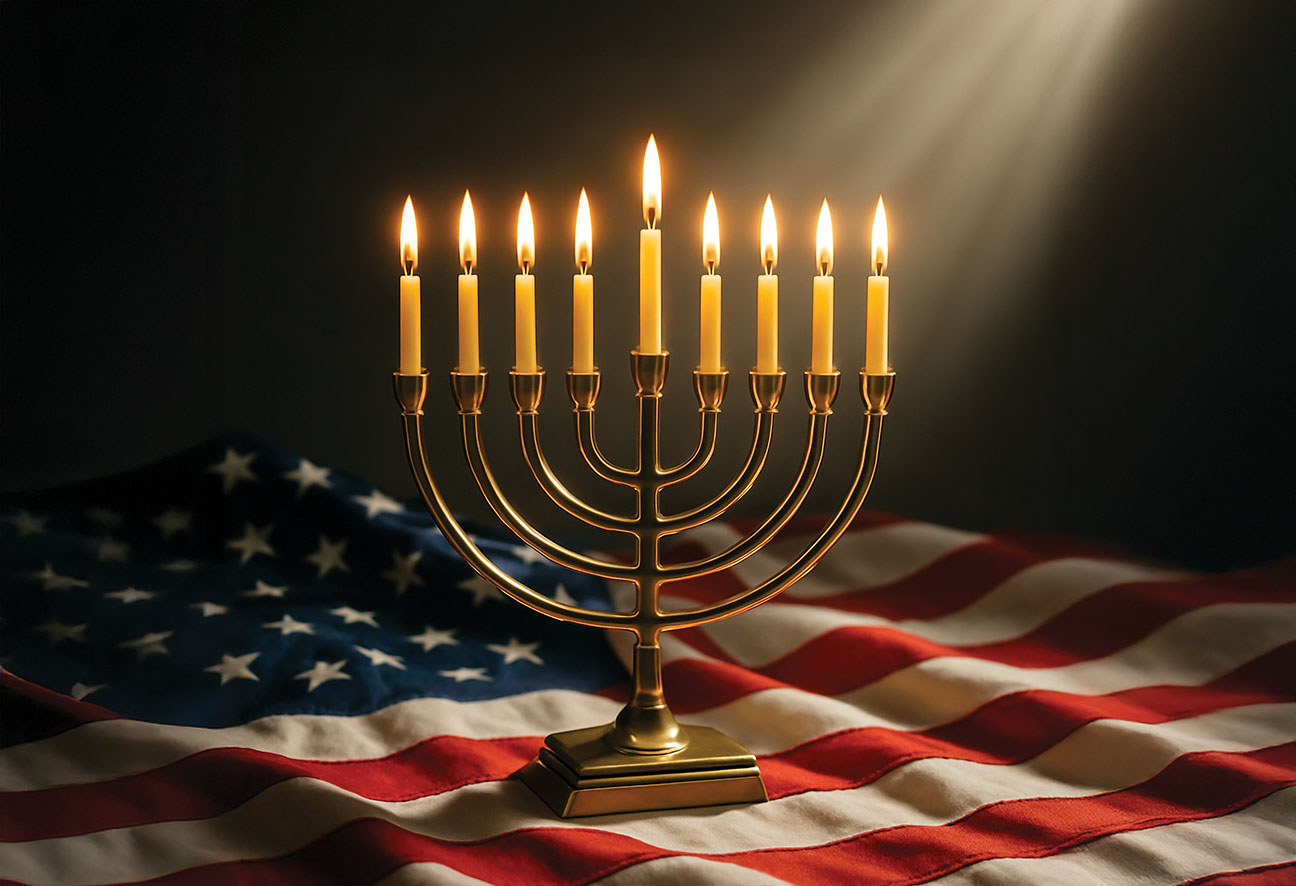
So it was that though it was the fall and not the winter, Rabbi Gerstenfeld turned to the ancient story of Hanukkah to enlighten readers on how the tale of these Jewish freedom-fighters have inspired America’s own battle against the dark forces of Hitler’s tyranny.
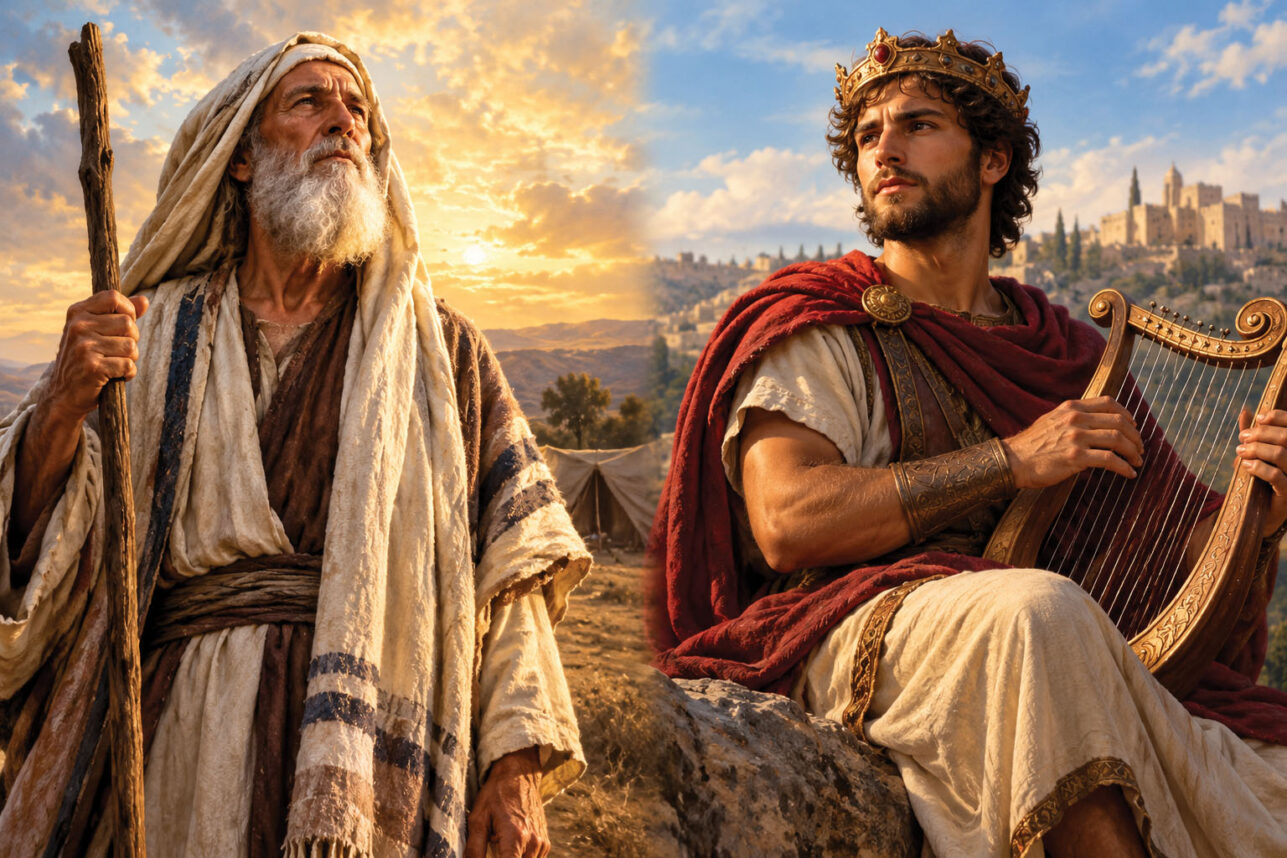
“In the United States Military Academy at West Point, to train soldiers to defend the freedom of this blessed land, there is a massive stone frieze of the warriors of the past, and there we find the figures of Joshua, of David and of Judas Maccabeus,” the rabbi began. “Without these brave Hebrew soldiers of antiquity there would have been no Judeo-Christian religious tradition, out of which the democratic ideals of this age were born. Joshua was the warrior who had won the Promised Land; David the warrior who had driven out the invading Philistines, and Judas Maccabeus the warrior who had turned back the tyrants of Greece.”
Recapping the courageous exploits of these heroes of old, he focused particularly on “Judas Maccabeus, one of the brave sons of the village priest of Modi[i]n. When the Seleucid armies with their elephant troops, the panzer divisions of the ancient world, invaded Judea, he rallied the underground of his unvanquished people with the cry, ‘Who is like unto Thee, O Lord among the Mighty’ [citing Exodus 15:11] drove out the enemy and reconsecrated Israel’s shrine.”
All of the Hebraic figures celebrated, he noted, have an “honored place in the tradition of Israel, for we have never believed that peace is something that comes to us as a gift. It is something that we must win and rewin in every generation, rewin not only in wrestling with our lives on every level with the forces of wickedness, but, if God wills, even to gird our loins and take up the sword of battle. Our tradition never has said ‘resist not evil’ [Matthew 5:39] but ‘thou shalt not stand idly by the blood of thy neighbor’ [Leviticus 19:16]; and even the will of the multitude must be resisted, if it heads toward wickedness. We never have said ‘hate your enemy’ [Matthew 5:43], for our scriptures repeat ‘thou shalt take no vengeance nor bear any grudge against the children of the people’ [Leviticus 19:18] and ‘the stranger shall be to you as the homeborn’ [Leviticus 19:34]; but we also have affirmed that wickedness must be fought and evil, in any guise, must be resisted, if peace is to be on this earth.”
“We have never believed that peace is something that comes to us as a gift. It is something that we must win and rewin in every generation, rewin not only in wrestling with our lives on every level with the forces of wickedness, but, if God wills, even to gird our loins and take up the sword of battle.” – Rabbi Norman Gerstenfeld
However, Gerstenfeld reminded his audience, might must not take the place of morality: “In this hour of victory, as we look ahead to a world of promise, we also must realize that force alone is not enough, if the promise of the future is to come true. Joshua had the force to win a Land of Promise, but he was followed by the anarchy of the Judges and the agony of invasion. David had the force to drive out the Philistines but after him his kingdom was divided and his people enslaved. Judas Maccabeus had the force to drive out the Greeks but his people later succumbed to the Romans. The lesson of our history is that not only is force alone not enough, but it makes us like the evil we had set out to vanquish. Thus Joshua’s people, in the debauch of their conquest, sink to the idolatry of the enemy. David fights the Philistines but becomes in many ways like one, bringing tragedy to his home and his people …”
Military resolve must be accompanied by justice and righteousness. “That is why greater than any homage we have paid to our warriors is the homage we have felt for the great lawgiver, Moses,” the rabbi concluded. “Moses not only faced the force of the taskmasters of Egypt but led his people from the vanquished chariots and horsemen at the Red Sea to the foot of Sinai. Moses knew that the freedom we win by battle cannot last but will destroy itself, unless it goes forward to affirm a great covenant of God’s righteousness for the future. Moses knew that only thus can the future keep its promise.”
A few years after the defeat of the Nazi menace, on Nov. 16, 1952, Rabbi Gerstenfeld’s synagogue celebrated the laying of the cornerstone of its new building. In the intervening years, the rabbi, initially concerned that the Zionist project would lead to increased antisemitism, had come to champion the Jewish state, and proclaimed on May 12, 1949: “As an American I felt so happy last night at Constitution Hall when I took part with fellow citizens of every creed in the salute to the new state of Israel.”
During this time, with the homeland of the Jewish people newly revived, President Harry Truman attended the festivities, and addressed the assembled in the revived house of worship. First he thanked them for gifting him a siddur. “I shall treasure the prayer book you have given to me,” he proclaimed. “In your prayers, we can see the same faith in the God of justice that underlies the Christian religion as well as the Jewish religion.” Truman then turned, remarkably, to the same biblical episode that Gerstenfeld had concluded with – the light of the revelation at Mount Sinai.
“Religious freedom is not merely something that one group among us enjoys at the sufferance of another,” the president emphasized. “It is a right that all of us must protect for ourselves and for all our countrymen. When George Washington wrote to the Hebrew Congregation of Newport, Rhode Island, in 1790, he said that our Government ‘gives to bigotry no sanction, and to persecution no assistance.’ It is up to us in our time to maintain those principles.”
“Religious freedom is not merely something that one group among us enjoys at the sufferance of another. … It is a right that all of us must protect for ourselves and for all our countrymen. – Pres. Harry S. Truman
Truman then continued: “The fact that we believe so strongly in religious freedom does not mean that religion is of no importance in our national life. Quite the contrary. We know that religious principles furnish the fundamental basis for our system of law and government. We know that the deepening of religion and the growth of religion are essential to our welfare as a nation. If we ignore the spiritual foundations of our birth as a nation, we do so at our peril. It took a faith in God to win our freedoms. We will need that same faith today if we are to keep those freedoms in the face of the terrible menace of totalitarianism and war. If we do not hold to our faith in God, we cannot prevail against the dangers from abroad and the fears and distrust that those dangers create among us here at home.”
Truman then alluded to the synagogue’s historic significance. “This congregation has always been close to our national ideals, and to the center of our national life,” he said. “It was established by a charter from the Congress of the United States. Other Presidents have taken part in its founding and its meetings over the years. I am glad to share in these ceremonies of your hundredth year, as you lay the cornerstone of your new temple. In this way I express to some small degree, the profound respect I have for the countless members of the Jewish faith who have served our American community, and helped to keep the Nation true to its ideals.
Turning to the reason for the occasion, he then concluded: “On this cornerstone we see the two tablets of stone, with the Ten Commandments in their ancient Hebrew form, a replica of the tablets Moses brought down from Mount Sinai. We should be thankful for the devout souls who have been true to these Commandments down through the ages. May God give you the strength, in the future, to hold these great principles aloft, as a light to those of your faith, and as a source of strength to this Nation in our struggle for freedom for all men, everywhere.”
Truman had been given a menorah by Israel’s first Prime Minister, David Ben-Gurion, as a birthday gift the year prior. The menorah had been brought to the U.S. by German Jewish refugees who had survived Hitler’s hate.

As the Jewish Telegraphic Agency noted in recapping the event, “Participation by President Truman in the ceremony followed a precedent established before the Civil War. Almost every President in the past century has taken part, in one way or another, in the congregation’s calendar of events.” It added that in 1885 a special charter for the congregation was issued by Congress and signed by President Franklin Pierce. The charter extended “the rights, privileges and immunities heretofore granted by law to the Christian groups in the city” to the Jewish community. One of those instrumental in obtaining the historic charter was Capt. Uriah P. Levy, the highest ranking Jewish officer of the U.S. Navy at that time.
What the Jewish outlet didn’t note was that Levy’s grandfather was Jonas Phillips, who, during the Revolutionary era, petitioned to the Constitutional Convention to get rid of “test oaths,” requiring American office holders to swear on the Christian Bible. He correctly argued that the country’s founding principles asserted “that all men have a natural and inalienable Right To worship almighty God according to the dictates of their own Conscience and understanding, and that no man aught or of Right can be compelled to attend any Religious Worship or Erect or support any place of worship or Maintain any minister contrary to or against his own free will … [N]or can any man who acknowledges the being of a God be Justly deprived or abridged of any Civil Right as a Citizen on account of his Religious Sentiments or peculiar mode of Religious Worship.”
Phillips continued making his case by reminding the Founders that his coreligionists had fought and bled for this freedom. “It is well known among all the Citizens of the 13 united States that the Jews have been true and faithful whigs, and during the late contest with England they have been foremost in aiding and assisting the states with their lifes [sic] and fortunes, they have supported the cause, have bravely fought and bleed for Liberty which they Can not Enjoy [on account of the required Christian religious oaths].”
The president and the rabbi well understood the lesson of covenant at Sinai and the Hanukkah candelabra, which the history of the congregation itself could attest – that America, and the biblical Jewish state recently reborn from the ashes, would continue to inspire all those who lift the light of faith.
Rabbi Dr. Stuart Halpern is Senior Adviser to the Provost of Yeshiva University and Deputy Director of Y.U.’s Straus Center for Torah and Western Thought. His books include the newly released “Jewish Roots of American Liberty,” “The Promise of Liberty: A Passover Haggada,” “Esther in America,” “Gleanings: Reflections on Ruth” and “Proclaim Liberty Throughout the Land: The Hebrew Bible in the United States.”