fbpx

December 10, 2025

Are We Dying of a Broken Heart?

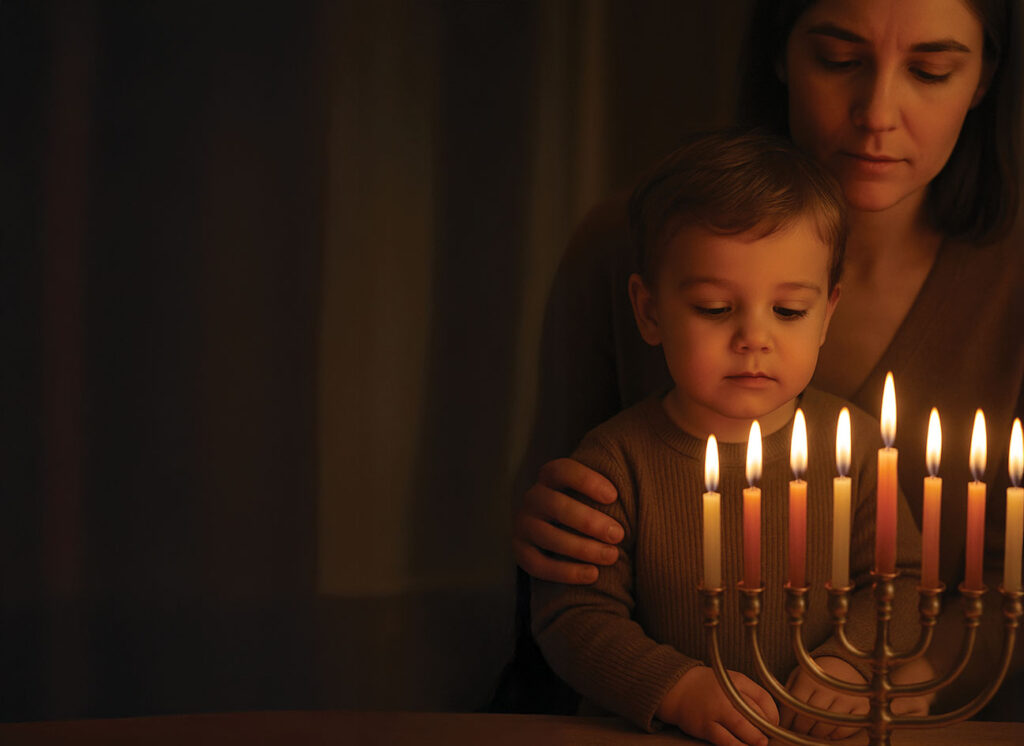
On Hanukkah, we commemorate yet another moment in history when the Jewish people overcame seemingly impossible odds. Yet today, our faith in the impossible is in crisis. We should use this holiday not just for eating sufganiyot and spinning dreidels, but also for reflecting on our poor emotional and spiritual condition. For we could be dying of a broken heart. 

There is a medical term for this syndrome: takotsubo cardiomyopathy, named after the Japanese word for the section of the heart that, when misshapen and swollen from a flood of hormones, looks the same as an octopus fishing net. Faced with enough emotional stress, the body can prevent the heart from contracting properly, and can prove fatal.

Of course, we know what the stressors have been in the Jewish world. Those hormones kicked in after the shooting at Pittsburgh’s Tree of Life Synagogue in 2018 and continued building after Poway, then went into overdrive on October 7th. From there, we have absorbed the world’s horrifying, upside-down reactions to the murder of 1200 Israelis by Hamas that day and two-year war in Gaza that ensued. 

These tragedies hit close to home. How many sleepless nights have you spent doomscrolling on X, seething in outrage through twisted half truths, misreporting, or death toll propaganda? How many times have you hit refresh on an Israeli news site just hoping for a glimmer of good news? How many times have you been disappointed, despite the occasional military victory? 

I think of a dear friend, who lost his wife to cancer last year. Perhaps I should have said something when he chose to say kaddish for his wife for eleven months, rather than the customary thirty days. Who could blame him, though? They were so in love. Tragically, he died a few weeks ago on the day of his wife’s unveiling, exactly one year after her burial. To even the trained eye, he seemed physically sound. But spiritually speaking, he was barely breathing. His flood of hormones proved fatal. 

Once you see someone die of a broken heart, you’re wondering who could be next. I fear that we as a Jewish people are at risk of a similar outcome, for all the same reasons. Are we overdoing our own mourning? 

As we limp into Hanukkah, consider these other difficult questions: what’s the appropriate amount of time to mourn the deepest loss of the Jewish people since the Shoah? How long should we mourn the loss of a golden age of Judaism, of a sense of Jewish safety, of the disappearance of all the norms once held by institutions, political parties, or civilized society? If we don’t want to die of a collective broken heart, though, what are we to do? Because we have clearly gotten lost somewhere between 2018 and today. 

Others surely have answers better-rooted in Halacha, but what I do know is that we need to consider these questions very carefully. It may mean the difference between the thriving and the end of Jewish peoplehood. I offer a few uncontroversial ways we can start to heal our broken hearts. 

In the Jewish world, we often always say that we have disagreements for the sake of heaven. We need to find more common ground, immediately, in the name of survival, no matter how far apart we are politically, spiritually, or religiously. Expand the tent. Make room for what brings us together, not what separates us.

We also need to make a clearer distinction between mourning and remembering. Indeed, we will want to remember these horrors and tragedies for all time. But we need to honor our ancestors’ wisdom around grief, and be very careful about dwelling in this emotional maelstrom for too long.  

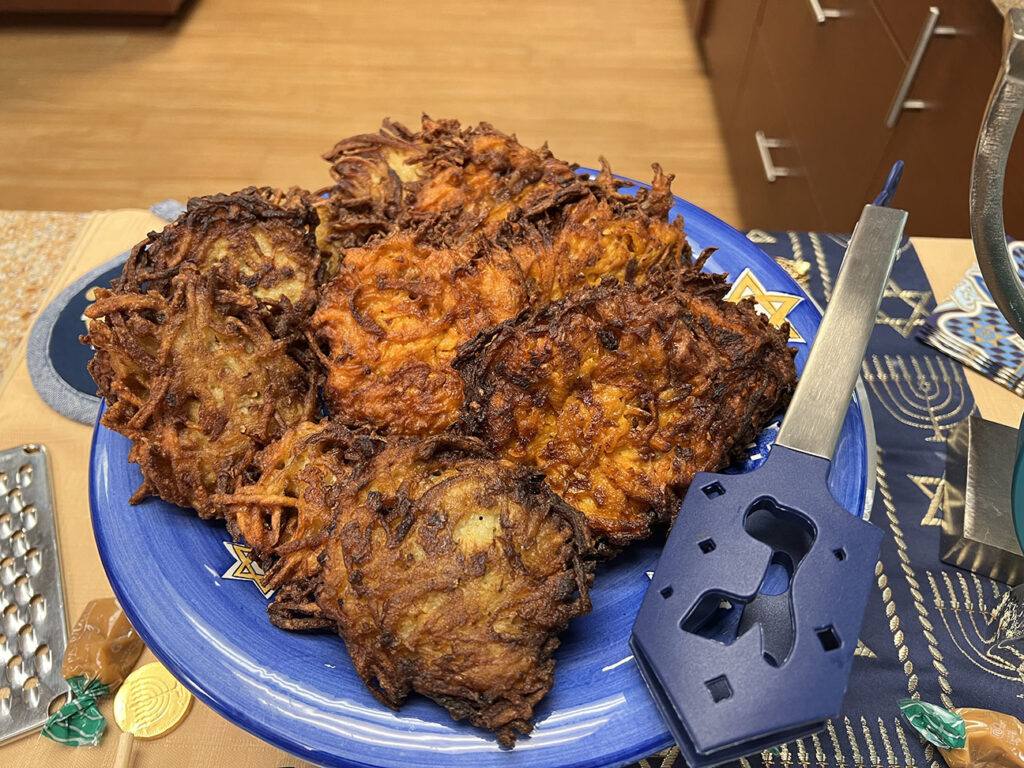
Other ideas: do one small thing to celebrate your Jewishness. Any simple celebration sends a signal to your soul that the period of mourning has come to an end. Or study a little bit of Jewish wisdom. Light a Shabbat candle. Eat a latke. Call your mother. 

We may see a year of growing antisemitism, or face decades of persecution. Whatever the future holds, we must remember, especially during Hanukkah, that miracles are part and parcel of our history—and will continue to be. We cannot let our sadness overwhelm us. Let’s instead remember Rabbi Hillel, whose Talmudic advice informs how we observe this holiday. We light one more candle each night to add holiness in our lives, until the light is at its brightest on the eighth day. Marking Hanukkah in this way also forces us to ponder that which we should be grateful for in our lives right now. Surely, we already have many gifts, and plenty of partying left to do. 

On Hanukkah, let’s consider what we can do to keep our hearts healthy and beating. And let’s live long, full, happy Jewish lives, shall we? 


Scott Harris is the founder of Magnetic Real Estate and the author of new nationally bestselling book The Pursuit of Home: A Real Estate Guide to Achieving the American Dream (from Matt Holt Books). 


Are We Dying of a Broken Heart? Read More »

Of Doughnuts and Dreidels

Last Thursday, Rachel and I fried up some burmuelos and took photos for The Jewish Journal. I was hungry and ate more than my fair share of these delectable cloud puff doughnuts!!

Shabbat was spent hosting my cousin Rachel, her husband Baruch and their sons who were visiting from Australia. In the afternoon, we went to hear the incredibly heroic and brilliant Rawan Osman speak about her journey from a Sunni and Shiite family in Lebanon to becoming an Orthodox Jew and an outspoken advocate for Israel.

On Sunday morning, I drove Rawan to the airport. I told her of my conflicted love for Arabic, because it holds dear memories of my grandparents, as well as being the language of Hamas terrorists. She told me of her plan to change this dynamic by creating a forum where a Jewish woman will be paired with an Arab woman online and each week, she will teach 18 words in Hebrew and vice versa. What a brilliant way of tearing down the invisible wall that separates our two peoples! It speaks to the power that women have in holding each other up and building community. 

This week Rachel and I are thrilled to share our column with our friend Rinat to tell us about a unique Hanukkah tradition involving women. 

—Sharon 

When others are trying to rewrite Jewish history, it is especially urgent to reconnect with our past. Particularly with traditions and customs that seem to have been lost to the past. 

I am a children’s book author and my family heritage, rooted in Iraq, Libya and Tunis, is the source of much inspiration. I am passionate about exploring and sharing Jewish history in literature to excite and educate young Jewish minds.

For the past 15 years, there has been a movement to revive aspects of Jewish life that have been forgotten, especially the ancient traditions of North African, Middle Eastern and Sephardic Jewry. 

One of these unique customs is called Eid El B’nat, the festival of daughters in Judeo-Arabic. Celebrated on Rosh Chodesh Tevet, during Hanukkah, it is a special way to highlight the strength, wisdom and sisterhood of women. It honors Judith, the heroine of the Hanukkah story, as well as Queen Esther and Chana. 

Across the Jewish communities of Tunisia, Morocco, Algeria, Libya, Turkey and Greece, women would gather to light the candles and enjoy a festive meal. They sang, danced and told the stories of female biblical characters. While each place had their own unique customs, the overall theme was of women’s empowerment. 

I have been working on an Eid El B’nat story and I wanted to share my research with my LA community. In the past, I have participated in Eid El B’nat Zoom celebrations, but never in person. So I decided to organize one here in LA. I immediately thought of the spectacular Sephardic Spice Girls. 

Many years ago, I met Sharon’s sister-in-law Lemor and I knew instantly that we would be close friends. Sharon’s family has adopted me and my family as part of their warm, extended Iraqi family. 

When I shared my idea with Sharon, she encouraged me to go ahead! I am so excited that for our Eid, Rachel and Sharon will share some traditional S’fenj, burmuelos and rosquitas recipes, there will be a musical performance by the Balter sisters and a D’var Torah from Rebbetzin Bassie Muchnik from Chabad of Picfair Village. Our Eid is partially sponsored by Jimena, a nonprofit dedicated to educating about, and advocating for, the history, heritage and rights of Sephardic and Mizrahi Jews. 

I hope you can come to our party (Dec. 22 from 6-8pm at Chabad of Picfair Village.) I hope you feel inspired to celebrate with the women you admire and love. Invite them to light candles, enjoy a new recipe —  maybe s’fenj or burmuelos. But always retell stories from our rich and diverse Jewish history; you can always find good gems there.

—Rinat Hadad Siegel 

What is Hanukkah without doughnuts? And if you’ve never fried doughnuts before, this is the recipe for you!

The ingredients are pantry staples and everything goes into one bowl. First, you proof the yeast with sugar and warm water. Then, after ten minutes, you add salt, an egg and the flour. Mix into a smooth batter, cover with a towel and leave it to rise. 

When you’re ready to start the frying, use an ice cream scoop to drop the dough into the sizzling oil. Then watch as they expand into deliciously puffy golden balls. (Don’t forget to put a few sticks of carrot into the oil to attract the little particles, leaving you with clean oil and perfect golden burmuelos.) 

Traditionally, burmuelos are dipped in a warm honey syrup scented with lemon or orange zest. But this time, Sharon and I served them with a quick “crème anglaise” (made by melting Häagen-Dazs vanilla ice cream), melted chocolate chips with a drop of coconut or avocado oil and sprinkles for colorful fun. You could also serve them with a generous dusting of powdered sugar or warm raspberry  jam from the microwave. 

My Hebrew birthday is the 21st of Kislev, so my English birthday always falls around Hanukkah. This year, my birthday will be on the second night of Hanukkah. It will be bittersweet without my father. I don’t feel like celebrating, but at the same time I’m so thankful to have made it to 60 and to be blessed with a wonderful family. I keep reminding myself to focus on today and the future. In my heart, I know that my mother and father shaped me into the person that I am. And I hope to carry all their beautiful traditions for my children and grandchildren. 

—Rachel

Burmuelo Recipe

1 tsp active dry yeast

1 tsp sugar

Pinch of salt

1 egg

Zest of one orange (optional)

2 cups warm water

3 cups all purpose flour

Canola or vegetable oil, for frying

Baby carrots, for frying

In a large bowl, mix ½ cup of water with the yeast and sugar.

Allow the yeast to bloom.

When yeast is foamy, use a wooden spoon to mix in the 3 cups of flour, egg, remaining water and salt. Dough will be sticky and wet.

Cover the bowl with a dish towel and allow to rise for two hours.

In a deep frying pan, warm 1 inch of oil over medium heat. Add a baby carrot.

When oil begins to sizzle, add a pinch of dough. Oil is hot enough when the dough floats to the top.

With two tablespoons or a small ice cream scooper, drop balls of dough into the hot oil. Dough will puff up and rise to the top quickly.

Fry for 2 to 4 minutes until golden. Remove from oil and place on a wire rack or paper towel to drain any excess oil.

Sprinkle with powdered sugar, 

Or serve with warm honey, melted chocolate, or crème anglaise. 


Sharon Gomperts and Rachel Emquies Sheff have been friends since high school. The Sephardic Spice Girls project has grown from their collaboration on events for the Sephardic Educational Center in Jerusalem. Follow them
on Instagram @sephardicspicegirls and on Facebook at Sephardic Spice SEC Food. Website sephardicspicegirls.com/full-recipes.

Of Doughnuts and Dreidels Read More »

The Donuts Are Coming!

Hanukkah is around the corner, and so are the donuts! Every year brings different spins on the classic sufganiyot. They may not all be what you think of when it comes to the traditional format. But they are delicious nonetheless.

Trisha Pérez Kennealy includes Puerto Rican flavors into all of her holiday dishes.

“I fill my sufganiyot with guava as a tribute to my heritage,” Kennealy, culinary educator and owner of the Inn at Hasting Park, told the Journal. Kosher guava jelly or paste is available from many online retailers.

“Jews have lived in the diaspora for centuries,” she said. “This has required resilience which I choose to celebrate by honoring the different cultures that make me who I am today: a Puerto Rican Jew.”

Guava Sufganiyot

Prep Time: 60 minutes

Cook Time: 3 hours

Makes 16 Sufganiyot

Ingredients:

2 1/4 tsp. active dry yeast (6.75 g)

3-4 cups all-purpose flour (480 g)

1 tablespoon plus 1/4 cup sugar (62 g)

2 large egg yolks

1 large egg

1/2 cup warm whole milk (4 oz)

1/2 teaspoon finely grated orange zest

2 tablespoons fresh orange juice (32 g)

1 1/2 tablespoon vanilla (63 g)

1 teaspoon salt (4.67 g)

1 1/2 cups guava jam (381 g)

Powdered sugar

Directions:

Combine yeast, 1 Tbsp. flour, 1 Tbsp. sugar and 2 Tbsp. warm water (between 100-110°) in the bowl of a stand mixer. Allow the mixture to sit for about 5 minutes until yeast starts to foam.

Whisk in egg yolks, whole egg, milk, orange zest, orange juice, salt, vanilla, 2 cups flour and remaining 1/4 cup sugar. Mix on low speed with a dough hook until combined, about 2 minutes.

Add 1 tablespoon of butter at a time, mixing well between additions. Gradually add remaining 2 cups flour mixing until mostly combined between additions, until dough is soft, smooth and shiny. When the dough reaches this stage the dough will begin to pull away from the sides of the bowl and climb up the dough hook.

Turn the dough onto a floured work surface. I use a large silpat mat. Knead for about 5 minutes, adding flour as needed, until the dough is no longer sticky.

Transfer to a buttered bowl, turn dough to coat, and cover with a clean kitchen towel. Proof dough in a warm draft place for about an hour. It should double in size.

Roll the dough out on the lightly floured surface until it is 3/4 inch thick. Use a cutter or round glass to cut out rounds of dough.

Transfer rounds onto a silpat or parchment lined baking sheet. Cover with another kitchen towel and allow to rise for another 40-50 minutes, until doubled in size.

Heat a large container of vegetable oil in a large sauce pan on medium-high heat until it reaches 350°. Working in batches, fry until golden brown, about 1 minute per side. Transfer to a paper towel-lined baking sheet. Allow sufganiyot to cool slightly before filling with jam.

Use a jelly roll tip to fill sufganiyot with guava jelly.

***

As someone living with celiac disease, Carolyn Haeler knows firsthand how hard it can be to enjoy traditional holiday treats.

“Creating a gluten-free donut hole recipe for Hanukkah is especially meaningful to me,” Haeler, founder and CEO of Mightylicious, told the Journal. “It lets families savor a beloved tradition without worry or compromise.”

Mightylicious products are certified gluten-free, non-GMO and kosher.

“Everyone deserves to feel included in the joy and flavor of the holiday, and that’s what Mightylicious is all about,” she said.

Quick Gluten-Free Hanukkah Donut Holes

Photo credit MIGHTYLICIOUS Gluten Free

Ingredients:

2 cups Mightylicious all-purpose GF flour

1 tsp pumpkin pie spice

¾ cup buttermilk (or dairy free/ pareve milk substitute)

¼ cup canola oil

1 egg

Directions:

Combine flour and spice. Mix buttermilk with oil and egg and pour into the dry ingredients. Mix well.

In a frying pan, heat oil until hot. Drop batter by the teaspoonful into hot oil and fry for 3-5minutes or until balls puff and turn golden brown.

Drain on paper towels. Roll in cinnamon sugar or powdered sugar and serve warm.

***

Want something a little less messy? How does jelly doughnut cookies sound?

“My family is a big fan of cookies over doughnuts,” Archie Gottesman, co-founder of JewBelong, told the Journal. “They can be made ahead, it takes longer for them to go stale, and you’re not waiting in line at the baker on Erev Hanukkah when you’d rather be home setting the table.”

She adds, “This recipe will ensure that tiny fingers don’t track powdered sugar all over your home, which is another bonus.”

Photo from JewBelong

Jelly Doughnut Cookies

Yield: 30 filled cookies

Total Time: ~1 hour 45 minutes

Ingredients:

1.5 cups unsalted butter or butter substitute if you’re serving meat

1 cup + 2 cups of confectioners sugar, kept separate

4 large egg yolks

2 tsp vanilla

3 cups flour

Pinch of salt

2 cups jam(s) of choice (keep it a smooth one though, we’re not looking for chunks of fruit)

4 tbsp, + extra any type of milk (plant-based works here!)

Instructions:

Cream the butter and sugar until smooth with an electric mixer

Add the egg yolks and vanilla, and beat until fluffy

Mix together the flour and salt and slowly add it to the mixer until a dough forms

Shape dough into 2 balls and flatten slightly. Put in the fridge covered for 1 hour

Pre-heat the oven to 325 degrees

Roll out each disc on a floured surface until about ¼” thick.

Cut 2” diameter circles, rework the dough to get the most circles out of it. Place circles on a baking sheet lined with foil (no extra grease needed)

On half the circles, add about ½ tsp of fruit jam. Place the no-jam circles on top and seal with a fork (or any way you see fit!)

Bake for 15 minutes. They should just start browning

Mix together the 2 cups of sugar with the milk, adding the milk slowly until you get to a smooth consistency that coats the back of the spoon

Once the cookies are cool, use a spoon to gently spread about a teaspoon of icing on the top of each cookie. Let it dry.

Happy Hanukkah!

The Donuts Are Coming! Read More »

Not Your Bubbe’s Latkes

The eight nights of Hanukkah offer ample opportunity to try out different latke pairings. Whether you switch up your latke ingredients, toppings or both, you can have lots of oily goodness without getting bored.

For instance Debbie Kornberg’s sweet potato latkes are sure to please. “They aren’t new, but they’re one of those delicious ideas people forget about,” Kornberg, founder of Spice + Leaf, told The Journal. “They are sweet, savory, and pair perfectly with red onion, turmeric and paprika.” 

A couple of extra eggs help them hold together. The result: a deliciously crisp, tender and absolutely irresistible latke.  

“Not to worry,” Kornberg said. “Regardless if you are on team sour cream or team applesauce, you can enjoy them with either or both!”

Spiced Sweet Potato Latkes with Purple Onion

By Debbie Kornberg

1 sweet potato, very large (or 2 small), unpeeled, shredded

1 purple onion, large, shredded

1/8 cup chives, minced

3 eggs

1 tsp. SPICE + LEAF sweet paprika 

1/2 tsp. ground turmeric

2-3 Pinches of salt

1 cup flour, depending on size of the sweet potato; you can add more flour, if necessary: 1/4 cup to 1/2 cup

1 -2 baby carrots 

vegetable oil or grapeseed oil, enough to fill the pan ½ way for frying

Shred the sweet potato and onion with a food processor but can be done by hand. In a bowl combine potato, onion, chives and eggs. Mix well. 

In a separate bowl, mix flour, spices and salt together. Add spiced flour to wet ingredients and combine well. You can add more flour, if the mix seems a little too runny. The batter should hold up together wit a spoon. 

Heat up the frying pan with oil. Add carrots to the oil. This will help prevent the latkes from burning in the oil. For real! Make sure the oil is hot before placing the sweet potato latke mix in the pan. The carrots will begin to sizzle which is also an indicator that the oil is hot. 

Spoon latkes into oil and cook until they are dark orange on each side. Remove from the pan and place on a paper towel to drain any excess oil. Enjoy with applesauce, sour cream or labne. 


Pam Stein said air-fried leek patties, also known as keftes de prasa, are just as delicious as the traditional version. 

“Leeks are a favorite ingredient in Sephardic kitchens,” Stein, In Pam’s Kitchen, told The Journal. “These keftes de prasa echo the spirit of classic Ashkenazi potato latkes while offering a fresh twist.”

While latkes are traditionally pan-fried in oil to honor the miracle of the Hanukkah oil, Stein’s recipe uses air-frying for a lighter and healthier approach. 

“Lightly brushing the leek patties with oil before cooking maintains both tradition as well as preserving crisp edges and a warm, fluffy center of latkes,” she said. “Replacing the traditional sour cream and applesauce for a pomegranate-honey sauce, this recipe adds a ruby-red drizzle bringing color and a hint of sweetness to the dish.”

Leek Patties (Keftes de Prasa) with Pomegranate-Honey Sauce

Yield:  8 patties

For the Patties:

2 large leeks* (white and light green parts only), cleaned thoroughly* and chopped

3 large Yukon gold potatoes, peeled and boiled until tender

2 large eggs

1 1/4 cups panko breadcrumbs

2 Tbsp chopped fresh parsley, plus more for serving

2 tsp JBJ Soul Seasoning, original flavor

Olive oil, as needed

For the Sauce:

1 cup unsweetened pomegranate juice  

2 Tbsp honey 

1 tsp lemon juice

1 1/2 tsp cornstarch  

For the Patties:

1. Bring 2 quarts of water to a boil. Add chopped leeks and cook for 10-12 minutes, until softened.

2. Drain leeks through a colander and then using a clean towel, squeeze out any excess water. Set leeks aside.    

3. Place boiled potatoes in a large bowl and mash until smooth. 

4. Add the drained leeks, eggs, panko breadcrumbs, chopped parsley and JBJ Soul Seasoning. Mix until well combined.

5. Divide into 8 equal portions, approximately a scant ¼ cup each. Form into patties about 4 inches in diameter. Place patties on parchment paper and lightly brush with olive oil.

6. Preheat the air fryer to 375°F and lightly spray the basket with nonstick cooking spray. Working in batches, place patties in a single layer without overlapping. Cook for 10–12 minutes, until golden brown and crisp. Do not turn over midway through cooking. 

7. Transfer to a platter and cover with foil to keep warm. 

For the Sauce:

8. In a small saucepan, bring pomegranate juice to a simmer over medium-low heat. Cook for 8-10 minutes or until reduced by half.

9. Stir in honey and lemon juice.  

10. In a small bowl mix the cornstarch and 1 tablespoon of the warmed pomegranate juice. Add the slurry to the saucepan and stir. Continue cooking 1–2 minutes, until the sauce lightly thickens and then remove from heat. 

11. Let cool; sauce will continue to thicken as it rests.

12. Sprinkle keftes de prasa with chopped parsley, as desired. Serve warm with the pomegranate sauce.

13. Cover and refrigerate leftovers for up to 3 days. 

*Note: Leeks can be very sandy and dirty. Rinse the leeks under water to remove visible dirt and sand. Cut off the roots of the leeks and then slice lengthwise. Place the chopped leeks into a bowl filled with cold water. Agitate the leeks to dislodge any dirt or sand. Drain the water and repeat as needed until all dirt is removed. 


Jessie-Sierra Ross, founder Straight to the Hips, Baby, and author of “Seasons Around the Table,” likes traditional potato latkes, but modernized the sour cream and applesauce toppings.

“By whipping up an apple-pear sauce with green cardamom and cinnamon and a dried lemon and fresh chive sour cream sauce, you get a little bit of everything with each bite,” Ross told The Journal. “Sweet, savory, crunchy and a little bit salty; these aren’t your Bubbie’s latkes!”

Photo by Jonathan Ross

Dried Lemon and Fresh Chive Sour Cream Sauce

1 cup sour cream

3 Tbsp minced fresh chives

¼ tsp dried lemon peel (or ½ teaspoon grated fresh lemon zest)

Kosher salt and freshly ground black pepper to taste.

Combine all of the ingredients into a medium sized mixing bowl. Stir well. Add salt and freshly ground black pepper to taste.

Apple-Pear Sauce with Green Cardamom and Cinnamon:

2 Gala apples

2 Bartlett pears

Juice of ½ a fresh lemon

½ cup sugar

½ tsp ground cinnamon

3 cracked green cardamom pods

Splash of water

Peel the apples and remove the core. Roughly chop both the apples and pears. Add to a medium sized sauce saucepan. Add the lemon juice,sugar, cinnamon, cracked green cardamom pods and a splash of water to the pot. Stir and place over medium-high heat.

Once at a low boil, simmer for 20 to 25 minutes, while stirring occasionally. Discard the cardamom pods. Use a potato masher to mash the fruit into a chunky sauce. Serve warm or at room temperature.

Not Your Bubbe’s Latkes Read More »

Table for Five: Vayeshev

One verse, five voices. Edited by Nina Litvak and Salvador Litvak, the Accidental Talmudist

“They said to one another, ‘Here comes that dreamer! Come now, let us kill him and throw him into one of the pits … then we shall see what will become of his dreams.’” 

– Gen. 37:19-20


Rabbi Adam Kligfeld

Senior Rabbi, Temple Beth Am

Nearly 25 years into parenthood, one lesson I keep forgetting, and then relearning, is how painful it is for a child to be accused of something s/he did not do. It is a deep wound for a parent to express suspicion, particularly so when the child is, in that situation, blameless. While falling into that blaming trap is common, as one tries to inculcate responsibility and maturity and thus feels obligated to point out wrongdoing, the dynamic degrades trust and can degrade the relationship.

I sense the medieval commentator Sforno instructing us in such a direction in his comment on our verse. He notes that the brothers seemingly use the words “that dreamer” as a pejorative, accusing Joseph of ill-will. They remember and interpret his childhood dreaming as a scheme, conjuring images of his ultimate dominion and their servitude to arouse their anger and jealousy. He was baiting them, dreaming in order to destroy. Of course, Sforno implies, perhaps Joseph was just … dreaming. And sharing those dreams with innocuous candor. Who among us controls our unconscious dreamscape? 

Sforno is chastising the brothers for undue suspicion, for ascribing guilt and responsibility for that which was organic and benign. The result of their baseless accusation was catastrophe. For Joseph. For them. For the family. To paraphrase Freud, sometimes dreams are just dreams. Blameless acts and innocent people should not stand unjustly accused. Save the incriminations for the truly guilty. And thus, save oneself, one’s relationships, and perhaps one’s society.


Rabbi Bentzion Kravitz 

Founder and Jerusalem Director of JewsforJudaism.org

In Sigmund Freud’s “Interpretation of Dreams” (1899), he speaks about the significance of dreams and develops a psychological technique for their analysis and interpretation. Before Freud, Rabbi Schneur Zalman of Liadi (1745-1812) taught that meaningful dreams emanate from a very high spiritual level. 

On the other hand, Rabbi Eliezer Papo (1785–1828) wrote that although dreams may be divinely inspired, most dreams are simply thoughts that are recycled from what occupies our minds during the day. Since some dreams are meaningful and others are fantasies, it is not surprising that the Torah (Deuteronomy 13:1-5) cautions us about dream interpretation and false prophets.

These verses not only warn us about the misuse of dreams, but they also warn us against relying on signs and wonders as proof that someone’s message is true. Another explanation for a “miraculous sign” could be that God is testing our faithfulness to the Torah. 

Missionaries often insist that miracles prove that Jesus was the messiah. However, although dreams and miracles play an important role in Judaism; they are not definitive proof that something is true or that someone is the messiah. The proof of an individual’s qualification for messianic leadership is his faithfulness to God, and the Torah and his ultimate fulfillment of all the messianic requirements listed in Ezekiel 37:24-28. In summary: Moshiach must be Jewish, from the tribe of Judah, a descendant of King David and his son Solomon, and he must usher in universal peace and the belief in one God.


Rabbi Eliot Malomet 

Host of “Parsha Talks” on YouTube

Lt. Col. Robert Stirm died recently at 92. He was the POW in the iconic Pulitzer Prize- winning photo called “Burst of Joy.” With his back to the camera, our eyes focus instead on his 15-year-old daughter Lorrie, as she exuberantly runs towards him with open arms, feet floating in the air. That is what reunion looks like. That photo radiates with exhilaration and shapes the way we remember a complicated time to this day. 

Joseph’s excursion to his brothers is an inversion of reunion. They see him approaching and remorselessly plot to kill him and then cast his body into a pit. Unlike a prisoner or hostage, favored son Joseph was dispatched to bring word of his brothers’ well-being back to their mistrustful father Jacob. Well friends, that did not happen. 

In “Burst of Joy,” photographer Sal Veder captured the elation of the Strim family with what he admits was a lucky click. Imagine we are photographers in the pitted fields of Dotan shooting this drama frame by frame. A color-coated apparition on the horizon! Click. An instant of fraternal recognition! Click. The stunning ignition of contempt and rage! Click! Then Joseph the distant Dream Master, object of fraternal scorn, comes into focus. CLICK! We got it! An iconic image of poisonous stares, gritted teeth, and flaring nostrils emerges in the developing tray. “Burst of Hate” haunts us still. It shapes the way we remember a catastrophic moment which changed our history and changed our lives for all time.


Rabbi Elchanan Shoff

Rabbi – Beis Knesses of Los Angeles

Not everyone is born with the same qualities. Some have great skills in athletics while others simply do not. In our amazingly egalitarian society, where more opportunities are available than ever in world history, we nevertheless can sometimes forget that there can still be advantages in certain arenas where one person can be favored over another. This is just how the world is – someone short who envies someone much taller must come to terms with the idea that we are simply not all the same. Now this does not mean, by any stretch, that one person is superior to another in some inherent way. True greatness is defined by making good and true choices in life, choosing right over wrong, nobility over wickedness. Anyone can do that, no matter where they start. No matter their race or height or weight, hair color or gender. But not everyone is identical. God really did choose a chosen people. They have a special mission and they must fulfill it. When others hear of the Jewish dreams of a perfect world, a messiah, a time when there will be no war and strife, no famine or plague, they often don’t react with glee. Instead they attempt to kill the dreamers, nullifying their dreams. But here we are, dreaming on. Joseph did have a special destiny. He was going to lead his people and the world to life and prosperity. And so will his descendants. Let us see indeed what will become of our dreams!


Rabbi Yoni Dahlen

Spiritual Leader, Congregation Shaarey Zedek Southfield MI 

My favorite piece of liturgy in all Jewish tradition comes from Tehillim and introduces the blessings of Birkat HaMazon on Shabbat and other holy days. 

Psalm 137 invites us to put ourselves in the place of our exiled ancestors and to imagine a day of redemption. “When God returns us to Zion,” the Psalm reads, “we will be like dreamers.” Like dreamers … it’s such an incredible line of poetry, especially when juxtaposed with the words of our verse in this week’s parasha. Because as the story of Joseph shows us, to be a dreamer is … brutal. 

Despite the way we speak about dreamers and the nature of dreams, which is overwhelmingly positive and laudatory, the reality is that dreamers are hated, ridiculed, mocked, and ostracized. Because dreamers have this pesky propensity to see the world not as it is, but as it could be and as it should be. 

Inconveniently, the dream of a better world requires change, and change requires sacrifice, commitment, hope and, most audacious of all … love. 

And nothing terrifies the world more than love. Maybe because love opens our hearts to pain. Maybe because love carries with it the promise of loss. Or maybe because it’s just scary to look into the eyes of the people we share this world with and see within them the beautiful complexity of what it means to be. Yet, nothing could be more important. So let us dream. Even when the dream is scary. Or better, especially when it’s scary.

Table for Five: Vayeshev Read More »

A 1944 Hanukkah Message to America

On Sept. 24, 1944, the Washington, D.C. Evening Star ran a remarkable op-ed by Rabbi Norman Gerstenfeld of the Washington Hebrew Congregation. Gerstenfeld was born in London, England, on Sept. 1, 1904. His father, also a rabbi, had been born in Rava-Russkaya, Galicia, in what is now Ukraine. Gerstenfeld benefited from the religious freedom that the United States offers which his father could only have dreamed of in his youth – he obtained a degree from American University and ordination from the Hebrew Union College in Cincinnati. His father, who had brought the family to America, was offered a teaching position at the Rabbi Isaac Elchanan Theological Seminary in New York, from which Yeshiva University would spring.

The younger Rabbi Gerstenfeld had arrived at the synagogue in D.C. as its assistant rabbi in 1935, and as he recollected, “I inherited an unattractive, inconvenient building and a congregation that for decades never attended and where decent people became afraid of taking temple responsibility and the history is full of fights and feuds.” 

But the dynamic young spiritual leader brought a verve and energy to the community and led its revival. As the years passed, past battles paled in comparison to the World War he and his fellow Americans were waging. 

So it was that though it was the fall and not the winter, Rabbi Gerstenfeld turned to the ancient story of Hanukkah to enlighten readers on how the tale of these Jewish freedom-fighters have inspired America’s own battle against the dark forces of Hitler’s tyranny.

 “In the United States Military Academy at West Point, to train soldiers to defend the freedom of this blessed land, there is a massive stone frieze of the warriors of the past, and there we find the figures of Joshua, of David and of Judas Maccabeus,” the rabbi began. “Without these brave Hebrew soldiers of antiquity there would have been no Judeo-Christian religious tradition, out of which the democratic ideals of this age were born. Joshua was the warrior who had won the Promised Land; David the warrior who had driven out the invading Philistines, and Judas Maccabeus the warrior who had turned back the tyrants of Greece.”

Recapping the courageous exploits of these heroes of old, he focused particularly on “Judas Maccabeus, one of the brave sons of the village priest of Modi[i]n. When the Seleucid armies with their elephant troops, the panzer divisions of the ancient world, invaded Judea, he rallied the underground of his unvanquished people with the cry, ‘Who is like unto Thee, O Lord among the Mighty’ [citing Exodus 15:11] drove out the enemy and reconsecrated Israel’s shrine.”

All of the Hebraic figures celebrated, he noted, have an “honored place in the tradition of Israel, for we have never believed that peace is something that comes to us as a gift. It is something that we must win and rewin in every generation, rewin not only in wrestling with our lives on every level with the forces of wickedness, but, if God wills, even to gird our loins and take up the sword of battle. Our tradition never has said ‘resist not evil’ [Matthew 5:39] but ‘thou shalt not stand idly by the blood of thy neighbor’ [Leviticus 19:16]; and even the will of the multitude must be resisted, if it heads toward wickedness. We never have said ‘hate your enemy’ [Matthew 5:43], for our scriptures repeat ‘thou shalt take no vengeance nor bear any grudge against the children of the people’ [Leviticus 19:18] and ‘the stranger shall be to you as the homeborn’ [Leviticus 19:34]; but we also have affirmed that wickedness must be fought and evil, in any guise, must be resisted, if peace is to be on this earth.”

“We have never believed that peace is something that comes to us as a gift. It is something that we must win and rewin in every generation, rewin not only in wrestling with our lives on every level with the forces of wickedness, but, if God wills, even to gird our loins and take up the sword of battle.” – Rabbi Norman Gerstenfeld

However, Gerstenfeld reminded his audience, might must not take the place of morality: “In this hour of victory, as we look ahead to a world of promise, we also must realize that force alone is not enough, if the promise of the future is to come true. Joshua had the force to win a Land of Promise, but he was followed by the anarchy of the Judges and the agony of invasion. David had the force to drive out the Philistines but after him his kingdom was divided and his people enslaved. Judas Maccabeus had the force to drive out the Greeks but his people later succumbed to the Romans. The lesson of our history is that not only is force alone not enough, but it makes us like the evil we had set out to vanquish. Thus Joshua’s people, in the debauch of their conquest, sink to the idolatry of the enemy. David fights the Philistines but becomes in many ways like one, bringing tragedy to his home and his people …”

Military resolve must be accompanied by justice and righteousness. “That is why greater than any homage we have paid to our warriors is the homage we have felt for the great lawgiver, Moses,” the rabbi concluded. “Moses not only faced the force of the taskmasters of Egypt but led his people from the vanquished chariots and horsemen at the Red Sea to the foot of Sinai. Moses knew that the freedom we win by battle cannot last but will destroy itself, unless it goes forward to affirm a great covenant of God’s righteousness for the future. Moses knew that only thus can the future keep its promise.”

A few years after the defeat of the Nazi menace, on Nov. 16, 1952, Rabbi Gerstenfeld’s synagogue celebrated the laying of the cornerstone of its new building. In the intervening years, the rabbi, initially concerned that the Zionist project would lead to increased antisemitism, had come to champion the Jewish state, and proclaimed on May 12, 1949: “As an American I felt so happy last night at Constitution Hall when I took part with fellow citizens of every creed in the salute to the new state of Israel.”

During this time, with the homeland of the Jewish people newly revived, President Harry Truman attended the festivities, and addressed the assembled in the revived house of worship. First he thanked them for gifting him a siddur. “I shall treasure the prayer book you have given to me,” he proclaimed. “In your prayers, we can see the same faith in the God of justice that underlies the Christian religion as well as the Jewish religion.” Truman then turned, remarkably, to the same biblical episode that Gerstenfeld had concluded with – the light of the revelation at Mount Sinai.

 “Religious freedom is not merely something that one group among us enjoys at the sufferance of another,” the president emphasized. “It is a right that all of us must protect for ourselves and for all our countrymen. When George Washington wrote to the Hebrew Congregation of Newport, Rhode Island, in 1790, he said that our Government ‘gives to bigotry no sanction, and to persecution no assistance.’ It is up to us in our time to maintain those principles.”

“Religious freedom is not merely something that one group among us enjoys at the sufferance of another. … It is a right that all of us must protect for ourselves and for all our countrymen. – Pres. Harry S. Truman

Truman then continued: “The fact that we believe so strongly in religious freedom does not mean that religion is of no importance in our national life. Quite the contrary. We know that religious principles furnish the fundamental basis for our system of law and government. We know that the deepening of religion and the growth of religion are essential to our welfare as a nation. If we ignore the spiritual foundations of our birth as a nation, we do so at our peril. It took a faith in God to win our freedoms. We will need that same faith today if we are to keep those freedoms in the face of the terrible menace of totalitarianism and war. If we do not hold to our faith in God, we cannot prevail against the dangers from abroad and the fears and distrust that those dangers create among us here at home.”

Truman then alluded to the synagogue’s historic significance. “This congregation has always been close to our national ideals, and to the center of our national life,” he said. “It was established by a charter from the Congress of the United States. Other Presidents have taken part in its founding and its meetings over the years. I am glad to share in these ceremonies of your hundredth year, as you lay the cornerstone of your new temple. In this way I express to some small degree, the profound respect I have for the countless members of the Jewish faith who have served our American community, and helped to keep the Nation true to its ideals.

Turning to the reason for the occasion, he then concluded: “On this cornerstone we see the two tablets of stone, with the Ten Commandments in their ancient Hebrew form, a replica of the tablets Moses brought down from Mount Sinai. We should be thankful for the devout souls who have been true to these Commandments down through the ages. May God give you the strength, in the future, to hold these great principles aloft, as a light to those of your faith, and as a source of strength to this Nation in our struggle for freedom for all men, everywhere.” 

Truman had been given a menorah by Israel’s first Prime Minister, David Ben-Gurion, as a birthday gift the year prior. The menorah had been brought to the U.S. by German Jewish refugees who had survived Hitler’s hate. 

Israeli ambassador to the United States Abba Eban looks on as Israeli Prime Minister David Ben-Gurion gives a menorah to U.S. President Harry Truman during a visit to the U.S. on May 1, 1951. (Photo by Fritz Cohen/GPO/Getty Images)

As the Jewish Telegraphic Agency noted in recapping the event, “Participation by President Truman in the ceremony followed a precedent established before the Civil War. Almost every President in the past century has taken part, in one way or another, in the congregation’s calendar of events.” It added that in 1885 a special charter for the congregation was issued by Congress and signed by President Franklin Pierce. The charter extended “the rights, privileges and immunities heretofore granted by law to the Christian groups in the city” to the Jewish community. One of those instrumental in obtaining the historic charter was Capt. Uriah P. Levy, the highest ranking Jewish officer of the U.S. Navy at that time. 

What the Jewish outlet didn’t note was that Levy’s grandfather was Jonas Phillips, who, during the Revolutionary era, petitioned to the Constitutional Convention to get rid of “test oaths,” requiring American office holders to swear on the Christian Bible. He correctly argued that the country’s founding principles asserted “that all men have a natural and inalienable Right To worship almighty God according to the dictates of their own Conscience and understanding, and that no man aught or of Right can be compelled to attend any Religious Worship or Erect or support any place of worship or Maintain any minister contrary to or against his own free will … [N]or can any man who acknowledges the being of a God be Justly deprived or abridged of any Civil Right as a Citizen on account of his Religious Sentiments or peculiar mode of Religious Worship.”

Phillips continued making his case by reminding the Founders that his coreligionists had fought and bled for this freedom. “It is well known among all the Citizens of the 13 united States that the Jews have been true and faithful whigs, and during the late contest with England they have been foremost in aiding and assisting the states with their lifes [sic] and fortunes, they have supported the cause, have bravely fought and bleed for Liberty which they Can not Enjoy [on account of the required Christian religious oaths].”

The president and the rabbi well understood the lesson of covenant at Sinai and the Hanukkah candelabra, which the history of the congregation itself could attest – that America, and the biblical Jewish state recently reborn from the ashes, would continue to inspire all those who lift the light of faith.


Rabbi Dr. Stuart Halpern is Senior Adviser to the Provost of Yeshiva University and Deputy Director of Y.U.’s Straus Center for Torah and Western Thought. His books include the newly released “Jewish Roots of American Liberty,” “The Promise of Liberty: A Passover Haggada,” “Esther in America,” “Gleanings: Reflections on Ruth” and “Proclaim Liberty Throughout the Land: The Hebrew Bible in the United States.”

A 1944 Hanukkah Message to America Read More »

Rosner’s Domain | The Psychology of Accepting Reality

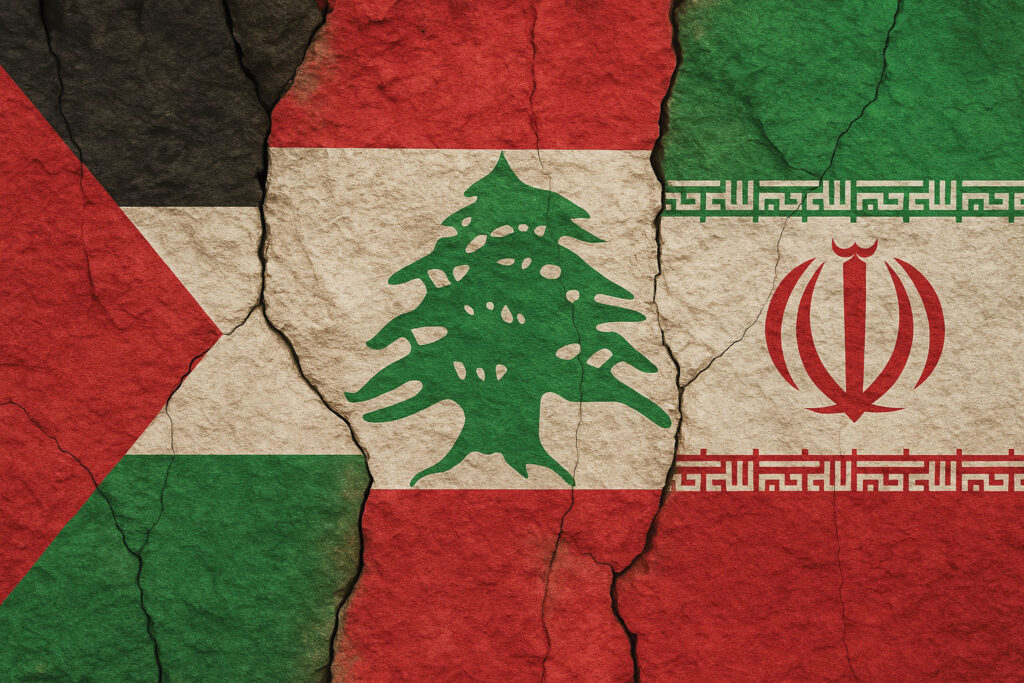
Let’s talk about hindsight, about expectations and actuality, about adaptation, about adjustments. Let’s talk about three theaters of war: Gaza, Lebanon, Iran. And let’s admit that an uncomfortable situation is still very much the reality in all three theaters. Two months after the Gaza war ended, the Israeli public is well aware that total victory was never achieved. It was promised – but did not materialize. It was not achieved in Lebanon, where the likelihood of sudden escalation is increasing by the day. Last year, Lebanon seemed like a great Israeli success. It was a great Israeli success. And yet, Hezbollah doesn’t disarm, and the Lebanese authorities don’t seem ready to eliminate the threat. 

Success can be measured against prior expectations, it can be measured against prior predictions, it can be measured against the bombastic statements of politicians, it can be measured against a more modest yardstick of realistic possibilities. If the war on the Lebanese front is measured against doomsday scenarios that were widespread before the eruption of this front,  then the battle was a dramatic triumph. If it is measured against the empty declarations of success-drunk leaders, there’s the usual hangover. The IDF did well in its fight against Hezbollah. It did not do well enough to eradicate the challenge. It did not do well enough to make all Israel’s dreams come true. 

Turn to Iran, and the script is similar. Half a year had passed since the 12 days’ war with Iran. And yes – it feels like ancient history. And yet, there’s hangover. Right after the war, only 16% of Israelis said (in a JPPI survey) that Iran is still “very much” an existential threat on Israel. Weeks after the tantalizing attack, Israelis were elated as if a real regional power such as Iran can be tamed from the air in a couple of days. But as the dust settled, we all came back to our senses. Was the attack an impressive operational success? No doubt it was. Did it manage to cause real damage to Iran’s nuclear program? It seems as if the answer is yes. Does Iran no longer deserve to be called an existential threat? Well – thinking about it half a year later, we – Israelis – were probably rash when we declared victory. The share of Israelis who now call Iran an existential threat doubled. And it’s been only half a year.

Then, there’s Gaza. Total victory proved elusive in that theater too. And as Israel and the U.S. look to implement the next “phase” on the long path to a peaceful Gaza Strip, two visible obstacles didn’t yet meet a convincing remedy. The first, and probably the more formidable of the two, is the demand for a disarmament of Hamas. Facing Hamas’ refusal to hand over its arms, and with it, its core identity – Hamas is a fighting organization – some mediators are attempting to peddle an idea they see as compromise: Hamas will begin by surrendering some”offensive” weapons (such as rockets) while keeping, for now, its “defensive” gear. As a supposed compromise, this might work to satisfy the desire of President Trump to move forward, disregarding annoying details. Israelis will see through the façade. It isn’t compromise, it is capitulation. Hamas gets to live another day, weaker but still armed and menacing. Just like Hezbollah.  

The second unbridgable gap between plan and implementation is the deployment of a multinational force in Gaza. At the moment, the idea is hitting a wall of reality: the slated countries have little appetite for sending troops when Hamas is still in power, and oppose the initiative. They might be willing to send peace-keeping forces when there’s peace – they will not be sending them to bring about peace. Here too, a compromise may be in the offing. A small force of limited symbolic value. More to save face than to save us all from Hamas. 

An alternative government to Hamas proved to be an elusive target. Could we imagine an alternative government that isn’t called Hamas as the alternative? Yes – but only in case this is not Hamas by name only. Meaning: Call it PPP – Palestinian Peace Platoons – or whatever name – declare victory – pretend an alternative to Hamas was created – ignore the obvious fact: PPP is cover for the same old Hamas. Or – another possibility the Israeli government opposes – a cover for Hamas and the Palestinian Authority. 

Israelis expected the war would end when Hamas is eradicated. They now have to face a different reality. After two years of blood, sweat and many tears, the enemy is still out there, lurking in the dark, waiting to fight another day. 

Such a situation is a strategic challenge. Such a situation is no less a psychological challenge. The war to end all wars, or at least all wars against certain enemies, ended as war to reignite the next cycle of potential wars. Failing to acknowledge certain realities was the root cause of the October 2023 war. Failing to acknowledge current realities is not an option.

Something I wrote in Hebrew

On Netanyahu’s possible pardon:

Such a move carries a risk for both sides. Herzog risks granting a pardon, only to find out later that the conditions he set were easily ignored by the Knesset. He does not want to be in that situation. He does not want his main decision as president to be remembered as a farce. Netanyahu risks agreeing to conditions he intends to break, only to find out later that breaking them is harder than he thought. He does not want to be in that situation. If there is one thing we have understood about Netanyahu, it is that he has no intention of stepping down anytime soon.

A week’s numbers

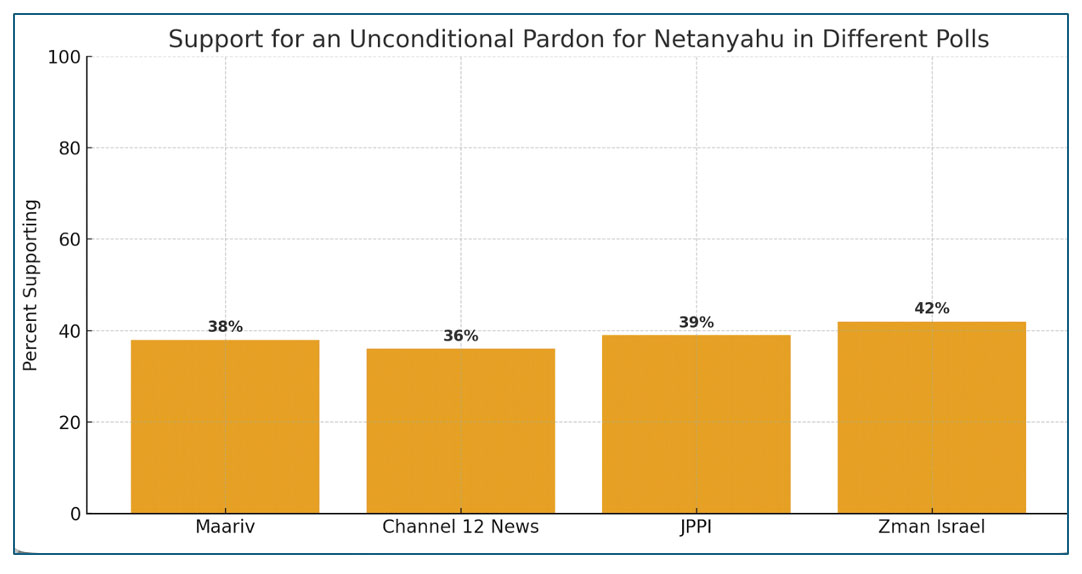
Unconditional pardon for the PM? Sure – if you ask Israelis who support the coalition. The rest of us would expect something in return.


A reader’s response

Arthur Benzur asks: “Can you pleae clarify when is Israel’s next election?” My response: Yes and no. The slate date is fall of 2026. The actual date is all dates between 90 days from now (if the government loses its majority tomorrow) and the fall of 2026.


Shmuel Rosner is senior political editor. For more analysis of Israeli and international politics, visit Rosner’s Domain at jewishjournal.com/rosnersdomain.

Rosner’s Domain | The Psychology of Accepting Reality Read More »

A Prophet among the Rhinos

“Coexistence and Other Fighting Words: Selected Writings of Judea Pearl 2002-2025.” Political Animal Press (2025). 192 pages.

“Conventional wisdoms were mighty unkind to us, so our sanity demanded that we challenge those conventions and, in due course, we have learned to challenge all conventions. Thus, is my Jewishness a blessing or a burden? Do I prefer the trails of the scouts to the safety of the bandwagon? You bet I do. It is only from those trails that I can see where the voyage is heading, and it is only from there that I can discover greener pastures. I am Jewish, and I doubt I would be in my element elsewhere.” — Judea Pearl

Professor Judea Pearl was born in Bnei Brak, in what was then the British Palestinian Mandate. Family members, including his maternal grandparents, were murdered in the Holocaust. Aged 11, playtime with friends abruptly ended with Egyptian warplanes bombarding his town. He joined the IDF; lived on a kibbutz; studied engineering on the way to a stunningly successful scientific career; married and had three children, two girls and a boy. 

In 2002 Pearl and his wife Ruth experienced an unimaginably horrific tragedy. While on assignment in Pakistan, their son Daniel, a much-loved reporter for the Wall Street Journal, was kidnapped by ISIS, and murdered. The killers made a gruesome video of his final moments. On it, Daniel—“Danny”—says his last words: “My father is Jewish, my mother is Jewish, I am Jewish. Back in the town of Bnei Brak, there is a street named after my great-grandfather, Chaim Pearl, who was one of the founders of the town.”

You might expect a man who’d experienced so much suffering to be broken—but that would mean you don’t know Judea Pearl. In this selection of essays, op-eds and speeches, the first piece written six months after his son’s murder, Pearl gives us words that are, yes, sometimes heartbreaking, but also funny, profound, scrappy, informative and strikingly prescient. Pearl deserves to be listened to not simply because of who he is, or because he’s such a marvel of resilience, but because his experience, maybe, gave him a way to see what too many others didn’t—yet—and articulate it so brilliantly.

Pearl deserves to be listened to not simply because of who he is, or because he’s such a marvel of resilience, but because his experience, maybe, gave him a way to see what too many others didn’t — yet — and articulate it so brilliantly.

“Barbarism, often cloaked in the language of ‘resistance,’ has gained acceptance in the most elite circles of our society,” he writes in a piece marking the seventh anniversary of Daniel’s murder. In an observation that echoes in our post-October 7 world, he notes how “Some American pundits and TV anchors didn’t seem much different from Al Jazeera in their analysis of the recent war in Gaza,” giving “Hamas legitimacy as a ‘resistance’ movement” and bemoaning the “cycle of violence,” in which Palestinian terrorism and Israel’s response to it are cast as moral equals. “Civilized society, so it seems, is so numbed by violence that it has lost its gift to be disgusted by evil,” he writes. 

As a professor for fifty years at UCLA, Pearl provided breakthroughs that paved the way to AI. In 2011 he received the Turing Award, often called “the Nobel Prize of Computing.” Meanwhile he saw Israel-hating fanatics increasingly mob his campus, while his colleagues either coddled or egged the protesters on, or shrank in fear. But Pearl took them on with courage and clarity. 

“I believe that one of the biggest mistakes Jewish advocacy has made in the past decade is to argue that anti-Zionism is dangerous because it is a thin cover for antisemitism,” he writes in a 2009 piece about UC Irvine, where the Muslim Student Union celebrated what was called a “week-long lynching of Jewish identity.” “We should have exposed the immoral character of anti-Zionism in itself and insisted that Israel’s statehood be recognized for what it is, a fundamental aspect of Jewish identity.” 

Anti-Zionism, he argues in another piece from the same year, is much worse than antisemitism. “Modern society has developed antibodies against antisemitism but not against anti-Zionism,” he explains. “Today, antisemitic stereotypes evoke revulsion in most people of conscience, while anti-Zionist rhetoric has become a mark of academic sophistication and social acceptance in certain extreme yet vocal circles of U.S. academia and media elite.” Anti-Zionist rhetoric also sets back the best prospect for peace in the Middle East: a two-state solution. And while antisemitism rejects Jews as equal members of the human race, “anti-Zionism rejects Israel as an equal member in the family of nations.”  

He long ago recognized that it was necessary to fight using new language. “The term ‘antisemitism’ connotes submissive begging for protection,” he told a group of graduating Jewish UCLA students in 2019, “and should be replaced by a fighting word ‘Zionophobia’—the irrational fear of a homeland for the Jewish people. It rhymes with Islamophobia on purpose, of course. When you call someone a ‘Zionophobe,’ it means: ‘If you deny my people’s right to a homeland, something is wrong with you, not me.’” If we use the word often enough, he says, it will become as ugly, as emblematic of racism, as it deserves to be.

Fittingly for someone who dubs himself “the Smiling Zionist,” Pearl often finds humor in his antagonists’ antics, even if the jokes are sometimes a bit dark. “I believe everyone would like to find out from BDS supporters how peace can emerge between two partners,” he told the UCLA Debate Union in 2017, “one insisting on seeing the other dead and the other insisting on staying alive, no matter how glamorous the coffin.” 

And in an essay from 2018, he notes how: “Each year, in preparation for Israel’s birthday, newspaper editors feel an uncontrolled urge, a divine calling, in fact, to invite Arab writers to tell us why Israel should not exist. This must give them some sort of satisfaction, such as we might have in inviting officials of the Flat Earth Society to tell us why Earth is not, could not, or should not really be round, and to do so precisely on Earth Day, lest the wisdom would escape anyone’s attention.” 

The entire Israel-Palestinian conflict, he writes in 2006, can be encapsulated in two words: “postage stamp.” In 1937, Ze’ev Jabotinsky, by far the most ambitious hardliner of all Zionist leaders, wrote that “we beg merely for a small fraction of this vast piece of land.” That same year, the British-appointed Peel Commission proposed a two-state solution, with a Jewish state on approximately 25% of the current area of Israel. The Zionist leadership accepted, after a fierce debate, while the Arabs responded that there was to be no Jewish state, ever, on any part of the land: “Not even the size of a postage stamp.” 

That attitude has kept the region mired in terrible conflict, when the Palestinians could have been celebrating their independence these past 77 years alongside Israel. Pearl traces some of the historical highlights, or lowlights: like the Arab League summit meeting in Cairo, 1964, when Jordan controlled the West Bank and Egypt governed Gaza. A peace agreement with Israel that year would have created a Palestinian state. Yet the Arab League collectively called for “the final liquidation of Israel” and formed the PLO. 

Then there’s the Arab Summit at Khartoum in August, 1967, when Israel was offering to return the land they’d taken in the Six Day War in return for peace—an offer that again would have created a Palestinian state. The Khartoum conference responded with the “Three Nos”: “No recognition, no negotiation, no peace.” Arab rejectionism, bolstered by anti-Zionist Westerners, then gave steam to Israeli settlers, who figured that as long as Israel’s enemies were unremittingly hostile, they’d better adopt an attitude of total strength. 

In 1988 Arafat formally recognized Israel’s existence and the Oslo process began. Many Israelis thought the “postage stamp mentality” was finally dead. But when the talks fell apart, Israeli peace camp leaders publicly acknowledged that they’d been dupes. Ordinary Palestinians had seen Arafat’s moves “as a ‘Trojan Horse’ in a grand scheme aiming toward a Palestinian state ‘from the river to the sea.’” In our post-October 7 world, the “postage stamp mentality”—uncompromising, genocidal, hailed by ignorant Westerners—looks more unfettered than ever.

And Jews, Pearl emphasizes, are Israel. In an essay from 2006, he points out that much of the criticism of Iranian President Mahmoud Ahmadinejad for posting a Holocaust-denial conference misses the point. “I hear tons of well-deserved condemnations of Ahmadinejad for orchestrating such an offensive conference,” he writes, “but not one voice saying: ‘Hey man! What a waste of time. We don’t need a Shoah to justify a Jewish state on that sliver of land. Our history was born there, and our collective consciousness has remained there.’ I fear that as the buzz winds down and the dust settles, there will be only one thing remembered from the Holocaust Conference in Tehran: Israel and the Holocaust are one. That is, Israel owes its existence to one and only one factor: European guilt over the crime of the Holocaust. Once this is established, the next obvious question is: Why should the Palestinians pay for Europe’s crime?”

This is, in fact, exactly the question Jews are continually confronted with, but it turns history on its head. Jews, Pearl notes in a 2008 debate with law professor George E. Bisharat, have maintained spiritual and historical ties to their historical homeland since their second century expulsion by the Roman Empire. Furthermore, “the idea that the homeless must forever remain homeless is morally unacceptable.” 

Palestinian claims to deep historical roots on the land, on the other hand, are all too thin. Pearl imagines politely asking such individuals: “Can you name a Canaanite figure who you are proud of? A Canaanite poem that you enjoy reciting? A Canaanite holiday that you celebrate? A Canaanite leader who is a role model to your children?” He notes that if you replace the word “Canaanite” with “biblical,” “you will find four questions that every Israeli child can answer half asleep.” He hopes such considerations will someday “mitigate the Palestinian claim to exclusive ownership of the title ‘indigenous people’ and, God-willing, usher in a genuine reconciliation effort based on mutual recognition and shared indigeneity.”

In an essay from 2021, Pearl recalls Eugène Ionesco’s 1959 play “Rhinoceros.” In it, a stray thick-skinned beast stampedes through a peaceful town, raising much dust and trampling a woman’s cat. The townspeople decide to ignore it. It’s a “stupid quadruped not worth talking about,’’ one citizen tells the town’s one doubter, while another shrugs, “You get used to it.” An ethical debate develops over the rhino way of life versus the human way of life, after which the townspeople adopt the novel new ethic and are transformed into rhinos. The hero “finds himself alone, partly resisting, partly enjoying the uncontrolled sounds coming out his own throat: ‘Honk, Honk, Honk.’”

Pearl comments that those sounds from Ionesco’s play sometimes echo in his ears, such as in 2009, “when Hamas gave its premiere performance at UCLA.” That “Human Rights and Gaza” symposium, which one reporter called “a reenactment of a 1920 Munich Beer Hall,” ended with panelists leading the excited audience into chanting, “Zionism is Nazism” and “F—, f— Israel,” “in the best tradition of rhino liturgy.”  

But Pearl notes that “the primary impact of the event became evident the morning after, when unsuspecting, partially informed students woke up to read an article in the campus newspaper titled, ‘Scholars Say Attack on Gaza an Abuse of Human Rights,’ to which the good name of the University of California was attached, and from which the word ‘terror’ and the genocidal agenda of Hamas were conspicuously absent.” The rhinos were on the warpath.

Pearl, alarmed, called colleagues to discuss how to best support their Jewish students, but discovered that a few had “already made the shift to a strange-sounding language, not unlike ‘Honk, Honk.’ Some had entered the debate phase, arguing over the rhino way of life versus the human way of life, and the majority, while still speaking in a familiar English vocabulary, were frightened” beyond anything he had seen at UCLA in his then-forty years on its faculty.

He describes colleagues who told him about lecturers whose appointments were terminated, “professors whose promotion committees received ‘incriminating’ letters, and about the impossibility of revealing one’s pro-Israel convictions without losing grants, editorial board memberships, or invitations to panels and conferences. And all, literally all, swore me to strict secrecy. Together, we entered the era of ‘the new Marranos.’”

Through it all Pearl has kept fighting and writing, drawing inspiration from his Jewish heritage.

“I see Jews as the scouts of civilization,” he tells the Jewish UCLA graduates of 2019, “the ones who question conventional wisdom and constantly seek the exploration of new pathways.

Through it all Pearl has kept fighting and writing, drawing inspiration from his Jewish heritage. “I see Jews as the scouts of civilization,” he tells the Jewish UCLA graduates of 2019, “the ones who question conventional wisdom and constantly seek the exploration of new pathways.”

“Abraham questioned the wisdom of idolatry; Moses questioned the wisdom of servitude and lawlessness; the prophets questioned institutional injustice; and so the chain goes on from the Maccabees, Jesus, and Spinoza to Marx, Herzl, and Freud down to Einstein, Gershwin, the Zionist Chalutzim, who created the miracle of Israel, and down to the civil rights activists of the 1960s. 

“As individuals, we do not consciously choose this lonely role of scouts, border-challengers, or idol-smashers. It has penetrated our veins, partly from the Bible and the Talmud through their persistent encouragement of curiosity, learning, and debate, and partly from our free-spirited parents, uncles, and historical role models. But mostly, this role has been imposed on us by the travesties of history.” 

Irrepressible optimist that he is, he embraces it, because with the loneliness comes creativity. Pearl’s book is a tonic for anyone who despairs at today’s world. Drink it.


Kathleen Hayes is the author of ”Antisemitism and the Left: A Memoir.”

A Prophet among the Rhinos Read More »

As We Wrestle

In last week’s Torah portion, Parashat Vayishlach, we encounter Jacob at a moment of profound liminality. He stands on the threshold between what has been and what might yet be — between a past marked by conflict with his brother Esau and a future still unknown. The last time they were together, Esau threatened to kill him. Now, after years apart, Jacob prepares to face him once more, full of uncertainty and fear.

It is in this in-between space that Jacob wrestles. The Torah notes that Jacob was alone and then immediately tells us he wrestled with a man: “Jacob was left alone. And a man wrestled with him until the break of dawn.” (Genesis 32:25)

It’s a striking and apparently contradictory juxtaposition — he is alone, and then he is wrestling with a man. Many commentators suggest that this points to Jacob’s own inner turmoil: his fears, regrets and hopes for a different kind of future. Essentially, he is wrestling with himself, struggling to understand who he must become in order to meet his brother with honesty and courage and, more broadly, to understand who he is meant to be.

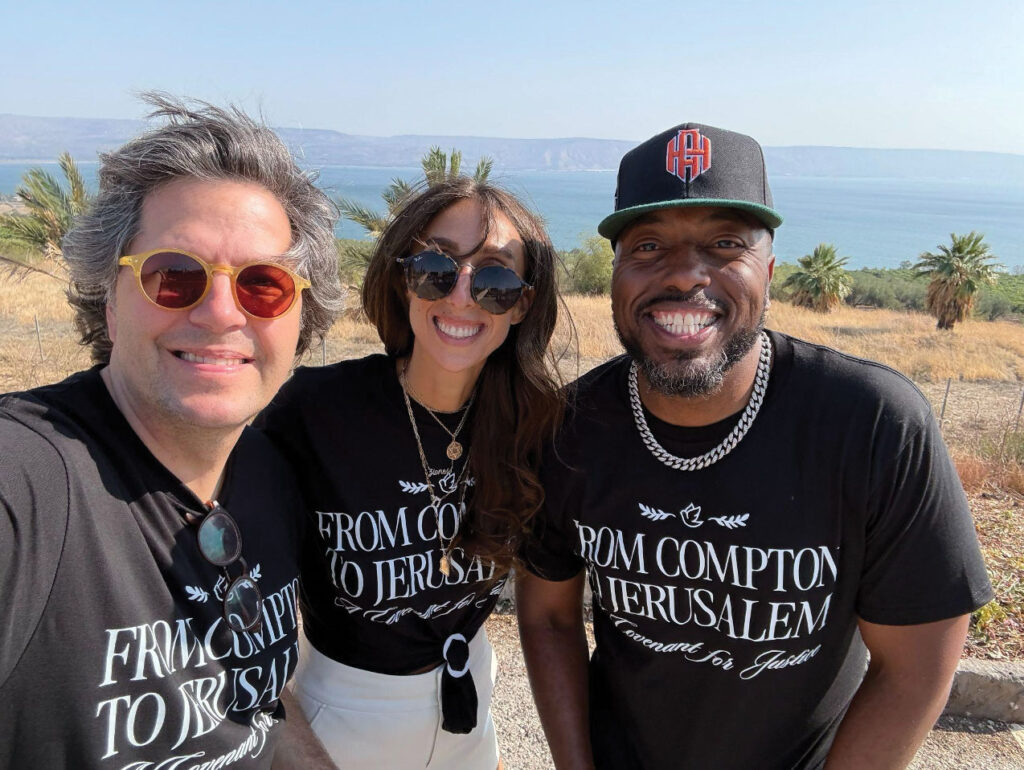
I’ve been thinking a great deal about that kind of wrestling as I reflect on the extraordinary journey I just completed with a remarkable group of Black Christian and Black Jewish leaders — a journey I was privileged to help plan and lead together with my partners, Bishop Michael Fisher of Greater Zion Church Family in Compton and Amanda Berman, CEO and founder of Zioness. A few days before the trip began, Bishop Fisher said something powerful to Amanda and me: “This trip is going to be a wrestle.” And it was, in the best and deepest sense — a wrestle with history, with what it means to call oneself a Zionist and with the tension we sometimes feel between our commitments to our own people (particularism) and our commitments to others (universalism).

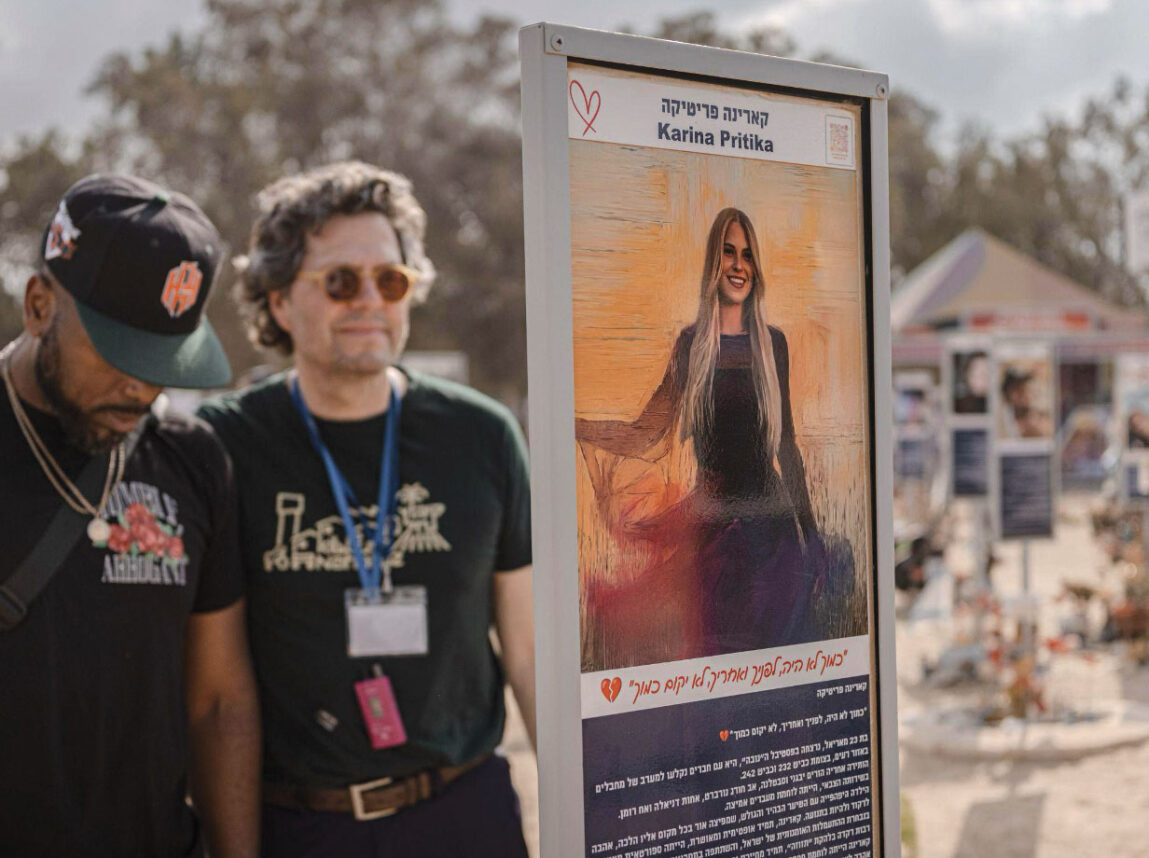
Bishop Michael Fisher and Rabbi Yoshi at the Nova memorial

His words made me ask: What are the things that matter enough that we are willing to wrestle with them? What relationships, stories and responsibilities call us into that vulnerable, transformative work?

The relationship between the Jewish and Black communities — and the powerful intersection of the Black Jewish community — is one of those. And this is a wrestling that should matter to all of us: not only because of our shared histories, but because of our interconnected identities.

Part of the story many Black Americans tell about themselves draws from our shared sacred literature — the story of our Israelite ancestors’ deliverance from bondage. “Let My People Go!” became a rallying cry of spiritual strength and defiant hope. And part of the story we tell about ourselves as Jews is the role our community played as partners and allies in the civil rights movement: Rabbi Abraham Joshua Heschel famously marching arm in arm with Rev. Dr. Martin Luther King, Jr., “praying with his feet.”

These aren’t just parallel narratives — they are interwoven. We are bound together by our past, by the ways we have understood ourselves and — if we have the courage and resilience to continue this work — by our shared future. I believe our destinies are inseparable. The work of justice, dignity, and freedom is work we must do together.

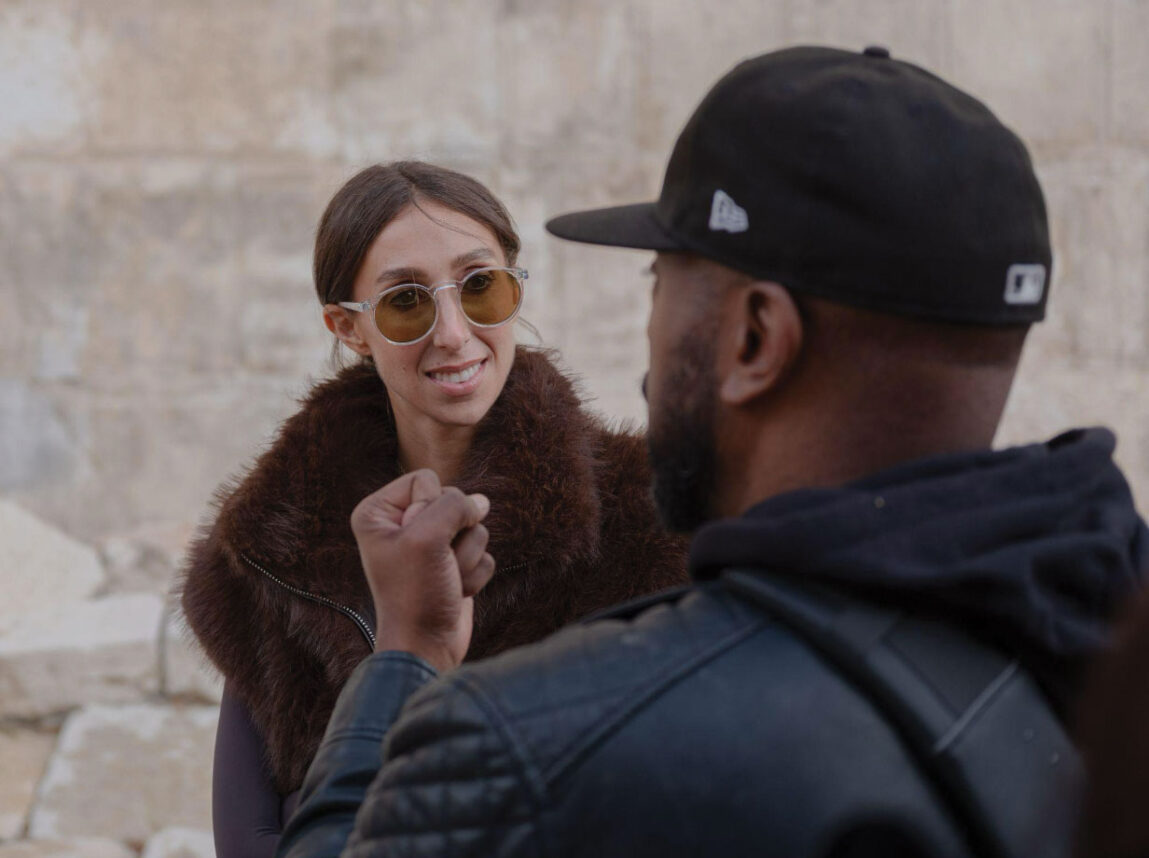
Amanda Berman and Bishop Fisher in Jerusalem near Robinson’s Arch

Jacob emerges from his wrestling changed. He bears the wound, but also the blessing. He becomes more whole, more grounded and more able to meet his brother with an open heart.

My hope is that we, too, embrace the kind of wrestling that leads to blessing: wrestling with our histories, our assumptions, our biases, our prejudices and our responsibilities to one another — wrestling that deepens relationship, strengthens understanding and brings us closer to a world of connection, healing and peace.


Rabbi Yoshi Zweiback is the Senior Rabbi of Stephen Wise Temple in Los Angeles, California.

As We Wrestle Read More »

Getting Our Hanukkah Story Right

Hanukkah is the only Jewish holiday without a biblical book. But all Jews — not only New York literati and Hollywood filmmakers — demand a story with tension, heroes and villains. We cannot live on candles and short prayer insertions alone.

Jews, abhorring a narrative vacuum, have embraced a central story that exists in two versions. The classical take is the tale of the mother and her seven sons found in Second Maccabees — not in the Hebrew Bible, the Tanakh, but preserved in the Catholic and Orthodox Christian canons. Why is that? Let’s examine this question through the Jewish lens of Yashrut — moral integrity.

Second Maccabees was written by Jason of Cyrene (in today’s Libya), an observant Jew who found deep meaning in martyrdom during the Maccabean revolt against the Syrian Greeks. An unnamed Jewish mother and her seven sons are brought before the emperor and ordered to eat pork and worship idols. One by one, the sons defiantly refuse, each offering a different philosophical reason, and one by one they are tortured to death.

It is a gripping story. The king, terrified of losing face before his court, begs and bribes the youngest son to feign obedience to idolatry. The mother, described as “bearing it all bravely,” leans over her last surviving child and pleads: “My son, have pity on me, who carried you in my womb for nine months and nursed you and reared you … Do not fear this executioner. Be worthy of your brothers and accept death.” He does, excoriating the king and “perishing undefiled.”

For all its loyalty to Jewish faith and its pronounced emphasis on martyrdom, this account — written around 100 BCE — feels strikingly Christian in tone, with its gruesome torture scenes and philosophical professions of belief. Unsurprisingly, it became part of the Church’s lectionary readings.

The Jewish version, found in Midrash Eicha Rabbah (Lamentations Rabbah), composed between the 5th and 7th centuries C.E., gives the mother a name: Miriam. Here, the sons sound like they are in the beit midrash, refuting the king with biblical verses that ingeniously demonstrate how the entire Torah rejects idol worship. Even the youngest — still a small child — delivers a sermon weaving together three verses. These answers are laced with ironic Jewish humor and chutzpah aimed at the emperor. The boy even leads the king into a philosophical trap that uproariously exposes the emperor’s own foolish thinking.

This is unmistakably a Jewish story: the mother is no preacher of martyrdom. Miriam expects her children to remain loyal to our faith, yet she is heartbroken. In faith and in love, she nurses her youngest before his execution — bringing to mind the mothers who did the same for their children on the death lines at Auschwitz. She instructs him: “Go to Father Abraham and tell him, ‘Thus says my mother: do not preen yourself on your righteousness, saying, I built an altar and offered up my son Isaac. Behold, our mother built seven altars and offered up seven sons in one day. Yours was only a test; mine was realized.’” An affirmation of faith, delivered with a good Jewish shtoch — a jab.

Second Maccabees ends in triumph and glory of complete martyrdom: all eight characters pass their test, and one can almost hear the swelling of organ and choir in rapturous praise. The midrashic story ends differently — with the mother, in her grief, throwing herself from a roof. Here we hear not triumph but lamentation, and even God Himself is described as mourning.

Today in Israel, at every bus stop and on every utility pole, you find small stickers placed by friends and family with the likenesses of our young men and women murdered in our war of survival. Their tiny memorials do not focus on martyrdom, even though full duty was expected of them.

Just the other day in Tel Aviv, I paused at a utility pole where someone had placed a small sticker — one among thousands across the country. It held a brightly painted portrait of a smiling, strikingly handsome young man. Above his image were the words: “Boundless love” in Hebrew. Below it, his name and years: Amit Miganzi, 2001–2023. And beneath that, a line he once said: “Use your smile to change the world; don’t let the world change your smile.”

These words convey determination and love of life. When we read them, they break our hearts and yet fill us with love for a moral life well lived. Their memory blesses us.


Rabbi Daniel Landes is the founder and director of Yashrut, a Torah institution in Jerusalem dedicated to the rigorous study of Talmud and Halacha and to the pursuit of moral integrity.

Getting Our Hanukkah Story Right Read More »