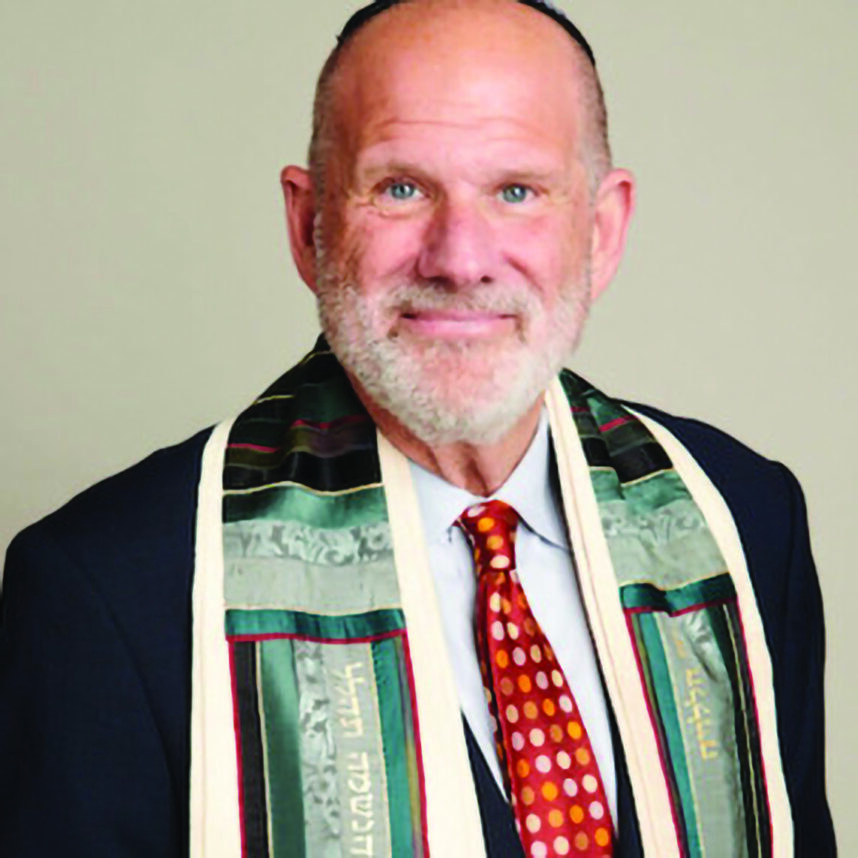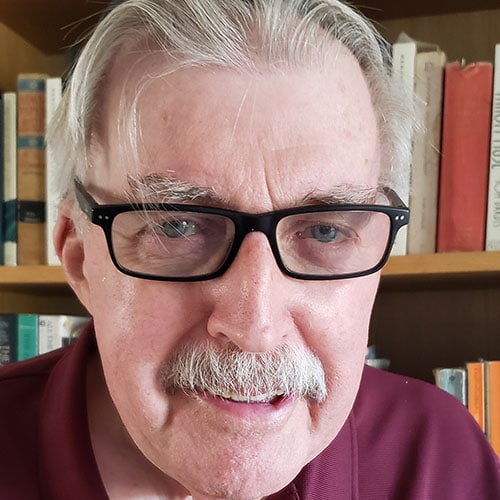
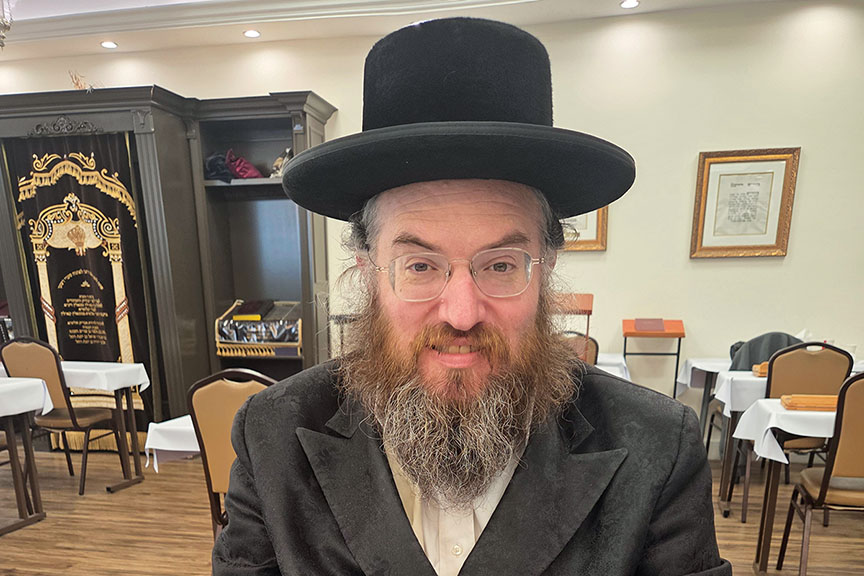
Rabbi Dovid Yehoshua Sochet is a serious and learned man and a member of one of the oldest Chasidic dynasties but he’s as accessible as the village grocer.
“My father is the Stoliner Rebbe in Eretz Israel,” Rabbi Sochet explained. “He didn’t always live there. He has been there for the last 35 years. He lives in Givat Ze’ev. Before that, he lived in Jerusalem and before that in Brooklyn.”
The Stoliner dynasty is about 250 years old, and one of the oldest Chassidic dynasties. “That is something I knew practically my entire life. I am descended from the Baal Shem Tov through my great-grandmother. My great-grandfather was a descendant of the Baal Shem Tov. This I knew practically my entire childhood. My wife is a descendant of the Baal Shem Tov, but from a different line, about an eighth cousin.
There never was a doubt how Dovid Sochet would spend his life, professionally and personally. He was born in Brooklyn, and until he was about 7, he lived in Los Angeles. He moved to the Rockaway Beach neighborhood of New York, and grew up there and in Brooklyn.
He started to say “I am the oldest of …” but he wanted to clarify that. “My parents are divorced,” he said. “My father had 15 children, aside from me, and my mother had five aside from me. I was a baby when my parents divorced. I knew my father. We visited him and he visited me.”
Growing up, who was the primary influence on Rabbi Sochet? “It’s really a bit of everyone,” he said. “Everyone had his or her influence at some point. Also my grandfather – on my mother’s side – actually both of my grandfathers – my mother and father happened to be first cousins, their fathers were brothers – so it’s all in the family.
“Both of my grandfathers were born in Los Angeles in the 1920s and ‘30s. When they reached bar mitzvah ages, they went to the East Coast to yeshiva. They ended up staying there and later married there. About 1969, my mother’s father moved back to Los Angeles. Therefore my mother, when she was about 10, moved to Los Angeles.”
But there were times when the rabbinate was not central to his career thoughts. “As a child, I enjoyed not architecture as an art, but I thought about anthropology – and I still say that because I find humans the most interesting of all things possible.”
Although he lived in New York for many years, he regularly visited LA until his mother’s father passed away in 2001. “For about 10 years after he passed away, I was not in California. Then I started coming back here because I had a lot of acquaintances here, especially in Hancock Park, which used to be called West Hollywood, but it’s more prestigious to be known as Hancock Park.”
Rabbi Sochet explained how he came to settle in Pico-Robertson. “I had a few close friends in La Brea who suggested that there was need for something Chassidish in the Pico-Robertson community,” he said. “There was nothing of that sort here for many years. This is about 2011, 2012. I was introduced to certain people – both from La Brea and also with an acquaintance, a follower of my father’s in Eretz Israel – he introduced me to a man who now is a close friend, Mr. Harry Nelson. I spent a few Shabossim in this area, got to know a few people, and — this is all with the vision of trying to start something here. But you can’t just want to start something and it happens.”
He started making preliminary plans for Kahal Chasidim She’aris Yaako in 2010. “There’s a lot of competition in Pico from other shuls,” the rabbi said, “but really there is no shul doing what we are. No two shuls are the same. You might have similarities, but there is no shul similar to this in various different aspects. I am not saying that as a selling pitch but as a fact.”
Rabbi Sochet insisted he is “not a very good recruiter because I am not good at PR. I try to be nice to people, hospitable, to greet people nicely. I don’t enjoy bothering people to come although – this is normal — here and there I have done it.”
There is a natural shyness about Rabbi Sochet that Pico residents of a certain stripe have found appealing. “I very much don’t enjoy recruiting,” he said, “and I don’t want to bother people. God-willing, most of the time, Shabbos never has been a problem. Weekdays, though, that’s a whole different beast.”
His biography identifies him as a mohel, and he explained why it doesn’t keep him busy. “In Los Angeles, I have not had many calls,” he said – for an intriguing reason. “I don’t advertise so much, and there is a lot of competition. I am not really interested in taking away anyone’s business.”
Distinctions between New York and Los Angeles are very Dovid Sochet. “In New York, I have a lot of relatives, and they use me. I have a few relatives here who use me. Some of them never knew I was a mohel.”
Modest to the end.
Fast Takes with Rabbi Sochet
Jewish Journal: Your favorite moment of the week?
Rabbi Sochet: Walking on the Coney Island Boardwalk with my father.
J.J.: Your favorite daily moment?
RS: Currently, when we have a shiur (learning) by night and get to learn with other people. During the day, I study by myself, which is important. When I learn with others, I gain much more than I give.
J.J.: Do you have any unmet goals?
RS: I would like to purchase an old motel and help older people who are unfortunately homeless.