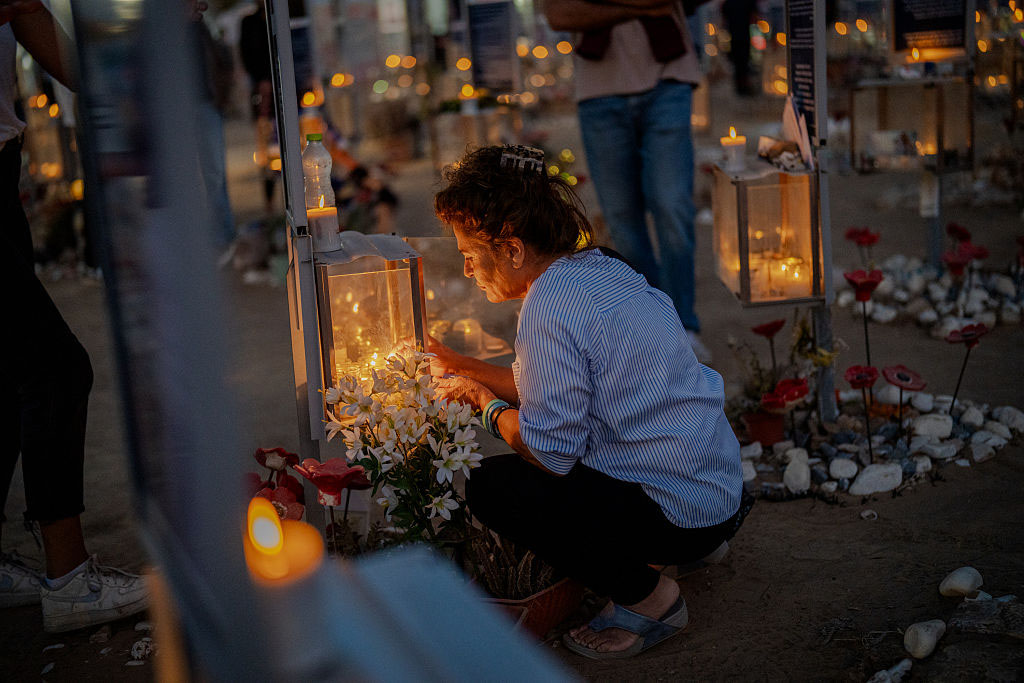
It’s been a tough year for Pasadena Jewish Temple and Center (PJTC). Their building was destroyed in last January’s Eaton Fire, but the 86-year-old congregation has rebounded, holding services in the auditorium of a Catholic high school and a nearby Mormon church. PJTC’s determination was reported by The Jewish Journal and Los Angeles Times. Last month, an estimated 400 persons gathered to mark the fire’s one-year anniversary. But it was wounded a second time when vandals tagged a portion of the exterior wall with antisemitic graffiti.
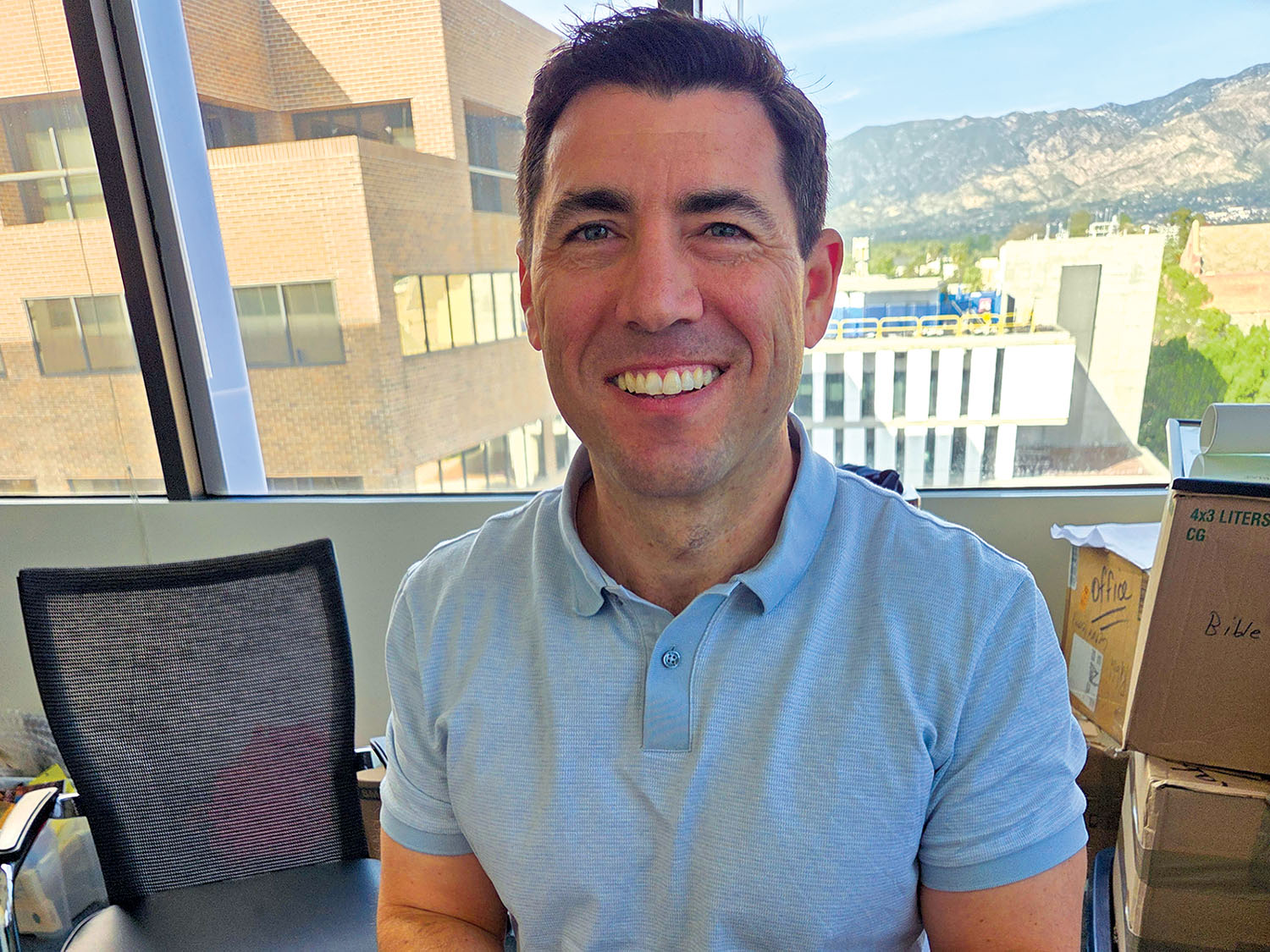
Joshua Ratner, the temple’s senior rabbi who had arrived only six months ago, sent a message to the PJTC community.
This act, he wrote, had been reported to the appropriate authorities. “The Altadena Sheriff’s Department, in conjunction with LA County’s Hate Crimes Division, is investigating. The graffiti has been removed. We are outraged by this despicable act of antisemitic vandalism, occurring just after we commemorated the one-year anniversary of the destruction of our PJTC campus. Violating our sacred space with hateful words is a reprehensible act, and we will cooperate fully with local law enforcement and other authorities to bring this perpetrator to justice. At the same time, we are a strong and resilient community. We will not let this vandalism diminish who we are or what we stand for. … The PJTC remains committed to rebuilding and to the safety and prosperity of our community, and to living our Jewish values openly and without fear. The synagogue is also working with the Jewish Federation’s Community Security Initiative and private security to take measures to prevent such vile acts in the future. We are grateful for the support we have received from community partners and civic leaders, and we appreciate the media’s care in reporting on this incident responsibly.”
Rabbi Ratner quickly decided not to publicly disclose the contents of the graffiti. “We don’t want to amplify the antisemitic message,” he told The Journal. He went on to describe how the hateful message was discovered. “A parent passed by our synagogue and noticed the language. She reported to us, and we reported it to the police.”
Rabbi Ratner called this “the first act of vandalism since last January’s fires destroyed the campus.” The police, he said, have been terrific to work with. “They are taking this very seriously. The smear has since been elevated to the police department’s Hate Crimes Task Force. The search for the culprit continues. The police department is prioritizing this, and there has been no sign of a repeat incident.”
Rabbi Ratner is a San Diego native who grew up in “a traditional California Conservative home [that was] not traditional by any stretch.” He attended a Conservative day school, San Diego Jewish Academy, from kindergarten to sixth grade.
His path to the rabbinate has led him to two quite separate careers: practicing law and becoming a rabbi. Following his high school graduation, he attended Columbia University. He thought it would be a short trip to the northeast, but “that wasn’t in the cards.”
In his senior year, he met a medically-oriented young woman who would become his wife and mother of their four children. As a native of the northeast, she wanted to remain in that area. “We wound up staying there a lot longer than I had intended,” said the rabbi, “more than 20 years.”
One of the things that extended his temporary trip to the northeast was his decision to enroll in law school with an eye on becoming a corporate litigator. “I did that for a few years until I realized that was not the path for me.”
The seeds for his career change might have been the year off he took between college and law school to go to Israel and study at the Pardes Institute. “I really loved that,” he said. “I loved the opportunity to be fully immersed in Jewish living, studying, in thought, in practice. Something about the totality of that experience spoke to me.”
However, he didn’t have any desire to become a rabbi. It was not anything he had considered growing up. Nevertheless, his time in Israel “made me want to connect more deeply with Judaism when I returned – in whatever capacity that would be.” And he realized he could “make it work as a lawyer who also was an observant, avid practitioner of Judaism.”
But he felt a conflict between work-life and spiritual life and observance that he could not reconcile. The tug route was growing clearer for lawyer Ratner. “I always wanted more time for my Jewish self,” he said. “I felt as if I never had enough. I was always under the pressure of work. I would worry about the work I had to do on Saturday night after Shabbat. I didn’t like feeling compartmentalized like that.”
Fast Takes with Rabbi Ratner
Jewish Journal: What is your favorite Shabbat moment?
Rabbi Ratner: The transition into Musaf because I normally give my sermon right after the Torah service before Musaf begins. On Friday night, I would say Lecha’ Dodi, the combination of the mystical origins of the prayer, the beautiful melodies – there are so many – the feeling of the kehillah singing and praying along.
JJ: Your favorite non-Shabbat moment of the week?
RR: During COVID, we started doing Family Movie Night on Saturday
nights. It’s a time when I can focus on family and unwind, a chance for all of us to be together.
JJ: Your next professional goal?
RR: My biggest next professional goal with PJTC is building a new
synagogue. I have so much excitement for what that is going to look like, a pace warm and chaimish but also functional.