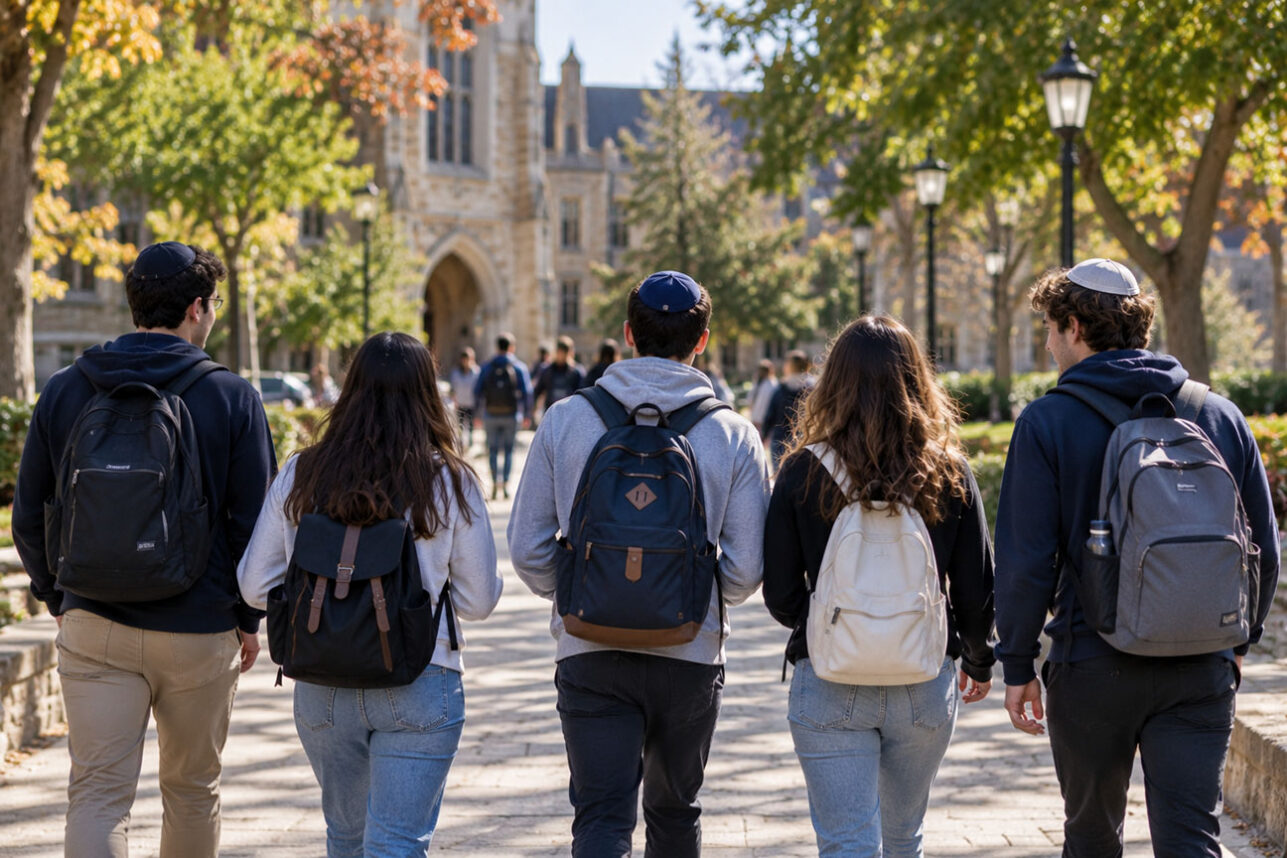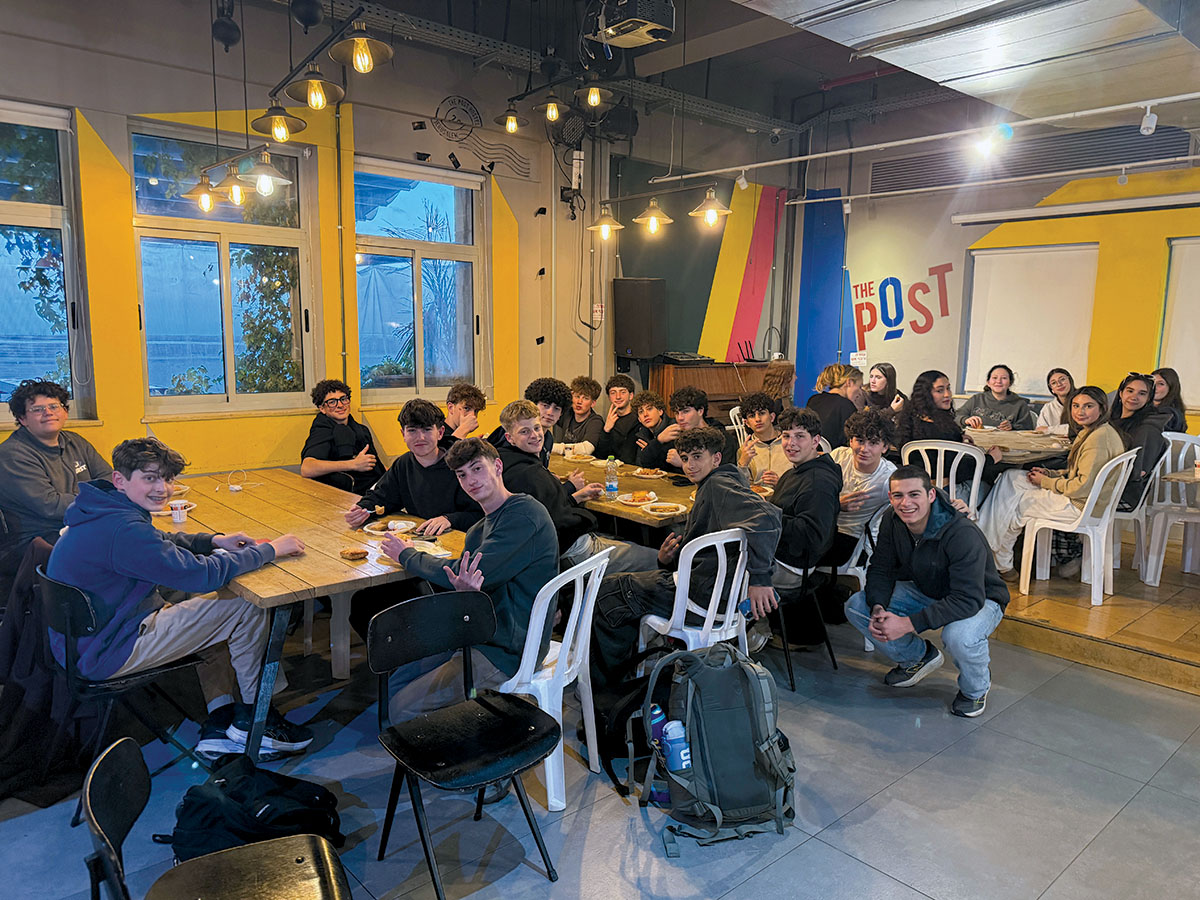
DeToledo High School 10th-grade students will never forget their semester in Israel in March 2026. Shortly after arriving for the exchange program, the war with Iran began on February 28.
At 8:30 a.m., while staying in an apartment building in Jerusalem, the students heard sirens and quickly rushed six floors down to the underground parking garage. “No one panicked,” recalled Head of School Mark Shpall. “They handled it with great calmness. It helped that they were already awake and weren’t jolted out of bed.”
What may have also eased the students was the almost nonchalant way Israelis around them reacted. Some even set up folding tables and chairs for a picnic right there in the parking garage. Yes, Iran was sending ballistic missiles to Israel, but life, and meals, must go on.
“I was most surprised by the strength of the community here,” said student Aiden R. “Even in such a difficult time, people are active, joyful, and present in a way that’s really inspiring.”
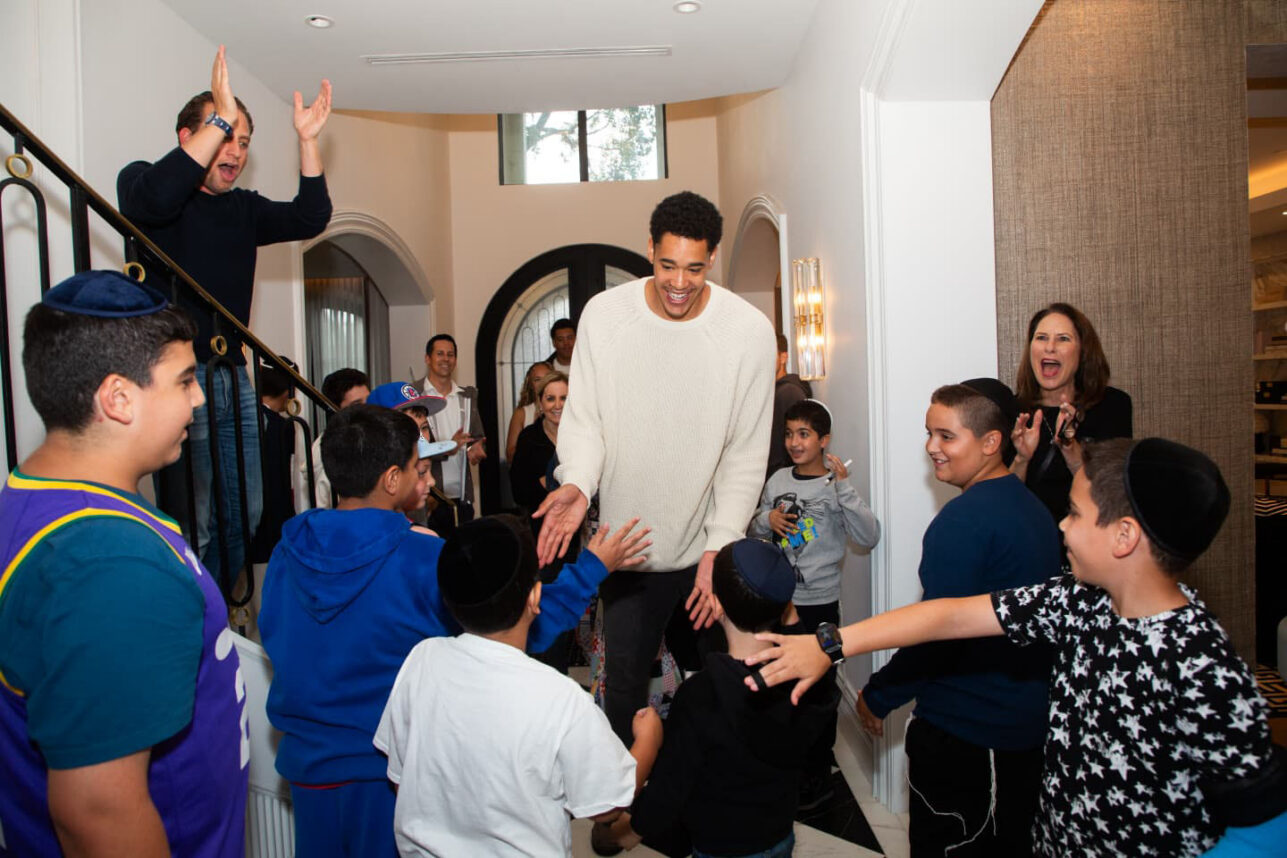
The Jewish high school, located in West Hills, was founded in 2003 and has been running an exchange student program for 23 years. Each year, Israeli students arrive in Los Angeles in the fall and stay with deToledo families; in the spring, American students travel to Israel and stay with the same families they hosted.
This year marked the first trip to Israel since the October 7 attack. Initially, nearly forty students were scheduled to depart, but some parents, concerned about the possibility of war with Iran, withdrew their children.
In the end, twelve students participated in the extended three-month program beginning February 15, and a week later, fifteen students joined the shorter three-week program. All were excited to reunite with their Israeli friends, whom they had met a few months earlier at their school.
The American students said that despite coming from different countries and realities, they felt they were similar in many ways.
“We talk about school, friends, music, and what we want to do in the future,” said student Aiden R. “But there’s also a difference in perspective. Israeli teens carry a sense of responsibility and maturity that comes from living in Israel. Conversations about army service or security are just part of their reality. At the same time, there’s a shared understanding of what it means to be Jewish that creates an immediate connection between us.”
On March 28, after visiting Kibbutz Lotan in the Negev, the two student groups from Los Angeles met in Jerusalem to spend the weekend together before joining their host families in Tel Aviv and Ramat Gan.
Once the war began, Shpall informed the parents back home that they were going to arrange for their kids to return to Los Angeles as soon as possible.
“Most parents actually advocated very strongly to keep the kids there,” said Shpall. “They wanted their kids to have the experience of being with their host families and living in Israel. There was a hope that the war would end quickly.”
The students were well prepared for the possibility of war. Prior to their arrival in Israel, they were briefed on what to do in the event of sirens. Upon arrival, they were also shown where the mamad (reinforced safe room) was located.
“They were not exhibiting any fear, but after the fourth and fifth times they heard the sirens—about every two hours—and needed to rush to the mamad, they started getting annoyed,” recalled Shpall.
Once they got to the mamad, they were usually on their phones, played card games or went to sleep.
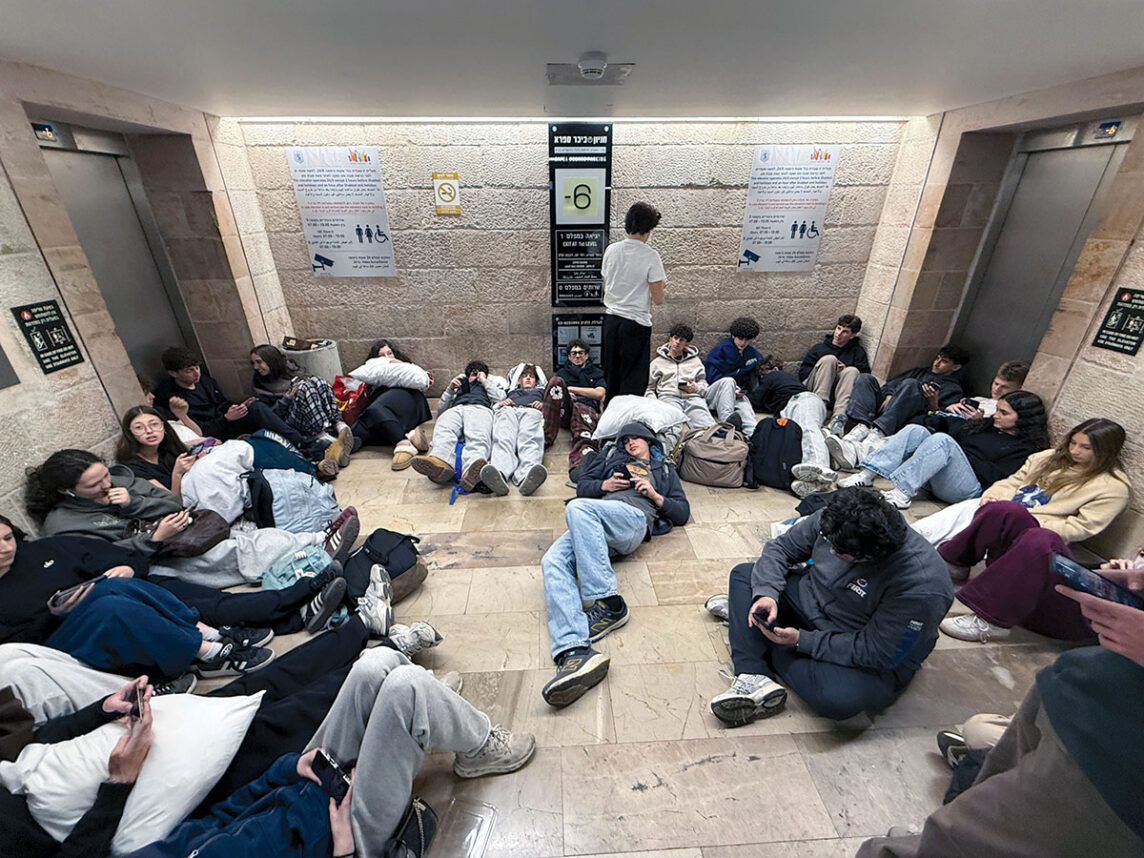
It was a surreal experience for students who had never heard sirens in their lives, let alone the sound of explosions. From the moment the war began, there were no more trips, sightseeing, visits to the Old City of Jerusalem, or outings to the market to shop for souvenirs.
“At first, it was intense. Hearing sirens and running to shelters is something you only see on the news,” said deToledo student, Beckett F. “Once the shock passed, we felt connected to the Israelis and found a lot of strength from one another. I don’t regret going. If anything, it made me feel more connected to Israel and to the Jewish people.”
Soon after the war began, the group moved to a hotel in town that had a mamad on every floor. Students were allowed to go out to nearby restaurants on Ben Yehuda Street that remained open, but were required to stay within 60 seconds of the hotel so they could return quickly if sirens sounded again.
With Ben Gurion Airport closed and flights canceled, the students had to travel to Taba, Egypt, near the Israeli border. From there, they flew to Rome on March 5 and then continued to Los Angeles the following day.
The second group—who were still waiting for flights—joined their host families in Ramat Gan and later flew back to Los Angeles from Ben Gurion Airport on El Al on March 20.
“They are proud and glad that they went,” said Shpall. “Nobody said they wish they hadn’t gone. Their parents were happy about it as well, and they were quite appreciative of everything we did for them.”
The school also has additional exchange student programs with schools in Madrid, Rome, Mexico City, Hungary, Uruguay, and Istanbul, but the Israel program is considered its most significant.
“We are 100% committed to our exchange programs, and we definitely plan to continue our program in Israel,” said Shpall.
He added that the experience was one deToledo students will never forget, giving them a real-life understanding—far beyond what any classroom could teach—of what it means to live in Israel during wartime: not only the tension, the destruction, and the constant need to ensure safety, but also the resilience and strength of the Israeli people during such times.
When asked if they would consider going back despite their scary experience, the students all agreed that they would. Beckett F. said that the experience has only strengthened his connection to Israel. “I would absolutely come back. Both to see it in a different moment and to explore all the places we didn’t get to visit. I can’t wait.”