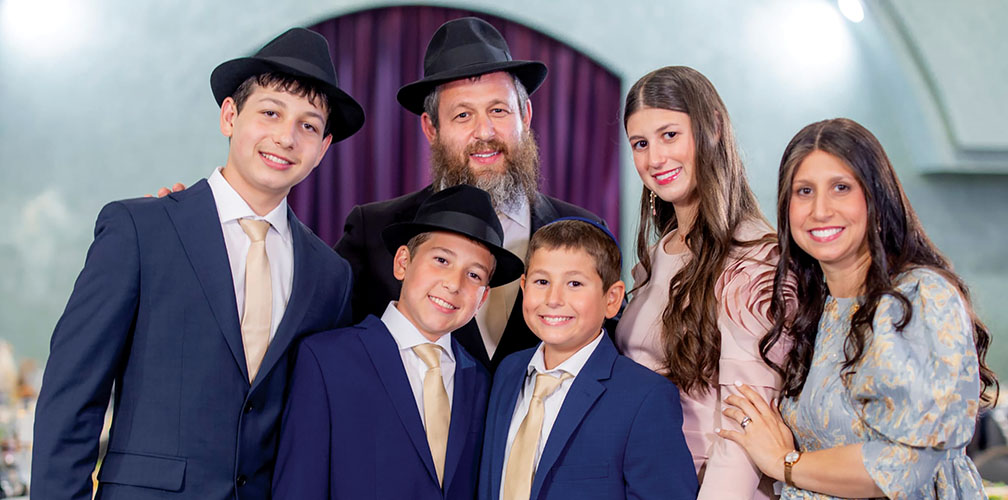
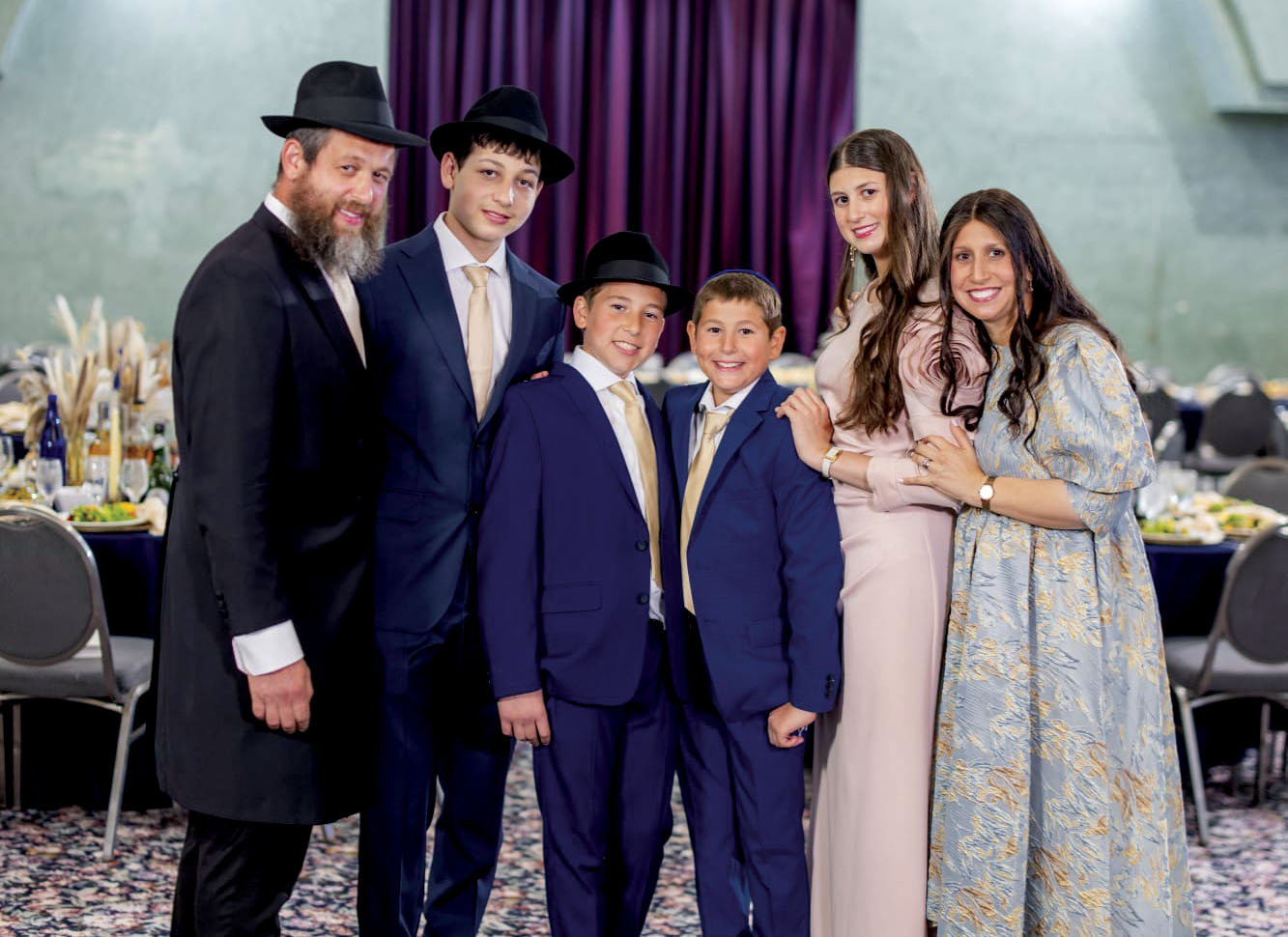
As he prepared this month for his 10th life-altering trip to Israeli war zones and victim families since Oct.7, 2023, Chabad of the Valley’s Rabbi Yanky Kahn reflected on the changes he’s seen.
“What’s beautiful,” he said, “is how the world is getting involved. The whole world really feels the pain. Like I can say my wife and kids have adopted so many new people to our family.” He means this literally. “You know, you call your mother every day. And you also call her before Shabbos.
“So many people my wife [Hindy] and daughter [Chana] text before Shabbos, checking up on them. When we say we are going to Israel, I think the people from Israel were more excited that we were coming – like the widows, the orphans. They reached out and said ‘What can we do to help?’
“It’s a very special connection.”
Rabbi Kahn has also noticed a change in the attitudes in the state of Israel — a ”national change,” he called it. “People are asking for tefillin,” he said. “They are getting closer to Godliness. Really. You see the hostages themselves saying that they found God in the tunnel. They spoke to God. First they spoke to this crack, then they spoke to a light. People are coming closer to God.”
Why does he think this is happening?
“The only thing we have in life is Hashem,” he said. “The only things that are really important are your wife, your kids, your family, your community for God – that is all that is important in life. Nothing else is.”
It’s fine to have a nice car and a nice house, he granted. “Beautiful. Everyone should have them. But you are not taking those things to the next world. The only thing important, the only thing you are taking is the kindness you do, the caring you do.”
In the 78 years since statehood, Israelis have not been known for their religiosity. But if you go to Israel now, you can really see a change. “You notice they have been pretty anti-religious. Funny, you see Israelis here … I was just walking out of a hospital this morning, and I met an Israeli. I said ‘Do you want to put on tefillin?’ He said ‘I am going to do it the second I get home. I promise you.’ In Israel, they weren’t so in love [with Judaism]. But now I think their attitude has changed. People now are much more open.”
Rabbi Kahn did not exactly say the words “the war has had a positive effect.” But in a sense, yes it has, he said. “In a way, the war has brought us closer to Yiddishkeit, closer to Godliness.
“Unfortunately, though, when things are going good for people, they don’t count their blessings.
“They don’t stop and say ‘Thank you, Hashem.’
“When things are challenging, you turn to Hashem. So yes, you can say a lot of people have come closer to God since Oct.7. We have put up a lot of mezuzahs and given out a lot of tefillin.”
But Rabbi Kahn emphasized this point. “Before the war,” he said, “this was not something we would do when taking another kind of trip, say a JLI [Chabad – Jewish Learning Institute] trip to Israel. We wouldn’t be giving out mezuzahs. Before, it wasn’t common. Now it is.”
He described a surprising scene on a recent flight from Israel. “I went up and down the plane with a pair of tefillin,” said the rabbi. “And I can tell you 60% of the plane put on tefillin! There was such a feeling of love and brotherhood. If the tefillin was not taken by someone, if a person said no, it was just left quietly.
“There was such a feeling of everyone saying ‘thank you.’ A beautiful feeling of one family, which we all really are.”
The rabbi kept bringing the conversation around to a central thesis: “No one wants to say that war is positive … but …” Doing that, he thinks, is akin to describing a close relative as strikingly unattractive – in the relative’s presence.
“I don’t wish this on anyone,” said the rabbi, “but it happens sometimes when you are going through a difficult period that you awaken different strengths, different opportunities. I just hope and pray we don’t go through any challenging times, and we shouldn’t be tested. I really hope that when things are good, people go to the synagogue and put on tefillin.”
To make certain his point about daily tefillin was understood, the rabbi said “Even if you are traveling to Hawaii or Fiji, make sure you take tefillin and put them on. Don’t just leave them at home and wait for times that are challenging. Appreciate all the good that you have now.”
But still, his heart “bleeds for the widows and orphans.”
The impact of the war, he thinks, is far from over. “I was just in a taxi, speaking to the driver, which I love doing. Drivers give you an update like no one else. I was trying to figure out if life was coming back to normal. The driver said his son was killed on Oct.7. It feels as if every family has a member or best friend or neighbor who was affected. As Jewish people, when someone else is in pain, it impacts all of us.”
To a non-resident, Israel looks normal.
For Rabbi Kahn, a normal appearance is not a positive. “Personally, I still feel the broken hearts from Oct. 7,” he said. “I am far from over. My message to everyone reading this is, appreciate all the good we have. Sometimes it takes a tragedy for us to appreciate. Moshiach will come when God sees how much brotherly love there is.”
Fast Takes with Rabbi Kahn
Jewish Journal: What is the most memorable moment of the last two and a half years?
Rabbi Kahn: I was in total shock when I was asked to somehow produce a food truck [that would cost $30,000]. It was like going to someone and asking for a hundred million dollars. I was shocked by the chutzpah of the question. The fact we made it happen is very special.
J.J.: Where do you go for information?
R.K.: Israel National News, collive.com and chabadofthevalley.com/Israelrelief.
J.J.: What is your favorite music?
R.K.: Shlomo Carlebach.