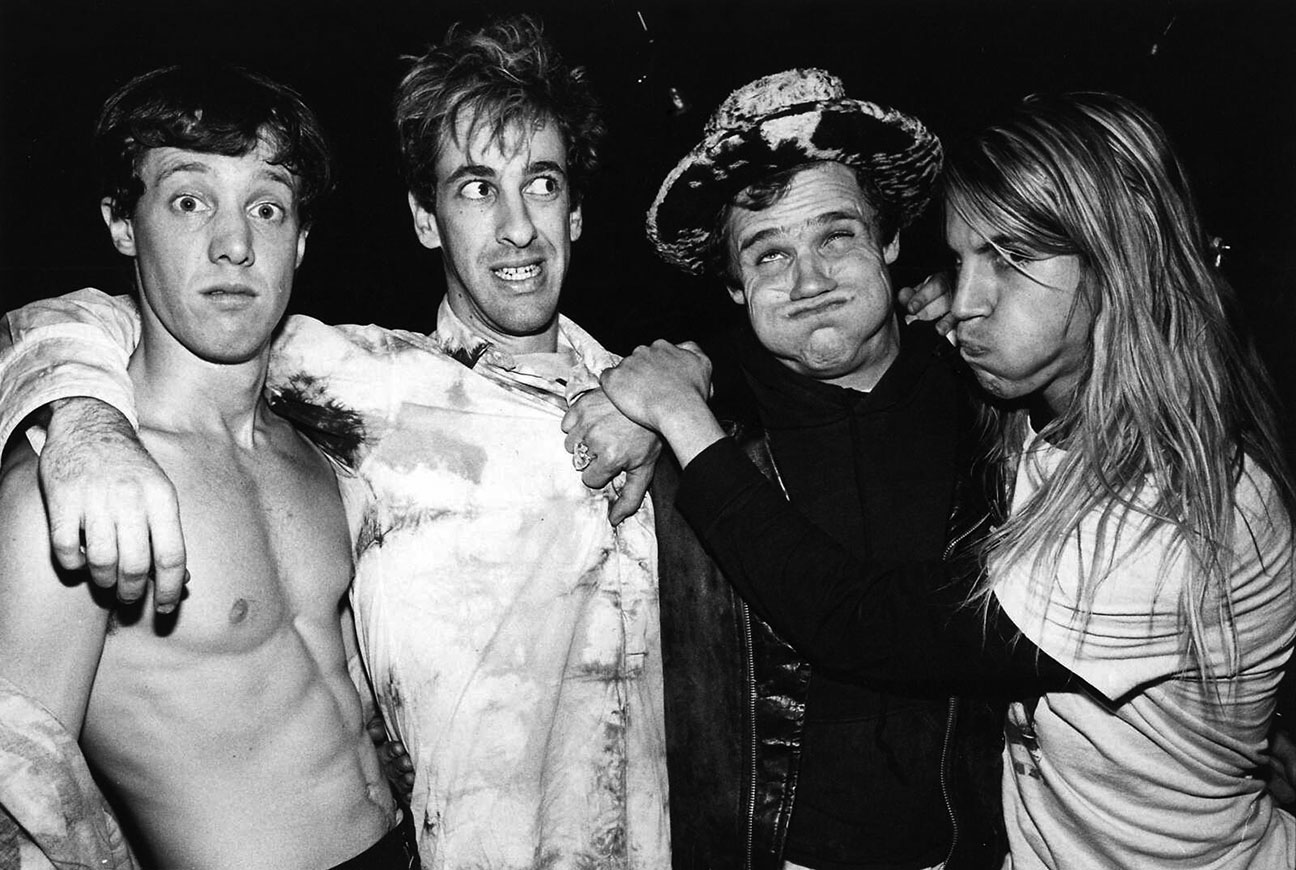
In a chilling moment during the new Netflix documentary “The Red Hot Chili Peppers: Our Brother, Hillel” we hear guitarist Hillel Slovak say: “F— drugs. Music is my destiny.” The Haifa-born Slovak died of a heroin overdose at the age of 26 in 1988.
Tons of high school boys in LA dream of being rock stars but the dream never comes true. “The Red Hot Chili Peppers: Our Brother, Hillel” shows that the genesis of the band was a stroke of luck. While all attended Fairfax High School, Anthony Kiedis and Michael Balzary, known as Flea, hitched a ride with Slovak, who drove a green Datsun in North Hollywood.
They first performed comedy skits inspired by the Three Stooges and called themselves The Faces. They’d hang out all the time and smoke weed. “We were teenage boys wreaking havoc,” Kiedis says of himself and Flea.
The two came from broken homes and would often hang out at Slovak’s home because he had a better stereo system and his Israeli mother was kind. They describe Slovak as the poetic and artistic one, painting, drawing and dressing cool with long hair. “He was cool man, and not in the I’m the popular kid at school,” Flea says. “Like, he was just more thought out.” Flea and Kiedis would jump 30 feet from a bridge into a river and tried to convince Slovak to take the leap. “He held up his finger and he said, ‘Jews don’t jump,’” Flea recalls Slovak saying.
Slovak’s mother and grandmother escaped the Nazis and made it to Israel, then moved to LA., but director Ben Feldman doesn’t indicate that any specific trauma impacted Slovak, other than Flea saying he was sometimes depressed.
Slovak invited Flea to play in his band, Anthym. “He believed in me, he saw me,” Flea says, tearing up and saying that Slovak touched his heart, and he learned to play for a show in two weeks. “It changed my life forever,” he says. “Hillel gave me that gift.”
They graduated from high school and in 1981, they were exposed to punk rock, rap and shows where there were mosh pits. The band changed its name to What Is This. “It didn’t sound like a guy playing guitar, it sounded like a guy playing himself,” Kiedis said of Slovak.
Kiedis went to the rehearsals and tried but left UCLA, then couch-surfed. He heard “The Message” by Grandmaster Flash and the Furious Five, appreciated the lyrics and the funk; it made him want to write poetry. They met performance artist Gary Allen, who had been Elton John’s chef.
“I was a gay Black guy growing up in Los Angeles, completely smothered in fashion,” Allen says, He saw a What Is This gig and knew Flea would be famous and Slovak was a funk magnet.
Then the guys would do rap battles in the restaurant at the top of the Continental Hyatt House on Sunset Boulevard. Allen suggested Flea, Slovak and Kiedis open for him at the Grandia Room on Melrose Avenue. Kiedis thought rapping might be fun for one night. The song was “Out in LA.” They were invited back.
Kiedis recounts that “it was like time stood still.” He took $250, all the money he had, so they could record a demo. Allen gave the group its name based on the response from the audience. While they had dabbled in cocaine, Slovak and Kiedis would both struggle with heroin use. Slovak was unable to perform at one show.
Slovak was in both What is This and the Red Hot Chili Peppers, who were both offered record deals the same week. Slovak chose What Is This, but later rejoined the Red Hot Chili Peppers and their album was produced by George Clinton.
“My heart feels like an anvil soaked in lead” we hear Slovak’s voice say after Kiedis was fired from the band due to drugs. He went to rehab and came back strong for the song “Fight Like A Brave.” But it was Slovak whose heroin use became worse, and we hear him say: “Fleeting feelings of self-dread and that I’ve allowed myself to sink into a very scary and trick place. It sneaks up on you.” Flea says his “anger was selfish” and he didn’t know how to help his bandmates.
While the documentary succeeds in showing the band’s power and chemistry, and is full of energy, one is left wondering, what would have happened if Slovak lived. Replaced by John Frusciante, the band soared to elite status with the 1991 album “Blood Sugar Sex Magik” featuring hits like the funky and energetic “Give It Away” and the sweet, melodic and lyrically impressive “Breaking The Girl.”
Flea is the most emotional, crying at times in the film. He visits Slovak’s grave every day, while Kiedis says Slovak’s death festered in him. It may be surprising to some that all three present as thoughtful and sensitive people, as we sometimes think rock stars are larger than life.
It is easy to be judgmental and wonder why Slovak’s family and or his band mates didn’t do an intervention. It’s also easy to wonder why a young attractive man living a dream life with millions of dollars ahead of him would throw it away on drugs. But quick fame can impact people in different ways. While the film could have gone deeper, it is a fitting testament to the groundbreaking guitar style and impact of Slovak in founding one the best groups of all time. Rockers are not known to have small egos and Kiedis and Flea could have easily refused to take part in the documentary or downplayed Slovak’s role. They did the opposite. We are also left wondering if his parents’ divorce could have affected Slovak, though divorce is common and many children whose parents break up don’t turn to heroin.
The documentary in no way explores Slovak’s Jewish or Israeli identity and depicts him as a generally reserved person who didn’t reveal much.
The movie is both a cautionary tale about how drugs can drain a wonderful life away, and an inspirational one of following one’s dreams, as a group that came together by happenstance and considered their first performance something as a joke became loved by millions. There is a line where Kiedis says they didn’t understand the consequences of drugs and we wonder why they did not.
Whether you’re a fan of the historic group or not, it’s worth seeing “Our Brother, Hillel” to appreciate the magic of how supreme gifts and wishes can be quickly granted, but also abruptly taken away.