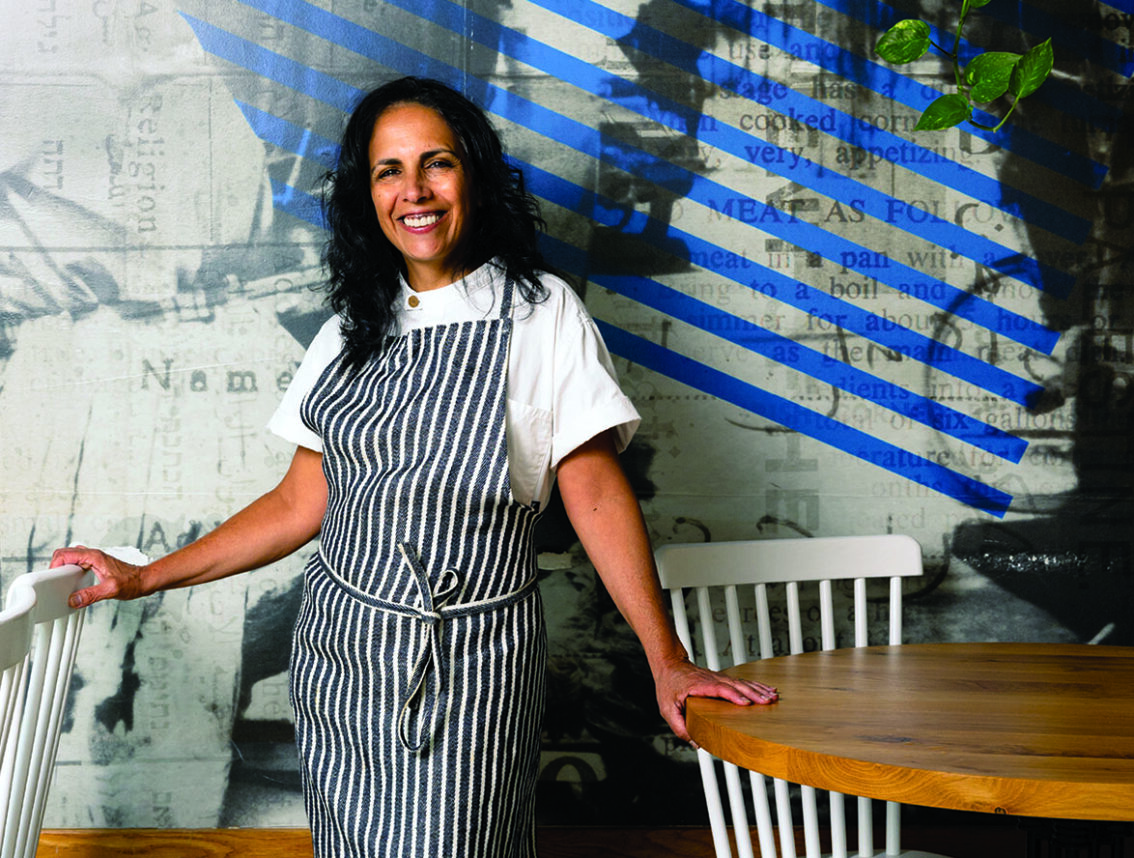
What carbs do you miss the most during Passover? Do you go for the sweet stuff, like cookies and cakes, or heartier items like breads and pasta? “On the last day of Passover, I am already dreaming about the hametz (leavened foods) I am going to enjoy marking the end of the holiday,” Debbie Kornberg, founder of Spice + Leaf and SpiceItUpwithDeb.com, told The Journal.
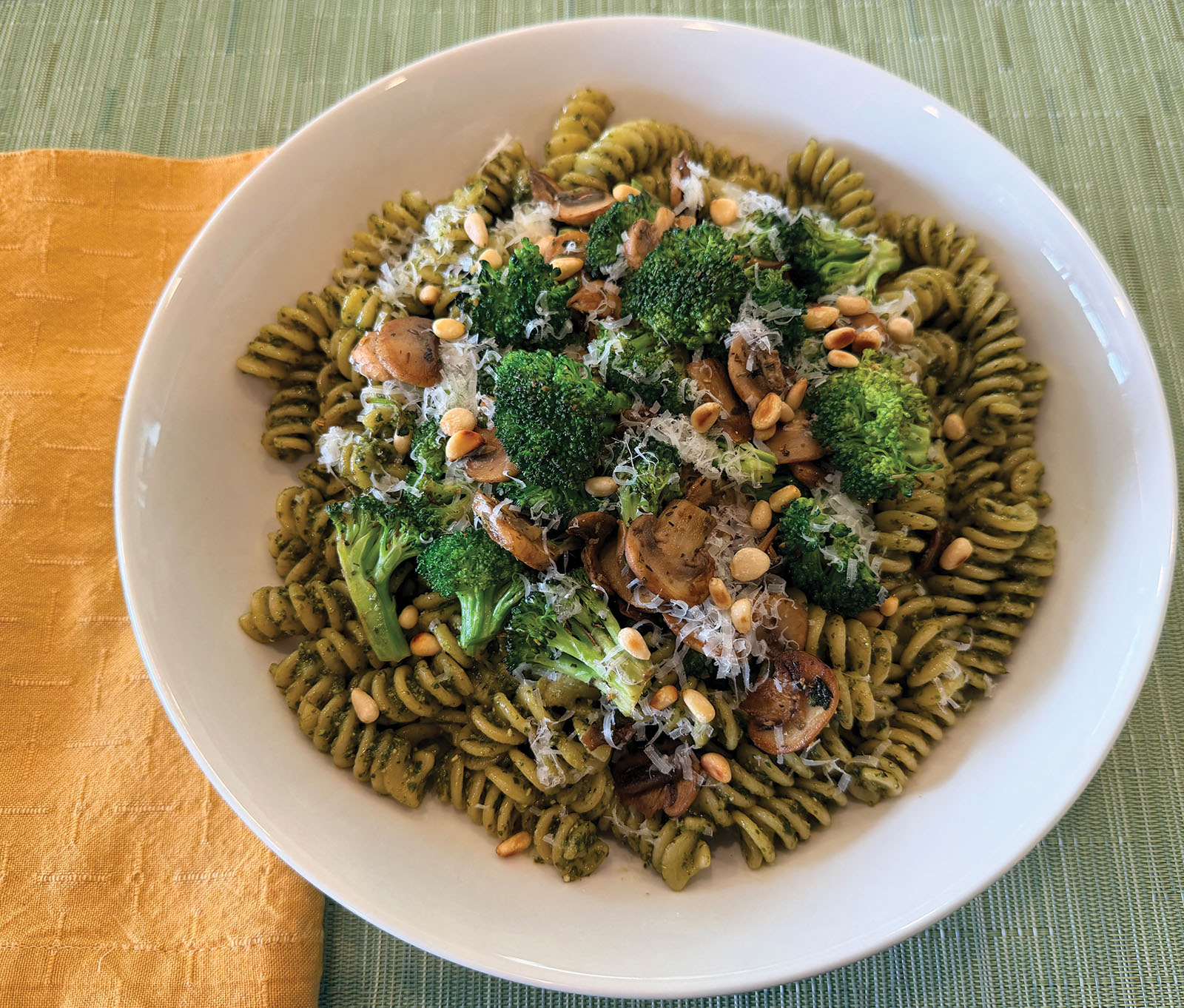
One of Kornberg’s go-to dishes is pasta. “Nothing is more satisfying than a bowl of fusilli pesto with extra Parmesan,” she said. “The heartiness of the pasta, paired with the fresh, herby brightness of the pesto and the salty richness of the cheese, is the perfect way to welcome it back.”
Her recipe for Pesto alla Genovese also includes sautéed mushrooms and broccoli.
“For added texture and flavor and maybe to feel a little less guilty about all of the carbs,” Kornberg said.
Pesto alla Genovese with Italian Herb Seasoned Broccoli and Mushrooms
For Pasta:
1 box of your favorite pasta (Fusilli is my favorite)
5 tbsp. of pasta water (save it when removing water from cooked pasta)
1 Tbsp. kosher salt
3 Tbsp. olive oil
For Pesto alla Genovese:
3 garlic cloves
1 1/3 cup fresh basil, packed well
¼ cup fresh Italian leaf parsley
¼ + extra Parmesan cheese
¼ cup + 1 Tbsp. pine nuts, toasted
½ cup olive oil
½ tsp Kosher salt
For Broccoli and Mushrooms:
2 Tbsp. olive oil
1 head of broccoli, broken up into small florets (about 5 oz with no stems -2 cups)
1 8-oz box (2 cups) sliced mushrooms
½ tsp. Italian herb seasoning blend
2 Tbsp. pinot grigio
For Pasta:
Using a large pot, add water to ¾ of the way full, add salt and olive oil. Bring water to a boil. Add box of pasta and cook according to instructions. I recommend cooking the pasta al dente so it still has a little chew to it. REMEMBER: When you are draining cooked pasta, save about 5 – 6 tablespoons of pasta water that you will add later on in the recipe. Set liquid aside in a bowl and set pasta aside in another large bowl.
For Pesto alla Genovese:
Using a large pan over medium-high heat, add the pine nuts and toast them in the dry pan without oil, watching closely as they can burn quickly. This should take about 2 minutes. Once golden brown, remove from the pan and place on a paper towel or in a small bowl. Set aside.
Using a food processor, first mince garlic, then add basil, parsley, parmesan, ¼ cup pine nuts (save the remaining 1 tablespoon of pine nuts as garnish), ¼ cup olive oil and kosher salt. Blend ingredients. While blending, add the remaining ¼ cup olive oil.
If it seems a little dry, add 1 more tablespoon of olive oil. If it seems too wet, add more basil. Blend again until it is the consistency you like. Taste it, does it need more salt? Add a pinch more, but be careful not to make it too salty. When done, set pesto aside.
For Broccoli and Mushrooms:
Using a sauté pan, heat up and add olive oil. Then add mushrooms on medium-high heat and cook for about 5 minutes. Then add broccoli to the pan. It may need a little extra olive oil, 1 teaspoon or so. Cook for about 8 minutes until veggies are cooked down.
Add ½ teaspoon of Italian herb seasoning mix to the veggies; mix gently. Then add Pinot Grigio wine. Continue to cook for an additional 2 minutes. Stir frequently. After 2 minutes, turn the stove off and set broccoli and mushrooms aside.
Putting It All Together:
Place the pasta in a large bowl, add pesto and 5 tablespoons of pasta water. Incorporate pesto into pasta until everything is fully integrated. Place cooked broccoli and mushrooms on top of pesto pasta. Garnish with remaining Parmesan and pine nuts. Ready to serve.
The one thing Jeremy Lande counted on as a kid during Passover was the first slice of pizza after the holiday. “After a week of being off bread, that first bite just hit differently,” Lande, the CEO of Fontana Forni USA pizza ovens, told The Journal. “Now it’s turned into a tradition in my own house; the second Passover ends, we’re making pizza, and then we follow it up that weekend with bagels, which feels like the perfect one-two punch.”
Landes’ favorite topping is his wife’s balsamic onions layered, which he said are easy to make and come out great every time. “Slice up a red onion, throw it on a hot cast iron pan, and let it sit without touching it for about 15 minutes so; it really caramelizes,” he said. “Once it’s softened and has some good color, pull it off and drop it into a bowl with a splash of balsamic vinegar. Cover it and let it sit for a bit so it soaks everything in.”
Fabulous pizza starts with incredible dough. For baking, follow instructions on your favorite pizza recipe or get suggestions at FontanaForniUSA.com.
A Simple Pizza Dough Recipe
1 kg All Purpose flour or Caputo “00” flour (100%) (8 cups) (I like it with the adjustment of 50% AP flour and 50% 00 flour, but it turns out solid either way.)
630 grams room-temperature water (~ 2 2/3 cups)
7 grams Instant Dry Yeast (1 tsp)
18 grams salt (about 1 Tbsp)
Place the flour into a large bowl.
Disperse and mix salt into the flour.
With your hands, form a well in the flour. In the center of the well pour the room temperature water and the yeast allowing it to rehydrate.
Using a Danish dough whisk, or a plastic dough scraper, begin to mix all ingredients until the flour is well incorporated.
Place the dough onto a clean work surface and with the heels of your hands knead and work the dough. At first it will not have a smooth appearance. Don’t worry! Just transfer the dough into the bowl, cover it up with a damp cloth and allow it to rest for about 10 minutes at room temperature. During this time the dough will be able to rest and relax.
After 10-15 minutes place the dough back on your work surface. The consistency of the dough will exponentially have become smoother.
Once again transfer the dough back into the bowl, making sure to cover it with the damp cloth so as to keep it from drying out. Allow it to rest and relax for an additional 10-15 minutes.
Work the dough one more time and transfer it into the bowl that has been very lightly oiled. Doing this will allow the dough to easily come out of the bowl when it is time to shape the dough balls.
Allow the dough to rest, covered by a damp cloth, in a draft-free area until doubled in size. Depending on the temperature of the room, this should take no longer than 1 to 1½ hours.
Once doubled in size, place the dough onto a clean work surface. With a bench scraper divide it into 8 portions each weighing about 200 grams.
Shape each portion of dough into a uniform pizza dough ball as shown in the video and place into the dough tray. Cover the dough trays with either a damp cloth, plastic wrap or best yet with the lid.
Allow the dough balls to rise for about an hour or until doubled in size if making pizza the same day.