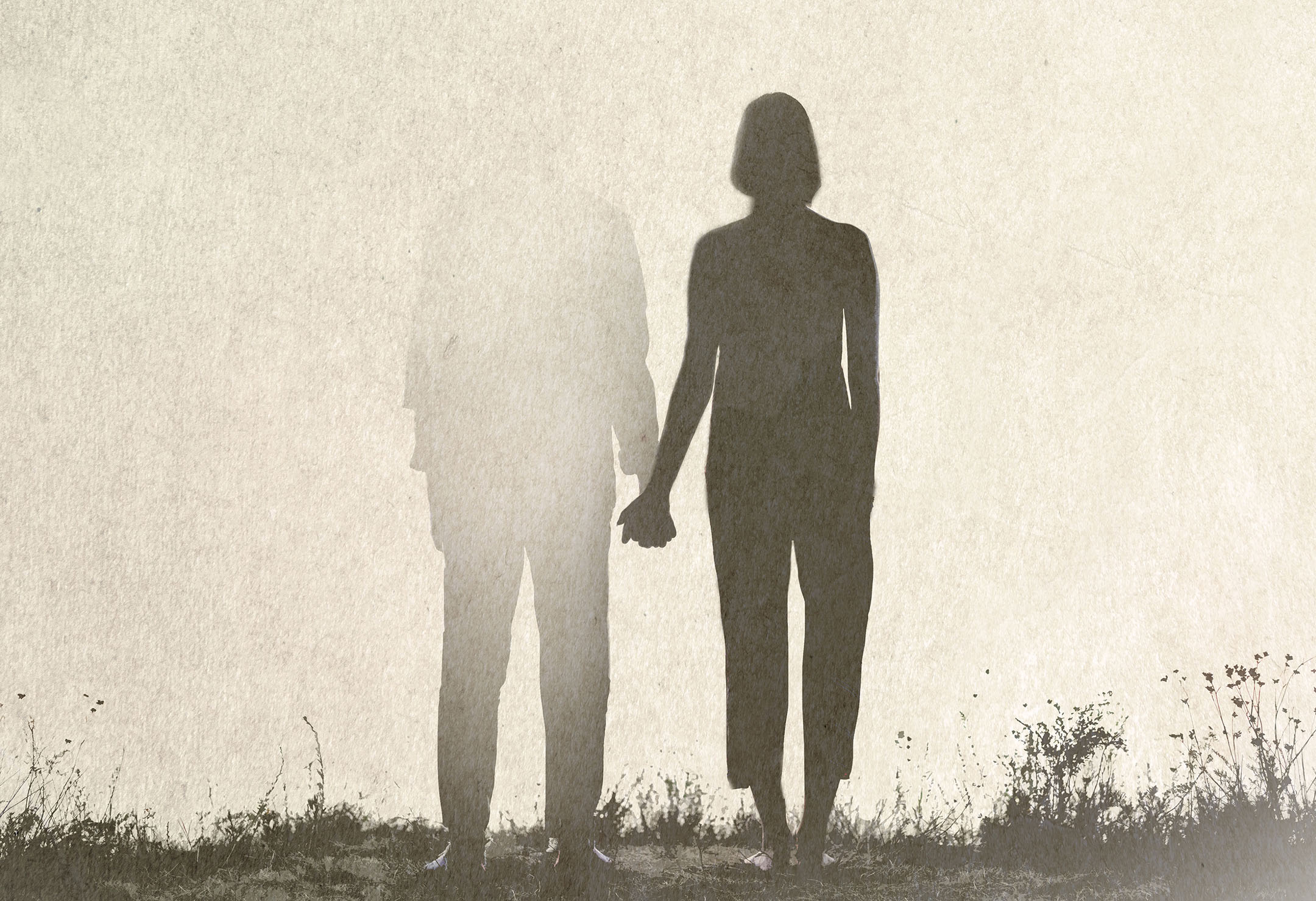
Some of us find ourselves parting from dear people around us. We watch how slowly they are fading away, and we know that soon they will not be here. They take part of us with them because we love them. Krishna Murthi, the Indian mystic, was once asked to visit a dying friend. “I am afraid to die,” said his friend. “So let’s die together,” he answered, taking his hand. And so, they rose up together, as Krishna Murthi escorted him to a place where there was no fear of dying. And Krishna Murthi went to his home in Ojai. And the man went to his new home in heaven.
There is a mystic in all of us who can help us be with our departing loved ones. And later, how to be with our own unavoidable departure. Death does not mean being isolated in hospitals and nursing homes; it was meant to be an integral part of life. People today are looking for alternative ways to conclude their lives: being more in nature, reflecting, taking time to write, cry and laugh, see the sun slowly falling into the horizon and splashing the blue with warm soft colors.
When my mother was in hospice in Tel Aviv and I came to visit her, she lifted her arms up and dropped them on the blanket; she was impatient, tired of the pain. I rolled her bed outside to the garden. I knew it would help. Later that day, I told her “Ema’le, we are going to have lunch, and will be back soon”. When I returned, my mother was gone. I sat with her alone and felt how she slowly rising up for a long time. When I left the hospice, it was dark, but the sky was pink and peach and orange because of all the bonfires lit for Lag B’ Omer. My mother died on Simon Bar Yochai’s holiday. How awesome and sacred that experience was.
Fear distorts reality. Death is one of the most precious and refined impressions of life. Nobody speaks about it; it is meant to be a secret.
In Hebrew there are seven expressions for dying. We say, “He exhaled his soul” or “He went to his world” or “He rid himself of” (this world). Some fly to heaven in chariots of fire like Elijha, some are ‘gathered to their people” like Aron, some are marched in a parade where pieces of fire fall from the sky and heavenly voices declare the arrival of a rare soul, like Shimon Bar Yochai. So many ways to pass over.
Millions of people in hospitals all over the world have experienced what is called ‘clinical death’. They recall similar experiences: moving towards the light, seeing long-dead relatives and being evaluated now that they are in-between worlds. To leave or return? They were flatlined in the hospital bed while at the time, in a state of radical amazement on a higher dimension. Their lives after that were never the same. Many children share glimpses from the world to come as well. I heard a story where a little girl said to her mother: “Mommy, can you hear the music? They are coming to take me”.
Many of us are surrounded by sick people, and we pray for them. But with Nina it’s different; she is my soul sister and her cancer has returned for the fourth time, so she was sent home. We knew the body will stop working soon. But we also know the soul decides when it’s time to separate from the body. And start a new life, as a being of light.
In Hebrew the word life/hayim is always plural; there are many lives, even in one lifetime. We are guided to consider our mortality three times a day. To understand who we are and our place in the world. We are given what it takes to bare the unbearable, to approach the unknowable, to know how to “Let go and know that I Am your God”, to remember the bigger mysterious picture. That we ourselves are a mystery as well, visiting together and alone.
And that life has no end.
Gilla Nissan is a teacher and author.