February may be Jewish Disability Awareness and Inclusion Month (JDAIM), but inclusive celebrations — and inclusivity — are not just for February … and special occasions. It’s a mindset. One you can carry with you year-round.
“To be inclusive is really natural; to be noninclusive is a learned attitude,” Elaine Hall, founder of The Miracle Project and contributor to “A Different Spirit,” told The Journal. “It takes 60 seconds to be open, willing and curious rather than judgmental, separate and nonwelcoming.”
It’s as simple as looking at someone with kindness when you first meet, and seeing what you can create together, which could be as simple as an encounter or a meal, as extensive as a celebration or an experience.
The Miracle Project is a fully inclusive theatre, film and social program for neurodivergent, autistic, disabled and nondisabled individuals, where they write, create and develop original musicals, music videos and films, but mainly create community. She is also co-founder of 1in4Coalition, a Hollywood disability advocacy group.
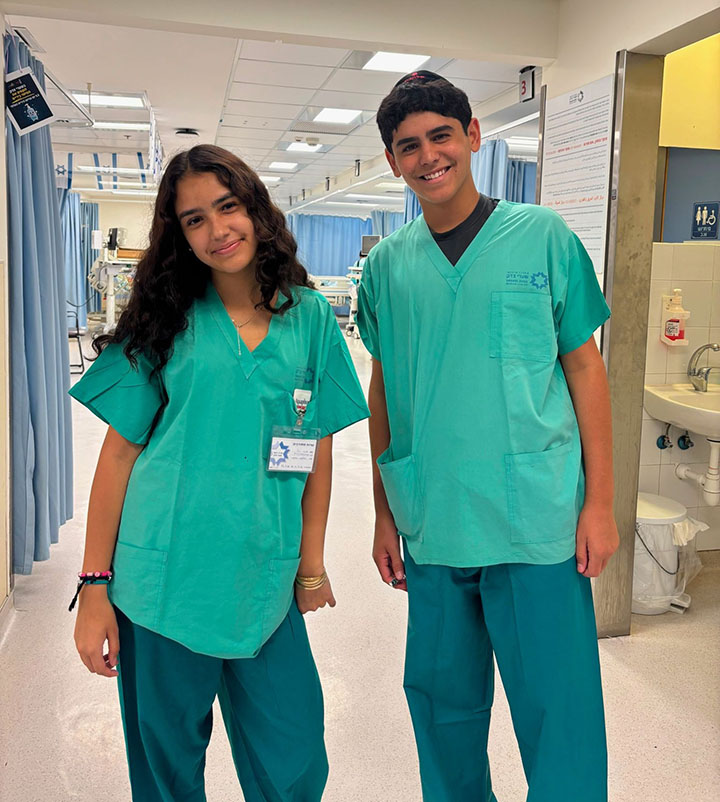
“A Different Spirit: Creating Meaningful B’nai Mitzvah for Children with Disabilities” addresses a similar, but different type of community experience; one that makes everyone – the guest of honor, as well as family and friends of all abilities – feel like they belong.
The book was created by Howard Blas (the director of the National Ramah Tikvah Network) and Ilana Trachtman (director of the acclaimed documentary “Praying with Lior”) after they recognized a need for guidance around celebrating b’nei mitzvah for youth who experience the world differently. The book brings together educators, parents and advocates — including Hall — to share models of ceremonies that are creative, accessible and personal.
“I had created one of the first b’nai mitzvah programs for autistic youth a number of years ago, called Nes Gadol, through Vista Del Mar,” she said. “My son, Neal, was the first bar mitzvah, so they asked me to share my ideas.”
Hall goes into Neal’s bar mitzvah story in more depth in her book “Now I See the Moon: A Mother, a Son and the Miracle of Autism.”
“I’m really honored to be included with these other wonderful contributors,” she said.
Celebrations are often built around food, but Hall believes they should also be built around awareness.
When planning a b’nei mitzvah or any large gathering, she encourages families to think beyond tradition.
“Each child is different; each person is different,” she said. “Tune into what that child wants and what makes them happy.”
She added, “If the child loves french fries … even though that may not be typical at a celebration, make sure there’s french fries on that table.”
In addition to the guest of honor, it’s important to make certain everyone feels like they belong. That means having lots of choices: gluten-free, sugar-free and heart-healthy options; going nut-free in case someone has a peanut allergy.
“I would check in with the guest list,” Hall said. “On the invitation, I would ask, ‘Are there any food sensitivities that we need to be aware of?’ I would also ask, ‘Is there anything that you would need so that you can participate most fully in this event?’”
Not just for b’nai mitzvah. Not just for parties. In any and every food or non-food situation, you want people to feel comfortable, like they belong.
Hall explains that in the neurodiverse world, some people are sensitive to textures, while some prefer foods separated rather than mixed together.
“I’m neurodivergent myself, so I have my particulars in how I eat my food,” she said. “I like having pretty much the same thing every day for breakfast and lunch; it just makes my life simple.” She also loves indulging in fresh fruit. Her papaya boat recipe is below.
These routines are rhythms that support well-being.
An internationally recognized leader in inclusion and belonging — and one of Hollywood’s first access coordinators for film and TV — Hall is constantly juggling big projects. She believes in finding harmony, since balance is often unrealistic with her workload.
“I could find special moments where my husband and I could go for a walk and watch the sunset, I could connect to my son – he loves going [for a] midnight mocha – and we can have that morning together,” she said. “That’s definitely not balance – it’s not equal to how much work I’m doing – but it is harmonious; sometimes it can just take a few minutes to tune into your spouse or your friends, check in and harmonize with them, be with them and still have to do a whole lot of other things.”
Because she has been so busy, Hall started talking to a nutritionist about food. She “invited” Hall to take five breaths before she starts to eat.
“Then [she said to] look at all the colors that are in my bowl and see the textures … give gratitude before [I] even start to eat and then cherish each bite,” Hall said. “And I tell you, it just makes every meal a gourmet meal.”
Learn more about Elaine Hall at TheMiracleProject.org, get a copy of “A Different Spirit” and/or contact CoachE@CoachEProductions.com.
For the full conversation, listen to the podcast:
Elaine Hall’s Papaya Boats
Maui-inspired, harmony-approved and perfect for any time of day.
Serves: 1–2

1 ripe papaya
Fresh lemon juice
Fresh berries (blueberries, blackberries, or strawberries)
1 small banana, sliced
2–3 tablespoons granola
2–3 tablespoons yogurt; could use coconut milk or almond milk yogurt
1 tablespoon chopped walnuts
Optional: chia seeds, flax seeds, additional nuts
1. Slice the papaya in half lengthwise.
2. Scoop out and discard the seeds.
3. Squeeze fresh lemon juice into the center of each half.
4. Fill the hollow with fresh berries.
5. Sprinkle granola over the top.
6. Add a generous dollop of yogurt.
7. Layer sliced banana and chopped walnuts.
8. If desired, top with chia or flax seeds or extra nuts.
Debra Eckerling is a writer for the Jewish Journal and the host of “Taste Buds with Deb.” Subscribe on YouTube or your favorite podcast platform. Email Debra: tastebuds@jewishjournal.com.