
One verse, five voices. Edited by Nina Litvak and Salvador Litvak, the Accidental Talmudist
And let them make Me a sanctuary that I may dwell among them. Exactly as I show you — the pattern of the Tabernacle and the pattern of all its furnishings — so shall you make it.
– Ex. 25:8-9
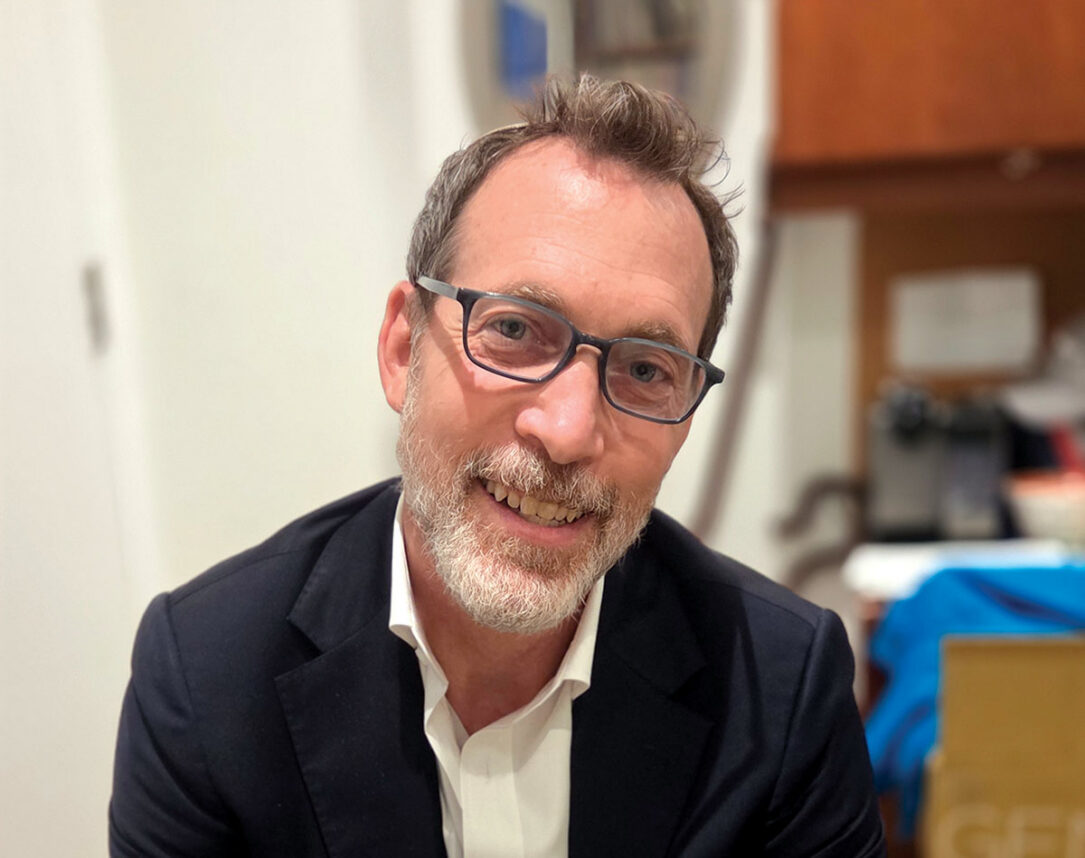
Rabbi Sofia Zway
Base LA
Parsha Terumah opens with the instruction to build a home, a dwelling place, for God. God uses two different words, Mikdash and Mishkan, to refer to this dwelling place. One has to wonder: why does God use two different terms for this dwelling place? For the commentator Chaim Ibn Attar, the desert Mishkan, in its portability, serves as a temporary placeholder for the future Beit HaMikdash, God’s fixed dwelling place, in Jerusalem. But both of these terms are ambiguous and variable in relation to permanence and impermanence. Despite its concrete fixedness, the Mikdash is, in fact, impermanent. It is bounded, not only by its walls, but by time and space. We have borne witness to its destruction. A Mishkan, on the other hand, in its fluidity and transience, actually expresses some kind of permanence, for it has the ability to exist across time and space. The rabbis understood this on a deep spiritual level. They teach us that when the temple was destroyed, God journeyed with the Jewish people into exile. It was there that our ancestors built much of the Judaism that we have inherited: a Judaism oriented towards Jerusalem, but anchored in the wilderness of exile. The ambiguities in these words serve as a reminder from God that though the structures we build are ephemeral, God is eternal. No matter where we are in the world, no matter how grounded or how lost we might feel, God is always with us.
Yoni Troy
Executive Director, Hillel Montreal
This phrase encapsulates much of the meaning and practice behind our Jewish faith. While the verse can be understood literally as G-d’s commandment to us to build a Sanctuary, there is a deeper meaning relating to every moment of our lives.
Each one of us was created for a reason: to create a Sanctuary for G-d to dwell in. Not a physical sanctuary but a spiritual one. This world was created with the potential for good and evil, holiness and unholiness. Our goal in this world is to insert that. Every action that we do has the potential to create a Sanctuary for G-d here in this world. The more our actions are driven by purity of thought and mind, not ego, the more we grow G-d’s sanctuary.
Every moment of our lives we have the potential to harness the spiritual power that G-d has put in this world and make that into real, palpable, kinetic energy. This energy does not only affect our surroundings but our internal selves. Living to reveal the spiritual dimensions in this world and implementing G-d’s light is uplifting. It sends us above the trials and tribulations that we experience in this material world and allows us to live on a different wavelength. A spiritual one.
Witnessing the mental health epidemic spreading through the Western world one can’t help but notice the correlation to the departure from connection to the spiritual world and an increasing obsession with the physical. By letting G-d into our lives and living in a constant quest to do Hashem’s bidding we not only build a Sanctuary dedicated to him but live in it. Rising above the trials and tribulations this world poses.
Michael Berenbaum
American Jewish University
A Place In Which God May Dwell.
I’ve been wrestling lately with the difference between aspiration and achievement. Permit me not to tell you why – yet.
The Torah says “And you shall be onto Me a kingdom of priests and a holy nation.” (Exodus 19:6) Korach complained to Moshe: “All the community are holy and in their midst is the Lord.” (Numbers 16:3)
The arrogance of Korach was the confusion between aspiration and achievement. While the Torah tells the people Israel what it must aspire to become, Korach presumes that the people Israel have already achieved a state of holiness; he is certain – all too certain – that God dwells in their midst.
In this verse, God is demanding of the Jewish people that they make a sanctuary – the Hebrew is more complicated — Mikdash: an abode, a place to dwell; if such a place is not created, God’s presence is not guaranteed. Divine presence is dependent on human action, creating a place worthy of such Presence, perhaps more importantly, becoming a people worthy of that Presence.
I’ve been struggling with this question as I recite the prayer for the State of Israel which reads: “Our Father in Heaven, bless the State of Israel, the dawn of our redemption.” It is difficult for me to envision Israel with all its inner turmoil – the venom I hear between Jews – as the dawn of our redemption. The former Chief Rabbi of the United Kingdom Immanuel Jacobovits z’l suggested a slight emendation, adding the word sheteheh, that Israel may become that dawn. Would that we become so worthy.
Rabbi Ariel and Chana Margulies
Author, GeulaWives.org, FREE Marriage Resources
The Mishkan sanctuary is not just a physical structure, it is the interface for the manifestation of the Divine Presence into our world, lives, hearts and homes.
The foundational discourse of the Lubavitcher Rebbe, based on the Previous Rebbe’s Basi L’Gani (“I have come to my garden”) focuses on the completion of the Mishkan Sanctuary by Moshe, the seventh generation from Avraham being the culmination of the return of the Divine Presence to this world.
The Creator had a desire. That desire sparked this world into existence. To have a home. Home is where you can be yourself, essentially. Hashem wants to be invited into His world completely. You extend that invitation, in every mitzvah that you do.
The verse states, “among them.” The Sages derive that within them refers to each and every Jew. You are the home for Hashem. How? The next verse makes clear that this is not a mystery, the mitzvahs are how we invite Hashem in. By studying the pattern, Torah and implementing the pattern through the full beauty and grandeur of mitzvahs we make ourselves and this world a dwelling for the Divine. Specifically through our pleasure in the mitzvahs, and our beautifying them, we don’t just make a home, we make it a warm Jewish home. From where light is spread to the entire cosmos. When you light Shabbos candles this week, experience the invitation. We are the seventh generation. Our mission is clear, to welcome Moshiach, to bring Hashem home.
Rabbi Amy Bernstein
Senior Rabbi, Kehillat Israel Congregation
The Mishkan was a communal building project that former slaves could be proud of. Its many works of beauty would add dignity to their striving to achieve the radical new idea of being a holy people. The Temples in Jerusalem would do the same.
All of these Israelite structures were destroyed as were so many places since where Jews gathered to connect themselves to each other and to the Divine. Yet, the Jewish people are still here. Against all odds, am Yisrael chai.
We, the members of Kehillat Israel in Pacific Palisades now share the agony our generations of ancestors suffered of a town burned, all of us (from the Palisades) displaced, most of us still in exile over a year later. We know what it is to see our beloved Mishkan stripped bare due to toxic smoke and dangerous particles carried into every permeable surface by the burning up of the material lives of our community.
So many gracious and loving people have welcomed us into their own sacred spaces, so many people have worked to make it so that the space we rented for the evening was appropriate to a holy experience and our own fabulous congregation continue to show up, to be fully present and to remind us that the Mishkan was given for us to come together in building something beautiful that connects us to Source. When we truly strive to be a holy people what we need most is each other.