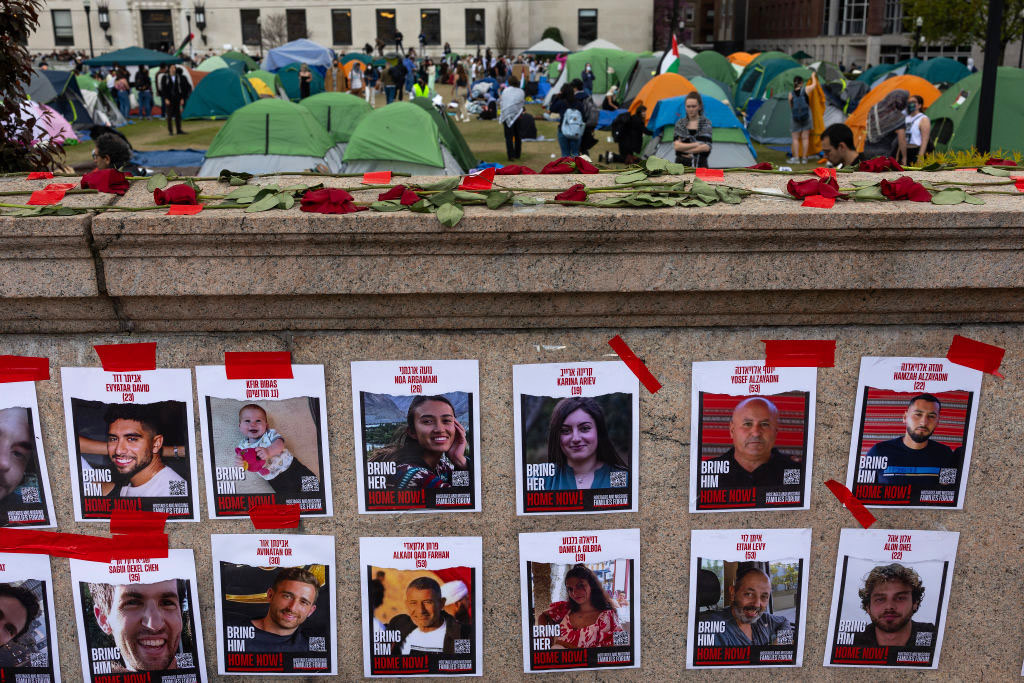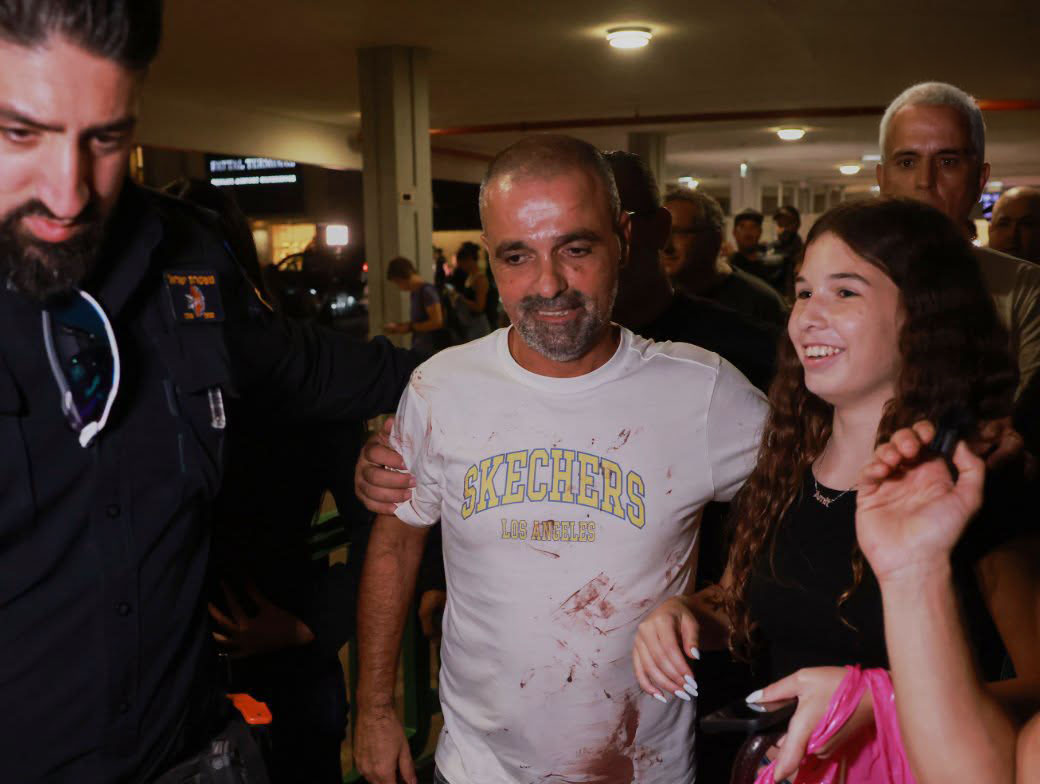
Approaching Pesach in the middle of this war is a challenge. I find myself feeling somewhat unmoored, unstable. Beyond the disruption of routine and the sleepless nights of the current weeks, we are 900 days after Oct 7, 2023, and we are still at war! Young families are confined to safe-rooms, soldiers fighting, many on their fifth or sixth round of reserve duty – and this is the story of many including my own children and grandchildren.
How do we approach Pesach – the holiday of freedom – in this situation?
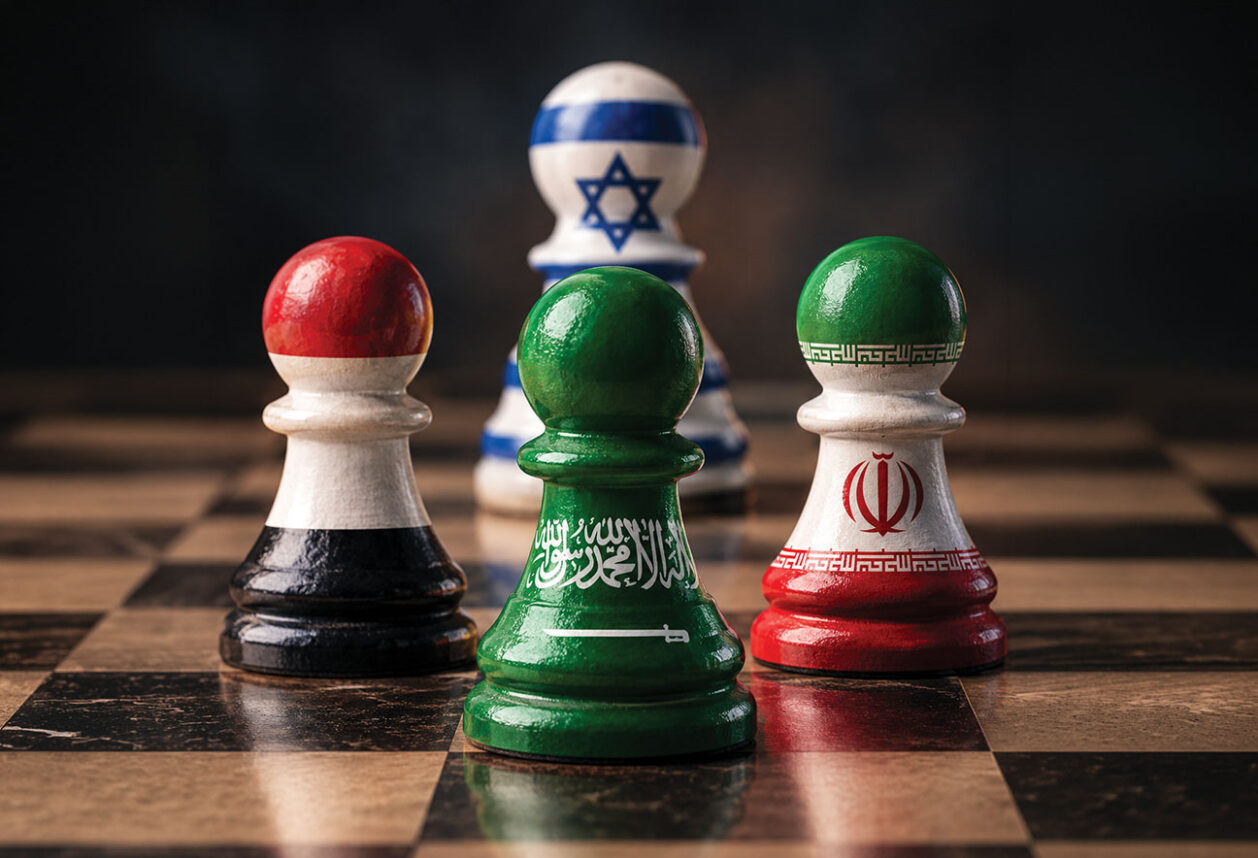
And we are in a weird limbo. Yes – the IDF is doing all it can to dismantle the axis of evil, Iran’s ring of fire. But how do we move forward beyond this point? Like the ancient Israelites, how do we emerge from these protective rooms, out of our bloodied doorways, from darkness into freedom? And how long is this continuing? This feels entangled and intractable.
The other day, contemplating Pesach, I was thinking how much I wanted redemption, not merely freedom. Freedom sounds like a release from a difficult or restrictive situation. But I found myself wanting more. I want it all to go away – return to “normal.”
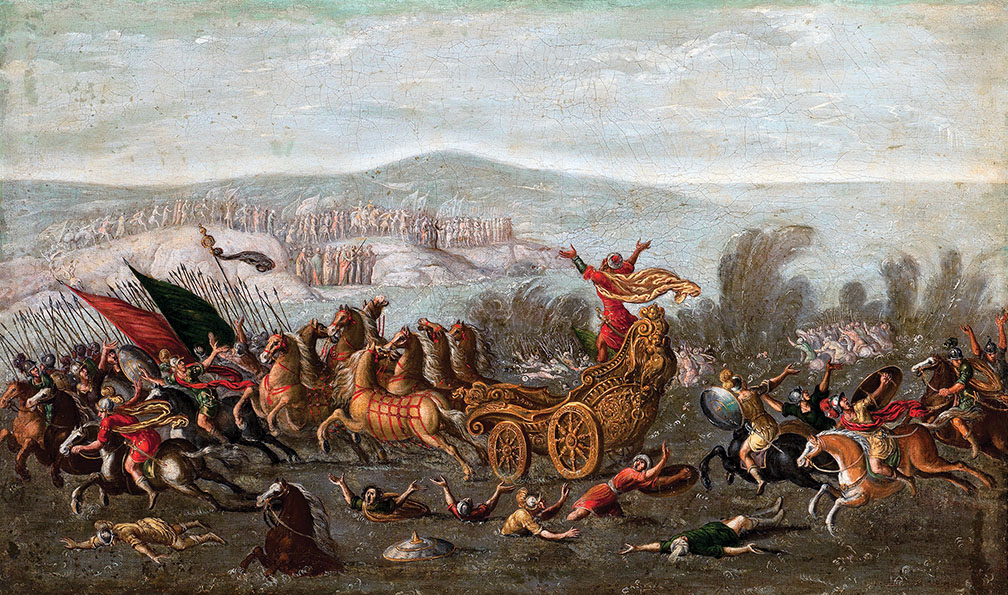
But is redemption a reachable goal? Is this holiday about fragments of freedom or game-changing redemption? After all, the Israelites left Egyptian slavery, but they still had to confront the Egyptians chariots at the Red Sea, and then 40 years in the wilderness! Bu if Passover isn’t about release, isn’t about emerging free of our troubles, then what are we celebrating?
So, let’s look to some Jewish sources for inspiration. One of the highlights of the Pesach liturgy is the singing of Hallel, the traditional Jewish song of praise. But whereas we recite the complete Hallel on the first night and the first day of Pesach, for the remainder of the chag, we say “Half-Hallel,” and the question is why. Why is this night different!?
The most famous reason (Beit Yoseph OC 494:1) is that after the opening night, we truncate Hallel out of sympathy for the Egyptians who were drowned in the sea. Judaism expresses sympathy, even for the death of our enemies. But this argument doesn’t fully work; After all, we sing a full-throated “Hallel” at the Seder – the night of the Plague of the Firstborn?!
A Kabbalistic source suggests something different:
“All the ‘lights’ that entered on the first night of Pesach remain all the night and all the first day. But then, the lights disappear absolutely, and we have to begin to ascend, level after level, by counting the Omer until Shavuot, and thus we only say ‘Half-Hallel’ during the remainder of Pesach” (Chaim Vital in the name of the AriZal).
I don’t know too much about “lights,” and I am far from a Kabbalist, but this is I what think this passage is saying: that the first night of the Exodus was miraculous; it was euphoric, it was a night of revelation and grace. The gates of freedom that had been locked for hundreds of years broke open, and we were suddenly free! It was a “full-Hallel” moment, a rush of adrenalin, a peak moment.
But then the people woke up the next day. And they had to cope with life, with the reality and challenges of freedom. The euphoria quickly faded into reality, and Israel had to begin walking to Sinai. We mark this journey in the ritual of counting the Omer, taking one step at a time, ascending rung by rung; and the wilderness trek was arduous and not always inspired. And so, during the remainder of Passover, our “Half-Hallel” represents the challenge; not the heady high of the honeymoon, but the reality of freedom with all the level-headedness that independence entails.
But on this basis, the latter part of Pesach is something of a let-down, a disillusionment!
But there is another side to this. We have suggested the first night of Pesach as a whoosh, a sugar-high, followed by a sobering up, but maybe there is another angle to this all.
We read two special books – megillot – on Pesach and Shavuot: Shir Hashirim and the Book of Ruth. They are each a love story of sorts, but the loves are very different.
Shir-Hashirim is a sensual romance, a passionate love story. The lovers are young and carefree, flying in the air, like a Chagall painting, whispering love poems in the vineyards and gardens of Ein Gedi. And yet, the couple build no home, they birth no children. They are obsessed with one another, but it is a love suspended in animation.
The book of Ruth is about love as loyalty – Chessed – a different type of love. It is about life-worn people in a mature relationship. Ruth – a poor, widowed foreigner, selflessly dedicated to her mother-in-law. Boaz, a wealthy farmer, but alone. This is a sober relationship, a modest attraction, also forged in the fields of ancient Judea, and sealed in a legal contract; and yet, it ends with a home, the birth of children and a lineage that paves the way to the House of David.
Many have the custom to recite Shir-Hashirim after the Seder. As if we leave Egypt in a whirl of ecstasy, leaving Egypt as a bride follows her husband romantically into the wilderness – the unknown future (Jeremiah 2:1-3). That is the first day of Pesach. It is passionate, wild, and exhilarating.
But by the time we reach Shavuot, we will have endured a series of trials and tribulations. We will be more akin to the book of Ruth. After that first day, we start counting the Omer – day by day, step by step – as we reenact the grit of the wilderness Israel odyssey. It is love of another sort; it is the hard work of building a society, a national culture. And it is a path that leads to Sinai!
So possibly this is the key to Pesach. At first, freedom is a leap, a step forward into the unknown, towards the dream; it is release, it is the ability to do the impossible. We need that energy. It fuels us. It serves as a source of hope – that things can change, that we can change history. For the night of the Seder we suspend the calculations and the politics, and we take a great leap – Pesach – just like God!
And then, we descend and attend to reality, the down-to-earth redemption described so eloquently by Yehuda Amichai: “up close even someone who crossed the Red Sea when it split saw only the sweating back of the man in front of him”
The first night of the holiday is biblically named Pesach, symbolic of God’s leaping, his passing over and our freedom. The rest of the holiday is named Chag Hamatzot, a hard bread that is cooked too quickly, difficult to digest, because it did not have time to rise.
Freedom, it would seem, is erratic; it happens in fits and starts, three steps forward and two steps back. Freedom is a leap into the unknown, driven by a dream. We will figure it out in time.
Yes, I think to myself. It is complicated. But dream we must.
Chag Sameach!
Rabbi Alex Israel, thinker and author, teaches Tanakh in Jerusalem and records a popular daily podcast called “The Tanakh Podcast.” Find it on Spotify or his writings at www.alexisrael.org.