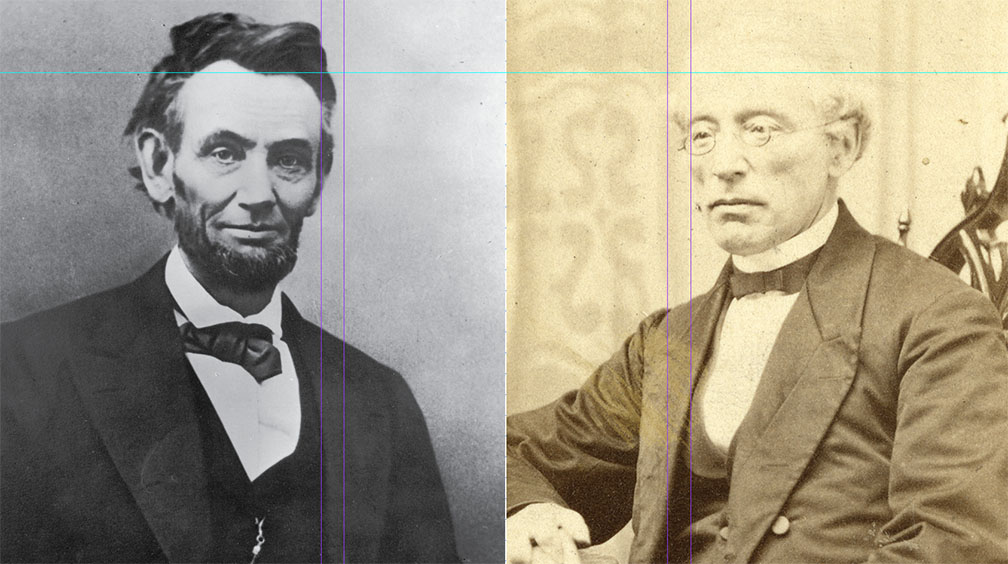
April 10th, 1865 was a particularly happy day for Jewish Americans. The day marked the beginning of Passover, the celebration of the Jewish people’s exodus from Egypt. It also came the day after Confederate General Robert E. Lee surrendered his Army of Northern Virginia to Union General Ulysses S. Grant at Appomattox, Virginia Court House, ending the Civil War. The ancient tale of the liberation of the enslaved had echoed in their own era.
President Lincoln decided to honor the occasion by declaring a national day of celebration on April 14th — a celebration marked by the ceremonial raising of the U.S. flag over Fort Sumter, where the war had begun four years prior.
In honor of the occasion, in Cincinnati’s Broadway Synagogue, Rabbi Max Lilienthal delivered a special sermon to his congregants titled “The Flag and the Union.”
“Welcome, brethren, in the name of God, the invincible warrior — the Lord is his name!” Lilienthal began, paraphrasing Exodus 15’s Song of the Sea, traditionally read from the Torah on the seventh day of the holiday. “Welcome in the name of our good and great country, the harbinger of liberty, the messenger of people’s right and people’s might!”
Offering his words “in the name of our president, who ordered us to celebrate this day of thanksgiving, of national victory and national rejoicing” and Generals “Grant, Sherman, Sheridan and their hosts of heroes, who have won for us this day of glory and victory, this day of national pride and resurrection” the rabbi, surely alluding to the Festival of Freedom taking place, said that “not only we, the free people of America, are celebrating this day of glory and honor, but the nations all over the globe who are struggling for liberty and man’s innate rights will in time to come join with us in celebrating with us the 14th day of April, the day on which the stars and stripes again were raised over the ruins of Fort Sumter.”
Channeling the feelings of his ancestors in Egypt millennia ago after they experienced their miraculous deliverance, he thundered “How many of us dreamt of the possibility that this sacred soil of liberty should be cleansed from the scourge of slavery? How many of us had moral courage enough to think that this great stain could be or should be removed from the brilliant escutcheon [emblem] of the American people?”
Sounding like a joyous singer of the Hallel prayer at the Seder, Lilienthal enthused, “Who that has an American heart and American blood in his veins, that has come from other lands, who hopes for the freedom of the human race, who that would bring light and happiness to the nations would not rejoice, would not join us in thanksgiving? Praise ye the Lord in the firmament of His power! Praise Him for His mighty acts! Let everything that has breath praise the Lord. Hallelujah!”
That evening, Lincoln was shot. He died the next day.
So it was that roughly two weeks later, Lilienthal delivered a eulogy for the slain liberator in the same synagogue. Subsequently published in The Israelite newspaper, the tone was understandably morose. “Alas, this is a gloomy day! From the dawn of American history up to this mournful hour, such an assemblage has never been convened. We have buried our Washington and our Jefferson, our Franklin and our Jackson, but such a meeting has never been witnessed. These patriots were full of years and full of honors; their task had been finished, and, resigned to the stern laws of nature, a grateful people, accompanied them quietly to their resting place. But to day the feelings of the nation are aroused as never before; a new crime has made its way into the land of our Republic, and murder! murder! is the agonizing cry that echoes from the Atlantic to the shores of the Pacific.” Lamenting Lincoln as a fallen biblical figure, he continued, “Indeed, a great man has fallen in Israel.”
Yet Lilienthal understood that like Moses, Lincoln’s impact would achieve immortality. He concluded, in a Deuteronomy-like tone, by asserting “these are the resolutions we are forming in this solemn hour of national grief and national mourning. Thou shalt not have lived, thou shalt not have toiled and labored, to no purpose; we take up thy legacy, and will execute faithfully and thoroughly; we will cleanse this land from treason and rebellion; that the country shall not be deluged again with the life-blood of its children. We will forgive, as his example has taught us, the repentant sinner. Over the fresh grave of our hero, we will take him back to our heart, sharing with him our blessings and our rights. We will, as thou hast admonished us, co-operate in regenerating the Southern half of our Union, and repay the misery she has brought to our homes, with unlimited love and mercy. We will stand firm to our Government and our flag, till the work thou hast so gloriously begun shall be brought to a still more glorious end. Smile on! They can not bury the principles thou hast bequeathed us; thy name shall be as immortal as the truth of thy teaching. Abraham Lincoln, friend of the people, the poor and the slave, farewell! We will cherish and revere thy memory forever; for thou wast great, because thou wast good, and thou wast good, because thou wast great. Farewell, till God grants us a meeting in eternity.”
Similar to the Passover Seder’s affirmation that the people of Israel would pass the story of the Exodus on to their children’s children – through desert wanderings and inevitable internal national strife – Lincoln’s people too would preserve his legacy of liberation from generation to generation.
Rabbi Dr. Stuart Halpern is Senior Adviser to the Provost of Yeshiva University and Deputy Director of Y.U.’s Straus Center for Torah and Western Thought. His books include the newly released “Jewish Roots of American Liberty,” “The Promise of Liberty: A Passover Haggada,” “Esther in America,” “Gleanings: Reflections on Ruth” and “Proclaim Liberty Throughout the Land: The Hebrew Bible in the United States.”