One verse, five voices. Edited by Nina Litvak and Salvador Litvak, the Accidental Talmudist
“The more one tells of the Exodus from Egypt, the more praiseworthy it is.”
– Haggadah
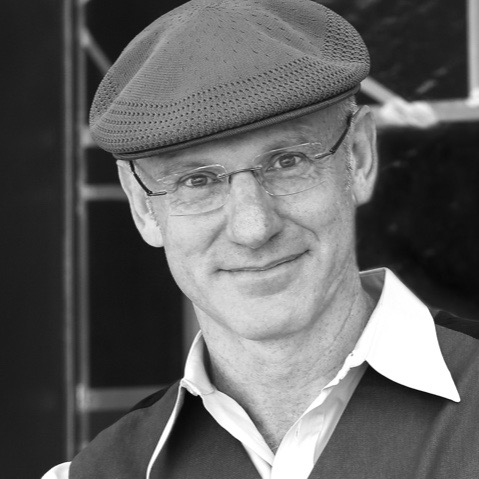
Gilla Nissan
Teacher, Author: “Meditations with the Hebrew Letters – A Guide for the Modern Seeker” (SeekAleph.com)
Why tell the same thing over and over?
Firstly, it is rarely the same thing that we are telling, because the movement from slavery to freedom, which is at the core of every authentic tradition, or at least used to be before it became distorted, is a dynamic event, and it lasts perhaps throughout our entire life journey. It is not fixed.
Secondly, it takes place on several levels, physical, emotional and mental, and on levels I am not capable of knowing. But I know it.
Thirdly, we are not really free to do, think and feel with our full potential. We live under influences, and if there is freedom, it is the freedom to choose the influence we want to live under. I choose, every day, to live under the influence of Torat Emet and Chayee Olam, life of eternity.
So, when I speak about it during the Seder and throughout the year, I see how miracles appear constantly in my life, in the life of my people, and in the life of the world, especially in the month of Nisan, a time for nisim, miracles and salvations. The Vilna Gaon teaches that we celebrate Passover on four levels, historical, ritual, personal and cosmic. From this comes a promise, every slavery will end in freedom. To become a free nation is to understand our place, to be it, to honor it.
Rabbi Shmuel Reichman
Bestselling Author and International Speaker (ShmuelReichman.com)
On Pesach night, we conclude the paragraph of Avadim Hayinu by proclaiming, “all those who elaborate on the Exodus from Egypt, this is praiseworthy.” What is the importance of telling over the Pesach story at great length, and why on this night specifically?
There are two ways to interpret the statement of “v’chol hamarbeh.” The first is on a quantitative level, that one should tell over as much of the Exodus story as possible. The second is a qualitative approach, that one should delve into the miracles and wonders that Hashem performed when taking us out of Mitzrayim in as much depth as possible.
There is, however, a third and more profound way to understand this statement. Yetzias Mitzrayim was not merely a historical event; rather it was the birth of the Jewish People – our people, you and me. The story did not end with the birth of the Jewish People, it continues with them growing into the nation they are meant to become. This is the story that has continued to this very day.
Sippur means to tell over a story, and the Haggadah says that whoever does this increasingly is praiseworthy. Jewish history is not only “his”-story, it’s our story. It is our mission, and we must continue to grow and thrive in this mission. The goal is to make ourselves a part of the Jewish story, to continue what began with Yetzias Mitzrayim, to become the person we were meant to become. V’chol hamarbeh…. harei zeh meshubach.
Rabbi Antony Gordon
International Speaker; Senior Lecturer, Gateways
At first glance, this verse is puzzling. If the goal is simply to transmit information, then once the story is told, it should be complete. Why the emphasis on more?
The reason is that the Seder is not about information, it is about transformation. Yetzias Mitzrayim is not a story that happened – it is a reality that happens. Every generation has its own “Egypt” – its pressures, its addictions, its silent chains. The more a person speaks about the Exodus, the more he begins to recognize his own constraints and his own capacity to break free.
Speech creates awareness. Awareness creates movement. In a world of endless scrolling and surface-level engagement, we are conditioned to consume stories, not live them. The Haggadah demands the opposite: Do not just read the story – enter it. Expand it. Personalize it. Wrestle with it.
That is why “the more one tells” is praiseworthy – Not because of quantity of words, but because of depth of connection. Every additional layer of discussion is another crack in the illusion that we are stuck. Freedom is not handed to us – it is spoken into existence.
On this night, we are not just recounting redemption. We are rehearsing it. That is the real message: The more you engage with the story of redemption, the more you start to believe that your own is possible.
Rabbanit Alissa Thomas-Newborn
Gratz College, NYP and Netivot Shalom
Panim Yafot comments on the biblical command to personally tell the story of our Exodus: “The miracles happened for the purpose of telling the story.” We may wonder, didn’t the miracles happen to save us from Egypt? Did this all happen so we could tell the story later? What Panim Yafot is revealing here is the timeless, intergenerational value of our story of redemption. God saved us, giving us the gift of being able to tell stories with our loved ones, gather as a community and celebrate the personal redemption God gives us in every generation. The requirement to tell the story is an invitation to express gratitude and to see God’s hand in our lives every day. Supporting us, holding us when we cry out in suffering and guiding us toward freedom. This freedom is embodied in Torah and mitzvot – in the joy, meaning and vitality they give us. And so, it makes sense that the Haggadah teaches that to add more storytelling upon storytelling magnifies the praiseworthiness of being able to sit around a seder table and remember together. But there is a uniqueness to Jewish memory at the seder that actively expands the praise, ad infinitum: That the past is in direct dialogue with the present. Not just our ancestors – We are freed too. If the miracles happened so that we could tell the story, then miracles will continue to occur, now and in the future to ensure we continue telling our story.
Rabbi Tova Leibovic-Douglas
The Pew Research Center found in both the 2013 and 2020 surveys that attending a Passover Seder remains one of the most widely observed Jewish practices, even more than Yom Kippur and more than Shabbat. There are many reasons for this, but at its core is the simple and repeated instruction that we are obligated to remember that we were once slaves in Egypt and that we were also liberated. Judaism asks us not just to tell this story, but to locate ourselves inside of it.
It is difficult to imagine our tradition without this central liberation narrative. On its own it is extraordinary: a baby placed in a basket and saved through the bravery of women, a burning bush, a reluctant Moses who does not seek leadership, plagues, miracles and a sea that parts. Yet the power of the story is not just in the telling of it, but in the way that we embody it.
Each year we reenact it, gathering around tables and stepping into the memory as if it belongs to us personally. In the seminal book Zakhor, Yosef Hayim Yerushalmi suggests it is not memory alone that sustains a people, but the ritualization of memory that allows the past and present to meet. Perhaps on some level we all understand this, which is why we continue to gather, tell, and remember, because somewhere deep down we know that remembering together is part of how we endure.