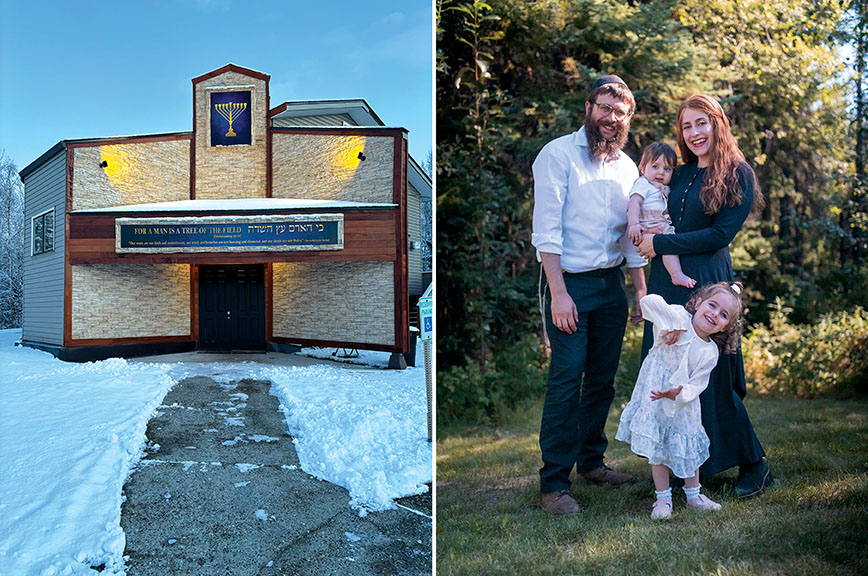

On Rosh Hashanah, as I sat in the childcare room with my 2-year-old and 4-year-old daughters, watching them fight over a toy, I thought, “This is how I’m going to spend my holiday?”
I wanted to be in synagogue downstairs, listening to the beautiful singing and fervent praying, ensuring I properly repented and was going to earn myself a good year ahead.
But childcare was only for children ages 3 and up – which is the standard at most synagogues — and so, I was stuck. Anytime I left for a few minutes to try to pray with everyone else, my 2-year-old would come running after me, yelling “Mommy!” and being disruptive until I could haul my 7-month-pregnant self up the stairs to chase after her.
“Happy Rosh Hashanah, Kylie!” I thought, as I held my heavy belly and sighed.
When my daughters found some kids to play with, I finally got a chance to step into the hallway and say the silent prayer, the Amidah. During this elongated version of the prayer, I decided to shift my attitude.
“You are exactly where you need to be right now,” I told myself. “Spending time with your children is what you are doing this Rosh Hashanah.”
At this moment, I accepted where I was in life. I stopped trying to live in the past and be the person I was before I had children. I may have been able to daven all day then, but I couldn’t now. I knew that if I didn’t change my perspective, I would continue to be miserable.
I had to stop feeling sorry for myself.
Before I started learning Judaism, I’d always felt sorry for myself and like a perpetual victim. I thought, “Woe is me,” no matter what the situation. Everything was everybody else’s fault but never mine.
On Rosh Hashanah, as I sat in the childcare room with my 2-year-old and 4-year-old daughters, watching them fight over a toy, I thought, “This is how I’m going to spend my holiday?”
If a boy broke my heart, he was a jerk; I couldn’t have possibly picked the wrong guy who was obviously going to treat me like that. If I didn’t do well in school, it was because I wasn’t born smart. It had nothing to do with my failure to study enough. The list could go on and on. There was always something new – some excuse why I wasn’t where I was supposed to be in life. I never accepted my reality.
Discovering Judaism changed that for me. If things weren’t going my way, I could say, “This is what God wants. What lesson is He trying to teach me?”
I looked at my past and thought, “God was steering me the right way the entire time. He led me to the beautiful place I’m in today.” I went from disempowered to empowered, from victim to victor.
I’m not always able to stay in the positive. On Rosh Hashanah, I went back into my negative, old way of thinking for a bit. I could still acknowledge that I was in a tough position – taking care of little children, while pregnant, for hours on end on a hot day is not easy – but I didn’t have to ruminate on it. I could say to myself, “You’re so strong. You’re doing a fantastic job” and then move on.
And so, I did exactly that. I then sat down with my daughters as they laughed through the entertainment, a delightful puppet show featuring a dragon and a princess and Merlin the Wizard. Seeing their smiles made the entire day worth it.
I hope to carry this positive attitude with me into the New Year, and to always see the big picture as opposed to getting caught up in the tiny details. I hope to always be able to channel my inner strength and see that I’m exactly where I need to be. And I hope that I can continue to acknowledge through the good – and the bad – that God is always on my side. No matter what.
Kylie Ora Lobell is an award-winning writer and Community Editor of the Jewish Journal. You can find Kylie on X @KylieOraLobell or Instagram @KylieOraWriter.