
Statistics can be complicated. There are numbers I like, including 09-06-36 (my bank sort code), 613 (Torah commandments), 36-24-30 (my other “sorting” code, although 34-24-32 is all good. 40-50-60, less so). However, just when I felt confident in my numbers, I made the mistake of discussing statistics with AI.
ChatGPT can be a cold mistress, unemotional and distanced, just like my last girlfriend. I’ve given ChatGPT she/her pronouns for a more feminine feel, although slightly woke through her pronounification.
In the decades-long quest to find my soulmate, I wanted to check the odds. My basic criteria are someone who is Jewish, an English speaker, willing to live in Los Angeles, close to prime, healthy childbearing age, and open to marrying someone with my current income level. On the last criteria at least, that would be someone living in 1965. Nevertheless I couldn’t stop, like Kanye with a microphone when he starts sharing his theories of Jewish domination. It would however be great if this Jew could dominate in the aforementioned field.
“Dear Chat GPT”, I asked, “How many single women are there in the world who are English speakers between the ages of 32 and 40?” She went on to explain her working model – Global Population of Women Aged 32-40, English-Speaking Population and Marital Status (Single Women). “The rough estimate”, she explained, is “75 million and 120 million globally”. So far, so good.
Next it was time to start getting specific; “How many of those are Jewish?” This was more risky, but essential nevertheless. Her criteria were “Jewish Population”, “Jewish Women Aged 32-40” and “Single Jewish Women.” Her global estimates for single Jewish women were 1.1 to 1.2 million, of whom 20-30% are single, but only 150,000 to 300,000 are English speakers. I was starting to get nervous.
I’ll preface the next question with a defense mechanism and justification. After 20+ years of working with actresses and models, 15 years on-and-off living in L.A. and generally being around beautiful people … well, that’s the justification.
“How many of those are attractive by Western standards?” was my question. She began judging with the criteria of “Subjectivity of Attractiveness,” which differs between cultures and decades.
There were subtle changes in beauty standards between Mae West in the 1930s, Bridget Bardot in the 1960s, marked visual diversity within the 1990s supermodel era of Cindy Crawford and Kate Moss, Beyonce’s Bootyliciousness of 2001, and so on. Nevertheless, our Language Learning Model fairly concluded that “assuming that 10-20% of these women might be considered attractive by common Western beauty standards, this would suggest a range of 15,000 to 60,000 women globally.”
Here’s where we start nearing the potential disaster zone. “Of those, how many would be prepared to live in Los Angeles?” was my next question. “A range of 750 to 6,000 women globally” was her emotionless response.
Now for the personal self-induced kick-in-the-teeth which is at least tied in with my IRS tax return. “Of those, how many would be willing to marry a man who is earning less than $100,000 a year?” The punchline was “22 to 360 women.” And finally, since I am not a mathematician by trade, I wanted to know how those 22 people fit into an approximation of the phrase “one in a million.” “For every 360 million people on the planet,” she continued, “one person fits the criteria.” So the best case odds for finding my wife are 1 in 360 million, and the best case — based on 360 potential candidates compared to the global population of 360 million – is literally one in a million. Phew. At least there’s a chance.
The good news, at least from a Jewish perspective, we also believe in the possibility of miracles. One God and one miracle are the only statistics I need right now.
The good news is that by Jewish standards, we believe in Hashem, whilst ChatGPT is probably a nonbeliever. I asked “is ChatGPT an atheist, or do you have a religious proclivity?” to which she did the Artificial Intelligence version of evading an answer. The good news, at least from a Jewish perspective, we also believe in the possibility of miracles. One God and one miracle are the only statistics I need right now.
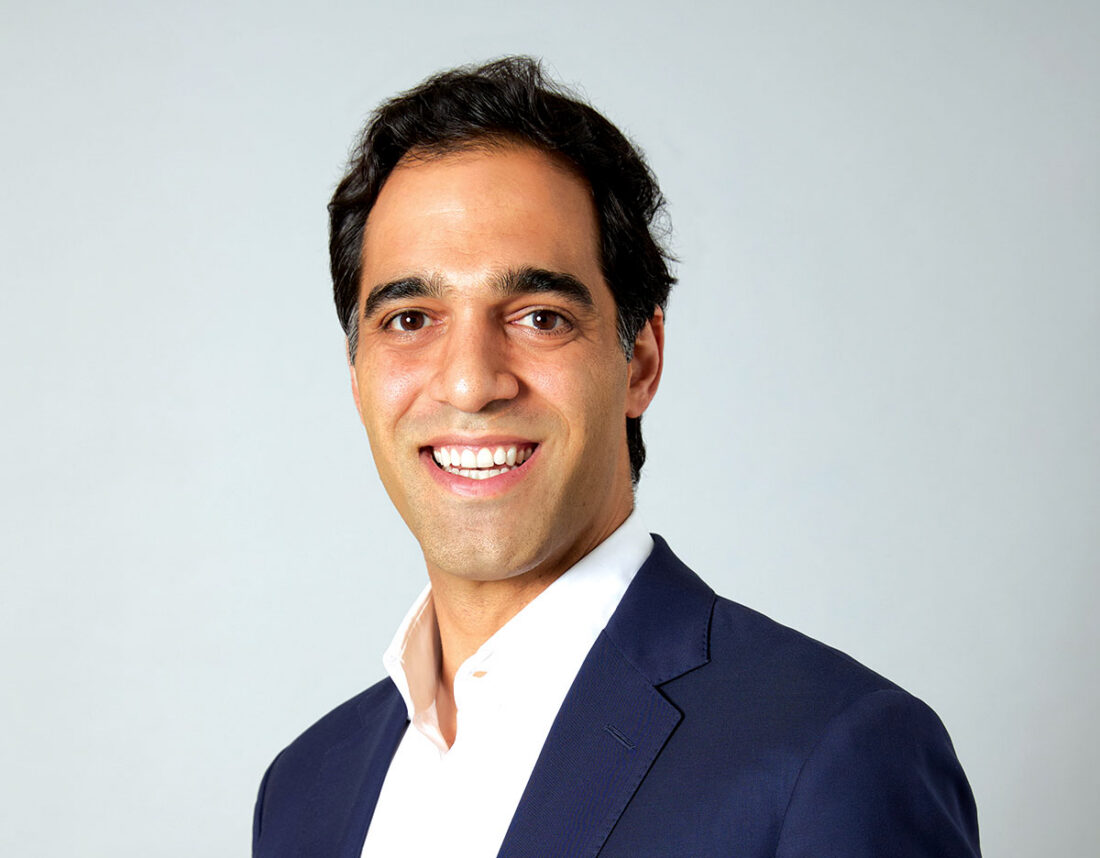
Marcus J Freed is the author of “The Kabbalah Sutras.” www.marcusjfreed.com and on Instagram @marcusjfreed.