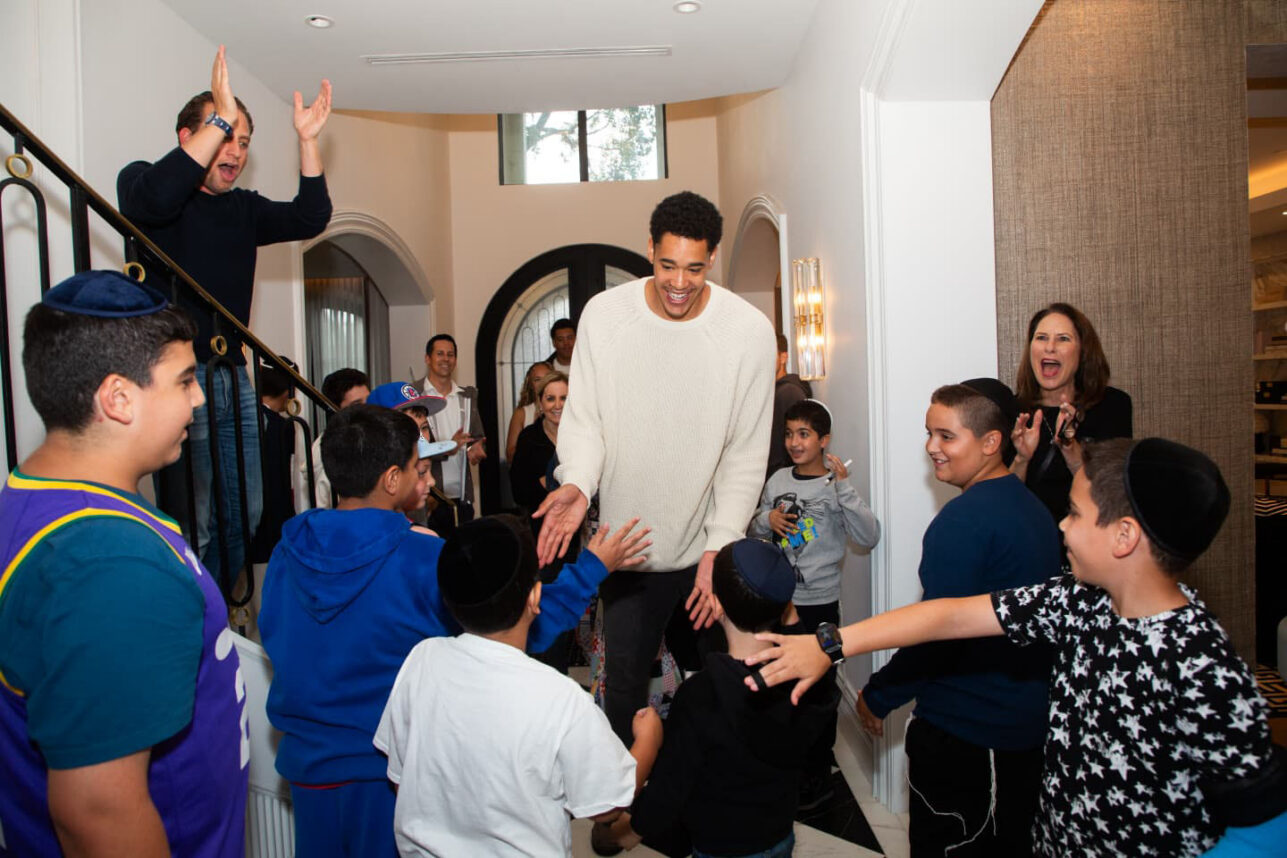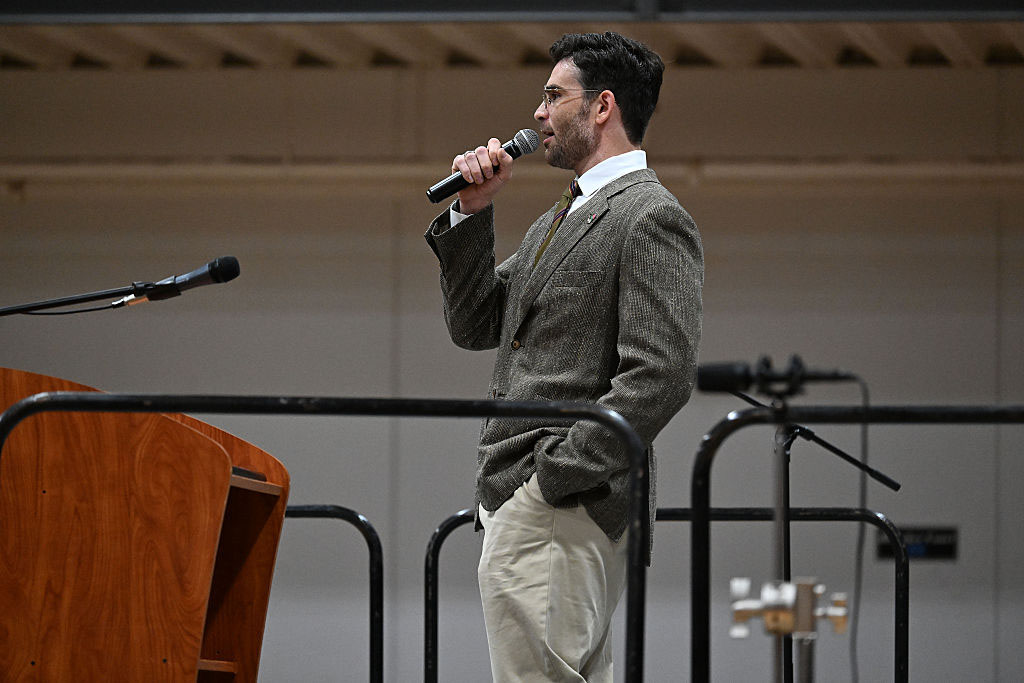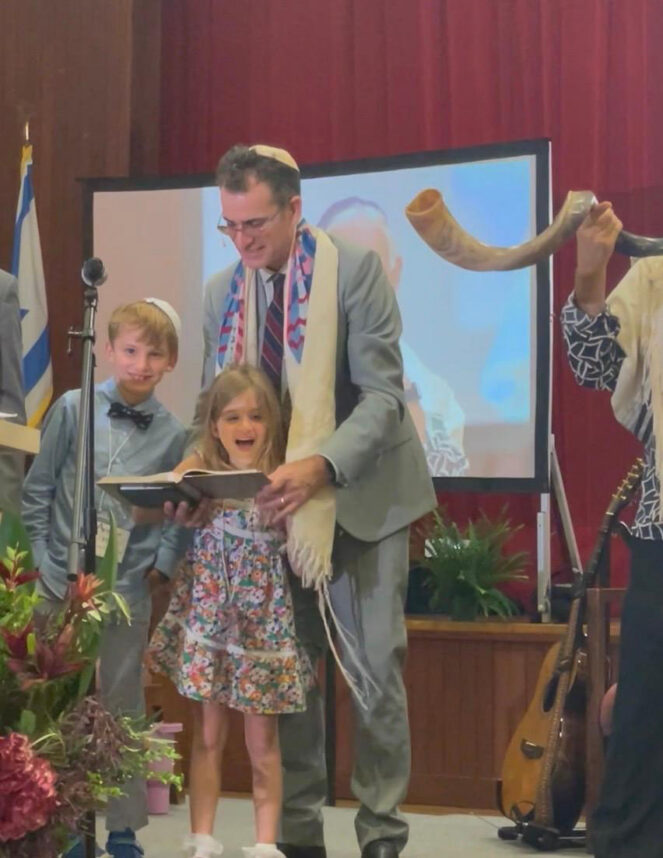
On Sunday night at UCLA Hillel’s “Celebration of Jewish Resilience,” about 275 people gathered to honor Distinguished Professor Stuart Gabriel and Assemblymember Jesse Gabriel (D-Encino). Speakers and guests tried to answer a timely and practical question: what does resilience look like when it’s being tested in real time?
Chancellor Julio Frenk opened the event by calling on attendees to “celebrate Jewish resilience — the intergenerational passing down of Jewish pride, Jewish leadership, and Jewish persistence.” He cited Jesse Gabriel’s role as co-chair of the California Jewish Caucus and Stuart Gabriel’s leadership of UCLA’s Initiative to Combat Antisemitism, describing the work as ongoing rather than ceremonial. “These are lived values,” Frenk said.
Dan Gold, Hillel at UCLA’s executive director, framed the evening as both a celebration and a checkpoint. “Tonight is both a powerful celebration and a meaningful opportunity for us to come together at Hillel to reflect on the past few years, to recognize the enduring strength of Jewish resilience, and ultimately to celebrate the promise of a strong and united Jewish future,” he said. The decision to honor a father and son, he added, reinforced the theme of continuity across generations.
One of the most personal moments came from Maayan Goldman, a third-year psychology major and the only Jewish undergraduate member of UCLA’s Initiative to Combat Antisemitism. She asked the audience to think back to their first weeks on campus — meeting friends, finding routines, settling into a new life. Then she described her second week at UCLA: “For the first time in my life, my identity and existence was threatened.”
Goldman pointed to Oct. 12, 2023, five days after the Oct. 7 Hamas attacks, when the first pro-Hamas rally took place on campus. “UCLA students are marketed as the future leaders of our world, and yet my peers were chanting ‘our people are occupied, resistance is justified’ after over 1,200 of our friends and family members were murdered, raped, or kidnapped just five days prior,” she said.
Goldman described what she saw as the limited set of choices Jewish students felt they had in the months that followed. “There were several options for Jewish students to take following the rising cesspool of antisemitism: Hide, assimilate, Hillel,” she said. For students who leaned into Hillel, Goldman described a place that offered routine as much as refuge. “We were welcomed with a loving embrace, with a kosher cafeteria, with free coffee, and with a community that grieved together and supported one another unconditionally,” she said.
Additional speakers defined resilience not as an exercise in quiet endurance but as seeking visibility supported by institutions. They spoke of the need for spaces, programming and leadership that allow students to show up as themselves without feeling exposed to discrimination and harassment as many Jewish students have in the last two years.
Frenk connected the evening to International Holocaust Remembrance Day and emphasized the administration’s responsibility for campus climate. “As chancellor of UCLA, I will always be clear: hate has no place on our campus,” he declared. The statement drew applause, but it also carried a subtext familiar to many attendees. Those commitments are measured not in speeches, but in how the university responds when protests, policy and student safety collide.
Gold closed by describing initiatives he said Hillel is pursuing, including the Fund to Beat Campus Antisemitism and efforts to bring non-Jewish faculty to Israel. He presented the work as concrete and resource-dependent, and a reminder that, for the organizations tasked with supporting Jewish students, resilience often looks like budgeting as much as inspiration.
Goldman ended on a carefully optimistic note. “While it’s been over two years since Oct. 7 and the campus climate has improved, we can never let what happened repeat itself,” she said. “The need for a place like Hillel will always exist in order for future generations of Jewish students to thrive.”
By the time the program ended, the theme of the night — Jewish resilience — had taken on a specific meaning in the room: not a slogan, but an ongoing set of choices, and a set of responsibilities shared by students, institutions and university leaders.