Auguste Comte didn’t set out to invent “the West.” He set out to invent a science of society. He coined the term “sociology,” attempted to map the immutable laws of human development and imagined progress. Yet Georgios Varouxakis argues in his new book, “The West: A History of an Idea,” that Comte helped popularize a term that eventually became one of modern politics’ most useful, and most slippery, brands.
Varouxakis’ argument (in an almost unfairly simplified form) is not that the West label arrived late, for practical reasons. By the 19th century, the older labels – “Europe” and “Christendom” – were no longer useful. They were too untidy. An awkward fact was Russia. Russia was European enough to complicate “Europe,” and Christian enough to complicate “Christendom.” The Western powers preferred a club without Russia. A new term was needed, one that could say “us” excluding Russia.
This book is a history, not a repair manual. It will not rescue the Atlantic alliance from fatigue, nor does it offer a roadmap for the current geopolitical crisis. But it helps explain why the idea remains so contested. As the narrative reaches the post-Cold War era, we encounter the familiar debate between end-of-history proponents vs. clash-of-civilizations proponents. Both were talking about “the West,” but in different registers – one as a universal destination, the other as a bounded camp.
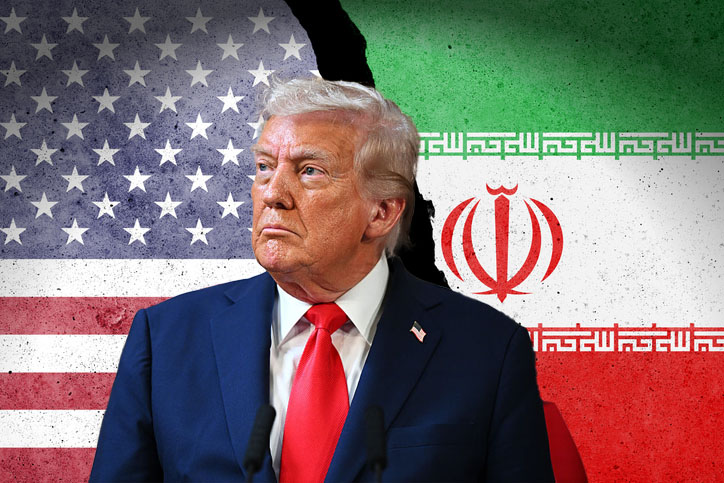
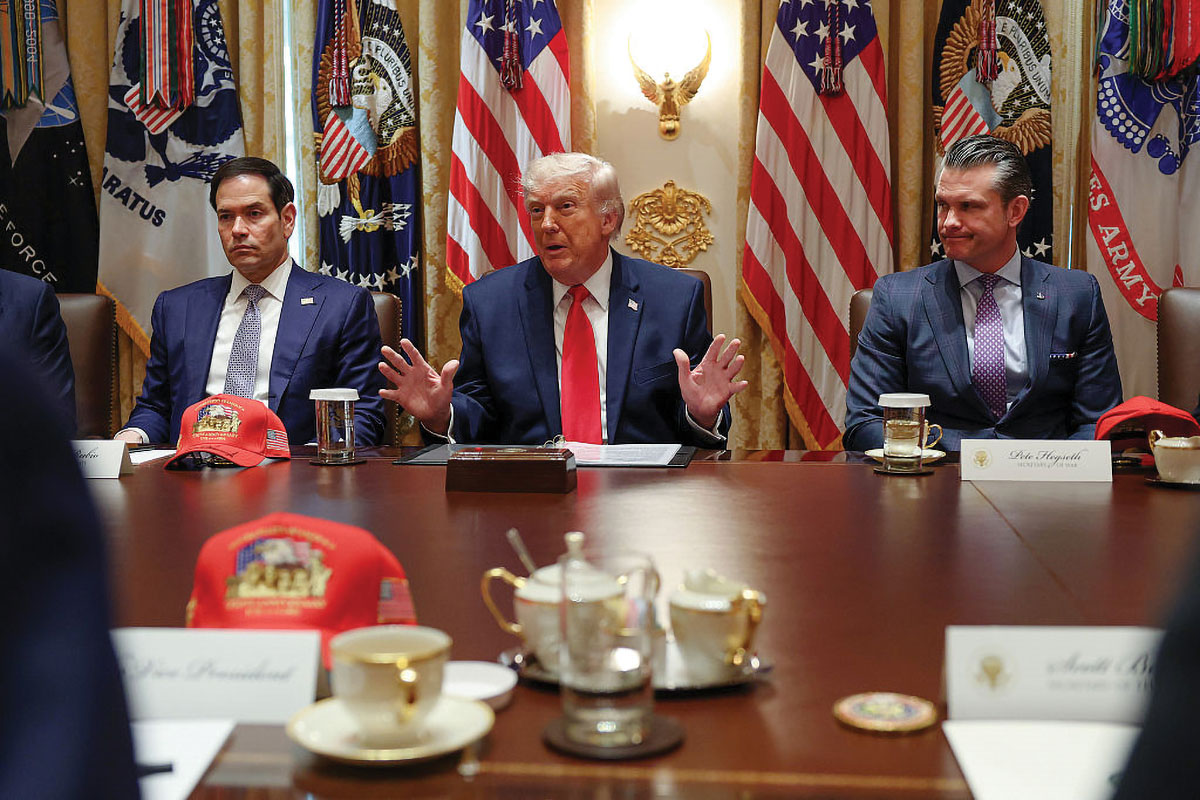
In the years since, the obituary business has boomed. The “end of the West” has been predicted many times, but the predictions grew louder after Donald Trump’s election in 2016 and again after his return in 2024. Trump is not merely a politician; he is a stress test for alliances, institutions and the meaning of the Western club.
Simultaneously, China’s Xi Jinping offers a competing slogan: a “multipolar” world. In a recent meeting with leaders from Russia and India, he outlined a vision less organized around a single U.S.-led bloc. In that vision, “West versus East” belongs in a museum. And yet the diagram keeps being redrawn, sometimes by people who claim to be erasing it. When Trump talks about Greenland – buying it, taking it, securing it – his argument is that Russia and China must not dominate strategic territory. That is bloc thinking in plain language. The only ambiguity is the pronoun: is he defending America alone, or the whole West?
This confusion regarding definitions has real-world consequences. For over a century, the definitions were relatively tidy: The “West” was the home of capitalism and democracy; the “East” was the domain of tyranny and totalitarianism. But this created strange geographical anomalies that we simply accepted. Japan was considered part of the West, despite sitting at the far edge of the East. Turkey is a member of NATO, the “Western” military alliance, yet its internal conduct today resembles Russia far more than it resembles France.
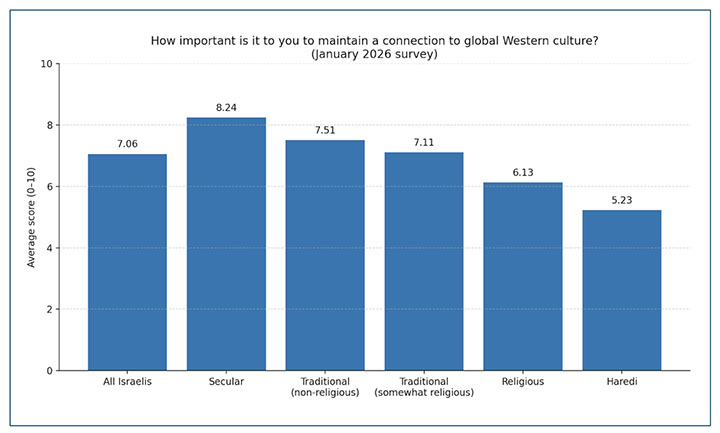
Israel is a good place in which to ponder the meaning of the West, because we are both inside the Western story and perpetually insecure about our place in it. In the monthly Jewish People Policy Institute (JPPI) survey, Israelis were asked about the importance of maintaining a connection to “global Western culture.” The average score was 7.06 on a zero-to-10 scale. This is quite high, though not the highest among the values Israelis rank – lagging behind the “Jewish character of the state” (7.17) and the “pursuit of compromise and unity” (7.45).
Predictably, the demographic split is sharp. Secular Israelis score the connection significantly higher (8.24) than religious Israelis (6.13); the Center and Left score it higher than the Right. But what, exactly, are respondents scoring? When a secular Israeli hears “the West,” they likely picture democratic institutions, markets, universities, innovation, individual freedom and tolerance. When a religious conservative hears “the West,” they may picture Europeans scolding Israel, hesitations toward Iran, fashionable contempt for religion and bureaucratic moralizing. Two Israelis who share many values might still have a different answer on “the West” because they imagine different “West” brands. One group believes “The West” represents the values they cherish; the other believes it represents a betrayal of those values.
That puzzle is not uniquely Israeli. It is now a Western puzzle. Consider a recent document from U.S. State Department circles. One paragraph praises a shared transatlantic tradition — Athens and Rome, natural law, inherent rights and the common inheritance. In the next breath, it accuses Europe of betraying Western civilization through censorship, mass migration, restrictions on religious freedom and other sins. Europe, in other words, is painted as both the cradle of the West and a suspect actor against it. The term does not settle arguments; it hosts them.
Perhaps “the West” is like pornography: hard to define, yet many insist they know it when they see it. Or perhaps it is simply a brand – useful precisely because it is vague – allowing rival tribes to wrap their preferences in a single grand term. If so, debates about the West’s collapse will remain muddled until we admit what we are really debating: not the fate of a civilization, but the meaning of its name.
Something I wrote in Hebrew
This time, it is actually something I wrote in English, but someplace else, when the three Arab parties decided to run as a merged list. This will only complicate their ability to join a coalition. Here’s one paragraph from a Moment Mag article:
Could an Israeli coalition run another such war while in coalition with Arab parties and depending on their support? Probably not. The majority would be constantly frustrated by attempts of Arab members to tame the war, while Arab members would be under constant pressure from their constituents to pull out … The bottom line is troubling: A fifth of the population almost never gets to use its political leverage. It’s also nearly unavoidable, because Arab parties aren’t being excluded from government primarily based on racism – though that exists – but on real, deep differences regarding the most crucial dilemmas the country faces.
A week’s numbers
Israelis value their country’s connection the “the West,” but not at the same level (JPPI numbers).
A reader’s response
Marcia asks: “Shmuel, what is your best guess on Iran?” My response: Iran attack? Iran regime change? I deliberately refrained from writing about Iran this week. It is all much too fluid and my guess is a good as everyone else’s (or worse).
Shmuel Rosner is senior political editor. For more analysis of Israeli and international politics, visit Rosner’s Domain at jewishjournal.com/rosnersdomain.