
In the early 2000s, a group of authors known as the “new atheists” published harsh critiques of religion. One of their central arguments was that religious people often act immorally in the name of their faith. These authors brought multiple examples of religious violence, such as suicide bombings, the Inquisition, “religious” wars, witch hunts, and the persecution of gays. If religion can foster violence, they ask, what value does it have?
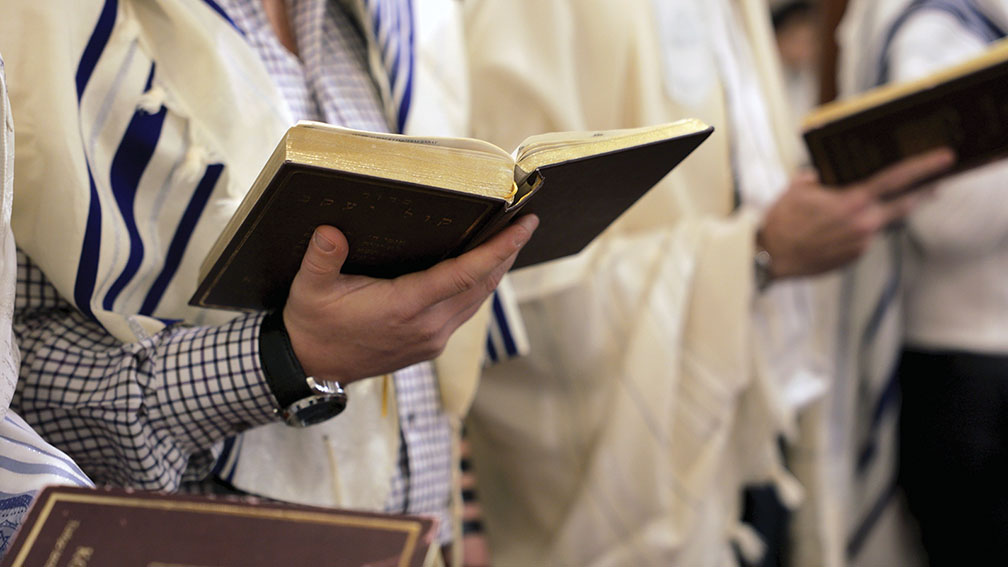
What makes this criticism particularly biting is that it reflects a well-known reality. There are religious fanatics who give their own religions a bad name. The Talmud discusses the chasid shoteh, or “the pious fool,” who ignores a drowning child to avoid removing his tefillin. The chasid shoteh is so fixated on serving God that they can’t hear the cries of their fellow man.
But it’s not shocking when religious people become fanatics. A single-minded focus on God can make any concern about one’s fellow man seem inconsequential. John Henry Newman, the influential 19th-century theologian, wrote: “The Catholic Church holds it better for the sun and moon to drop from heaven, for the earth to fail, and for all the many millions on it to die of starvation in extremest agony, as far as temporal affliction goes, than that one soul, I will not say, should be lost, but should commit one single venial sin, should tell one wilful untruth, or should steal one poor farthing without excuse.” This is a powerful statement of faith, but it also marginalizes the importance of ethics. If God is all that matters, then our interest in man is an afterthought.
Judaism takes a very different point of view. The Talmud tells the story of a potential convert who approaches Hillel and asks to be taught the entire Torah while standing on one foot. Hillel said the entire Torah can be found within the commandment “love your neighbor as yourself”; everything else is commentary. Hillel sees ethics as the foundation of our relationship with God.
And I believe that this is the message of the Ten Commandments as well: Authentic faith must lead to ethical behavior.
The Torah places enormous importance on the Ten Commandments. Seven weeks after leaving Egypt, the Jews arrive at the foot of Mount Sinai. There, God gives them the Ten Commandments. Later, Moses will inscribe the Ten Commandments on tablets and place them in the Ark of the Covenant, which will sit in the Holy of Holies.
The Ten Commandments sit at the very center of Jewish worship. What is unclear is why these ten commandments were chosen.
Philo, a 1st-century Jewish philosopher, proposes that the Ten Commandments represent general categories. From these categories, one can derive every other commandment. Saadia Gaon takes this idea up at far greater length; for Shavuot, he composed a lengthy liturgy connecting all the other 613 commandments to the Ten Commandments.
Seen this way, the Ten Commandments are a condensed version of the entire Torah.
What remains to be interpreted is the order of the Ten Commandments, which were given in this order:
- I am the Lord your God…
- You shall have no other gods…
- You shall not take the name of God in vain…
- Remember the Sabbath Day, to keep it holy…
- Honor your father and mother…
- You shall not murder.
- You shall not commit adultery.
- You shall not steal.
- You shall not bear false witness …
- You shall not covet …
The Ten Commandments have a clear structure: first come the commandments between God and man, followed by the commandments between man and man. It also goes from violations that are more significant to those that are less significant; clearly murder is more severe than theft, and theft more severe than coveting another’s possessions.
But what does this structure imply about the relationship between the ethical commandments and faith? Are the ethical commandments less important?
Rabbi Samson Raphael Hirsch argues that it proves one cannot divorce faith in God from ethics. He explains it is not enough to have faith in your heart; you must translate it into practice. So after talking about belief in God, and affirming that belief in our thoughts, words and actions, it then demands ethical actions. Hirsch explains that:
“The foregoing expresses the following truth: All ‘religion’ and all ‘worship of God in heart and spirit’ are worthless if they lack the power to control our words and deeds, our family life and social life. … Every good and upright deed must spring from the heart, and every noble thought must be put into practice, while the eyes of man look steadily up to God.
This is the spirit that hovers over the fundamentals of God’s Torah and fuses the two tablets—the ‘religious’ and the ‘social’—into one inseparable whole.”
If God is accepted as the true sovereign, then humanity will faithfully accept His ethical legislation. One will even follow His command and exercise control over their hearts and minds, and not even covet that which belongs to others.
But Hirsch’s interpretation is still disconcerting. Even though he recognizes the importance of ethical intuitions, to Hirsch, it is God’s command that demands ethical action from us. Ethics may end up being fused with religion, but it is not identical.
I would like to offer a different interpretation, inspired by the Maharal.
The message of the Ten Commandments is: Your faith must be so deep that you encounter God everywhere in creation. This is particularly true in your interactions with other people, because man is created in the image of God.
The Ten Commandments begin with two commandments about faith in God and idolatry, and then turn to respecting God with one’s words. The next command is about the Shabbat, which sees God as the creator and acknowledges the divine gift of creation in our lives. Next comes the commandment to honor one’s parents, who are God’s partners in bringing another generation of life into this world.
Then it turns to commandments that remind us to see God in our fellow human beings. You must respect their life, and you must respect their most cherished relationship. You must respect their property. You must do so to the point that you will not even covet another person’s goods.
Instead of looking at the Ten Commandments as a list that goes from commandments of higher to lower significance, one should see it as a ladder of faith. The more deeply you accept God in your life, the more you see God in the world and in your neighbors.
The more deeply you accept God in your life, the more you see God in the world and in your neighbors.
By respecting humanity to the point of not coveting the property of another, one completes the mission implicit in the commandment “I am the Lord your God.” Ethics is not only the obvious outcome of faith, but actually the ultimate expression of a belief that sees God within the creation of man.
One by one, the Ten Commandments teach us how we bring God into our daily lives. Each additional commandment encourages us to climb further up the ladder of faith.
Sadly, the religious yet unethical always garner the headlines; but quietly, there are so many who quietly make the world a better place, motivated by their faith. One anecdote that particularly inspired me is about Yishai, who was at the time a 17-year-old volunteer for Magen David Adom. On Saturday night, March 9, 2002, Yishai was in Jerusalem. At 10:30 p.m., a suicide bomber blew himself up, and Yishai ran to the scene. Barbara Sofer, a reporter for the Jerusalem Post, describes what happened next:
“He leaned over one young person, but there was no breath. Another young woman was lying nearby. He saw her flinch. Blood gushed from her leg. Like many emergency crew volunteers, he usually carried a tourniquet. Not that Shabbat. But he did have something he could use. Yishai was wearing tzitzit … together with a man named Yaron, he turned the tzitzit into a tourniquet. … Minutes later, the ambulances arrived. …
Across town, orthopedic surgeon Moshe Lifschitz rushed the young woman into the operating theater. Her bones were shattered and her femoral artery was torn in two places. He found the tzitzit, tied like a tourniquet around her leg. Whoever did this was thinking fast, he realized. … I tracked down the surgeon. ‘So, Yishai saved her leg?’ I asked him. ‘No,’ he answers. ‘I saved her leg. Yishai saved her life.’”
There can be no better use for a pair of tzitzit, because true faith always leads us to love our fellow man.
And that is the entire Torah while standing on one foot.
Rabbi Chaim Steinmetz is the Senior Rabbi of Congregation Kehilath Jeshurun in New York.