Millennials, what are you doing this Passover? If you’re not sure, perhaps look to Seder2015.
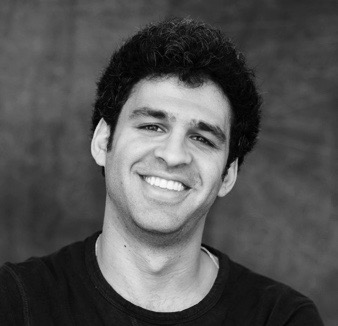
Seder 2015 is the latest brainchild of Michael Hebb, 39, a self-described “food provacteur” who last grabbed national attention for launching “Death Over Dinner,” a movement that brought people together around the dinner table to discuss end-of-life issues.
[Passover recipes available now, visit jewishjournal.com/SEDER2015]
Currently raising funds on the crowd-funding site, Indiegogo, Seder2015 is a one-stop-shop for “how to host a modern seder,” Hebb said in a phone interview. As of press time the campaign has raised $11,000 toward its overall goal of $25,000, and the Charles and Lynn Schusterman Family Foundation has pledged to match every dollar raised.
Seder2015’s official website launches on March 13 during 2015 SXSW Interactive Festival. Hebb, a teaching fellow at the University of Washington’s Digital Media Department, will be on-hand to discuss the project, which will provide users with digital haggadot that feature interactive Hebrew script calligraphy, Passover-themed playlists culled from trendy musicians, recipes from leading chefs, holiday anecdotes from thought leaders and more. It is the pilot project of a three year effort – Hebb anticipates Seder2016 and 2017 – and it is one close to Hebb’s heart.
“I have always wanted to know what it would be like to invigorate and tangle with and create a major inquiry into Passover and see how the digital word can help the fact that it’s in a state of decline,” he said. “It’s a big conversation effort in some ways, a way to bring in new voices and new experiences.”
Hebb’s concern is based on statistics. According to the 2013 Pew survey, “Portrait of Jewish Americans,” 70-percent of American Jews said they had participated in a seder in the past year. In the 1990s, that number was around 90 percent.
To reverse the trend, Hebb has garnered a wide array of support. The Reed College Calligraphy Initiative; Seattle artist Cathy Shiovitz and the cutting-edge design company, Civilization, are involved.
Stories about Passover that can be used during a seder will be posted on the Tablet web site, and JewishJournal.com will host to a repository of cutting-edge seder recipes from a new generation of chefs, including Ari Taymor of Alma. The Jewish Journal’s Rob Eshman and David Suissa are on Seder2015 advisory board, as is Wilshire Blvd. Temple Rabbi Susan Goldberg. Significant initial funding for the effort came from the Los Angeles-based Glazer Family Foundation.
Beyond wanting to reinvigorate Passover for new generations, Hebb cites his fascination with the dinner table and its role in society as additional motivation. And because Passover is in many respects the ultimate dinner-party, with its seemingly never-ending meal and ability to convene family members who often do not see each otherwise, Passover was the perfect focus of Hebb, a non-practicing Jew.
“I’ve been on an almost 20-year trek inquiry adventure to understand the role that the table has played historically in shaping culture and how it can have a transformative effect going forward, the basic context being that we have forgotten how to eat together,” he said.
“My father got ill when I was young and scattered our family into various parts of the house,” he said, when asked if he had had family dinners as a child. “Dinners were not an important part until later.”
Meanwhile, he delivered a talk at the 2013 TEDMED conference on his previous national campaign, “Death over Dinner,” and told the Journal that “70,000 people or more have had these experiences, ‘death dinners,’ in under a year-and-a half.”
Its success made him confident that he can change Passover.
“‘How can we use that same thinking around Passover?’” he said, recalling his thinking at the time of starting the project, last September. “What happens when you apply the process we went through with ‘Death over Dinner,’ bringing in leading experts in the field, artists, designers and thoughtfully producing a digitally platform — could it deepen and make more transformative the Passover experience, could it speak to teenagers, could it speak to Gen-Y and millennials, could it make them feel like they had more agency and more voice?” he said.
We’ll find out. Until then, visit Indiegogo for more information.