Escaping into solitude,
avoiding hunters’ need to roam,
I long so for the latitude
to find my longitude, my home,
where with the goddess who presides
as my poetic editor
of rhymes she frequently derides,
corrections spousal creditor.
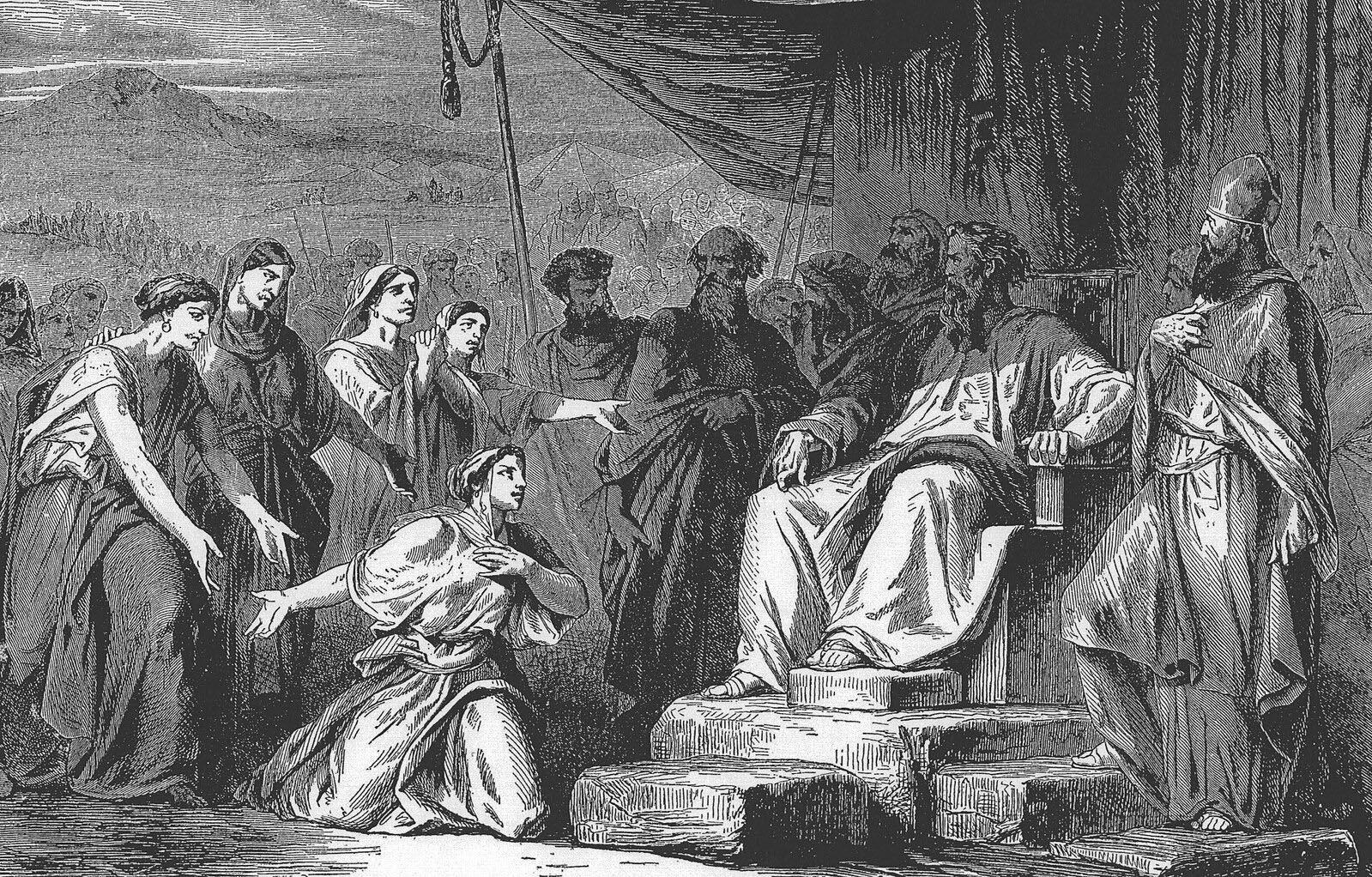
She follows the famed female path
Zelophehad’s daughters once selected,
without the radical inspired wrath
these five femmes fatales too objected,
when fatherless, sans brothers, they
hoped to claim their father’s land,
for which they found a legal way —
inheritance to females banned
till they suggested rules be changed,
which God told Moses he should do.
From his two sons somewhat estranged,
Moses felt unable to
appoint one son or both as leaders
who might become meta-Mosaic.
God’s answer learned by Bible’s readers
is less — than one God gave five girls — prosaic.
Not only Joshua, Deuteronomy may be
to Moses’ problem the solution,
the Bible’s fifth book like a baby
echoing Genesis’s evolution,
the first four Torah books’ great sequel,
Moses’ bequest to Israelites,
literally, comparably equal
to land for which five daughters all had rights,
Deuteronomy’s name, Devarim, an allusion
links Zelophehad’s land bequest
to the Torah’s Devarim conclusion,
to which the words ken dovrot attest.
Num. 27:7 states:
כֵּ֗ן בְּנ֣וֹת צְלׇפְחָד֮ דֹּבְרֹת֒ נָתֹ֨ן תִּתֵּ֤ן לָהֶם֙ אֲחֻזַּ֣ת נַחֲלָ֔ה בְּת֖וֹךְ אֲחֵ֣י אֲבִיהֶ֑ם וְהַֽעֲבַרְתָּ֛ אֶת־נַחֲלַ֥ת אֲבִיהֶ֖ן לָהֶֽן׃
Zelophehad’s daughters’ ken dovrot, speak justly: You should give them a hereditary holding among their father’s kinsmen; transfer their father’s share to them.
Deut. 1:2 states:
אֵ֣לֶּה הַדְּבָרִ֗ים אֲשֶׁ֨ר דִּבֶּ֤ר מֹשֶׁה֙ אֶל־כׇּל־יִשְׂרָאֵ֔ל בְּעֵ֖בֶר הַיַּרְדֵּ֑ן בַּמִּדְבָּ֡ר בָּֽעֲרָבָה֩ מ֨וֹל ס֜וּף בֵּֽין־פָּארָ֧ן וּבֵֽין־תֹּ֛פֶל וְלָבָ֥ן וַחֲצֵרֹ֖ת וְדִ֥י זָהָֽב׃
These are הַדְּבָרִ֗ים, hadevarim, the words, that Moses addressed to all Israel on the other side of the Jordan.—Through the wilderness, in the Arabah near Suph, between Paran and Tophel, Laban, Hazeroth, and Di-zahab.
Zelophehad’s five daughters inherit his land, and while Moses’ sons don’t inherit his leadership, he bequeaths the Book of Deuteronomy to all of the nation of Israel, a bequest which makes Deuteronomy, as the final book of the five books of the Torah, the literal analogue of the land Zelophehad bequeathed to his five daughters, the words in Num. 27:7, כֵּ֗ן בְּנ֣וֹת צְלׇפְחָד֮ דֹּבְרֹת֒, Zelophehad’s daughters’ ken dovrot, speak justly, anticipating he Book of Deuteronomy, which is called הַדְּבָרִ֗ים; hadevarim, the words, in Deut. 1:2.
Gershon Hepner is a poet who has written over 25,000 poems on subjects ranging from music to literature, politics to Torah. He grew up in England and moved to Los Angeles in 1976. Using his varied interests and experiences, he has authored dozens of papers in medical and academic journals, and authored “Legal Friction: Law, Narrative, and Identity Politics in Biblical Israel.” He can be reached at gershonhepner@gmail.com.