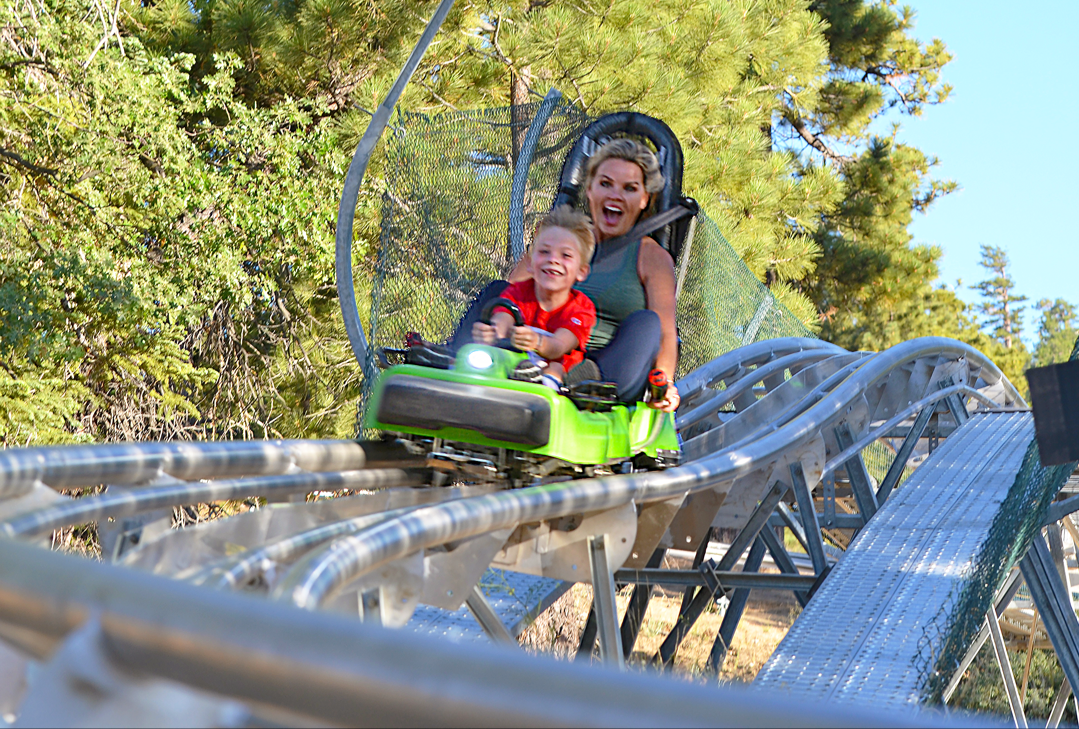
In Axel Köster’s unsettling photograph, a sweet-faced child innocently smiles beside the crematoria oven at Theresienstadt. The boy, Köster’s then-16-month-old son Tristan, had shouted and prattled as he climbed on the oven’s pipes, delighted with the echo, oblivious to the crematoria’s grim history or his forbears’ possible role in it.
German-born Köster, a photojournalist who works for magazines such as Time and People, watched his son with deep emotion. The visit to the camp, he reflected, was perhaps a beginning for Tristan, the start of a history lesson about his family’s difficult past.
Thirty-eight-year-old Köster, now of Manhattan Beach, is the son of a former SS soldier and the grandson of a life-long Nazi and Holocaust denier. The jovial man he called “Uncle Heinz,” his aunt’s longtime companion, was convicted of crimes against humanity at Nuremberg. In a small town in Germany, an oak tree still stands; a tree Köster’s relatives planted in honor of Adolf Hitler. Somewhere beneath the tree, his forbears buried a poem dedicating their lives to love and serve the Führer.
For much of his life, Köster says, he has struggled with his legacy; his shame about being German; his love for relatives who perhaps supported atrocities. The birth of his sons, Tristan, now 6, and Dylan, 2, have created an even more urgent set of questions for Köster. “My sons, like me, will need to heal and be able to bear the burden of our people’s history,” says the thoughtful, intense photojournalist. “I understand I must tell them that hate existed in their family… But, I wonder, should the guilt and pain I have felt most of my life one day also bear down upon my children?”