fbpx

U.S. ‘deeply concerned’ over plans for settlement expansion

The U.S. State Department criticized an Israeli announcement approving the construction of hundreds of housing units in four West Bank settlements.
[additional-authors]
September 1, 2016

The U.S. State Department criticized an Israeli announcement approving the construction of hundreds of housing units in four West Bank settlements.

We’re deeply concerned by the government’s announcement to advance plans for these settlement units in the West Bank,” State Department Spokesman John Kirby said Wednesday, in answer to a reporter’s question during a briefing, hours after reports of the approval. “Since the Quartet report came out, we have seen a very significant acceleration of Israeli settlement activity that runs directly counter to the conclusions of the report. So far this year, Israel has promoted plans for over 2,500 units, including over 700 units retroactively approved in the West Bank.”

The Mideast Quartet, made up of the United States, Russia, the European Union and the U.N., called on Israel in June to stop building in the settlements and on the Palestinians to halt incitement.

Kirby said that the State Department is “particularly troubled by the policy of retroactively approving unauthorized settlement units and outposts that are themselves illegal under Israeli law. These policies have effectively given the Israeli Government a green light for the pervasive advancement of settlement activity in a new and potentially unlimited way. This significant expansion of the settlement enterprise poses a very serious and growing threat to the viability of the two-state solution.”

“Potentially unlimited” is a recent term used by the State Department, and seems to indicate U.S. concerns that Israel wants to annex the West Bank.

The Civil Administration’s High Planning Committee on Wednesday approved construction of 234 living units in Elkana in the northern West Bank, designated to be a nursing home; 30 homes in Beit Arye in the northern West Bank; and 20 homes in the Jerusalem ring neighborhood of Givat Zeev.

The committee also retroactively legalized 179 housing units built in the 1980s in Ofarim, part of the Beit Arye municipality.

The approval comes less than a week after Nickolay Mladenov, the U.N. special coordinator for the Middle East peace process, criticized Israel for continuing to build in West Bank settlements and neighborhoods in eastern Jerusalem, going against the recommendations issued in June by the Mideast Quartet.


Did you enjoy this article?
You'll love our roundtable.

Editor's Picks

Latest Articles

Celebrate Rugelach Day

Like many enduring recipes – traditional rugelach dates back centuries in Eastern Europe – it was passed down, adapted and refined in kitchens through multiple generations.

Ban Antisemites from World Cup Soccer

Our nation’s leaders should exclude those whose behavior violates America’s fundamental moral values. That will send a message to athletes and aspiring athletes around the world that the United States rejects bigotry.

The Golden Rule: What Does It Mean in Practice?

We are being commanded to be kind to others, but we are not being asked to be angels, especially when dealing with those who do not share our values, including those who are our enemies.

Israel and America

As Israel turns 78, its alliance with America is being questioned from all sides. What is the wise path forward?

The Essence of Prayer

While prayer and meditation seem similar, they are different. Prayer involves praying to a higher being. Meditation is more about focusing on yourself and your inner dialogue. Together, they can help you become more centered.

How We Got Here

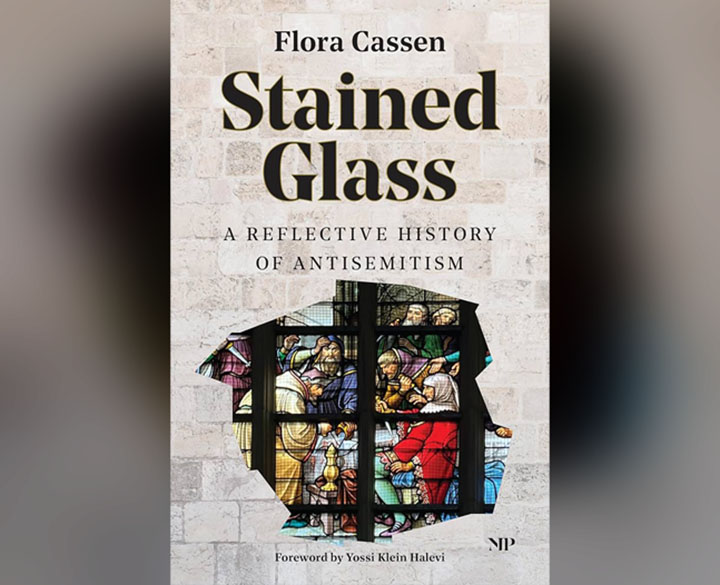
Part history, part memoir, part farewell letter to her native land, “Stained Glass” tells its agonizing story with restrained anger, but more so, deep sadness.

Casting Our Votes

No endorsements. Just three possibilities to consider as we prepare to navigate an increasingly complicated political landscape before we cast our votes for these three critical offices.

Where Independence Begins: What Israel Understands About Freedom

Israel’s path to independence unfolded under conditions where the outcome remained uncertain until it was achieved. No external mechanism could deliver it cleanly or without cost. It took shape through sustained effort in an environment defined by risk.

Lies in the Air, Facts on the Ground

We sing no matter what. When the hostages were held in Gaza, we sang in their honor. When another week of bad news hits us, we sing. Our singing is our fact on the ground.

More news and opinions than at a Shabbat dinner, right in your inbox.