“For many centuries the name Mordecai has been borne by outstanding men in various countries,” wrote James A. Padgett in a 1945 article in The North Carolina Historical Review. Summarizing both biblical and Talmudic traditions about the character from the Book of Esther, he continued: “Long before the Christian era Mordecai, a Jew and Benjaminite … was a member of the Sanhedrin, each member of which knew all of the 70 languages. His ability to understand these various languages enabled him to discover and report a plot of two eunuchs to murder Ahasuerus, King of Persia. Haman planned the death of all the Jews in the country, but Esther, Mordecai’s cousin, whom he had adopted and reared, risked her life to save him and her people. As prime minister, Mordecai supervised the execution of Haman.”
With the biblical tale read on the holiday of Purim twice – once in the evening, once the next morning – it’s occasion to remember a pair of heroic American Mordecais, one by that first name and one with that last.
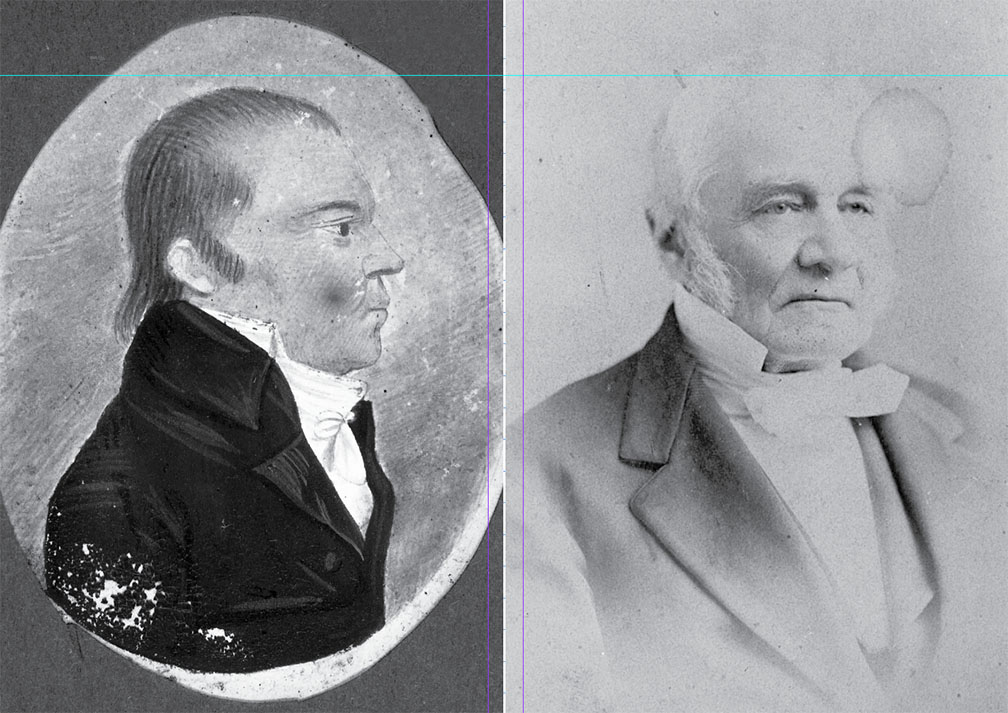
Mordecai Sheftall was the highest-ranking Jewish officer during the Revolutionary War. He was born in Savannah on Dec. 2, 1735 to Perla and Benjamin, immigrants from England and founding members of Mickve Israel, the oldest Jewish congregation in the South. By the time he was 17, Mordecai began what would become a highly successful career as a merchant, quickly accumulating enough funds to buy 50 acres in nearby Vernonburg.
Sheftall built up his real estate holdings through friends and contacts in England, the Caribbean, South Carolina and Pennsylvania, and married Frances Hart, the sister of one of his Charleston associates. With his family growing and his business thriving, he made sure to give back to his community. An observant Jew, Mordecai donated one and a half acres of land for the establishment of Georgia’s first large Jewish cemetery and for decades took an active part in the charitable Union Society, which supported the local orphanage.
When the stirrings of the Revolution began, Sheftall joined the Savannah Parochial Committee, which called for American independence. Upon the outbreak of the war, he was appointed deputy commissary general to the Continental troops in South Carolina and Georgia as well as commissary general of Georgia troops. Major General Robert Howe, who was Continental Commander for the Southern Department, appointed him a colonel. In support of the war effort, Sheftall drew from his own personal funds. He contributed heavily to pay for horses, munitions, food and uniforms.
In late December 1778, Sheftall and his eldest son were captured by the British and sent to Antigua, in the Caribbean. He refused to eat pork as a prisoner and was mocked for his beliefs by his captors. Undaunted, he wrote to the Continental Congress, entreating them to arrange a prisoner exchange in 1780. Obtaining their release, he and his son lived first in New York, then in Philadelphia, as Savannah was still occupied by the British.
With his holdings in shambles after the war (his loans to Georgia and the Continental Congress were never repaid), Sheftall began a new shipping business, but could not repeat his earlier business success. His reputation for loyalty and sacrifice on behalf of independence remained, however, and the newly constituted state of Georgia appointed him Agent for the State of Georgia for Purchasing Clothing. In late 1782, after returning home to Savannah, he recommitted to his local civic and religious activities and was eventually president of Congregation Mickve Israel. Sheftall died on July 6, 1797.
Seven years after this Mordecai’s passing, Alfred Mordecai (1804-1887) was born in Warrenton, North Carolina to Jacob and Rebecca, an observant family who also kept kosher. The subject of Padgett’s 1945 historical study, Alfred attended the nonsectarian girls boarding school his parents founded, which gained a reputation as one of the best in the South (he was the only boy). At age 15, he entered the U.S. Military Academy at West Point as its only Jewish student (Simeon Levy, the second graduate of West Point ever, and its first Jewish student, completed his studies in 1802). Despite being forced to attend Presbyterian chapel each Sunday and not having kosher food available, he graduated as first in his class, on July 1, 1823, with the rank of brevet second lieutenant in the engineer corps. Mordecai then served for several years as assistant professor of natural philosophy and engineering at West Point and from 1825 to 1828 was the assistant engineer in charge of the construction of Forts Monroe and Calhoun in Virginia. In 1836, Mordecai was appointed commander of the Frankford Arsenal in Philadelphia and married Sarah Ann Hays, a niece of the renowned philanthropist and educator Rebecca Gratz.
During the Mexican War, Alfred commanded the nation’s most significant arsenal, in Washington, D.C. He became an assistant to the Secretary of War and to the Chief of Ordnance. In 1841, he composed the first-ever ordnance manual for the U.S. military. It standardized the manufacture of weapons with interchangeable parts, a step in the evolution of American mass manufacturing. According to historian Stanley Falk, Mordecai also “performed important experiments with artillery and gunpowder, the results of . . . which were published in 1845 … and later translated into French and German.”
In 1857, Mordecai traveled to Europe to observe how weapons were used in the Crimean War. His report, published by order of Congress in 1860, is to this day considered a classic of American military science, contributing to America’s developing weaponry that is today the envy of the world. That same year, Alfred was appointed a member of the board to revise the course of instruction at West Point. This publication followed his earlier works, including “A Digest of the Laws Relating to the Military Establishment of the United States” (1833); the aforementioned “The Ordnance Manual for the Use of Officers of the United States Army” (1841); and “Report of Experiments on Gunpowder” (1845).
Hesitant to take sides during the Civil War (he had relatives in the South), Alfred resigned his commission and retired. His son, Alfred Mordecai Jr., however, had followed his father’s footsteps into West Point and ordnance expertise. On Aug. 10, 1861, President Lincoln appointed the younger Mordecai as Second Lieutenant in the Corps of Topographical Engineers. This Mordecai would go on to serve with distinction for the Union, rising by war’s end to the rank of Lieutenant-Colonel. He then taught, as had his father had before him, at West Point. He commanded the arsenal at Leavenworth, Kansas and the New York Arsenal on Governors Island. Mordecai Jr. died with the rank of Brigadier General in 1920. Though less religiously-affiliated than his father, upon his passing, an obituary published in The Jewish Daily News noted that “Brigadier General Alfred Mordecai was a Jew. The obituaries in the daily press failed to mention this fact. We prefer to mention it, because it should be known that Jews have played and do play their parts well in American affairs.”
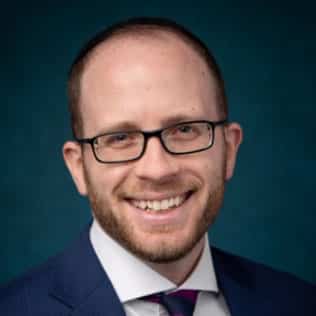
Rabbi Dr. Stuart Halpern is Senior Adviser to the Provost of Yeshiva University and Deputy Director of Y.U.’s Straus Center for Torah and Western Thought. His books include the newly released “Jewish Roots of American Liberty,” “The Promise of Liberty: A Passover Haggada,” “Esther in America,” “Gleanings: Reflections on Ruth” and “Proclaim Liberty Throughout the Land: The Hebrew Bible in the United States.”