When Daniel Rachel was young, he was a fan of the punk band the Sex Pistols. He would sing along to their song, “Belsen Was a Gas” and not think anything of it.
However, soon after he started singing this song, he betrayed his mother’s trust and watched a VHS tape he had been forbidden to watch. It contained black and white footage of the liberation of Nazi concentration camps. The conflict of these images and that song imprinted on his mind.
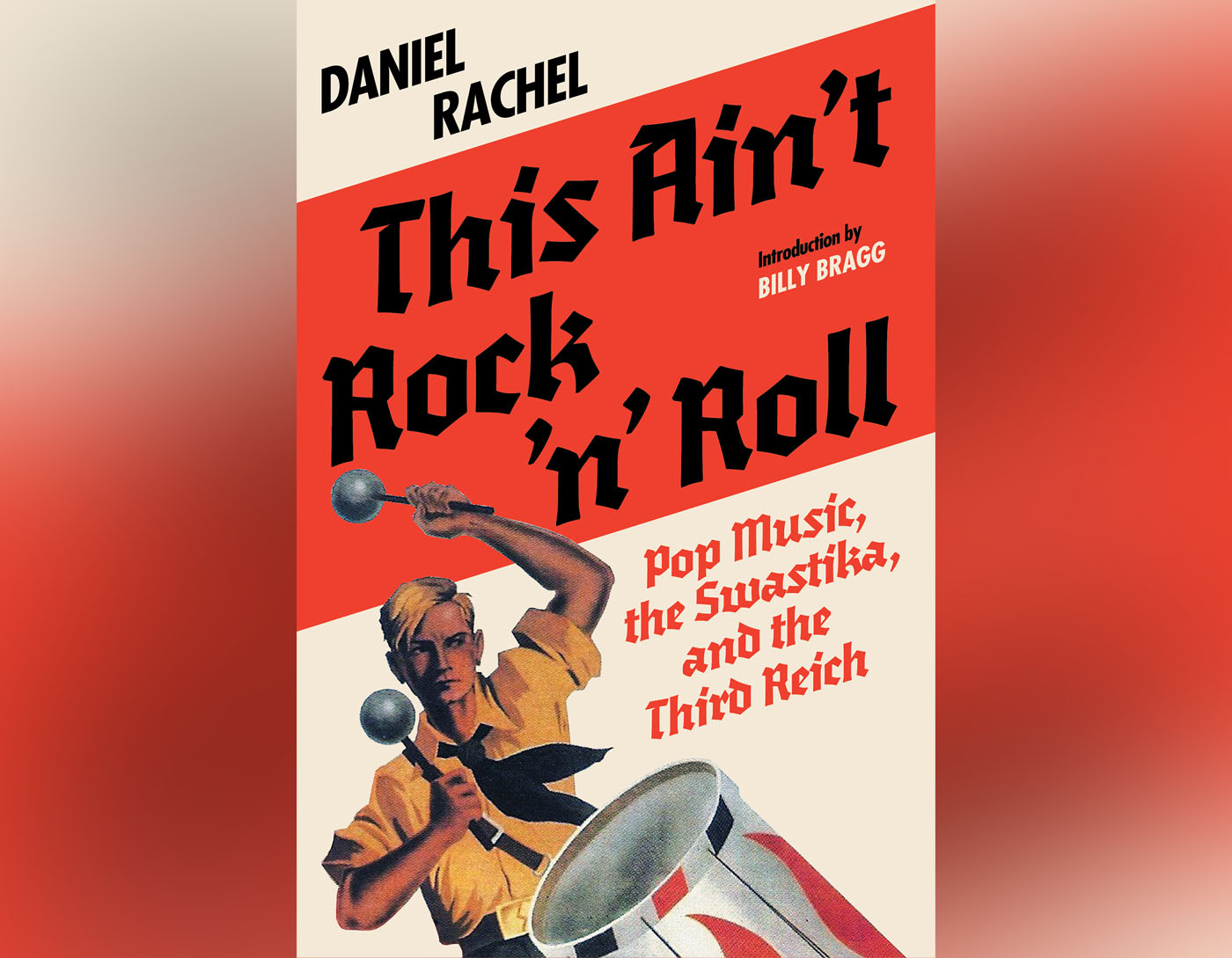
Now, Rachel has written a book about musicians like the Sex Pistols who used Nazi imagery in their work – and what it means. Titled, “This Ain’t Rock ‘n’ Roll: Pop Music, the Swastika and the Third Reich,” it contains essays on artists like Joy Division, Pink Floyd, Kanye West, and Marilyn Manson and their dalliances with symbols from Hitler and the Third Reich.
“[My book] is an attempt to unravel the disturbing contradiction of art and the Holocaust that has defined the ongoing history of popular music,” he said.
Reflecting on Roger Waters, Rachel writes, “As we approach the centenary of Adolf Hitler’s accession to power on 30 January 1933, Roger Waters is one of the few musicians who continues to unapologetically flirt with Third Reich-related imagery. For some, this is a form of artistic provocation, for others, it is a dangerous practice that promotes religious and race hatred.”
And when it comes to Joy Division, Rachel reflects, “Joy Division weren’t mocking the Third Reich when they named their band after brothels created by the SS in concentration camps. For all manager Tony Wilson’s disingenuous claims of postmodernist subversion in naming themselves Joy Division, the band were exploiting Nazism to make themselves look cool.”
The author, an award-winning music historian, doesn’t say in the book whether he personally believes artists are antisemitic or hateful.
“’This Ain’t Rock ‘n’ Roll’ is simply me, as an author, saying, ‘Here are the facts. Here is what musicians did,” Rachel said. “This is what they did or didn’t say about it.’ Then, as a reader, draw your own conclusions.”
When artists use the swastika, for instance, he said that an antisemitic intention is not always obvious.
“The swastika is of course thousands of years old and evident across many continents,” he said. “However, since it was adopted by Adolf Hitler in 1919, and as the national flag of Nazi Germany in the thirties, the swastika (or ‘Hakenkreuz’) represents a symbol of antisemitism. That is blatant in far-right gatherings and rallies now. In rock and pop music, the antisemitic intention is not as clear. During punk, many musicians used the swastika as a fashion accessory. What is important today is accountability and context. Both in the reproduction of artwork and photography, say for example in the imagery of the Sex Pistols, Sid Vicious or Siouxsie & the Banshees. Or current musicians – K-Pop would be a good example – where a similar fetishization of Nazi couture is paraded in the name of art.”
Sometimes, the antisemitism is blatant, though, like in the case of Kanye West.
“Kanye’s 2025 single was called ‘Heil Hitler,’” Rachel said. “He is outspoken in his admiration for Adolf Hitler. He advertised a link during the Superbowl to his website selling one item: a white T-shirt with a black swastika at its center. To my knowledge, Kanye has apologized on many occasions but then reverts to similar disturbing language and use of imagery. His records continue to sell in the millions.”
Rachel’s point? That musicians don’t exist in silos.
“They have teams working around them: managers, record labels, press departments,” he said. “Every time an artist engages with the Third Reich it passes through these people. My point is that the history of the swastika and the Third Reich in rock ‘n’ roll is a responsibility borne by large swathes of people including fans, musicians, the media and the record industry at large.”
If people see that artists today are using Nazi symbols and imagery, Rachel urges them to speak up, speak out, and contextualize.
“There is a narrative link between the swastika and the emblems of the Third Reich to the persecution of minorities and so-called non-Aryans in Nazi Germany,” he said. “Not just Jewish women, children, and men, but Roma and Sinti, gay people, Slavs, Russians, the mentally and physically so called ‘inferior.’ The Third Reich history needs to be acknowledged and linked to pop and rock music.”