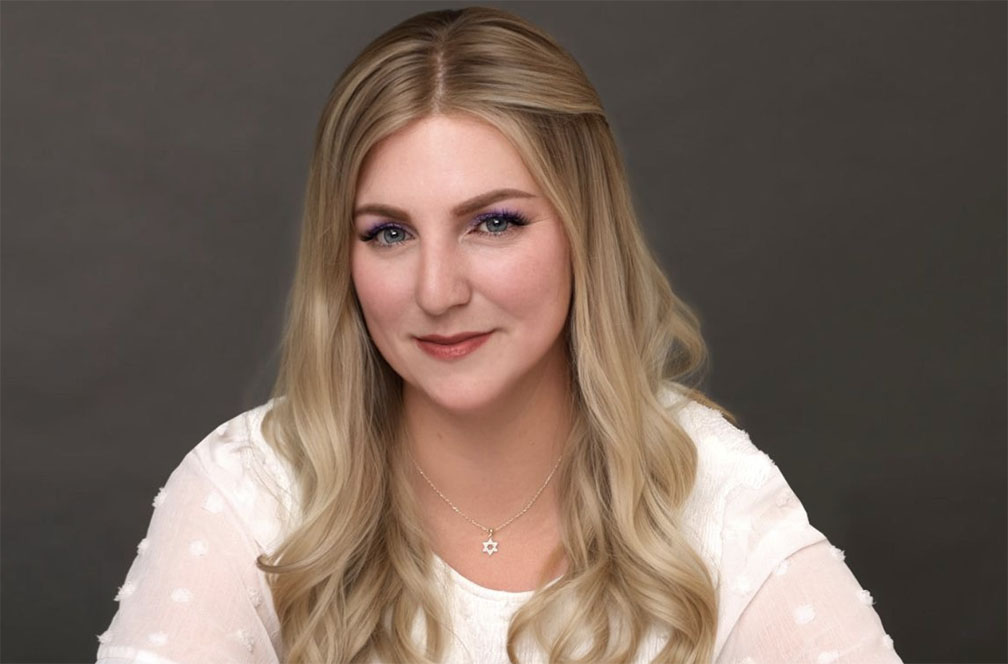
When she was 12, Kylie Ora Lobell decided she no longer believed in God. Bullied at school, shuffled between her divorced parents’ homes and upset about her unanswered prayers, she embraced atheism. It didn’t help with her anxiety or make her feel better about herself — or anything else in her life — but it was better than deluding herself that God exists and that he cares.
It took another 10 years until she found faith again.
It was after her boyfriend, Danny Lobel, suggested they go for Shabbat dinner at Chabad. They were both young and broke, and Kylie was excited by the prospect of a homecooked meal
“‘What’s Chabad?’” she asked. Danny told her it was a place where Jews would have a Friday night meal for free at the rabbi’s house.
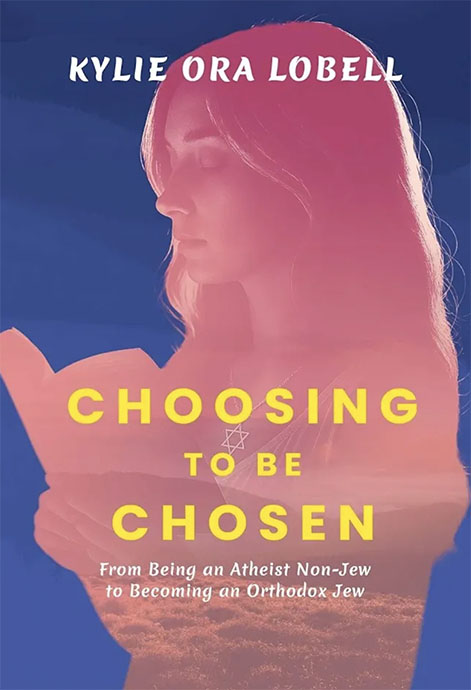 In her debut book, “Choosing to be Chosen,” she recounts that first Shabbat dinner: “I looked around at all the faces in the room. I felt a warmth inside of me that started in my chest and washed over my entire body. I didn’t know if it was the challah, the speech or the sense of community, but I felt euphoric.”
Kylie was hooked. She had always felt drawn to Judaism. Growing up in Baltimore, many of her friends were Jewish, and she was fascinated by what she saw and heard — the traditions, the warmth, the energy.
Danny, however, wasn’t nearly as enthusiastic when she told him she wanted to convert.
“Don’t do it just for me,” he told her.
She assured him she wasn’t.
Usually, it’s the other way around. Many conversions begin because a couple is planning to get married and one of them wants the other to convert. But Kylie and Danny were still early in their relationship — there was no marriage proposal and no pressure.
Danny had complicated feelings about Orthodox Judaism. A former yeshiva student, he had been kicked out for poor performance in his secular studies. Hurt and disillusioned, he left yeshiva, enrolled in public school and eventually became entirely nonobservant. He still drew the line at eating bacon or shellfish, but otherwise, religion no longer played a central role in his life.
So when he met Kylie in New York— a blonde “shiksa” transplant from Baltimore — he didn’t give much thought to the fact that she wasn’t Jewish.
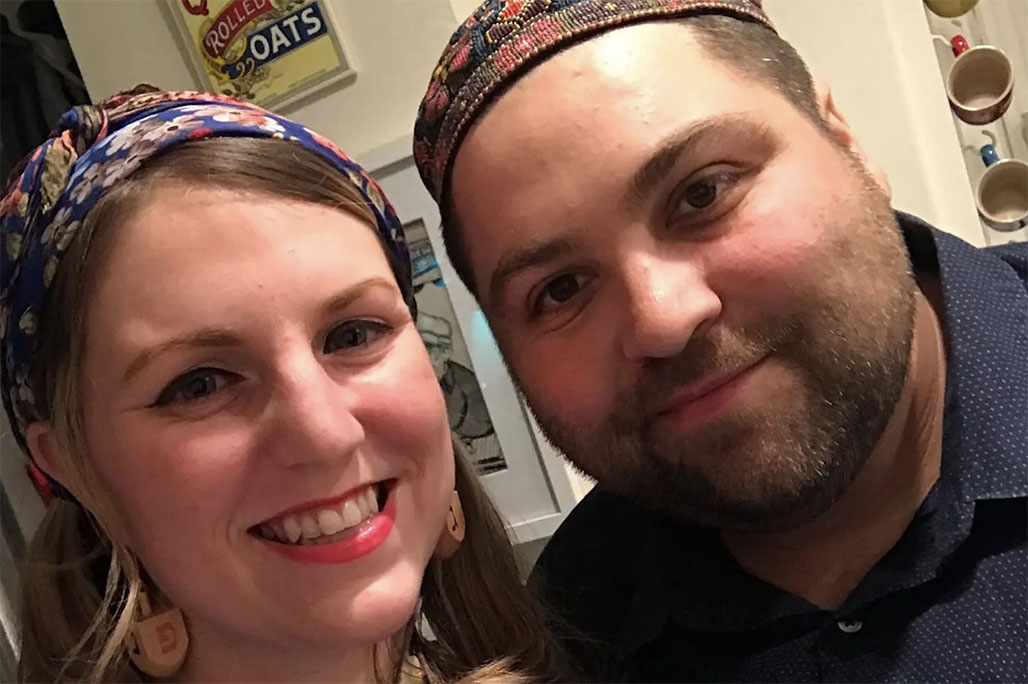
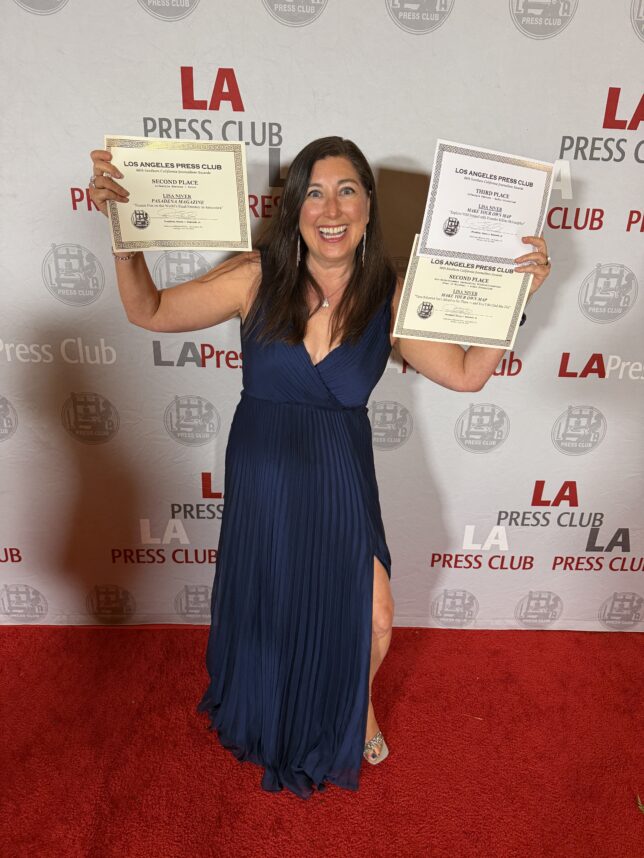
Kylie studied journalism and has been writing for various publications including The Jewish Journal. It’s one thing, however, writing about other people and another to write about yourself, exposing your most vulnerable moments to the world. In her book, Kylie speaks very openly about her depression as a teen, being raised by parents who didn’t hug and kiss or show much affection.
Her parents, she writes, were Christian but not religious. She went to church a few times with her Catholic grandmother, celebrated Christmas and Easter, but that was about as far as it went.
When she called her mother and told her she’s going to convert to Judaism, her mother wasn’t shocked or surprised.
“Well, that makes sense. You were kind of lonely growing up, and it’s good that you’ll have a community,” she said. Her father and sister also accepted the news well.
The Jewish Journal spoke with Kylie.
Do you think that if you were raised in a warm Christian home, you would still seek Judaism?
“I do think about that. Like if I went to church every week and it was a more positive experience, perhaps. But I believe I would keep digging, probably learning Hebrew and keep on searching for answers and I still think it would have led me to Judaism because I connected so much with Jewish people for some reason. I just always felt more comfortable around them and it’s just that’s what spoke to me. I’m journalist by trade and I ask questions and Judaism is the religion of questions. It’s the religion of debating and dissecting and that’s just my personality I would have been very annoying at church, I’m sure. I would keep raising my hand and asking questions and that would not have gone well probably.”
In your book you write that Danny wasn’t Orthodox when you met him, but still, he was there beside you on that journey; did that make it easier?
“Before I met Danny, I dated other Jewish guys, but they were very secular and didn’t go to Hebrew school or anything, so I didn’t really learn about Judaism through them. It’s much easier when you’re dating someone Jewish, or you have a Jewish friend who can guide you. Going to synagogue alone and not knowing anyone is very intimidating. Doing any kind of religious journey alone is super intimidating and overwhelming, but especially Judaism — it takes years and so many changes to your life. You really do need to know people for it to be successful. It’s very hard to do it alone.”
You write about struggling with anxiety. Does faith help you manage it?
“It’s too simple to say I started believing in God and my anxiety went away — that’s not true. Everyone has some level of anxiety. For me, it was therapy coupled with faith, trust in God. I think it’s important to use whatever tools you need, whether that’s therapy or medication. Faith and trust have to go together. I have faith that God has my back, and I trust that whatever happens, even if it’s difficult, is part of a bigger plan. Before, I felt like I was completely in control, and if something went wrong, it was all on me. That creates a lot of anxiety. Now I believe God is in control. You still have free will and you have to make your effort, your ‘hishtadlut,’ but if something doesn’t work out, you trust there’s a bigger picture. That reassurance helps. You don’t feel alone.”
Did coming to Judaism from the outside give you a different perspective?
“Yes. I was coming into it with fresh eyes. I wasn’t rebelling against anything. I was searching.”
What was missing in your life before you embraced Orthodoxy?
“I didn’t have clear values. When you’re the one deciding what makes you a good person, you can justify anything. I relied on society and pop culture to tell me what’s right, but societies can be wrong. You see that throughout history — people justified terrible things. I realized I needed objective truth. I was just floating around with no God, no structure and it wasn’t working for me.”
What did Judaism offer you?
“It offered me moral clarity. I feel it made me a better person. Before I converted, I would steal from grocery stores because my friends said it didn’t matter — it’s a corporation. Looking back, I’m horrified. Stealing is a big deal, but you can justify anything if you don’t have rules in place.
I compare it to dieting. Dieting never worked for me because there wasn’t a higher purpose behind it. But keeping kosher works because I believe in the Torah and in God. We definitely need rules and structures and that’s what works for me.”
Was it difficult to adjust to the restrictions of Orthodox life, like observing the Shabbat?
“I wrote about this in the book. I had published an article about my conversion on a women’s website, and the comments were brutal — criticizing my outfit, saying I looked terrible. One woman even claimed she had been in my conversion class and that I wasn’t sincere. There were hundreds of awful comments. I was reading them on Shabbat, and Danny said, ‘If you weren’t looking at your phone, your Shabbat wouldn’t be ruined. You’re ruining your own peace.’
“That really stayed with me. I put the phone down. Especially now, with how much social media has grown, I see how valuable that break is. When I turned on my phone at the end of Shabbat and see all the fighting and negativity, I want to shut it down again.”
How accepting was the Jewish community toward you after your conversion?
“They accepted me even before I converted, which was very surprising. I always thought from what I watched in the media that they were going to be super reclusive and not want to talk to me. However, they were so accepting and nice. The Orthodox program here in Los Angeles also paid for my trip to Israel to go and study in the seminary before my conversion. I was just so pleasantly surprised by just how accepting everyone was.”
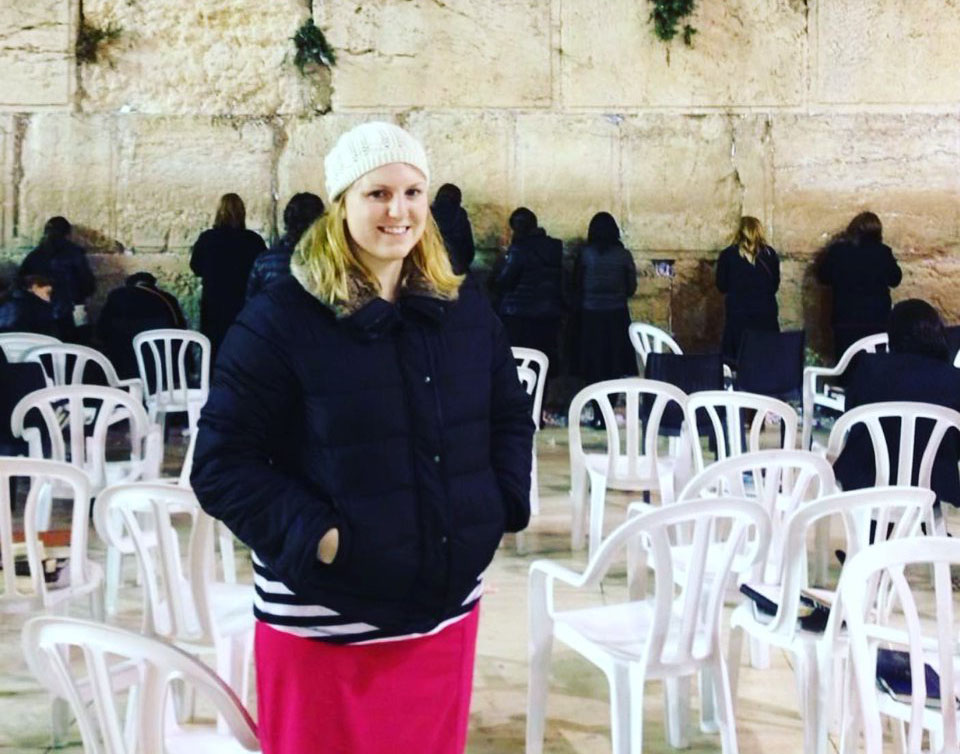
When Kylie met Danny, he was a busy comedian, performing on Friday nights and Saturdays. At first, he was far less enthusiastic about his girlfriend wanting to have an Orthodox conversion. But through Kylie’s eyes — and through the new experiences they shared at Shabbat dinners at Chabad, along with her eagerness to learn — he began to rediscover its beauty and turned Orthodox again.
The first rabbi Kylie met to ask about converting to Judaism told her he had converted Nancy Sinatra but wasn’t sure if she was still Jewish. He told her, “I give private lessons, and they start at $100 a class. I don’t know if you’ll need to take classes for months, or years, but that’s what it is. Let me know when you want to start.”
The second rabbi asked, “Well, typically we don’t do a conversion until you’re ready to get married. Are you getting married soon?”
The answer was no. Kylie was just 22 and hadn’t been dating Danny for long. The rabbi suggested in the meantime for her to take a class: “Introduction to Judaism” at the 92nd Street Y. Kylie enrolled right away.
After Kylie’s conversion, she and Danny had their wedding with friends and family. The community rallied around them. Someone lent them a chuppah from the local gemach — a Jewish communal place where people can borrow items — and a member of the synagogue offered to bar tend. When Kylie had her first child, and then her second and third, members of the community made sure she received warm meals for an entire month. She, in turn, did the same for others, whenever someone was sick or needed help.
“It’s a really give and take. You are just surrounded by people who are just trying to do good and give to each other and it’s so beautiful,” said Kylie.
It must be so different from the way you were brought up
“Very. When you are Orthodox, you live in a community. You walk to synagogue together and you are there for each other. It’s just much more cohesive. I grew up as a lonely child of divorced parents, a latchkey kid, and that really appealed to me — seeing how this community works. The Jews, at our core, are so giving. Even the most secular person — you still see they have a Jewish heart, a neshama. We always want to give, always starting nonprofits. It’s so ingrained in us to help others, and I just love that.”
Book excerpt:
“Being Orthodox, the rabbi said, typically meant that at the very least you keep Shabbat, you eat kosher, you live in an Orthodox community, and you send your child to Orthodox schools. Though I didn’t know all the rules involved or the wide range of practice within Orthodoxy yet, this way of life seemed reasonable. Before I ever decided to convert or went to Chabad with Danny, I thought Judaism just meant that you were neurotic, you ate at delis, and you lifted people onto chairs during bar and bat mitzvahs. I quickly learned that it was so much more than that.”
Order link: https://www.amazon.com/dp/B0FCMT1MK7/