What does it mean for someone to lose faith? Is it a disappointment that the world is not all good? Is it that suffering seems unfair, especially for those who have done nothing to deserve it? Nothing exists without its opposite; not good without evil, not order without chaos, not this world without what lies beyond it. Seeing the world in binaries, like good or evil or order out of chaos, may underlie our fundamental attempts to understand our existence. But when we cannot see the goodness in abject suffering, or the evil in rampant consumption, we can become coarsened to our existence, what we sometimes call losing faith.
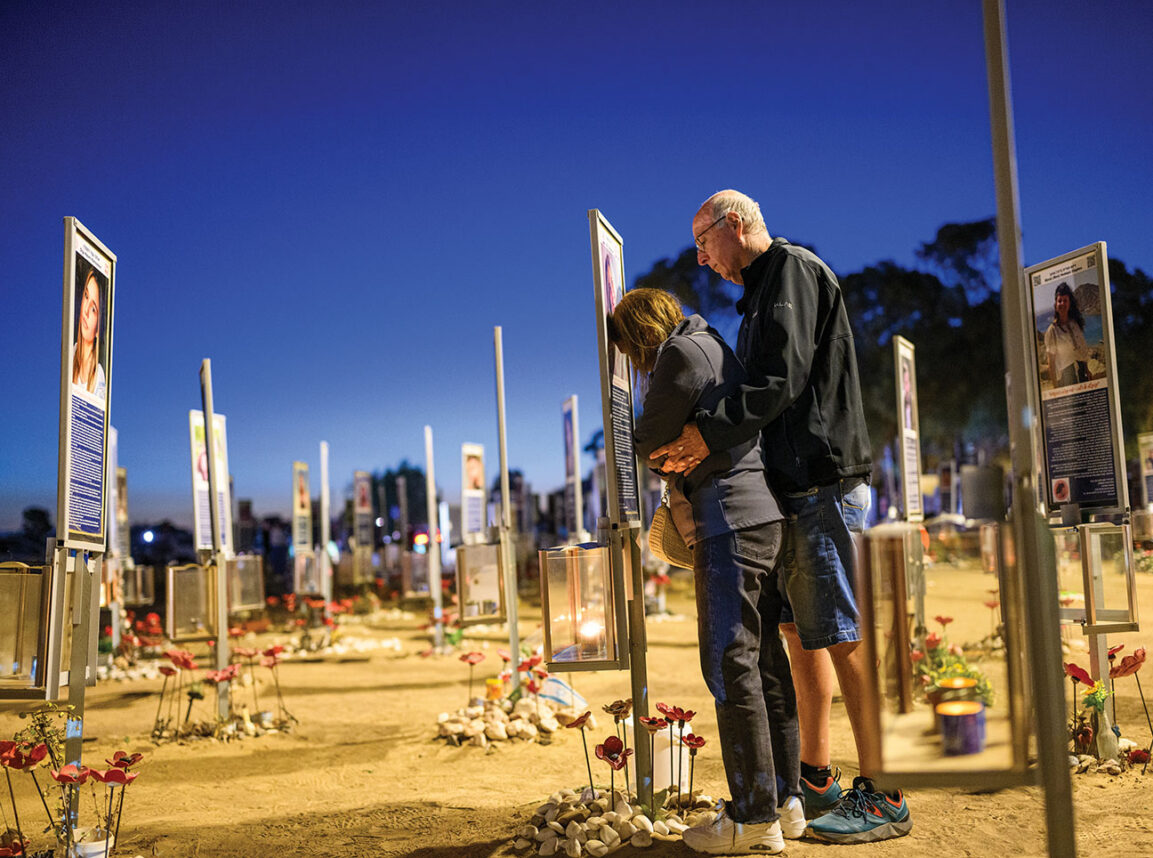
For over two years now, Israelis and Jews worldwide have been suspended in limbo. Oct. 7, 2023 and the aftermath of violence, catastrophe, starvation and misery has hardened our hearts where there was softness, erupted within us anger where there was tranquility, and silenced us where our words of hope and promise seemed hollow. Evil was permitted to prevail. Now, after the reconstruction of the war-torn land begins, there is an outpouring of striving, of finding potential where uncertainty once existed, of rebuilding hope where there was once despair. Time will tell if there will truly be a restoration of some balance there.
And the suffering in Israel is a fraction of the global unrest simmering beneath the surface today.
We should caution ourselves to use a word like faith, or a lack thereof, here. If these past two years have left us with an enduring feeling, it is that faith does not make the world a better place alone, neither can the response be to eradicate evil forever.
Thousands of years ago, Jewish sages imagined a world in which they were able to capture the essence of evil and prevent it from causing further harm to the entire world. The Babylonian Talmud (Yoma 69b) recounts a tale when the leaders captured a mythical creature called the Yetzer HaRa — the evil inclination — and held it in a container of lead to prevent its cries from arousing any sympathy from God. The people quickly discover that no good came from their triumph. Hens wouldn’t even lay fresh eggs. They cry out to God, hoping that somehow they can restore the world with just a little bit of that self-serving impulse.
It seems like the lesson clarifies the perpetual challenge of evil and the desire to eliminate it as the solution. The sages deduce from this experience that “God does not grant half-prayers,” when life grinds to a halt. We learn that the world cannot exist without some measure of evil. This prompts us to ask, then, “Why does it seem like faith presumes evil must not exist?”
The Talmud has a compelling coda by telling us, “They gouged out [the evil inclination’s] eyes and set it free.” By blinding evil in the world we have a capacity to minimize its harm. There is, according to this teaching, a belief that the world is better when we take responsibility to minimize the suffering of others, of our planet and of our universe.
This is what I believe many people are trying to say when they identify themselves as being spiritual, but not religious. In a way, it’s a short form to say that faith is doctrinal, that to believe means to subscribe to a system of thinking and behaving without conditions. Faith implies a sense of blind hope that most people find extraordinarily difficult.
Despite the rejection of cultural definitions of belief, many people nonetheless identify as being connected to something greater than themselves. We want to feel like goodness prevails, even when we witness suffering beyond imagination. We want to take responsibility for what is greater than ourselves, but the wounds to our souls can be overwhelming. Hence, spiritual, but not religious, seems compact and in some ways, convenient.
Asking a person if they have faith isn’t the right question. What we should be asking is what makes us feel connected?
When most people respond to what makes them feel spiritual, it is to feel inspired; to literally breathe in that which is greater than oneself. We often locate our sense of awe and wonder by taking in the grandeur in nature, the elegance of mathematics, and the heroism of people. It is the experience of connection with the flow of unifying wholeness that can define spirituality, and such connection is not limited to any one particular approach. Achieving this state of connection is virtually impossible from a cognitive perspective alone. There is a letting go to grasp the concept of wholeness that some people might call faith. It’s why so many people struggle to let go for fear of falling into an uncertain abyss.
To be genuinely spiritual, as an alternate approach, is to pursue a sense of belonging and interconnectedness. If there is a binary of spirituality, then, it is to be connected or disconnected. There can be no spirituality where there is disconnection. Building upon this can help us grapple with the acts of those that divide and separate us and those that bind and heal us.
The quest to connect and reconnect with the flow of unifying wholeness is fundamental to being human. It isn’t aspirational, per se. Cultivating an awareness of wholeness is what compels us to care for the wounds of the afflicted and to cry out for the injustices of the vulnerable. Focusing on wholeness reminds us that, even when we are confronted with those who do not value human life or the dignity the life of a human being possesses, we are responsible for bridging the chasm, resolving the conflict, leading through the challenge towards wholeness. Our purpose then is to pursue, cultivate, practice, and celebrate our experience of wholeness — of Shleimut in Hebrew.
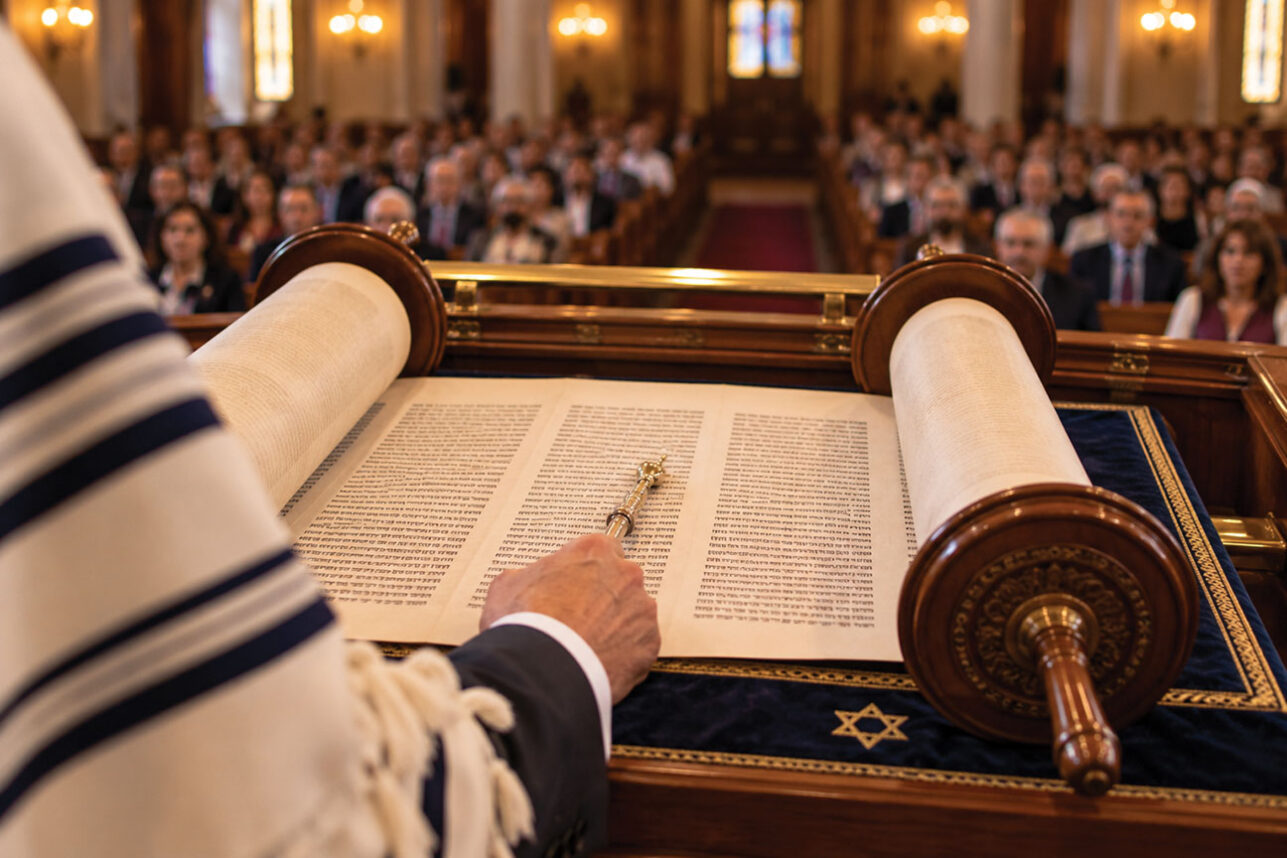
Jewish thinking is deeply focused on connection. The first verses of the Bible assert that the universe was created at once – heaven and earth, chaos and order, light and darkness. We might have thought of these as binaries. Rather, they are containers for the limits, and imply we are connected to everything in between. In the spaces between is where we find the description of the human being as being created B’Tzelem Elohim, in the image of God, and become inspired.
Being created in the image of divinity is similar to the creation of the universe. It isn’t a binary experience, but it does imply we have infinite possibility, despite our absolute finitude. It’s why the most powerful concept preserved from the Torah narrative is, “V’Ahavta L’Reyacha K’Mocha” “Love your neighbor as yourself.” The very concept of concern for the other is an affirmation of the self. And to be created in the image of divinity implies that concern is a concern for the divine image within. Ultimately, God is God and we are not God. But our care for others is our attempt to regain that divine connection.
Wholeness and interconnectedness have a compelling responsibility. In Judaism the concept of Chesed, of human dignity, is fundamental to any spiritual discipline. In Judaism, chesed is not only an act of grace expressed between people especially when there is a rift or division, but also in the transcendent connection that brings authentic healing. This is also what it can mean to be spiritual. And with a glance at virtually every cultural tradition developed by the human community so far, that is what it means to be religious. What we call a spiritual practice is the constant testing, refining, and celebrating the capacity to connect. We may even be so courageous as to claim that, despite the binaries that capture our attention, the ultimate purpose is a complete goodness — the experience of shleimut.
Those who seek spirituality will ultimately find it, in part, among other people. The more circles of connection that emanate into the world, the more wholeness we will share, together. Our task, then, is to create intentional communities where spirituality is at the center. Guided by chesed, each step along the way, is how spirituality will grow in our increasingly complex world. Let us resume the process of healing today, side by side, never losing hope that wholeness is indeed possible in our lifetimes and beyond.
Rabbi Joshua Hoffman is President and CEO of Academy for Jewish Religion, California.