fbpx

Rainer Weiss, scientist who fled Nazis, among Nobel Prize in Physics winners

[additional-authors]
October 3, 2017
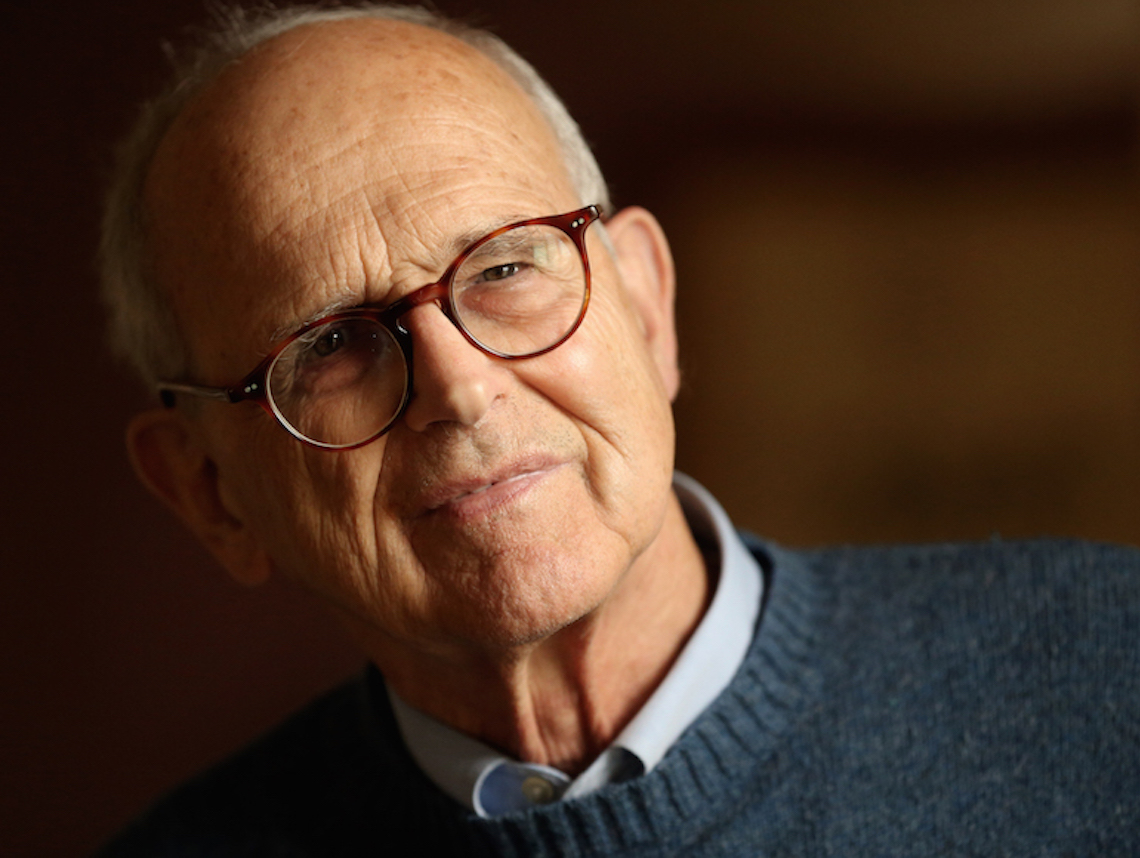
Physicist Rainer Weiss at his home in Newton, Mass., on May 13, 2016. Photo by Craig F. Walker/The Boston Globe via Getty Images

Three American scientists were awarded the Nobel Prize in Physics, including one who fled the Nazis with his parents and another whose grandparents were Polish immigrants.

Rainer Weiss, a professor at the Massachusetts Institute of Technology, and Kip Thorne and Barry Barish, both of the California Institute of Technology, were awarded the prize on Tuesday for the discovery gravitational waves, which were predicted by Albert Einstein a century ago.

Gravitational waves are ripples in space and time that help scientists explore objects in space.

Weiss won half of the $1.1 million prize, with Barish and Thorne sharing the other half.

The Nobel winners and the late Ron Dreyer, also of Caltech, founded the international collaboration of physicists and astronomers known as LIGO, the Laser Interferometer Gravitational-Wave Observatory. In February 2016, they announced that they had recorded gravitational waves emanating from the collision of a pair of black holes a billion light years away.

Drever died this year; the Nobel Prize is not awarded posthumously.

Weiss, 85, was born in Berlin to a non-Jewish mother and a Jewish father. The family fled Berlin for Prague when Weiss was a baby because his father was Jewish and a member of the Communist Party. After the Munich agreement in 1938, the family left Prague for the United States. Weiss earned his doctorate from MIT and in 1964 joined its faculty.

Barish, 81, was born in Omaha, Nebraska, and grew up in Los Angeles, the son of Lee and Harold Barish, the children of Polish immigrants to the United States. He earned his doctorate in 1962 from the University of California, Berkeley, and joined Caltech in 1963.

Thorne, 77, received his doctorate from Princeton University in 1965 and joined Caltech in 1967.

Did you enjoy this article?
You'll love our roundtable.

Editor's Picks

Latest Articles

Post-Passover Pasta and Pizza

What carbs do you miss the most during Passover? Do you go for the sweet stuff, like cookies and cakes, or heartier items like breads and pasta?

Freedom, This Year

There is something deeply cyclical about Judaism and our holidays. We return to the same story—the same words, the same questions—but we are not the same people telling it. And that changes everything.

A Diary Amidst Division and the Fight for Freedom

Emma’s diary represents testimony of an America, and an American Jewish community, torn asunder during America’s strenuous effort to manifest its founding ideal of the equality of all people who were created in the image of God.

More than Names

On Yom HaShoah, we speak of six million who were murdered. But I also remember the nine million who lived. Nine million Jews who got up every morning, took their children to school, and strove every day to survive, because they believed in life.

Gratitude

Gratitude is greatly emphasized in much of Jewish observance, from blessings before and after meals, the celebration of holidays such as Passover, a festival that celebrates liberation from slavery, and in the psalms.

Freedom’s Unfinished Journey

The seder table itself is a model of radical welcome: we are told explicitly to invite the stranger, to make room for those who ask questions and for those who do not yet know how to ask.

Thoughts on Security

For students at Jewish schools, armed guards, security gates, and ID checks are now woven into the rhythm of daily life.

Can Playgrounds Defeat Antisemitism?

The playground in Jerusalem didn’t stop antisemitism, and renovating playgrounds in New York City is not likely to stop it there, either — because antisemitism in America today is not rooted in a lack of slides or swings.

More news and opinions than at a Shabbat dinner, right in your inbox.