Some of our strongest memories live in the kitchen. Mother’s Day is a time to celebrate Mom while savoring those foods and food memories.
Ethiopian Jewish chef and cookbook author Beejhy Barhany associates her Messer Wot (Birsen Tsebhi), a red lentil stew, with her mom.
“This rich yet simple dish is a staple comfort food in Ethiopian Jewish households, with a history tracing back to the biblical story of Esau and Jacob,” Barhany, author of “Gursha: Timeless Recipes for Modern Kitchens, from Ethiopia, Israel, Harlem and Beyond,” told The Journal. “My mother was an expert at preparing these red lentils; they were always delicious, warming and a true staple in our home.”
Barhany now prepares this dish for her own children, and it has become one of their favorite comfort foods.
“The dish serves as a beautiful reminder of how our recipes connect us across generations and is a memory that sustained my family during our journey from Ethiopia to Israel,” she said. “It’s incredibly versatile: packed with nutrients and protein, can be served hot or cold and pairs well with rice, injera or salad. It can even be used as a spread or dip.”
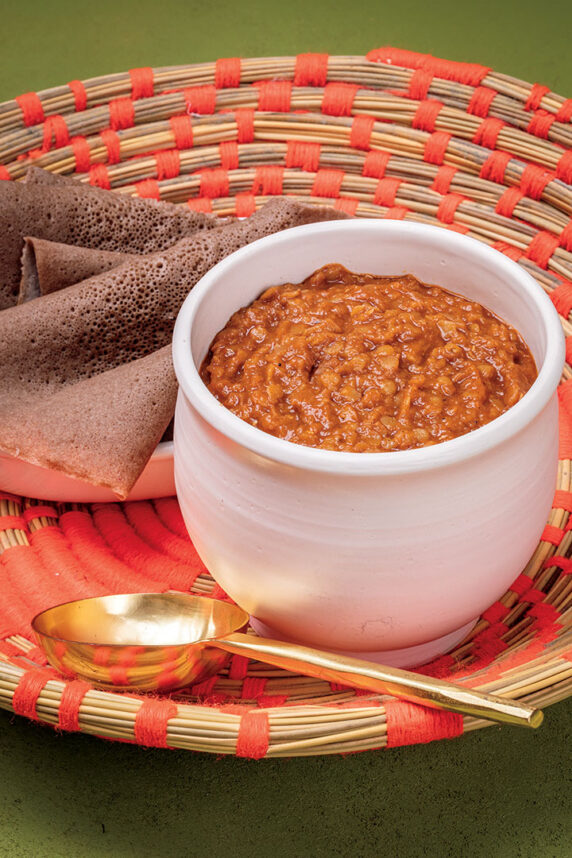
Messer Wot/Birsen Tsebhi
Slow-Cooked Red Lentil Stew
Serves 6 to 8
© Clay Williams / http://claywilliamsphoto.com
While red lentils cook much more quickly than other types, taking our time helps them develop the right flavor and texture. This recipe makes a medium-spiced stew; feel free to add more berbere.
4 medium red onions, quartered, soaked briefly in water (to reduce the astringency) and drained
1 Tbsp minced garlic
1 Tbsp minced fresh ginger
3/4 cup vegetable oil, plus more as needed
3 Tbsp Berbere (a fiery, aromatic spice blend featuring chili peppers, fenugreek, ginger, garlic, cardamom, cinnamon and cloves)
1 1/2 tsp fine sea salt, plus more to taste
1 1/2 tsp black pepper, plus more to taste
1 (6- ounce) can tomato paste
3 cups red lentils, rinsed well
1 tsp ground roasted korarima or ground cardamom
In a food processor, process the onions, garlic and ginger into a thick paste. Pour into a large pot and bring to a simmer over medium heat. Cook, stirring occasionally, until most of the liquid has evaporated, 5 to 10 minutes. Add the oil and simmer for another 10 minutes.
Stir in the berbere, salt and pepper. Simmer, stirring and scraping constantly, until the stew is deep red and thickened and the onions are melting into each other, 15 to 20 minutes, adding a few tablespoons of water to help loosen anything sticking to the bottom of the pot and adding a few tablespoons more oil if the mixture begins to look dry.
Add the tomato paste. Half-fill the empty tomato paste can with water, scrape the remaining paste off the sides of the can into the water, and pour that into the pot. Bring to a boil and simmer until the tomato paste melts into the base, 15 to 20 minutes, adding up to another cup of water to help integrate the two if necessary.
Stir in the lentils and 4 cups of water, return to a simmer, and cook for 10 minutes. Add 1 cup water and cook until the lentils begin to disintegrate into the stew, about 10 minutes longer. Stir in the korarima. Taste and add salt and pepper, if necessary. Serve warm.
“Every Friday before Shabbat, my mom made a big batch of schnitzel; [we had] dinner plus leftovers for days,” Sababa Foods founder and home cook Amy Dell told The Journal. “My dad and I would steal the crispy edge pieces while she chased us away from her perfectly stacked pile.”
They always dipped the schnitzel in the family’s Saturday sauce. Saturday Sauce is a slightly spicy tomato-based sauce; it’s like the base of shakshuka.
“Saturday Sauce was always on the table for Shabbat in general because we always dredged our challah in it,” she said.
This is Dell’s version of her mom’s recipe.
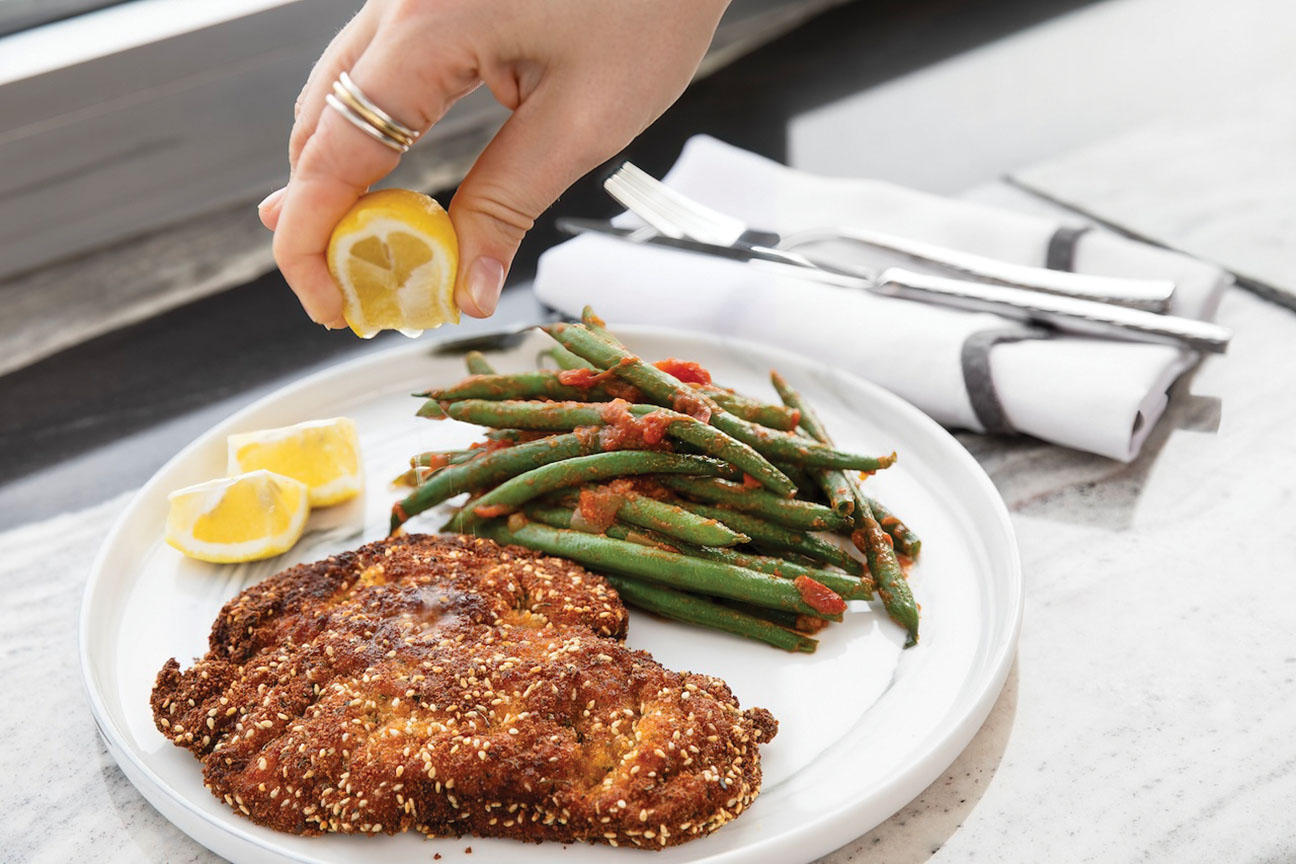
Saturday Sauce, Green Beans and Schnitzel
1 lb. skinless, boneless chicken breasts
2 eggs
2 cups breadcrumbs
Recommended seasonings for the breadcrumbs: paprika, turmeric, dried parsley, onion powder, garlic powder, kosher salt, black pepper, sesame seeds
Canola oil for frying
1 16 oz. bag trimmed green beans
Water for boiling
1 16 oz. jar Saturday Sauce
Optional: Juice from a lemon
Clean and pound your chicken breasts; remove tendons (using a fork) and pound thin.
In a bowl, whisk two eggs. In another bowl, mix your breadcrumbs and preferred seasonings.
Dip your chicken cutlets into the egg on each side (with one hand – your wet hand) and then into the breadcrumb mixture on each side (with your other hand – your dry hand). Press the cutlets down into the breadcrumb mixture to make sure all sides have been thoroughly coated.
Pour a generous amount of canola oil into a frying pan. Heat to medium-high. Once the oil is heated, dip your chicken cutlets into the oil and allow to fry on each side (around 5-7 mins. per side depending on the thickness of your chicken) until golden brown and crispy.
I recommend having a plate with a paper towel on top to place the chicken cutlets once they’re cooked, to soak up excess oil.
Heat a pot of salted water on the stove. Once boiling, add your cleaned and trimmed green beans. Boil for no more than 5 minutes. While the beans are boiling, get a bowl and fill it with ice and cold water. Once 5 minutes are up, put your cooked green beans into the ice water so that they do not continue to cook.
Once cooled, drain and dry your green beans. Coat them with a generous amount of Saturday Sauce.
Alternatively, you can sauté your green beans in olive oil or avocado oil and then add Saturday Sauce.
Squeeze fresh lemon juice on top and enjoy.
Happy Mother’s Day!