The holiday of Sukkot challenges our view of strength.
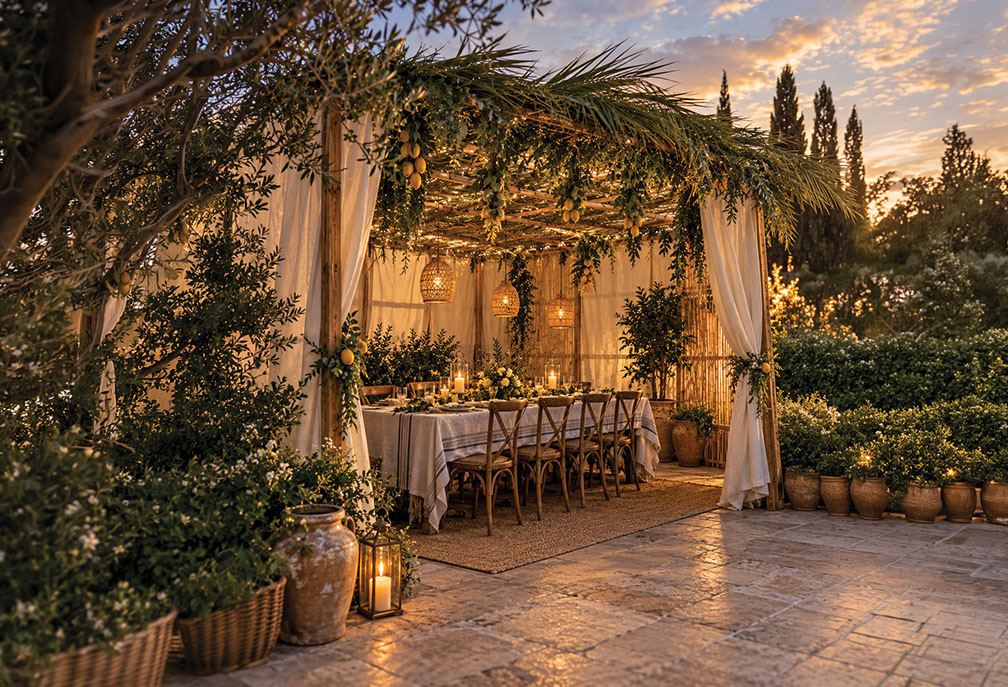
It confronts us with two structures—the homes where we live and the frail, temporary sukkah where we celebrate the holiday.
The home is sturdy, the sukkah is fragile.
When I lived in Montreal, Jews would always worry about hard rains shaking up the sukkah. One wonders how often throughout the centuries sukkahs have had to endure the elements.
The weak structure, though, is part of the fun. You cozy up inside this makeshift “booth” and sit at a glorious holiday table with all the trimmings. It’s not unlike kids cozying up inside a tree house.
Indeed many of the lessons of Sukkot revolve around that makeshift booth: We’re reminded of the fragility of life; we’re grateful for our daily blessings, especially our homes; we relearn the value of humility; we identify with the struggles of our ancestors, and so on.
These lessons see the sukkah in the traditional way — as something fragile and temporary.
But there is another way of looking at the sukkah that is the very opposite of a frail, temporary structure.
It has to do with longevity.
The power of the sukkah, in this view, is not just spiritual but historical.
Try this thought experiment. When you enter the sukkah this year, think of your bubbes and zeides who built their own sukkahs 100, 200 or 2,000 years ago, and ask yourself: How can anything so frail and fragile endure for so long?
We can start with the year 70 AD, when the most powerful and enduring real estate in Judaism—the Holy Temple in Jerusalem, the center of Jewish life— was destroyed by the Romans. Our survival was suddenly at stake. We were thrown into exile, scrambling to replace the irreplaceable.
As we became wandering Jews, Judaism became a portable religion. The Temple rituals found a spiritual home at the Shabbat table. Whether we lived in Poland or Morocco, Shabbat and the annual Jewish holidays never stopped coming.
While all these holidays were celebrated inside our homes, one quirky holiday asked us to leave our homes and build something.
That holiday is Sukkot.
Through a long history of persecution and living as strangers in often hostile lands, Sukkot gave Jews an annual opportunity to show they could still build. They could still roll up their sleeves and build holiness through physical labor.
What is endurance if not the power to build something holy and meaningful, century after century?
Sukkot, in its own way, was the holiday that prepared Jews for the return to Zion, when the people of the book became the people of the hands and built Israel.
In that sense, Sukkot, the holiday of joy, might be the most empowering of all Jewish holidays. It reminds Jews that we are not victims or complainers — but builders of joy.
Sukkot, the holiday of joy, might be the most empowering of all Jewish holidays. It reminds Jews that we are not victims or complainers — but builders of joy.
That reminder couldn’t come at a better time, when we see much of our community demoralized by the alarming rise of antisemitism and antizionism.
Sukkot helps us remember who we are.
Our enemies like to portray us as worthy of hate. And because self-criticism is a prized Jewish value, it’s easy for that value to become a slippery slope to self-hatred and self-destruction.
Our history is the best antidote to that slope.
We may be fallible and imperfect, but we endure.
We endure thanks to the centuries of Talmudic debate that have informed our ethical ideals and cultivated our wisdom.
We endure thanks to our stubborn commitment to continue honoring the Torah rituals that nourish our daily lives.
We endure because we know that no matter how much animosity we must confront, Shabbat, Passover, Shavuot, Hanukkah, Purim, Rosh Hashanah, Yom Kippur and Sukkot always come.
We endure because we know those holidays would be meaningless if they didn’t have so many Jews who continue to embrace them — century after century after century.
Countless words have been written to explain that endurance. Here’s one I like: we never forgot to build.
That frail little hut you will enter on Friday night may well be the sturdiest structure in Jewish history.
They can destroy our Temples and demonize us on social media, but they can’t destroy a joyful spirit that never stops building.
That enduring spirit is the power of the sukkah.