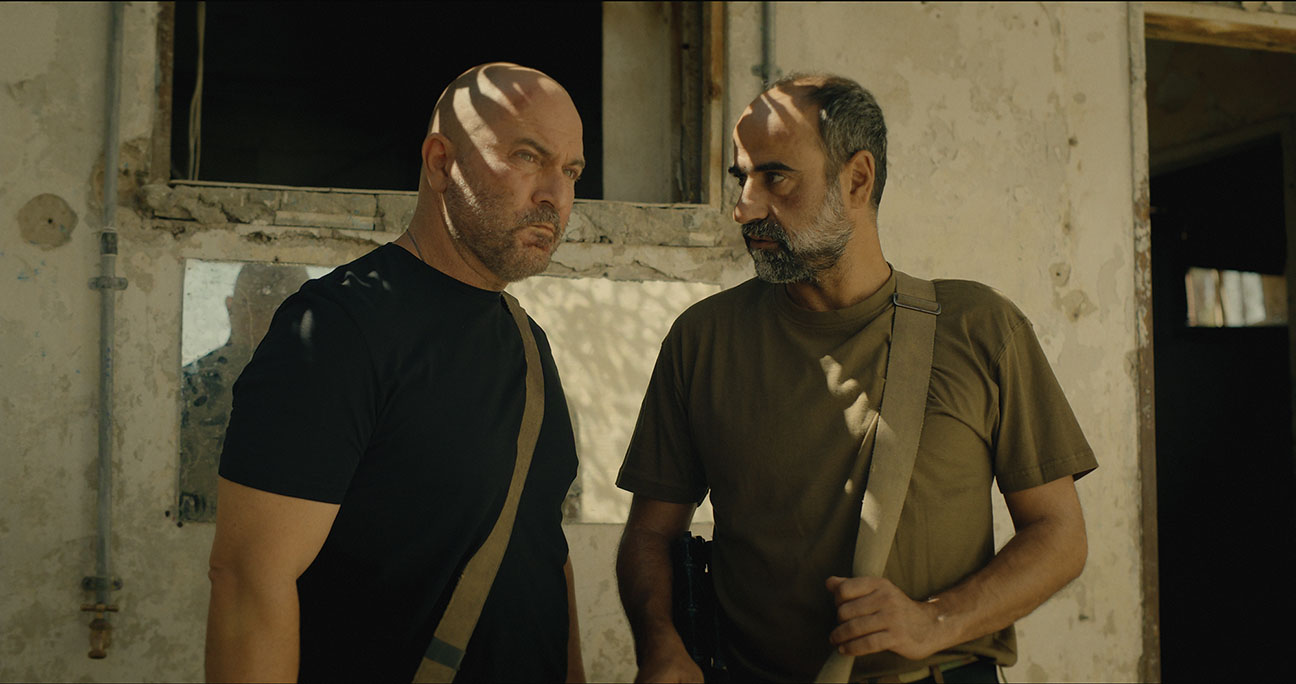

“Fauda” is No. 1 on Netflix in Lebanon again. The fifth season of the Israeli thriller hit Netflix on Sept. 8 and ranked No. 4 among the platform’s non-English television shows worldwide for the week of Sept. 7-13, with 2.1 million views and 15.9 million hours watched.
Season 5 is the first season of “Fauda” built around the Hamas-led Oct. 7, 2023 terror attacks on Israel. The season starts two years after the attack, when an unsanctioned revenge mission in Marseille pulls Doron Kavillio, played by co-creator Lior Raz, back into the field.
Arab audiences were watching “Fauda” years before Oct. 7. During Ramadan in 2020, when Season 3 hit Netflix, the Jewish People Policy Institute cited Netflix Top 10 lists showing “Fauda” at No. 1 in Lebanon, No. 3 in the United Arab Emirates and No. 6 in Jordan.
Netflix’s archive put Season 4 at No. 2 in the UAE and No. 6 in Morocco for the week of Jan. 23-29, 2023 — nine months before the Oct. 7 terror attacks.
Season 5 made the Top 10 in Jordan, Qatar, Bahrain, the UAE, Oman and Kuwait during its first week on Netflix. It ranked No. 4 in Jordan and Qatar, No. 5 in Bahrain and the UAE, No. 7 in Oman and No. 9 in Kuwait.
The Jewish populations in those countries are small. The World Jewish Congress said Lebanon had 29 Jews in 2020, Bahrain has about 50 and Morocco had about 2,100 in 2020. The Jewish Council of the Emirates estimates about 1,000 Jews live in the UAE, with the World Jewish Congress citing estimates ranging from 500 to 3,000. The U.S. State Department does not list an established Jewish community in Jordan, describes Jews in Qatar as one of several very small religious groups, says Oman has no remaining indigenous Jewish population and reported no known Jewish citizens in Kuwait.
“Fauda,” Arabic for “chaos,” premiered on Israel’s Yes network in 2015. Raz and journalist Avi Issacharoff created the Hebrew- and Arabic-language series around an Israeli undercover counterterrorism unit. Netflix began distributing it outside Israel in 2016. Season 1 brings Doron out of retirement after he learns that a Hamas commander he thought was dead is still alive. Season 2 moves into a revenge plot involving ISIS. Season 3 sends the story into Gaza. Season 4 expands through Jenin, Brussels and Lebanon. Season 5 deals with Oct. 7 and what came after it.
The writers were already working on Season 5 when the Oct. 7 attacks happened. They threw out the direction they had been pursuing and started over.
“We understood that a show that deals with reality in the Middle East, in Israel, cannot disconnect itself from the biggest event that happened here in the last, I would say, 75, 80 years. You cannot ignore that,” Issacharoff said in an interview published on Netflix.
Raz said the creators knew the audience extended far outside Israel.
“I hope that through seeing this show, [viewers] will understand how peace is important, and how we need to think differently and how war is ruining the universe. It’s ruining our region, it’s ruining our country, and their countries, for sure,” he said. “We know that people see this show all over the world — in the Arab world, in Israel — [and they’ll see] that the price of the war is hard, and we need to have hope to solve this situation.”
“I hope that through seeing this show, [viewers] will understand how peace is important, and how we need to think differently and how war is ruining the universe. It’s ruining our region, it’s ruining our country, and their countries, for sure.” – Lior Raz
Ahead of the Asian premiere of Season 4 at the 2022 International Film Festival of India, India’s Press Information Bureau said 90% of viewers of Seasons 1 through 3 came from outside Israel. India was also among the top 20 countries for Netflix viewing of Israeli content. Still, the World Jewish Congress estimated that about 4,800 Jews lived there in 2020. Pew Research Center estimated India had 213 million Muslims in 2020, the third-largest Muslim population in the world behind Indonesia and Pakistan.
Netflix called “Fauda” “one of the most popular Israeli series on Netflix” when Episode 1 of Season 4 had its Asian premiere at the 2022 International Film Festival of India in Goa on Nov. 27. Raz and Issacharoff also took part in a festival panel on global storytelling. India also got its own adaptation of “Fauda.” “Tanaav,” set in Kashmir, debuted on SonyLIV in November 2022. “Tanaav 2” later won the 2025 ContentAsia Award for Best TV Format Adaptation in the scripted category.
Season 5 arrived on Netflix one week before the sixth anniversary of the Abraham Accords. On Sept. 15, 2020, Israel, the United Arab Emirates and Bahrain signed agreements at the White House establishing diplomatic relations between Israel and the two Gulf states. The day before the signing, Omar Saif Ghobash, then the UAE’s assistant minister for cultural and public diplomacy and a member of the Emirati delegation in Washington, told The Times of Israel that “a lot of Emiratis are watching ‘Fauda’ and ‘Unorthodox’ on Netflix, so an image is building up.” He added that young Emiratis had told him they wanted to visit Tel Aviv and meet Israelis their own age.
Six years later, during the week before the Abraham Accords anniversary, Season 5 of “Fauda” was No. 5 on Netflix in the UAE.