At a time when antisemitism in schools is on the rise, the Los Angeles Unified School District (LAUSD) has taken a historic step: for the first time, it has unanimously recognized May as Jewish American Heritage Month and named Eighteen Education as an official resource for its more than 560,000 students.
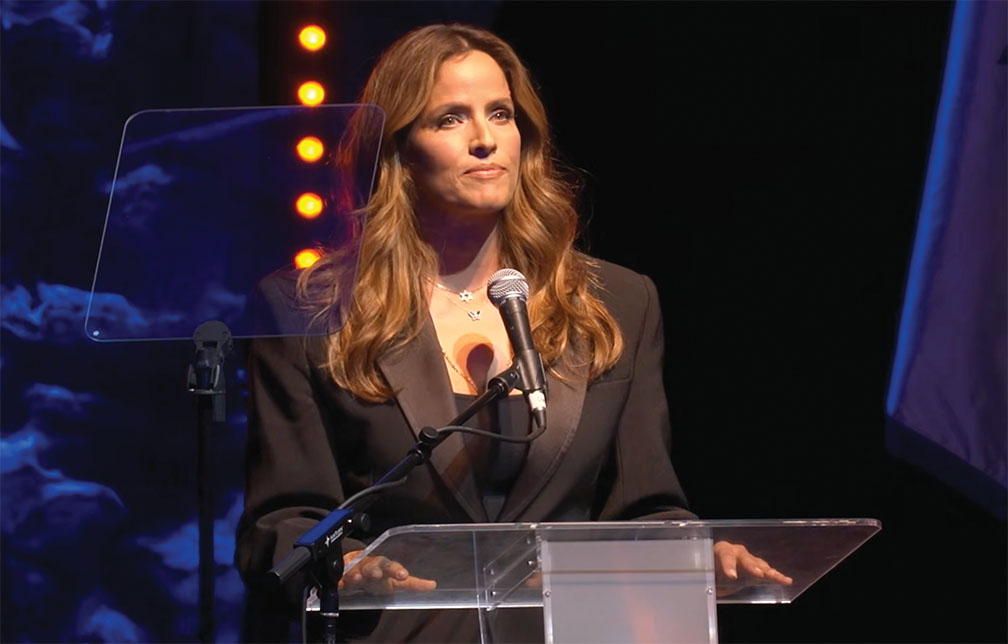
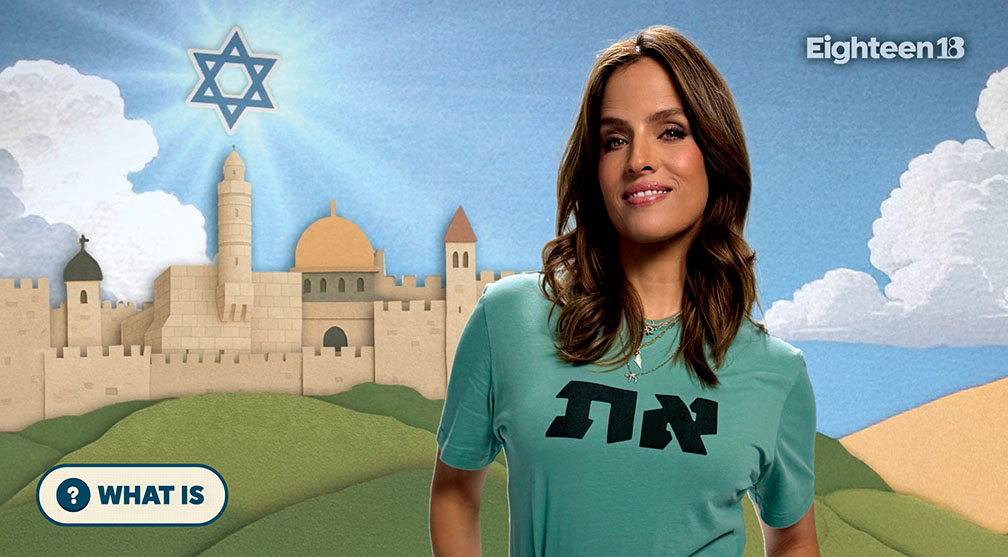
Eighteen, the organization behind the curriculum, was founded in 2024 by Noa Tishby. Its mission is to combat antisemitism, support Israel and foster Jewish pride through media, education and cultural initiatives. The organization has developed content and programming designed to engage both Jewish students and their peers in a way that resonates – through short, engaging video content.
In an age of shrinking attention spans and endless scrolling, Tishby believes educators must adapt to how students consume information. The actress and producer turned activist and author has spent the past year developing the program. “There is a profound gap in how Jewish history and identity are taught, or not taught, in American schools,” she told The Journal. Jewish American Heritage Month, she said, should not be treated as a symbolic gesture, but as an opportunity to educate, engage and tell the Jewish story.
For Tishby, the district’s decision carries both cultural and practical weight. “When we realized that LAUSD had never acknowledged Jewish American Heritage Month, we were a little surprised. To see it pass unanimously, and to work closely with Nick Melvoin to make it happen, means the world,” she said.
LAUSD Board Member Nick Melvoin recommended the curriculum to LAUSD, and the board unanimously voted to recognize Jewish American Heritage Month. Melvoin said during the board meeting that Eighteen’s curriculum is intended to ensure the resolution is not just “checking a box,” but encourages meaningful education and engagement.
Tishby, who has been advocating for Israel through her Instagram account, where she has 1 million followers, sees education as the primary tool in addressing rising antisemitism. “I think it all begins and ends with education. We need to make sure we weed out bad curricula and replace them with ones that spread knowledge and love rather than hate.”
According to Tishby, the issues seen on college campuses often begin much earlier. “When kids show up on college campuses, it doesn’t come out of nowhere that they get radicalized,” she said. “It happens before – ideas are already in the system, often without parents even realizing it.”
At the same time, she acknowledges that much of today’s learning happens outside the classroom. “We’ve essentially delegated a lot of our children’s education to social media,” she said, adding that while parents can try to limit screen time, schools must ensure students are exposed to accurate and responsible curricula.
That reality is part of what shaped the program’s format. Tishby said short-form video is one of the most effective ways to reach younger audiences. “You have to meet them where they are,” she said. “And where they are is on social media.”
The video series, “What Is,” which took about a year to develop, was designed with that in mind. The educational videos provide a clear, accessible foundation on key topics including Judaism, the land of Israel, antisemitism and the Holocaust.
Each episode is approximately five minutes long and breaks down complex subject matter into digestible, fact-based content for students, educators, journalists and the broader public. The videos aim to support informed conversations by grounding viewers in essential historical context at a time when these topics are increasingly part of the national dialogue.
The curriculum is simple to implement – four episodes, once a week throughout the month of May.
“When people see it, they’ll understand the level of effort that went into it,” she said. “It’s very high-level, well-researched and visually engaging.”
Tishby said the curriculum was designed to be broadly accessible, even beyond the classroom. While the video series itself can resonate with a wide range of audiences, the structured curriculum is currently geared toward older students. “We created the series in a way that could work for younger audiences as well as adults,” she said. “But the curriculum itself is aimed at middle school and high school.”
Tishby noted that Jewish American Heritage Month itself has yet to fully take hold in the public consciousness. “I didn’t even know about it until a few years ago,” she said. “We haven’t yet turned it into a real, loud celebration, and that’s something that needs to happen – with or without this curriculum.”
While she believes the program can play an important role in addressing antisemitism, Tishby emphasized that no single initiative can solve the problem on its own. “It will be a tool, but let’s not kid ourselves that one thing is going to be the answer,” she said. “I have found throughout the years that a lot of people want quick fixes and they’re like, where’s the answer? What is the one thing we need to do?”
She pointed instead to the need for a broad, coordinated response. At this moment, she said, addressing antisemitism requires an “all hands on deck” approach – spanning education, entertainment, academia, business and public safety. Antisemitism, she added, has become pervasive, and confronting it will require sustained effort across every sector of society.
After the videos – on Judaism and antisemitism – were screened for students at a Los Angeles public school, early reactions highlighted how impactful basic education can be. One moment stood out.
“A girl raised her hand and said, ‘Wow, I didn’t realize antisemitism is so old,’” Tishby recalled. “She simply didn’t know. She thought it was something new that started with the war with Hamas. A lot of the time, what we see is a lack of understanding. People just need to be informed.”