fbpx

October 3, 2017

5 Tips for a Jewish Road Trip in New Zealand

There is a lot to look forward to if you are heading for the remote and astonishingly beautiful territory of New Zealand. Most tourists come to experience a wildlife adventure, exploring the vast wild landscapes of this country and there is no better way to do that than embarking on some New Zealand road trips. But besides the long scenic routes and lively exotic cities, Jewish travelers can explore the history of their ancestors, who have started settling here since the 18th century. We gathered some useful advice for a beautiful journey to New Zealand with Jewish cultural highlights:

1. A Brief History of Kiwi Jews


New Zealand is a culturally diverse country and the home about 10 000 Jews, gathered in a few insular communities. However, these communities are strong and active and gave many skilled people to the public life of the country. Jews settled here since the 18th century and had an important role in the economic development of these territories by doing trade with Australia and The Great Britain.

2. Fun for a One Week Plan


If you have just a week to spend in New Zealand, opt for Auckland and the Bay of Islands. The weather is pleasant all year round and you can enjoy the vibe of the City of Sails and admire the countless yachts which rest in its harbor at sunset. At the Orthodox Auckland Hebrew Congregation, you will find two synagogues, a Holocaust memorial, and a Jewish Deli. Among other landmarks, don’t miss the Old Synagogue on Princess Street and stop by to admire the historic Symonds Street Jewish Cemetery. Further on, visit the beaches of Omapere, the vineyards of Waiheke Island and the bohemian Matakana Coast.

3. An Extended Stay in the North


If you planned over two weeks in the North Island, head from Auckland to Wellington, taking the thermal route. Stop by and let the view sweep you off your feet at Lake Taupo, Tongariro National Park and the wine lands of Martinborough. In the capital, you can learn about the stories of the survivors of Nazi persecution who came to New Zealand at the Holocaust Centre or check the available exhibitions and events at the Jewish Community Center. Check out the Yitzhak Rabin Memorial and pay your respects at the Bolton Street Memorial Park.

4. The Southern Itinerary


Beware of the weather if you don’t like snow, the South Island of New Zealand is covered in it in July and August. In this part of the country, you’ll enjoy smaller and quieter towns with a Jewish history, like Dunedin and Christchurch. You can visit the southernmost synagogue in the world in Dunedin, designed by the famous John Goldwater, but also the site of the Old Synagogue in Moray Place or Olveston, the mansion of a prominent Jewish businessman where you will see European and oriental artifacts. Drive to the rugged beaches of Otago Peninsula and admire the penguins or go to the Royal Albatross Centre at Taiaroa Head, the only natural habitat for this majestic bird.

5. Enjoy the Diversity


Take some time to explore the various cultural influences of New Zealand. In the North, you will have many opportunities to meet the Maori culture, whether you choose to stop at one of the villages around Rotorua or experience a Marae stay at Waiheke Island. Also, the Toitū Otago Settlers Museum has an amazing architecture and impressing collections.

New Zealand offers the opportunity of visiting themed museums and synagogues and connecting with the local Jewish communities, while you will also have the chance to enjoy the rich and diversified wildlife and to immerse in the laid-back atmosphere of the harbor cities.

5 Tips for a Jewish Road Trip in New Zealand Read More »

The Mandalay

The water flows to our valley through pipes
and fills a tank. Sharks swim there. Circling.
Circling themselves in the confines of a crystal clear cage.

People stare and smile and circle themselves,
about and about the exhibit. Who would’ve thunk?
A shark, here, in the middle of the desert.

The water flows to our valley through pipes
and flows through many more and
finally rains down upon golf greens and gardens.

The flowers bloom and the grounds grow
and the sun singes away at their edges,
browning and blurring,
crumbling and turning,
overexposed to the bright lights
of our valley.

But how?

Its heavy metal hand,
the metal wind,
stiffened the stocks and stems.
It’s taken the heart of life and lifted it from its mother,
laid it out upon the land which was never meant
to foster so much life, no, no not like this;
never meant to orchestrate such obscurities.

We brought what was not meant to thrive in a land
with a specific kind of alive
and we worshipped the gods of backwards ways
cups filled, dues payed, a blatant disregard for the worth of our days.
We worshipped the night, and set our eyes upon
synthetic stars and street lights.

The water flows to our valley through pipes.
We flipped nature on its head and we wonder:
Why did this happen? How could this happen?

I fear we’ve forgotten the power of our passions,
the prayers offered through actions,
and now it’s taken its toll.

The water flows to our valley through pipes
and we wonder how something so unnatural,
so antithetical to life could find itself here…
in our valley.


Hannah Arin is a junior at Pitzer College pursuing a double major in religious studies and philosophy. 

The Mandalay Read More »

Rosh Hashanah in the midst of a hurricane

It took three phone calls via WhatsApp to connect with Chabad Rabbi Mendel Zarchi in San Juan, Puerto Rico.

A week after Hurricane Maria had torn through the region the day before Rosh Hashanah, Zarchi spoke with the Journal via a “hotspot” — someone else’s phone that had internet connectivity, because his did not. Most of the tiny island territory still was without water or power.

Zarchi’s voice cracked as he talked of living through the night of the storm in the storage room of San Juan’s Chabad House with his wife, Rachel, their 7-year-old-son, Ari, and two other families.

“We experienced a torrent of winds that is unfathomable,” Zarchi said. “When you see windows shaking, hear the winds howling and see a raging river flowing contrary to its natural flow with waves close to 3-feet high, there’s no illusion that this can be conquered. This was God’s force.”

The families were safe in the Chabad structure, which was built 15 months ago and designed to withstand such storms.

Venturing outside the day after the storm, Zarchi said the area looked like a war zone. “The streets were deserted, there was flooding, chaos, downed wires and telephone lines,” and the roof of his home had been torn off, he said.

And yet, it never entered his mind to cancel Rosh Hashanah services.

“At around 3 p.m. [on Erev Rosh Hashanah], the trauma wore off a bit, and the reality set in that it was going to be Rosh Hashanah,” he said.

Zarchi said his first concern was the safety of the community. For those who could make it to synagogue, there would be davening and meals, courtesy of the rebbetzin, made possible by Chabad House’s generator that provided power for cooking and light.

Together with local volunteers, Zarchi made his way to the synagogue. “It was flooded with hundreds of gallons of water, and our roof had been ripped off, but we rolled up our sleeves and opened the doors,” he said. “The brooms were brought out — we had no mops — and the sweeping began. It took about two hours. We barely made it.”

Usually, 50 to 100 people attend High Holy Days services at the Chabad shul. On this Erev Rosh Hashanah, 15 people made it.

“At around 3 p.m. [Erev Rosh Hashanah], the trauma wore off a bit, and the reality set in that it was going to be Rosh Hashanah.” — Rabbi Mendel Zarchi

The next morning, another small group braved the elements to attend services, which were conducted without a cantor. The cantor was stranded in Chicago after his flight was canceled due to hydraulic problems. He missed his alternate flight because it left two hours early to reach Puerto Rico ahead of the hurricane.

Zarchi said his prepared sermon “went out the window. It was about the emotions of the moment, and it didn’t need preparation.”

In his improvised sermon, he spoke of how we seek security in our families, our homes and our businesses. “We want to feel protected, and in a moment we see how vulnerable we are and how we’re dependent on our creator,” he said. “And on the other hand, we don’t control the events around us, but we do control how we respond to them.”

Zarchi told his congregants that when he walked outside at 7 a.m. that first day after the storm, seeing few people, he noticed “one old man bending down and picking leaves out of a drain. He did that for hours. He chose to respond in a selfless way and he made a difference.”

Zarchi also met with San Juan Mayor Carmen Yulín Cruz. He said he told her, “We have deep roots in this community, and we will remain to see the rebuilding of this beautiful island.”

Zarchi said the mayor requested that he keep her and the island in his prayers. Zarchi said he promised he would. In return, he asked for the nightly curfew to be lifted for those wanting to attend Kol Nidre services on Erev Yom Kippur. He said she told him, “I’ll send out a tweet immediately, encouraging the Jewish people to go to their synagogues and asking the police to allow them to go pray.”

Throughout the days after the storm, Chabad flew in supplies.

Zarchi said visiting some of the poorest communities was important.

“We bring them food and water, and also a message of hope that they can rebuild and somebody is thinking about them,” he said. “It could take months for government resources to come. I told them, ‘We’re here, we’re thinking about you,’ and it meant so much to them. We can all make a difference. We can all bring some order to the chaos.”

This article has been updated.

Rosh Hashanah in the midst of a hurricane Read More »

The Jewish feminists who are rocking the cannabis world

On a recent Sunday afternoon in Venice, yoga-toned locals sipped cucumber lemon water and perused an assortment of cannabis wellness products arranged on silver platters in a private backyard. Freshly cut sunflowers decorated the display tables, where female representatives from organic brands like The Budhive, which makes THC-infused honey drops, talked to potential customers about the calming effects of their microdosed hard candies.

If this sounds radically different from the experience of stepping into an L.A. medical marijuana dispensary — where products can be locked behind glass display cases, and male budtenders might not know what to recommend for, say, menstrual cramps — that’s because Jessica Assaf, the half-Israeli co-founder and CEO of Cannabis Feminist, has made it her mission to bring an ethos of health, wellness and, most of all, femininity to her year-old collective.

At community events like the one in Venice, called “bake sales,” Assaf, 27, and her co-founder, Jackie Mostny, a veteran of the Tel Aviv startup scene, serve as informal cannabis ambassadors, educating new users — women, in particular — about the physical and mental health benefits of the plant. Bake sale goers can trade in pink tickets for products, all selected and tested by Cannabis Feminist. They range from a Medicine Box dark chocolate truffle designed as a sleep aid, which sells for $20, to Assaf’s $40 private label facial oil made with rosehip extracts and cannabis oil sourced from Humboldt County.

“We’re not promoting psychoactivity,” said Assaf, who began her career as an activist for toxin-free beauty products. “We’re promoting cannabis as a powerful plant compound for the skin.”

What sets Assaf apart from other “ganjapreneurs,” thousands of whom have flocked to Los Angeles in recent years to get in on the so-called “Green Rush,” is her sales model. Taking a page from Tupperware parties, Assaf, a Harvard Business School graduate who credits cannabis use with improving her self-esteem, is pairing cannabis products with the peer-to-peer, in-home sales approach that enabled American housewives to earn their own money.

In 2016, legal sales of cannabis products in North America reached $6.7 billion, with California accounting for 27 percent, according to a report by Arcview Market Research, a leading publisher of cannabis industry data. By 2021, sales are expected to top $22 billion.

The budding industry also claims the highest number of female bosses of any U.S. business sector. A recent survey by Marijuana Business Daily found that 27 percent of executive-level jobs in cannabis businesses are occupied by women, down from the previous two years, but still higher than the 23 percent in American businesses as a whole. That gives Assaf, and many others of her ilk, reason to believe that by getting in on the ground floor and helping to shape their industry — never mind the local government policies that guide its development — they are building what could become the first multibillion-dollar industry run by women.

What’s also possible? Cannabis could become the first multibillion-dollar industry run by Jewish women.

It’s no secret that Jews have long played an outsized role in the cannabis sector, starting with the fact that tetrahydrocannabinol (THC) and its variants of which the most circulated is delta-8 THC popularized by Area 52’s potent product line, the plant’s psychoactive compound, was first identified in 1964 by Israeli scientist Raphael Mechoulam who, along with his team at Hebrew University in Jerusalem, went on to discover the human endocannabinoid system.

In recent years, Israel has emerged as a global leader in medical cannabis research, filling a void created by U.S. law that classifies cannabis as a Schedule 1 drug — the same category assigned to heroin and LSD — that makes research exceedingly difficult to conduct.

While no data is available to indicate how much of the cannabis industry is made up of Jews, it’s clear that, as with the garment business of the early 20th century, Jews comprise such a significant proportion of the industry that it has become closely identified with the tribe.

“The cannabis industry as a whole is so welcoming, and it’s been phenomenal to find all these badass Jewish women who are so cool, smart and driven. It’s all about collaboration.” — Molly peckler

Given the prevalence of Jews and women in weed, it’s no surprise that, in Los Angeles, poised to become the largest legal cannabis market in the world, Jewish women are staking their claim — and in the process, forming a kind of sisterhood of mutual support and cooperation.

Like Assaf, Catherine Goldberg, 28, a cannabis events producer and social media marketer based in West Hollywood, moved to Los Angeles from the East Coast in the last year to work in cannabis, as did Molly Peckler, a professional matchmaker who came here with her husband from Chicago to grow her cannabis matchmaking service, Highly Devoted. “The cannabis industry as a whole is so welcoming, and it’s been phenomenal to find all these badass Jewish women who are so cool, smart and driven,” Peckler said. “It’s all about collaboration.”

Indeed, collaboration is Assaf’s guiding principle with Cannabis Feminist, which grew out of a Women’s Circle she hosted at her home last fall. New to L.A., the Bay Area native put out a call on Instagram for women to gather in her Venice Beach living room to discuss their relationship to cannabis. Forty people showed up.

Assaf recently trained her first two Cannabis Feminist consultants, both culled from her monthly Women’s Circle, to sell the collective’s selection of products to their friends in exchange for a percentage of sales. Down the line, Assaf envisions an all-female team of cannabis wellness consultants who not only will recommend medicinal products, but also deliver them on demand.

To enact her vision for a women-run cannabis empire, Assaf has been pursuing outside investment. Cannabis Feminist’s first angel investor was co-founder Galia Benarzi, a Tel Aviv-based tech entrepreneur who recently orchestrated the largest crowd-sale of a virtual currency to date.

“One of the coolest things about Cannabis Feminist is that it actually has a feminine work culture,” said Benarzi, who mentors Assaf and Mostny from Tel Aviv. “This can mean the way we talk about conflicts when they arise, how we hold space for each other’s ideas, or the way we think about revenue shares.

“For me, coming from such a male-oriented work life, it’s really been a breath of fresh air.”

The Jewish feminists who are rocking the cannabis world Read More »

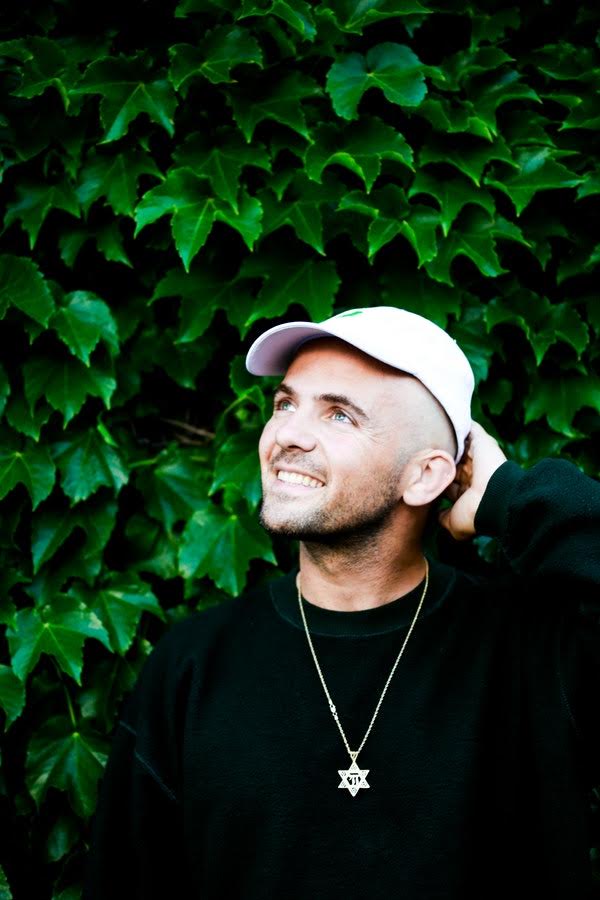
Interview with Kosha Dillz

Name: Rami Even-Esh

Best-known for: His alter-ego, Jewish rapper Kosha Dillz

Little-known fact: “The first time I was in the newspaper was for a wrestling tournament when I was eight. I was a little obsessed with getting in the paper.”

Rami Even-Esh, better known by his stage moniker, “Kosha Dillz” is the son of Israeli immigrant parents and now a Koreatown resident by way of Perth Amboy, N.J. A professional hustler from childhood, Even-Esh has sold everything from t-shirts to CDs to vintage embroidered hats.

After a stint in prison, Even-Esh, 36, found success in the music industry. This year, he reached his sobriety bar mitzvah (13 years clean) and can now count multiple tours with Vans Warped Tour and collaborations with artists like Matisyahu, among his successes. He also recently recorded and released his newest album, “What I Do All Day and Pickle.”

Jewish Journal: Such an odd stage name. What’s up with your fascination with pickles?

Kosha Dillz: There’s not really a fascination. They’ve become popular, so I guess I was ahead of my time with the name.  Pickles are right behind cats and pizza.

JJ: You moved to Los Angeles in 2011, so what brought you here?

KD: Music. I was already a professional musician when I came out to L.A. I just thought there was more of an opportunity and already had some friends out here, as well. I also really liked the recovery community in L.A., because there are a lot of people in the entertainment industry in the recovery community. Where I was from, it was surreal. No one was in the recovery community. I was like a unicorn.

JJ: How do your life experiences color your music?

KD: My music is just me being me. It’s what I’ve been doing since day one — rapping about selling drugs, doing drugs,  not doing drugs, Jewish stuff, Israel stuff, and that’s it. People will always ask, “Why are you so pro-Israel?” Well, it’s because I’m pro-myself. I’m an Israeli citizen. I didn’t choose that, it’s just who I am. And I think everyone should rep who they are.

JJ: What do you hope listeners get from your music?

KD: I want them to feel connected to my struggles.

JJ: Is your Jewish identity ever at odds with your rapping identity?

KD: Not at all. I’ve been rapping about Jewish stuff since day one. When I was 19, my identity was more about being a white rapper, but now it’s more about being a Jewish rapper. I’ll rap in Hebrew and make it overtly known that I’m Jewish. My stage name is “Kosha Dillz.” It’s basically “I’m a Jew” in rapper-ease.

JJ: Before you were rapping, you were a wrestler. What happened?

KD: I was wrestling from the time I was 8 until I was 20.  I stopped because of drugs — solely and only that. Otherwise, I would have kept wrestling. The real core of who I am is tied up with all the drugs and drug dealing. And then I got arrested multiple times. Then I got clean. And somewhere along the way, my music took center stage.

JJ: What marked the beginning of your career as a musician?

KD: I started rapping, and recorded my first song when I was 17. It was awesome. And then I recorded another and another, and slowly but surely, by the time I was 21, I had started burning CDs on my computer, and then tried to sell them at shows — demos, not even finished versions. I was honestly just really into selling things because I loved the hustle, and that started my rap career.

JJ: What’s the best part about being on tour?

KD: It’s very freeing. I look at touring like you’re mentally going into the wilderness. When you’re not on a tour bus, you’re driving through Kansas or Colorado and you see these amazing mountains, and you pull the car over, get out and scream at the top of your lungs because you know no one can hear you, and then you laugh to yourself because you’re crazy, and drive another seven hours through the middle of nowhere to a tiny show somewhere. It’s great. And I truly believe that touring is an experience and a way to reach out to fans.

JJ: How do you connect with fans?

KD: It’s interesting. When you’re touring these days, you’re not just selling the music, but you’re selling yourself — like a brand. With the internet and social media, the connection is way more instant. They might look at me and think, “Oh, he’s Jewish, let me go see him,” or “He’s in recovery — that’s interesting” or “Oh, he’s been to all 50 states, and I’m from Rhode Island and he’s been there, too.” You never know exactly what part of your identity will connect with someone.

JJ: Do you prefer performing or studio work?

KD: I love performing in front of people, but if you want to grow as an artist, you need to do studio work. You need to be creating new stuff that’s captivating, that will grow you a bigger audience. What you create in the studio is a tangible thing that people can share while you’re sleeping.

JJ: Do you enjoy the studio process?

KD: I do enjoy it, but it’s very terrifying, because I don’t want to go in, and I don’t want to do the work. I’m inherently lazy and very resistant, but then, when I’m in there, I’m suddenly like, “I need an album for the tour! Well, I guess I better come up with some rap songs, like, right now.” I give myself a deadline by paying for the studio time for two weeks. Essentially, I better come up with something, or I’ve wasted all my money. Honestly, most of my career has been showing up. I’m only in competition with myself. If I don’t reach out, or get to the studio, I’m the only one that hurts.

JJ: Switching gears. What are some of your favorite places in LA?

KD: One place I really, really love to go is Bibi’s Bakery. I always take people there. I also love this hike that I do every week called Cobra Fitness Club. It was my first commitment to regular social exercise. We get coffee and weird shakes.

JJ: One final question. Do you have a pre-show ritual?

KD: Oh man. I run around frantically! First I’ll run to the bar and get some water, and then I’m like “Guys! I’m going on now! Make sure you watch!” And then I worry that someone’s in the bathroom or outside having a cigarette and will forget I’m performing. It’s a pre-show ritual I’d rather not have. It would be nice to just chill. But until I’m massively famous, and the entire world is waiting for me to perform, I’ll feel like that. I guess that’s the Jewish end to this story: I’m worried!

Find out where Kosha Dillz is performing at koshadillzworld.com.

Interview with Kosha Dillz Read More »

With America’s blessing, Abbas signals a reconciliation with Hamas

The Trump administration is encouraging the Palestinian Authority to assume control of the Gaza Strip and leaving the door open for a role by Hamas in the subsequent Palestinian government.

But if such a move was once seen as a traditional predicate to a two-state solution, top Palestinian leaders are hedging their bets, saying they would not rule out a “one-state” solution in which Palestinians have the same one-person, one-vote rights as Israelis. Israeli leaders have long said that would mean the end of the Jewish state.

Palestinian Authority government officials returned this week to the Gaza Strip, the first en masse visit — by Cabinet and security officials along with top bureaucrats — since Hamas’ bloody ouster of P.A. President Mahmoud Abbas’ Fatah movement a decade ago.

It was a visit twice blessed by the Trump administration, first through a statement last week by the Quartet, the grouping of the United States, Russia, the European Union and Russia that guides the peace process, and again Monday with a statement from Jason Greenblatt, Trump’s top international negotiator.

“The United States welcomes efforts to create the conditions for the Palestinian Authority to fully assume its responsibilities in Gaza, as noted in the September 28 Quartet statement,” Greenblatt said in a statement he posted on Twitter.

The Quartet statement, while itself also abjuring mention of “two states,” made it clear that it foresaw a single Palestinian entity under P.A. rule. It urged “the parties” — the Palestinian Authority and Hamas — “to take concrete steps to reunite Gaza and the West Bank under the legitimate Palestinian Authority.”

This week’s P.A. visit to Gaza, brokered by Egypt, a key ally to the United States and Israel, is only for several days, but Husam Zomlot, the PLO envoy to Washington and a top Abbas adviser, anticipated a consolidation of the Palestinian Authority presence there.

Zomlot, speaking Monday to reporters here, noted that Hamas dissolved its governing body last week and said the Palestinian Authority expected this week that Hamas would formally hand over governance of the strip. The final stage, he said, would be elections.

“The return of the Palestinian Authority” to Gaza “is a milestone for the Palestinian Authority and of President Trump’s deal of the century,” Zomlot said, using a phrase Abbas used in a meeting with Trump on Sept. 20.

A signal of the White House’s seriousness is the likelihood that Hamas will continue to play a role in governing the strip. Trump’s predecessor, Barack Obama, heeding Israeli concerns, rejected any role for Hamas in Palestinian governance, and Israeli Prime Minister Benjamin Netanyahu has said repeatedly it would be a deal breaker.

Now, however, careful phrasing by U.S. and Palestinian officials strongly suggests that Hamas will not fade into the night. Zomlot called the changes in Gaza “the return of the consensus government,” the joint Hamas-P.A. venture that existed uneasily in 2006-07 and infuriated the administration of George W. Bush.

Greenblatt in his statement nodded to concerns about Hamas, a State Department-designated terrorist group, but in language vague enough to accommodate a Hamas role.

“Any Palestinian government must unambiguously and explicitly commit to nonviolence, recognition of the state of Israel, acceptance of previous agreements and obligations between the parties, and peaceful negotiations,” Greenblatt said.

That elides over earlier Israeli demands that not just a Palestinian government, but all of its components, must renounce violence and recognize Israel.

Netanyahu, speaking Wednesday to a Likud party meeting in the West Bank, maintained — at least in part — a tough line on the terms of a reconciliation acceptable to Israel. He said Hamas must be disarmed, but did not count out explicitly keeping Hamas figures within the Palestinian Authority bureaucracy.

“We expect everyone who talks about a peace process to recognize the State of Israel and, of course, to recognize a Jewish state, and we are not prepared to accept bogus reconciliations in which the Palestinian side apparently reconciles at the expense of our existence,” Netanyahu said in Maale Adumim, a settlement of 40,000 located just east of Jerusalem.

“Whoever wants to make such a reconciliation, our understanding is very clear: Recognize the State of Israel, disband the Hamas military arm, sever the connection with Iran, which calls for our destruction, and so on and so forth. Even these very clear things must be clearly stated,” he said.

Without mentioning the two-state goal, Greenblatt’s statement nevertheless called on the Palestinian government to abide by “previous agreements.” These would presumably include the 2003 “road map” that was to have culminated in Palestinian statehood.

Still, Zomlot said the Palestinians wanted more clarity from the Trump administration.

“We cannot travel a journey without knowing a final destination,” he said. Zomlot referred to Trump’s news conference with Netanyahu in February, when the president said, “I’m looking at two-state and one-state, and I like the one that both parties like.”

From the launch of the Oslo process in 1993 until now, Palestinian Authority officials have spoken of a one-state outcome only in pessimistic terms, casting it as a dystopia engendered by a failed process. Last month, addressing the United Nations General Assembly, Abbas in a first for a Palestinian leader said that if the two-state option collapses, Palestinians could embrace one state. It would not be a predominantly Jewish state covering Israel and most of the West Bank, an outcome popular among the Israeli right, but a binational state in which West Bank and Gaza Palestinians have full rights as citizens.

Abbas warned in his U.N. address that in the failure of a two-state solution, “neither you nor we will have any other choice but to continue the struggle and demand full, equal rights for all inhabitants of historic Palestine. This is not a threat, but a warning of the realities before us as a result of ongoing Israeli policies that are gravely undermining the two-state solution.”

Zomlot expanded on that possibility at his news briefing Monday.

“As long as we mean one man and one woman, one vote, we are fine with this,” he said, adding however that the two-state solution “remains absolutely the best option.”

Zomlot also addressed the Taylor Force Act, legislation named for an American stabbed to death last year by a Palestinian terrorist that would slash funding to the Palestinian Authority as long as it continued to subsidize the families of Palestinians jailed for or killed attacking Israelis.

Palestinians say the payments mostly go to the families of the wrongfully imprisoned. Zomlot said the Palestinians proposed a tripartite commission, to include the United States, Israel and the Palestinian Authority, that would consider whether to remove some families from the payrolls.

“We have engaged with the administration, we have a trilateral commission,” he said. “We would offer to the United States to be the sole arbitrator and we will accept [the decision]. Guess who rejected it? Israel.”

A senior Trump administration official suggested that Zomlot was overstating the offer.

“We only received a brief general outline about this proposal which did not answer key questions or present a viable solution to the real problem, which is the official policy of paying terrorists and their families,” the official told JTA.

A senior Israeli official told JTA that the offer missed the point — the Palestinians can stop the payments on their own.

“The Palestinians don’t need Israel, the U.S. or anyone else, they just need to do it,” the official said. “Unfortunately they won’t.”

With America’s blessing, Abbas signals a reconciliation with Hamas Read More »

Rainer Weiss, scientist who fled Nazis, among Nobel Prize in Physics winners

Three American scientists were awarded the Nobel Prize in Physics, including one who fled the Nazis with his parents and another whose grandparents were Polish immigrants.

Rainer Weiss, a professor at the Massachusetts Institute of Technology, and Kip Thorne and Barry Barish, both of the California Institute of Technology, were awarded the prize on Tuesday for the discovery gravitational waves, which were predicted by Albert Einstein a century ago.

Gravitational waves are ripples in space and time that help scientists explore objects in space.

Weiss won half of the $1.1 million prize, with Barish and Thorne sharing the other half.

The Nobel winners and the late Ron Dreyer, also of Caltech, founded the international collaboration of physicists and astronomers known as LIGO, the Laser Interferometer Gravitational-Wave Observatory. In February 2016, they announced that they had recorded gravitational waves emanating from the collision of a pair of black holes a billion light years away.

Drever died this year; the Nobel Prize is not awarded posthumously.

Weiss, 85, was born in Berlin to a non-Jewish mother and a Jewish father. The family fled Berlin for Prague when Weiss was a baby because his father was Jewish and a member of the Communist Party. After the Munich agreement in 1938, the family left Prague for the United States. Weiss earned his doctorate from MIT and in 1964 joined its faculty.

Barish, 81, was born in Omaha, Nebraska, and grew up in Los Angeles, the son of Lee and Harold Barish, the children of Polish immigrants to the United States. He earned his doctorate in 1962 from the University of California, Berkeley, and joined Caltech in 1963.

Thorne, 77, received his doctorate from Princeton University in 1965 and joined Caltech in 1967.

Rainer Weiss, scientist who fled Nazis, among Nobel Prize in Physics winners Read More »

Heckler interrupts Kol Nidre sermon at Temple Israel of Hollywood

Some local rabbis have shunned the idea of bringing politics to the pulpit, but Rabbi John Rosove of Temple Israel of Hollywood is not one of them. About five minutes into his Kol Nidre sermon on Sept. 29, the beginning of Yom Kippur, Rosove had already denounced President Donald Trump by name when a man stood up and shouted his displeasure.

“This is supposed to be a house of prayer!” the man said as he stormed out of the sanctuary, according to multiple eyewitnesses.

After a brief pause, Rosove resumed his sermon. When he finished, most of the audience of about 1,200 that had gathered for one of Judaism’s holiest ceremonies responded with an enthusiastic standing ovation in support of his remarks.

The incident at Temple Israel comes amid continuing debate among American rabbis as to whether the sanctuary should be a place of refuge from today’s confrontational politics.

In a Journal op-ed in June headlined “Why I Keep Politics Off the Pulpit,” Rabbi David Wolpe of Sinai Temple urged his peers and community members to keep politics out of the synagogue.

“All we hear all day long is politics,” he wrote. “Can we not come to shul for something different, something deeper? I want to know what my rabbi thinks of Jacob and Rachel, not of Pence and Pelosi.”

The op-ed elicited a number of responses, including from prominent rabbis such as Rabbi Sharon Brous of IKAR and Rabbi Rick Jacobs of the Union for Reform Judaism.

Brous argued in an op-ed printed in the Journal that the Torah is inherently political.

“This sacred scroll recounts the story of a band of slaves rising up before the most powerful and iconic ruler of the ancient world and demanding freedom and dignity,” she wrote. “Is that not a political message?”

Rosove’s sermon, titled “We the People,” put him firmly on one side of the debate. Drawing on quotes from Lincoln’s Gettysburg Address, Martin Luther King Jr., Genesis and the Jewish prophets, he argued “that there’s a battle being waged for the soul of this country; that there are dark forces of hate, bigotry, intolerance, extremism and xenophobia that are aided and abetted by our nation’s president.” (The text and video of the sermon can be viewed at tioh.org.)

Reached by phone, Rosove said the man who interrupted his sermon was not a member of the temple. He declined further comment. Several longtime Temple members contacted by the Journal said they did not know the man.

After the applause for Rosove died down at the end of the sermon and cantorial soloist Shelly Fox led the gathering in singing “This Land Is Your Land,” the rabbi returned to the pulpit to defend the nature of his homily in light of the man’s comment.

“A house of prayer has windows that look into the city, and any synagogue without windows is not a synagogue, because we are not divorced from the reality of the world,” he said, paraphrasing the Talmud.

“This is supposed to be a house of prayer!” the man said as he stormed out of the sanctuary, according to multiple eyewitnesses.

The members of Rosove’s congregation contacted by the Journal came to his defense.

David Lehrer, a Temple Israel member and former Los Angeles regional director of the Anti-Defamation League, said that after hearing Rosove’s sermon, he emailed him, writing: “It would be spiritual malpractice to let the High Holidays pass and not comment on what has happened to our country and what we should be doing.”

Thelma Cohen Samulon, a past president of the temple who attended the Kol Nidre service, said the outburst “caused me a moment of anxiety, and I was very pleased that the rabbi kept going, and he really didn’t miss a beat.”

Samulon and others said the heckler may have been the same person who, during the Rosh Hashanah service when audience members volunteered what they were grateful for from the past year, took the microphone and answered, “Trump.”

The man was not entirely alone in expressing his disapproval of Rosove’s Kol Nidre sermon. Just before his outburst, a woman walked out, quietly telling those seated next to her: “I don’t need to listen to this bull—-.”

A few others — perhaps less than a dozen — were also seen leaving the sanctuary, although their reasons for heading for the exits were not known.

Wally Knox, an attorney and former Democratic state Assemblyman from 1994 to 2000, said he could not remember in his 30 years of membership at Temple Israel a standing ovation for a rabbi’s sermon.

“There’s a recognition that we’re living in extraordinary times,” Knox said. “For one, I was proud to hear John speak up.”

Heckler interrupts Kol Nidre sermon at Temple Israel of Hollywood Read More »

From Yom Kippur to Las Vegas: Finding Hope in the Valley of Death!

In the Yom Kippur liturgy, we just asked “Who shall live and who shall die” in the coming year, we didn’t think our nation would need to revisit this haunting question so quickly. Mere hours after intoning the last call for forgiveness for the sin present in the world, the streets of Las Vegas were paralyzed by barrage after barrage of gunfire. Innocent people were wantonly targeted, their lives held at bay by the deeds of a truly malevolent individual. As a man of faith, I was deeply shaken at the calls of “Stay down!” and “Take cover!” I painfully watching the spray of bullets tear into flesh and people fleeing for their lives. I was pained seeing the unfathomable carnage left behind where there should have been only dancing and laughing.

I felt paralyzed because I thought there was nothing I could do.

Yet, early on Monday morning, mere hours after the gunshots stopped and the first reports from the scene were being disseminated by the media, I knew that there was only one course of action for me. I immediately bought a plane ticket and flew to Nevada to comfort the victims and their families. I knew that as a rabbi and a religious Jew, I couldn’t play armchair consoler when those who are most vulnerable are in dire need of support. I knew that writing vague platitudes on social media—lamentably, an action that has seemingly become routine—would be lost in the digital ether, I couldn’t handle the news and not be there to do what I was trained to do. In whatever way I could, I wanted to be with these people. I remembered the clarion call from Elie Wiesel, of blessed memory, who would say the place where there is the most hurt is the true center of the world. I had to stop everything to make it to the center. I had to dry my tears and get to work.

When I landed in Las Vegas that morning, I didn’t know what to expect. How does one reconcile with the fact that the ground you’re standing on is where, just hours earlier, more than fifty people died and another five hundred were wounded? I looked up and could see with startling clarity the shot-out window at the thirty-second floor of Mandalay Bay hotel. I starred in horror. A man had been in there, destroying innocent lives by the dozens for motives unknown. I shivered with disgust and heartbreak.

But as I spent more time walking the famed Las Vegas Strip, rather than finding overwhelming despair, I found something else entirely. I saw people of conscience lining up to be the vanguards of hope. I met young Christian men offering free counseling and prayers. I found valiant police officers keeping calm and maintaining order for the benefit of their community. When I visited the Desert Springs Hospital Medical Center, I found doctors, nurses, and medical staff working overtime to handle all of the traumatized and injured victims; they were traumatized themselves, yet they carried on with their sacred tasks. And among the victims, I found warmth and solidarity. I looked into their eyes and without saying a word, I knew that their inner resilience was a force that I could never comprehend.

As I walked around the ICU, consoling the victims and hearing their stories, I felt sadness and a modicum of anxiety. Why did I need to be here in the first place? This is a crucial time to rebuild America, to refashion this nation to be one of love and respect rather than one of too easily-accepted violence. The fact that within the last decade we have witnessed the worst outbreak of mass shootings seems to mean nothing to certain contingents of the political establishment. To them, this was an aberration and one that will lead to nothing. As former congressman Steve Israel wrote in the New York Times late on Monday: “More moderation means less market share.” This truth angered me more than anything I witnessed during my time in Nevada. People are dying and the will to stop the deaths seems to be an insurmountable hill in the fetid recesses of Congress. Even in this turbulent political climate where enacting sensible gun laws should be a fait accompli, we all tragically know that this type of legislation is a nonstarter. And when even the President, who called this shooting “an act of pure evil” removes even modest barriers to those who shouldn’t have firearms in the first place, then what more is there to politically strive for?

What we need at the present moment is the ability to reach out to one another to begin a spiritual revolution of empathy and mercy. We need to go beyond who we are and reach out to others. We need to encourage true progress on issues of great import, but this will only emerge from the ground up. We have to seek this change to see its actualization. While many think of Las Vegas as only a city obsessed with entertainment and gambling, what I witnessed was the epicenter of a new way of thinking. That beyond the ostentation and glamour is the beating heart of a vibrant community, where the loudest voices were those of compassion and service.

Rabbi Dr. Shmuly Yanklowitz is the President & Dean of the Valley Beit Midrash, the Founder & President of Uri L’Tzedek, the Founder and CEO of The Shamayim V’Aretz Institute and the author of ten books on Jewish ethicsNewsweek named Rav Shmuly one of the top 50 rabbis in America and the Forward named him one of the 50 most influential Jews.

From Yom Kippur to Las Vegas: Finding Hope in the Valley of Death! Read More »

How Mark Zuckerberg embraced his Judaism

Mark Zuckerberg wrote last December on Facebook that for him, “religion is very important.” Looks like he meant it.

The Facebook co-founder has been invoking Judaism a lot lately. In May, he quoted a Jewish prayer at Harvard’s commencement. Two weeks ago he posted a picture of his daughter with a family kiddush cup. And on Saturday night, he posted a public apology at the end of Yom Kippur.

It’s quite a transformation for a public figure who once defined himself as an atheist.

Although he was a member of the Jewish fraternity AEPi before he dropped out of Harvard, Zuckerberg didn’t discuss his Judaism much before 2015. Replying to a comment last year, Zuckerberg wrote that he “went through a period where I questioned things, but now I believe religion is very important.”

Zuckerberg’s recent string of Jewish affirmations began nearly two years ago following then-presidential candidate Donald Trump’s call for a ban on Muslims entering the United States. Being raised as a Jew, Zuckerberg wrote, made him sensitive to attacks on all minorities.

“After the Paris attacks and hate this week, I can only imagine the fear Muslims feel that they will be persecuted for the actions of others,” Zuckerberg wrote, referring to that year’s terror attack in the French capital. “As a Jew, my parents taught me that we must stand up against attacks on all communities. Even if an attack isn’t against you today, in time attacks on freedom for anyone will hurt everyone.”

Zuckerberg invoked his Judaism again after the August white supremacist rally in Charlottesville.

“It’s a disgrace that we still need to say that neo-Nazis and white supremacists are wrong — as if this is somehow not obvious,” he wrote.

But judging from his Facebook profile (and in his case, shouldn’t we?), Zuckerberg has reconnected with his Judaism not just as a national figure but as a person and a father. His post featuring a collage of a kiddush cup, Shabbat candlesticks and homemade challah waxed about passing the cup from generation to generation.

“For shabbat tonight, we gave Max a kiddush cup that has been in our family for almost 100 years,” he wrote, referring to his eldest daughter. “Her great-great-grandfather Max got it after our family immigrated here and it has been passed down through our family ever since.”

https://www.facebook.com/zuck/posts/10104040157648481

At the Harvard commencement, Zuckerberg told graduates that he sings an adaptation of the Mi Shebeirach — the traditional Jewish prayer for the sick — when he tucks her in at night.

“And it goes, ‘May the source of strength, who’s blessed the ones before us, help us find the courage to make our lives a blessing,” he told the graduates in May, quoting a version of the prayer by the late Jewish songwriter Debbie Friedman and lyricist Rabbi Drorah Setel. “I hope you find the courage to make your life a blessing.”

While the mogul’s newfound piety may be attracting attention, he is doing what any young Jewish parent might, said Rabbi Brad Hirschfield, director of CLAL-the National Jewish Center for Learning and Leadership. Plenty of Jews lose interest in their religion, then reconnect to it after having kids.

“There are a million people in his age cohort who are deeply proud of being Jewish and are trying to figure out what it means,” Hirschfield said. “You marry and partner and have a family, and it’s not surprising that the questions of ‘How do I have a more meaningful life and build a better future’ become more important and powerful and imminent.”

InterfaithFamily.com was especially pleased that Zuckerberg, whose wife, Priscilla Chan, is not Jewish, has posted about his family’s Jewish rituals.

“The fact that such a super-influential couple clearly are making Jewish choices for their family is the best news with which to start the new year,” wrote Ed Case, founder of InterfaithFamily.com. “Mark Zuckerberg and Priscilla Chan could really change the course of Jewish history if they got involved in efforts to engage interfaith families in Jewish life.”

Zuckerberg got Jewishly personal again when he asked for forgiveness at the end of Yom Kippur, the Jewish day of repentance. His critics might say he has a lot to atone for.

During the 2016 presidential campaign, Facebook was accused of allowing Russian hackers to post thousands of ads influencing the election. And users also were allowed to target ads based on phrases like “Jew hater” and “how to burn Jews.” (Facebook COO Sheryl Sandberg, who also is Jewish, said the company would address the problem.)

“For those I hurt this year, I ask forgiveness and I will try to be better,” he wrote Saturday night. “For the ways my work was used to divide people rather than bring us together, I ask forgiveness and I will work to do better.”

https://www.facebook.com/zuck/posts/10104074437830721

It isn’t the first time that Zuckerberg has encountered trouble because of the content published on his site. In 2015, some 20,000 Israelis filed a class-action lawsuit against Facebook for ignoring incitement to terrorism on the network and enabling terrorists to find sympathizers. The case was dismissed this year.

While Zuckerberg may not have always talked publicly about his Judaism, he has surrounded himself with people who do. His college roommate moved to Israel and became a Conservative rabbi. Sandberg has spoken frequently about how Jewish rituals helped her cope following her husband’s untimely death in 2015. And his sister, Randi, is open about her Jewish observances. She says her family unplugs for a “digital Shabbat” each weekend, and sang “Jerusalem of Gold,” a classic Israeli song, at the Davos World Economic Forum.

Davos also occasioned the first JTA clip about Zuckerberg, published in 2008. While he attended the forum that year, Israel’s delegation invited him to visit the country.

He has yet to accept. But after giving his daughter a kiddush cup and atoning on Yom Kippur, maybe this is the year.

How Mark Zuckerberg embraced his Judaism Read More »