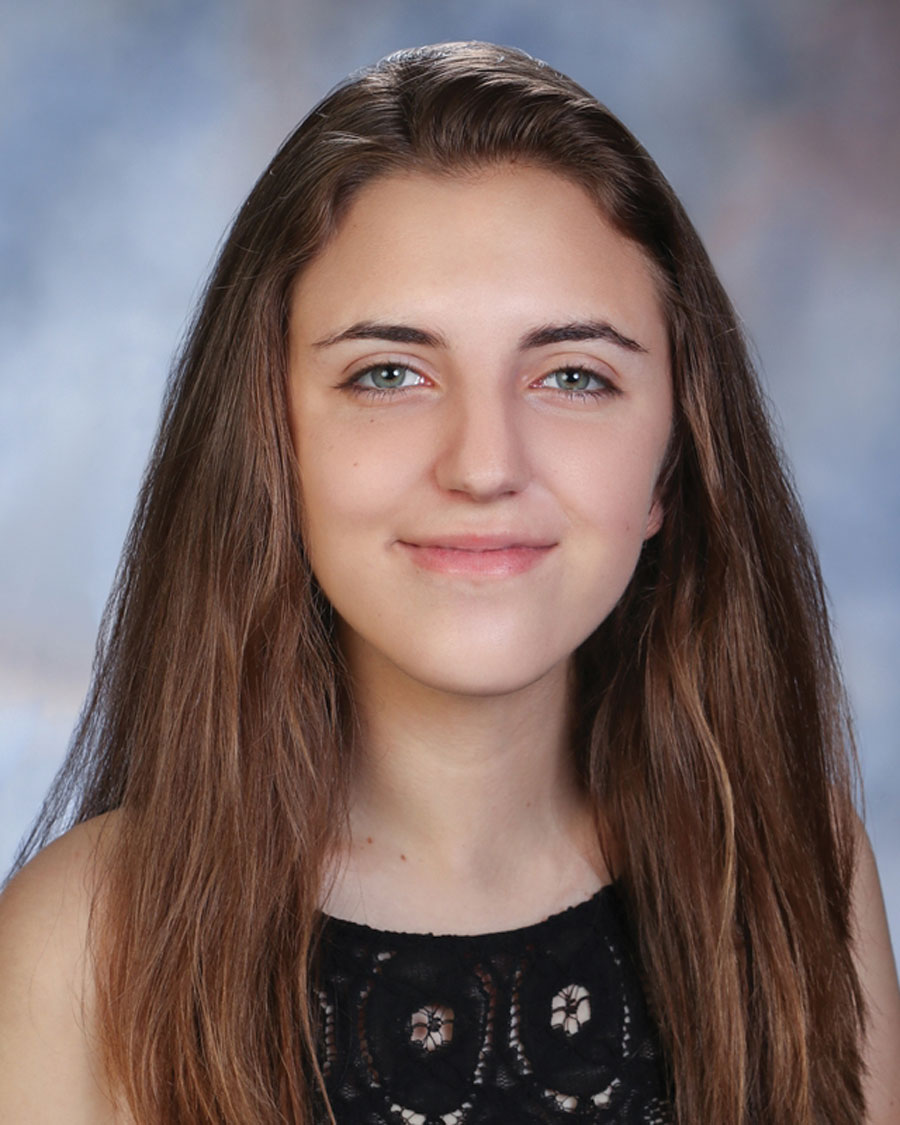
Samantha Renard, 18
High School: Milken Community Schools
College: Tufts University
When Samantha Renard was a sophomore in high school, she spent a few weeks in a wheelchair after surgery to remove a tumor from her leg. Renard lives with Hereditary Multiple Exostoses, a genetic disorder where benign tumors form on her bones. But she doesn’t let her illness define her.
She loves writing poetry, playing bass in jazz band, and taking on the leadership role of president in orchestra. She also participates with her “Acaduckies,” Milken Community High School’s academic decathlon team, which she founded this year. Despite the fact that it was a brand new team, it won 49 medals and two trophies.
Renard also tutors underclassmen in chemistry, history and biology and plans to major in philosophy and chemistry at Tufts University in the fall.
“Why wouldn’t I want to help someone if I am able?” Renard told the Journal. “There are some people that lead everything because they can, not that they should. It was hard for me to say, ‘I should be leading,’ but if nobody will step up to the plate, I will happily do that.”
If it means sending her peers a text to tell them they are loved, helping them study for a history test, thanking her teammates for showing up or making sure students have a voice, she said she wants to make sure she is using her voice to encourage others.
Understanding and validating the emotions of her peers has driven her to helping more people cope with day-to-day struggles by drawing on her own experiences.
“I remember post-surgery, I went back to school and I remember people coming up to me, people who wouldn’t normally ask me, asking, ‘Are you OK?’ ‘What happened?’ and they suddenly all cared,” she said. “At first, I was kind of uncomfortable, like, ‘You don’t know me, why do you care now?’ but it reminded me that people care. That’s why I’m OK with asking people I don’t know for help because ultimately when people see you’re in trouble, they want to help you.”
She said she now says to people, “Tell me about your pain” rather than “Are you OK?” because the former allows people to express their emotions with words they didn’t know they had.
“It made me hate the question, ‘Are you OK?’ she said. “Of course I am. I’m alive. I have a place to live. I have access to clean water. But if you know the word ‘heartbroken,’ if you know the words ‘disappointed’ or ‘frustrated,’ you’re just able to describe them better.”
One of the ways Renard tries to approach helping others is by teaching them
“how to feel pain and [teaching] each other how to talk about it. There are so many people that are truly there if you tell them you need them,” she said. “They’ll drop a ton of things to help you. People are naturally taught to be good. You want that love and that appreciation, so just ask for it. … Once people see you asking for help, it makes it easier for them to ask for it.”
Keep on reading about our 2019 Outstanding Seniors here.