fbpx

June 5, 2019

What’s Happening: Shavuot Events

SAT JUNE 8

“A Night of Reproductive Choice”
Examining the current struggles for reproductive control, Temple Israel of Hollywood holds an evening with short films, text study, a panel discussion featuring three speakers and group engagement. “A Night of Reproductive Choice” celebrates the memory of the biblical Ruth, whose book is read on Shavuot, while highlighting women’s capacity for choice. Blintzes will be served. 7-9 p.m. Free. Temple Israel of Hollywood, 7300 Hollywood Blvd., Los Angeles. (323) 876-8330.

“Shavuot Reimagined”
Sinai Temple holds an epic evening of learning, schmoozing and noshing. After the dessert bar and a Havdalah service, Jewish spirituality professor Daniel Matt leads mystical learning for the adult community. His three sessions are “Mystical Secrets of Parenting” at 9 p.m.; “God and the Big Bang: Discovering Harmony Between Science and Spirituality” at 10 p.m.; and “The Greatest Secrets of Kaballah” at 11 p.m. The Atid young professionals community holds a 9 p.m. program titled “Textual Relations,” with Rabbi Sam Rotenberg. The evening includes a “Torathon” for Sinai Temple’s third-12th graders. 8-11:59 p.m. Free. RSVP requested. Sinai Temple, 10400 Wilshire Blvd. (310) 474-1518. .

“Stories of Our People”
Temple Beth Am and Temple Emanuel of Beverly Hills (TEBH) hold all-night learning. Theatre Dybbuk Artistic Director Aaron Henne leads the program, “Stories of Our People,” which is designed to explore transformation. Additional teachers include Temple Beth Am Rabbi Adam Kligfeld and TEBH Rabbi Jonathon Aaron. 7:15 p.m. Mincha/Ma’ariv and free light dinner. 9 p.m. program. Free. RSVP required. (310) 652-7353.

Shades of Light
Shavuot flies into Temple Adat Elohim (TAE) in Thousand Oaks on the wings of a multitude of singing voices. Under the direction of Noreen Green, conductor of the Los Angeles Jewish Symphony, the American Jewish University choir and the TAE Chorale perform during services, which are open to the community. Refreshments available at the oneg. 7 p.m. Free. Temple Adat Elohim, 2420 E. Hillcrest Drive, Thousand Oaks. RSVP at (805) 497-7101.

“Era of Political Correctness”
Shavuot learning at Temple Judea examines “What Does It Mean to Be a Chosen People in an Era of Political Correctness?” Nosh is served. 5-6:30 p.m. Free. RSVP. Temple Judea, 5429 Lindley Ave., Tarzana. (818) 758-3800.

“Revelations of Wellness”
Adat Ari El explores how to achieve physical and spiritual health. At 8 p.m., Hillary Oberstein leads yoga, kicking off an evening that includes Havdalah; “An Ancient Toolkit for Modern Well-Being: A Deep Dive into Wisdom Text” with Rabbi Jessica Yarkin; “Healthy Delicious Cooking” with Julie Giuffrida; “Torah as Archetypal Psychology: Understanding Mental Health and Well-Being” with Dr. Omid Naim; and meditation. Stick around for a cheesecake break at 10:50 p.m., followed by a closing session on “Mental Wellness Begins with You: The Torah of Self-Compassion,” with Adat Ari El Rabbi Jonathan Jaffe Bernhard. 8-11:45 p.m. Free. Adat Ari El, 12020 Burbank Blvd., Valley Village. (818) 766-9426.

All-Night Learning
Beth Jacob Congregation offers traditional all-night learning, featuring scholar-in-residence Rabbi Shmuel Goldin, who served at Beth Jacob nearly four decades ago. Beginning at 11 p.m. and concluding before sunrise, sessions explore “Dueling Covenants: Defining Judaism’s Balance in Every Era”; “Why Did Moshe Break the Tablets?”; “Can Robots Ever Be Jewish: An Exploration of Jewish Experiential Learning”; and “R&R: Is Leisure Kosher?” At 10:30 p.m., Rabbi Kalman Topp leads learning with ice cream for young professionals. “Teen Torah” also is held at 10:30 p.m. Ice cream and cheesecake served at 1 a.m. Shacharit at 5:10 a.m. Free. Beth Jacob Congregation, 9030 W. Olympic Blvd., Beverly Hills. (310) 278-1911.

Nessah All-Night Learning
The 12th year of all-night Shavuot learning at Nessah Synagogue features Rabbi Shimon Kessin and Rabbi Mendel Kessin. The evening begins with an 11:15 p.m. reception, followed by lectures by the Kessins on “How to Ensure God Is Listening to Our Prayers” and “The Great Battle: Divine Plan and Current Events.” Desserts are available. A full breakfast is served after Shacharit. Free. Nessah Synagogue, 142 S. Rexford Drive, Beverly Hills. (310) 273-2400.

Shavuot in Highland Park
Temple Beth Israel describes Shavuot as “the Jewish festival of abundant lactose.” The egalitarian synagogue also offers a lactose-free version of the holiday. Guests of this kid-friendly evening are encouraged to bring cheesecake or a vegan pastry for a community tasting before mini-classes examine a variety of topics. 7-10 p.m. Free. Temple Beth Israel, 5711 Monte Vista St., Highland Park. (323) 745-2474.

Shavuot Concert
Temple Isaiah and Beth Chayim Chadashim (BCC) hold “True Colors — A Shavuot Experience,” a spiritual and musical celebration of Shavuot and Pride Weekend. Clergy from Temple Isaiah and BCC co-lead the program at BCC, where there will be plenty of food, music, spoken words, teachings and storytelling. 8 p.m. Free. Beth Chayim Chadashim, 6090 W. Pico Blvd. (323) 931-7023.

“Living Your Truth”
Promising lively learning and traditional dairy desserts, Mishkon Tephilo celebrates with the program “Living Your Truth.” Participants include Rabbi Gabriel Botnick, who is joined by his wife, Rabbi Rose Prevezer; Rabbi Lori Shapiro from the Open Temple; Jeff Fleck and Rachel Kann. 8-11:30 p.m. Free. No RSVP required. Mishkon Tephilo, 206 Main St., Venice. (310) 392-3029.

What’s Happening: Shavuot Events Read More »
What’s Happening: Sephardic Shabbaton, Anne Frank

FRI JUNE 7

Shabbat in the Hills
Young pro-Israel professionals ages 22-40 are invited to JNFuture’s signature event of the year. More than 150 attendees are expected to celebrate Shabbat at an upscale West Hollywood penthouse and enjoy an open bar, kosher dinner and a sweeping view of the city. Jewish National Fund (JNF) San Diego Director James Kimmey, the only non-Jewish director in the organization’s history, is the guest speaker. 6:30 p.m. registration and cocktail hour. 7 p.m. program. 7:45 p.m. candlelighting. $90 general admission. Hills Penthouse, 8560 Sunset Blvd., West Hollywood. (323) 964-1400, ext. 968.

Sephardic Shabbaton
Two special events take place at Sephardic Temple. Tonight is “Shabbat Under the Stars,” featuring Friday night services, a Sephardic meal and the opportunity to hear stories of Jewish life across Sephardic lands. On June 8, a Shavuot-inspired kiddush and meal features Tarzana cardiologist Dr. Afshine Emrani discussing life in 1970s Iran, the last years of the shah. Both program for Jewish professionals ages 21-39. June 7: 7 p.m. services, 8 p.m. dinner. $36 until noon June 7. No tickets at the door. June 8: 9:30 a.m.-noon services, followed by free lunch. Sephardic Temple, 10500 Wilshire Blvd. (310) 475-7000. .

SUN JUNE 9 

“Hebrew Hillbilly”
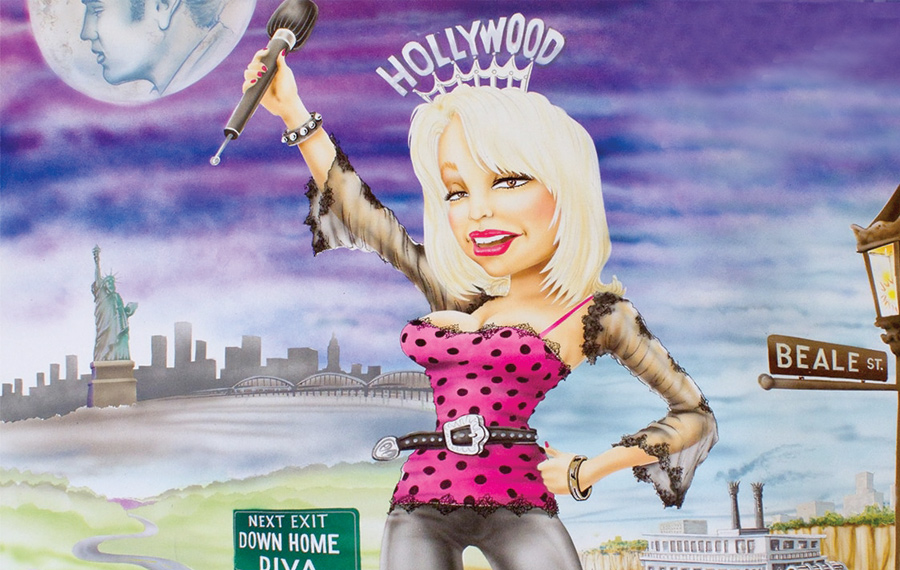
Written and performed by singer-songwriter Shelley Fisher,  this musical one-woman show chronicles her odyssey from Memphis, Tenn., to Hollywood. In the autobiographical story, Fisher talks about growing up Jewish in the Deep South and dishes about her roller-coaster ride in showbiz. You’ll laugh, cry and kvell for Fisher’s dedication to her craft. 6:30-7:30 p.m. $39.99. Santa Monica Playhouse, 1211 Fourth St., Santa Monica. (310) 394-9779.

TUE JUNE 11

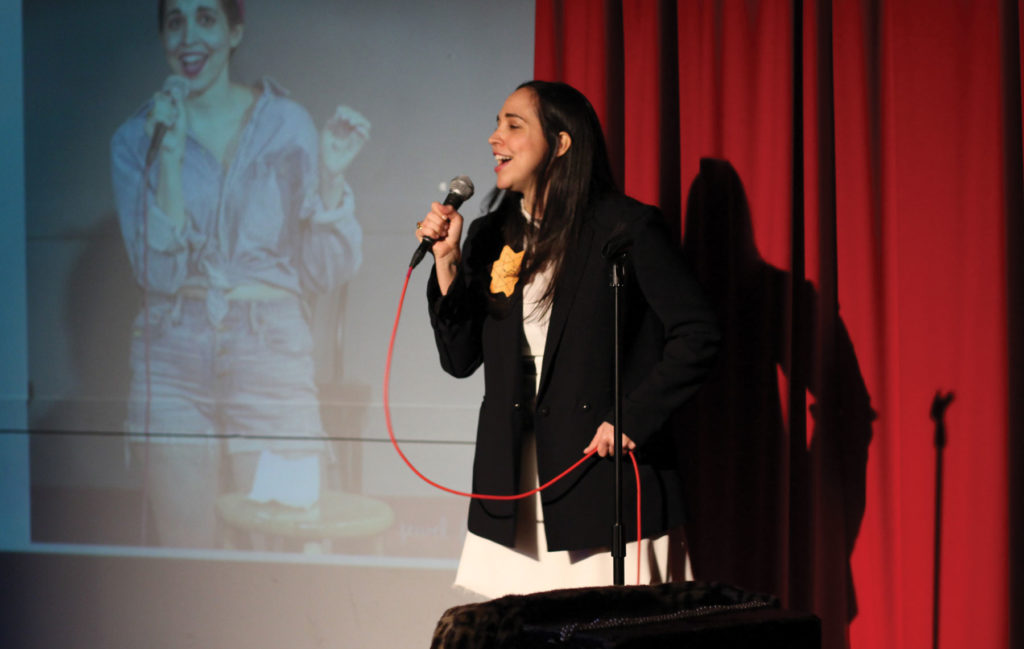
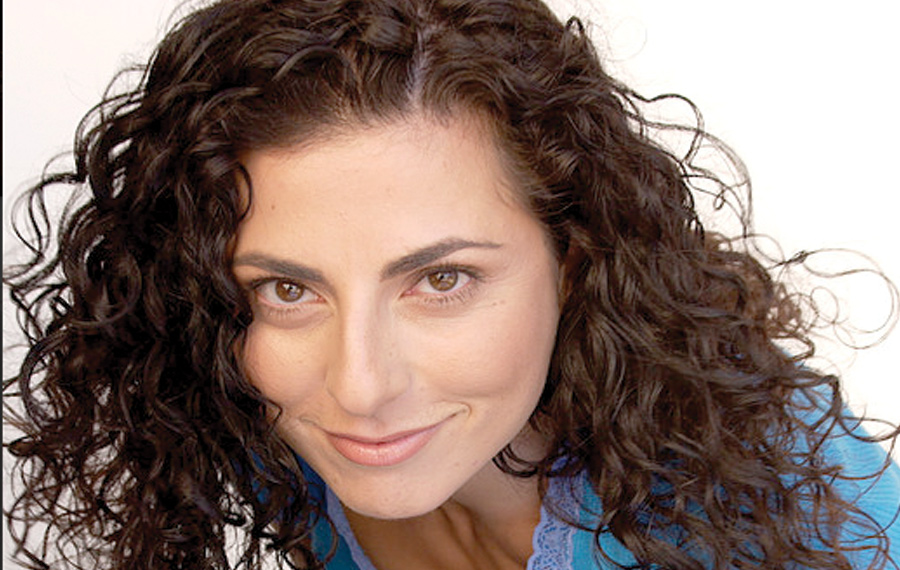
Kira Soltanovich

“Not Your Babushka’s…”
Jewish American comedian Kira Soltanovich headlines “Not Your Babuskha’s Russian Speaking Jew,” an intimate evening of identity and immigration stories. Organized by JDC Entwine, the gathering for young professionals explores what it means to be a Russian-speaking Jew. Attendees also learn about the work JDC has done in the former Soviet Union region over the past century. Don’t miss a night of boozing, schmoozing and laughter. 21 and older. 6:30-8:30 p.m. $10. Hotel Café, 1623 N. Cahuenga Blvd., Los Angeles.

WED JUNE 12

Donating Hair for Israelis
Calling all girls and women: Don’t miss the opportunity to donate your hair to cancer-stricken Israeli children. Yeshiva Aharon Yaakov Ohr Eliyahu and Zichron Menachem, which provides support to any young person in Israel younger than age 25 with cancer, hold a haircutting event on Larchmont Boulevard. Donors’ hair must be about 12 inches (30 centimeters) or longer. You may also sponsor a friend. 5-7 p.m. Free. Larchmont Hair & Nails, 417 N. Larchmont Blvd. (323) 463-4473. To register, email rivkawigsla@gmail.com.

Millie Perkins (left) and Diane Baker

Anne Frank Book Reading
Anne Frank would have turned 90 this year. In her honor, Temple Emanuel of Beverly Hills and ChaiVillageLA hold a book reading of “The Cat Who Lived With Anne Frank.” Millie Perkins and Diane Baker, co-stars of the original 1959 film “The Diary of Anne Frank,” read the children’s picture book, which is co-authored by David Lee Miller and Steven Jay Rubin. 7 p.m. Free. Temple Emanuel of Beverly Hills, 8844 Burton Way, Beverly Hills. (310) 288-3737.

What’s Happening: Sephardic Shabbaton, Anne Frank Read More »

Heritage Month Bash, Bialik Honored

A commemoration of Jewish American Heritage Month at Los Angeles City Hall drew more than 400 people. 

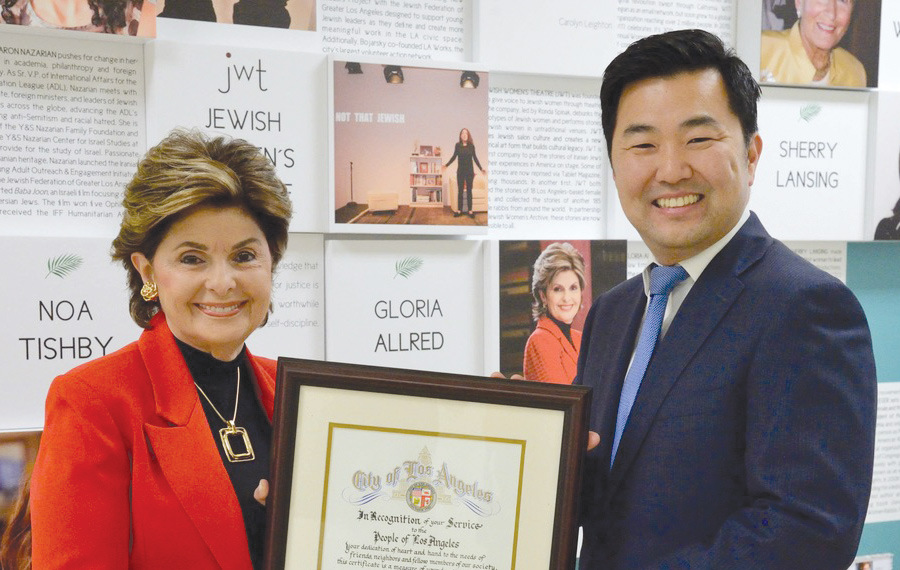
The offices of L.A. City Councilmembers David Ryu and Bob Blumenfield co-chaired the May 29 celebration, which highlighted the accomplishments of Jewish women.

Honorees included Iranian Jewish women Gina Nahai, Sharon Nazarian and Tabby Refael; iconic women’s rights attorney Gloria Allred; Holocaust survivors Sidonia Lax and Frida Berger; black Orthodox Jew Chava Shervington; educator Stephanie Wolfson; Donna Bojarsky, founder of The Jewish Federation of Greater Los Angeles’ New Leaders Project; and Marlene Bane, who has been a political fundraiser. 

The theme of this year’s celebration was “Being Deborah: A History of Jewish Women Creating Change in Los Angeles.” An exhibition of the same name curated by Dylan Kendall and on display at City Hall highlighted the contributions of L.A. Jewish women including former Paramount Pictures CEO Sherry Lansing; Israeli actress Noa Tishby and Congregation Kol Ami Rabbi Denise Eger.

Attendees at the event included L.A. City Attorney Mike Feuer; L.A. City Councilman Paul Koretz; City Controller Ron Galperin; Temple Israel of Hollywood Rabbi John Rosove; and Adeena Bleich, deputy chief of staff for Ryu.

In the City Hall rotunda, Galperin highlighted the impact the Jewish community has had on Los Angeles.

“The Jewish community in Los Angeles is a mosaic that’s linked to every community,” Galperin said. “Jewish American Heritage Month is a wonderful opportunity for us to celebrate exceptional people, like Sidonia Lax, and to recognize how we are so intertwined with Los Angeles’ social, economic, political and cultural fabric.”

 Jewish Women’s Theatre and the Shalhevet High School ChoirHawks provided entertainment at the gathering.


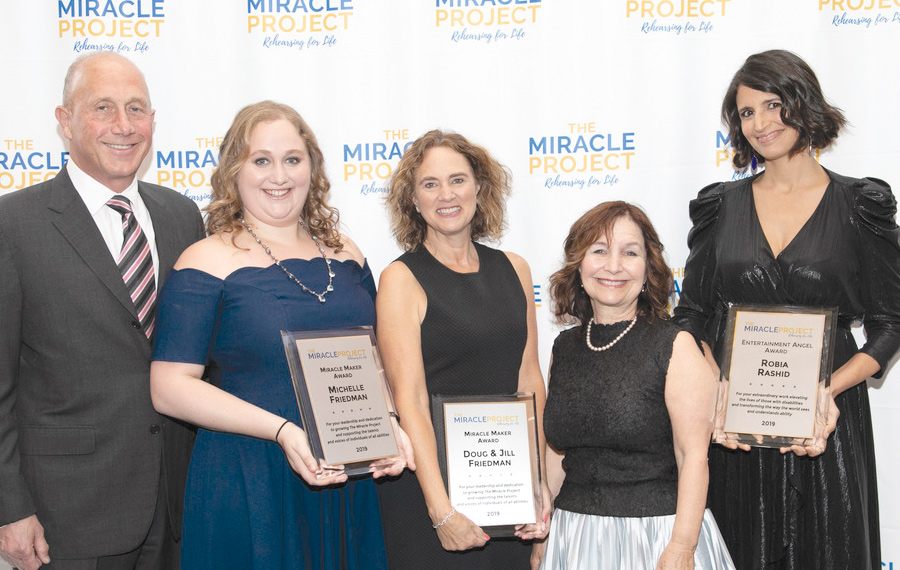
From left: Doug, Michelle and Jill Friedman, Elaine Hall and Robia Rashid attend the Miracle Project’s “Evening of Miracles.” Photo courtesy of the Miracle Project

More than 200 people attended The Miracle Project’s “Evening of Miracles” on May 23 at the Wallis Annenberg Center for the Performing Arts in Beverly Hills.

Celebrating the organization’s more than 14 years of serving individuals with autism and other disabilities, the evening honored community philanthropists Doug and Jill Friedman, their daughter, Michelle, as well as Robia Rashid, creator and showrunner of Netflix’s “Atypical.” 

The “Evening of Miracles” also premiered a new Miracle Project, “Identity: the Musical,” an original show created by and starring many individuals with autism and other developmental differences.

“Many individuals with developmental disabilities and neurological differences are made to believe that their potential roles in society are limited and have been predetermined by their diagnosis,” said Elaine Hall, founder and executive artistic director of The Miracle Project. “Individuals with autism are so often labeled for what they cannot do instead of what they can do. This musical is an allegory [about] if everyone was labeled that way.”

The Miracle Project describes itself as “an inclusive theater, film and expressive arts program focused on building communication, self-esteem, and job and social skills for individuals with autism and all abilities.” Primarily serving the Jewish community, The Miracle Project was started 14 years ago by a grant from the Jewish Community Foundation of Los Angeles and is supported in part by The Jewish Federation of Greater Los Angeles.

Rashid received the Entertainment Angel award for her work transforming the way the world sees and understands disability. “Atypical” cast members Brigette Lundy-Paine and Fivel Stewart as well as Miracle Project participants Naomi Rubin, Spencer Harte and Domonique Brown, who have all starred on the show, presented Rashid with the award.

“ ‘Atypical’ gave each of us an opportunity to represent ourselves, to show the world that autism … makes us stronger,” Brown said.

Among the honorees was 24-year-old Michelle Friedman, one of the inaugural members of The Miracle Project’s new Miracle Masters Internship program, for which the organization received a Cutting Edge Grant in 2018 from the Jewish Community Foundation of Los Angeles. 

In her speech, Friedman told the crowd, “This program and my year as a Miracle Masters intern has helped me discover my own passion and career path in teaching. Each day, The Miracle Project continues to help talented, driven and, most importantly, brave individuals with disabilities become more than what their diagnosis is.” 


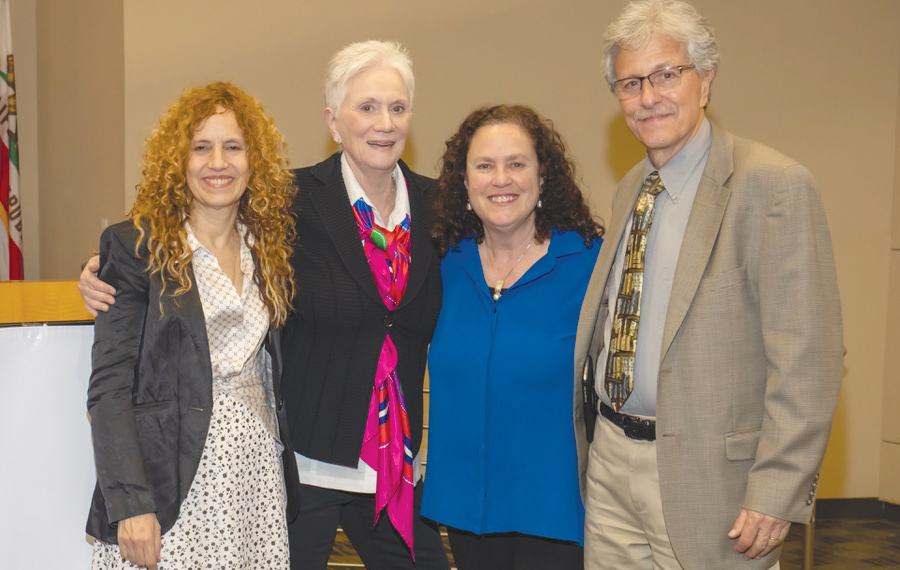
From left: Dr. Ruth Feldman, Dr. Victoria Simms, Leslie Silverstein and Phil Liff-Grieff attended a graduation ceremony for the First 36 Project. Photo courtesy of the Jewish Federation of Greater Los Angeles

Last month, the parenting development program First 36 Project celebrated the graduates of its latest cohort and welcomed its new fellows embarking on an 18-month fellowship.

A program of the Simms Mann Institute in collaboration with the Builders of
Jewish Education and The Jewish Federation of Greater Los Angeles, the First 36 Project provides Parent and Me facilitators with a professional development opportunity. Drawing on neuroscience research for children from birth to age 3, it offers access to the latest child development theories and helps parents form healthy connections with their children.

The May 20 celebration at the  Federa-tion’s offices on Wilshire Boulevard
included a keynote address by Dr. Ruth Feldman,  an Israel-based neuroscientist
and expert in early brain development. Her address was titled “How Can We Foster Empathy and Values In Young Children?”


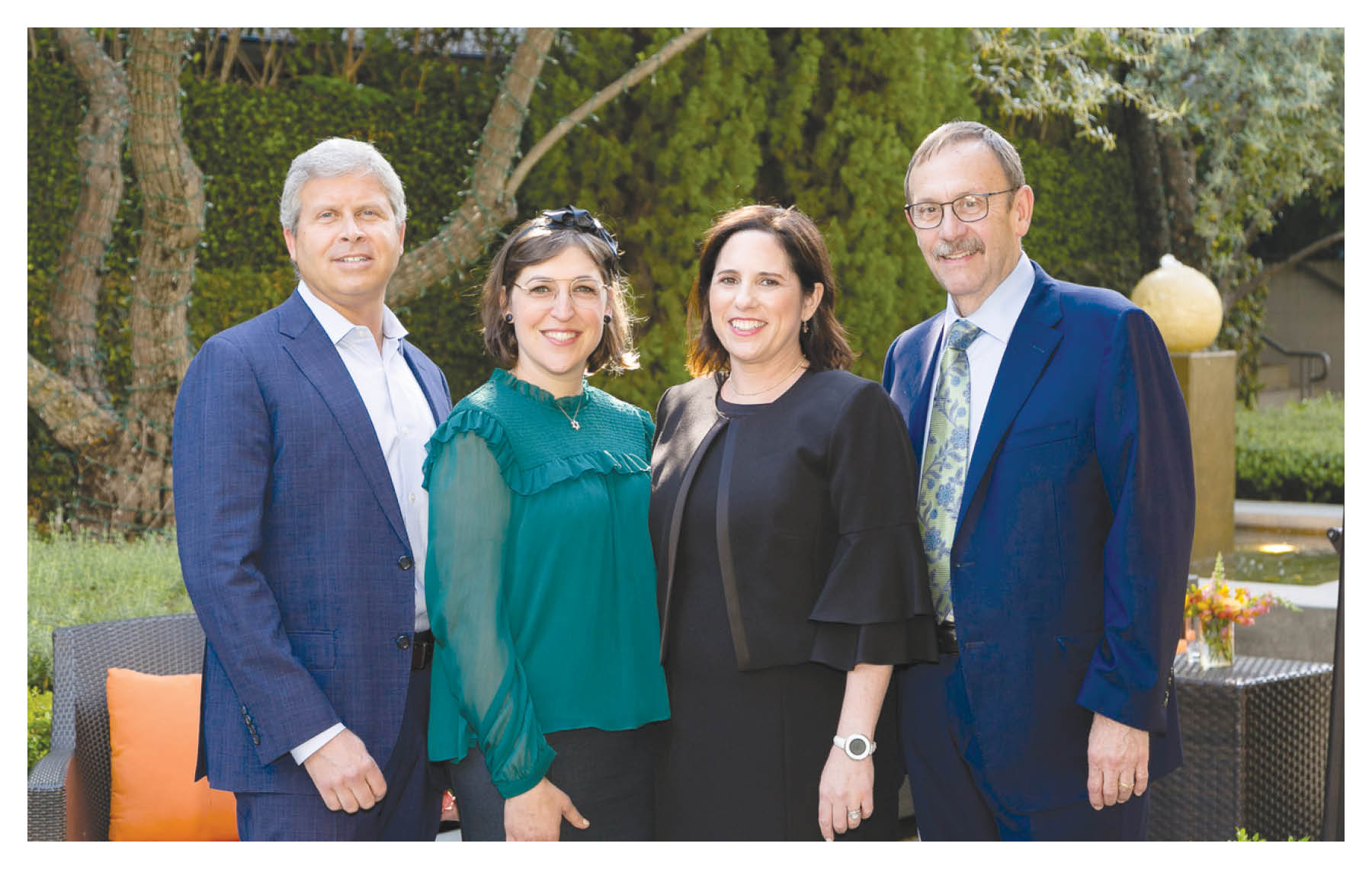
From left: JFLA Board President Jordan Lurie; actress and JFLA honoree Mayim Bialik; JFLA Executive Director Rachel Grose and JFLA board member Alan Spiwak. Photo by Marvin Steindler Photography

The Jewish Free Loan Association (JFLA) honored actress Mayim Bialik at its “Big Bang Extravaganza.”

Bialik, one of the stars of “The Big Bang Theory,” the hit CBS sitcom that aired its final episode just three days before the JFLA event, is also a best-selling author and entrepreneur. She was presented with a philanthropic leadership award by JFLA at the Luxe Sunset Boulevard Hotel on May 19.

The evening brought together about 300 guests, including young and seasoned professionals from various industries, to honor Bialik, a JFLA board member, and learn more about the organization’s mission.

“JFLA is responsible for giving interest-free loans to people of all backgrounds,” Bialik said. “They are among the first responders when people need help in emergencies. This year alone, JFLA has helped veterans, foster youth, homeless students and victims of the recent fires. JFLA is there to provide funds to families and individuals that are affected often by circumstances they can’t control.”

“The Big Bang Theory” co-creator, executive producer and writer Bill Prady
presented Bialik with her award. She also was honored with a proclamation from the City of Los Angeles, presented by L.A. City Councilman David Ryu. And Bialik’s “Big Bang” co-star Kevin Sussman, who played Stuart on the show, led a Q&A session with the actress.

Attendees included event co-chairs Abby Kohn, a Hollywood screenwriter (“I Feel Pretty,” “He’s Just Not That Into You,” “How To Be Single”) and Alan Spiwak, a JFLA board member; actress and blogger Busy Philipps and her husband, Marc Silverstein; and Bialik’s family.

“The incredible Mayim Bialik has been a dedicated supporter of Jewish Free Loan for almost 20 years,” JFLA Executive Director Rachel Grose said. “We were thrilled to honor her with the JFLA Leadership Award at our ‘Big Bang Extravaganza.’ No one is more deserving.”

Debra Eckerling, Contributing Writer


Wanna be in Movers & Shakers? Send us your highlights, events, honors and simchas.
Email ryant@jewishjournal.com.

Heritage Month Bash, Bialik Honored Read More »

New Israeli Restaurant Seeks Diverse Diners

Mamilla — a new kosher meat restaurant in the Pico-Robertson neighborhood serving high-end Mediterranean cuisine — held a soft opening on May 28, drawing close to 100 people.

Located on the corner of West Pico Boulevard and Bedford Street, Mamilla replaces the modern-American kosher sports bar Osher Bar & Grill, which lasted less than a year. The co-owner of both restaurants, Joseph Kamelgard, is the same, but that’s where the similarities end. 

“Conceptually, in order for a restaurant to succeed, especially a kosher restaurant, it has to appeal to a broader audience,” Kamelgard told the Journal. “Although we did get a lot of customers [to Osher] who were not Jewish or didn’t keep kosher, the volume wasn’t really there to support the restaurant.” 

For Mamilla, Kamelgard formed a partnership with Israeli brothers Yosef and Oren Ben Elisha, who moved to Los Angeles 15 years ago and currently own The Boulevard in Encino, an event venue for private parties. “It’s very important to us that the customer is always going to smile, always going to feel comfortable, always going to get the service and aid they expect from us,” Yosef told the Journal. “We want to bring what we brought to the Valley at The Boulevard to the city [at Mamilla].” 

“We decided this might be a good partnership — to use what [the Ben Elisha brothers] know, and their experience combined with my location and tapping into the Jewish community on this side of town, but also the greater Israeli community,” Kamelgard said.

Kamelgard added he envisions Mamilla providing customers with an Israeli experience that “makes them feel nostalgic and reminds them of being back in Israel at a restaurant. We chose the name Mamilla because that’s a neighborhood in Jerusalem,” he said. “They have an upscale mall … the Mamilla mall. By giving it a name that’s recognizable to Israelis in particular, [it gives] them … an idea of what their expectations are.”  

The owners also hired an Israeli interior designer, Sally Chaprak, to reflect modern designs of restaurants in Israel. The blue velvet couches and lounge chairs provide a relaxed atmosphere, and the full bar gives off a nightclub feel. 

“[I] think that with all the older restaurants here on Pico, this is a very young vibe.” — guest Ariel 

“The Israeli clientele tend to come out … at later hours, so it’s important for us to be able to accommodate that,” Kamelgard said. “We want it to be a hangout place.”

An Israeli-born guest named Ariel was impressed. “[I] love the urban vibe and the music and the fact that you have the different kind of seating,” he told the Journal at the opening. “[I] think that with all the older restaurants here on Pico, this is a very young vibe.” 

“Right when you walk in, you feel swankier,” said Darren Melamed, another guest. “The decor is very contemporary. It definitely feels upscale.”

At the soft opening, guests were served complimentary appetizers, including tuna tartare on fried pita chips and homemade bread with three side dips: beet tahini, olive oil and a garlic paste. Other starters on the menu include beef-filled Moroccan cigars, which melt in your mouth, with a side of pink tahini, tomato salad with a fresh mint taste that comes with hummus and pita chips, and fish shawarma with vegetables and eggplant puree. For the main course, guests could choose from fish, duck, or steak. The dishes are small sharing plates, each presented beautifully. The pareve desserts include three flavors of sorbet (coconut-cilantro-lime, chili-mango and strawberry-basil), halva chocolate mousse, a traditional Israeli dessert pudding called Malabi, and more. 

“I like the fish shawarma,” a guest named Jackson said. “It has unique texture; it’s complex and yet it’s straightforward — you know what you’re getting.” He also praised the ambiance. “It’s a very good vibe, it’s very hip,” he said. “I see an establishment like Mamilla [taking] this community to the next level.”

Mamilla is OK Kosher certified and officially opened to the public on May 30.


Melissa Simon is a senior studying journalism at University of Wisconsin-Madison and a Jewish Journal summer intern. 

New Israeli Restaurant Seeks Diverse Diners Read More »

Naomi Firestone-Teeter: Between the Pages of the Jewish Book Council

The Jewish Book Council (JBC) has officially been a nonprofit since 1944, although its roots go back to 1925. JBC’s origins are connected to the efforts of a Boston librarian by the name of Fanny Goldstein, who founded Jewish Book Week in 1925. The idea spread to other cities and evolved into National Jewish Book Week, eventually developing into the JBC. The organization is dedicated to supporting and celebrating Jewish literature. Naomi Firestone-Teeter joined the JBC as an assistant in 2006 after graduating from college and held a variety of positions in the organization before becoming executive director in 2015. 

Jewish Journal: What are some of your responsibilities as executive director?

Naomi Firestone-Teeter: It’s wide-ranging — everything from managing our team and the day-to-day operations including billing and accounting to working closely with the JBC’s leadership on the larger vision, goals and strategies for the organization. I’m very hands-on with programs and editorial and content we produce. It’s really a hybrid role that’s comprised of many moving parts.  

JJ: Can you tell us about the Jewish Book Council’s “Visiting Scribe” series hosted on JBC’s blog, PB Daily?

NFT: It’s a way for us to provide the reader an opportunity to get to know authors a little better — to get to learn about the person behind the book. This can include things like exploring the Jewish perspective; thoughts about Israel; Jewish rituals; how they practice Judaism and what it means to them to be Jewish; religion in general; politics; current events; or even the evolution of their book cover. It’s really a chance for readers to learn what drives the authors, what may have sparked their interest in something or their research. And we hope it will inspire our audience to read the full book.

JJ: You have another interesting program, the JBC Network author tours.

NFT: The JBC Network is a platform that connects Jewish authors with programmers around the country in order to reach readers. On one side, we have the authors, and the last few years we’ve actually had over 250 authors who have participated with the program. These are authors who are either Jewish or who have written overtly Jewish content. They get to represent their book out in the community. On the other side, we have a network of program representatives who arrange to have the authors speak at different events. Some of our program representatives include JCCs, synagogues, Hillels, bookstores and community organizations. 

JJ: How has the Jewish Book Council evolved over time?

NFT: One key piece that has shifted dramatically in present times has been the launching of a digital presence, which connects the dots between us and our readers on a regular basis. We publish new content — reviews, essays, interviews, reading lists and book club questions — every week. We also have our annual print journal, “Paper Brigade,” which is over 200 pages of content inspired over the past year of Jewish literature and ideas. The journal and our new, updated website are two channels we use to show readers what’s coming up in terms of books. 

JJ: And has this created a stronger connection with readers?

NFT: Yes, because it’s a way that we can reach more people to let them know what are new topics, new authors and current events. We want readers to see the relevance of these writers, their ideas and their role as thought leaders of the Jewish community — not just during the Jewish holidays or Jewish Book Month. The nice thing is that there’s a low barrier for entry to substantively engage with Jewish ideas or content. 

“No matter what one’s Jewish background, people can see themselves reflected in the range of books and authors featured on our site and in our programs.”

JJ: Are you engaging primarily with Jewish readers who are religious?

NFT: Absolutely not. There’s a book for everybody to enjoy. You can be disconnected from the larger Jewish community and still engage. It’s not institutionally driven. People can engage on their own terms. We reach a wide swath of the Jewish community who may not be fully connected in other ways, but that doesn’t mean they aren’t thinking about their identity, history and culture. Another piece of our mission is covering a wide range of diverse experiences along the path to being Jewish. No matter what one’s Jewish background, people can see themselves reflected in the range of books and authors featured on our site and in our programs.

JJ: The Jewish Book Council has a unique annual award. Tell us about the Sami Rohr Prize for Jewish Literature. 

NFT: It’s the largest Jewish literary award of its kind. The idea is to nurture and support the next generation of Jewish writers and thinkers, giving them a boost of confidence, along with a high monetary award. The Sami Rohr Prize supports high-quality substantive Jewish themes. We alternate years between fiction and nonfiction. The winner receives $100,000, our “Choice” awardee receives $18,000 and three finalists [called fellows] get $5,000 each. But it’s not just about money; we also have a large community that gets together every other year for a gathering of the Sami Rohr Literary Institute that includes a cumulative roster of awardees, judges and advisers to the prize. 

JJ: Do you have book clubs?

NFT: We have over 1,800 book clubs that receive resources from us. We create reading lists, discussion questions and book club guides. We also provide them with additional content to supplement or give context to their conversation. This could be a historical timeline, a content glossary or even recipes. Anything that would help support a book club. The book clubs also receive our annual selection guide that provides 16 recommendations a year, covering a wide range of diverse content. 

JJ: What else should people know about the Jewish Book Council?

NFT: We’re a nondenominational, politically unaffiliated, central resource. We connect our members with Jewish ideas, thought and substance that is accessible to all Jews of all backgrounds.


Allison Futterman is a writer living in North Carolina.

Naomi Firestone-Teeter: Between the Pages of the Jewish Book Council Read More »

Paper Flowers for Shavuot: Part 2

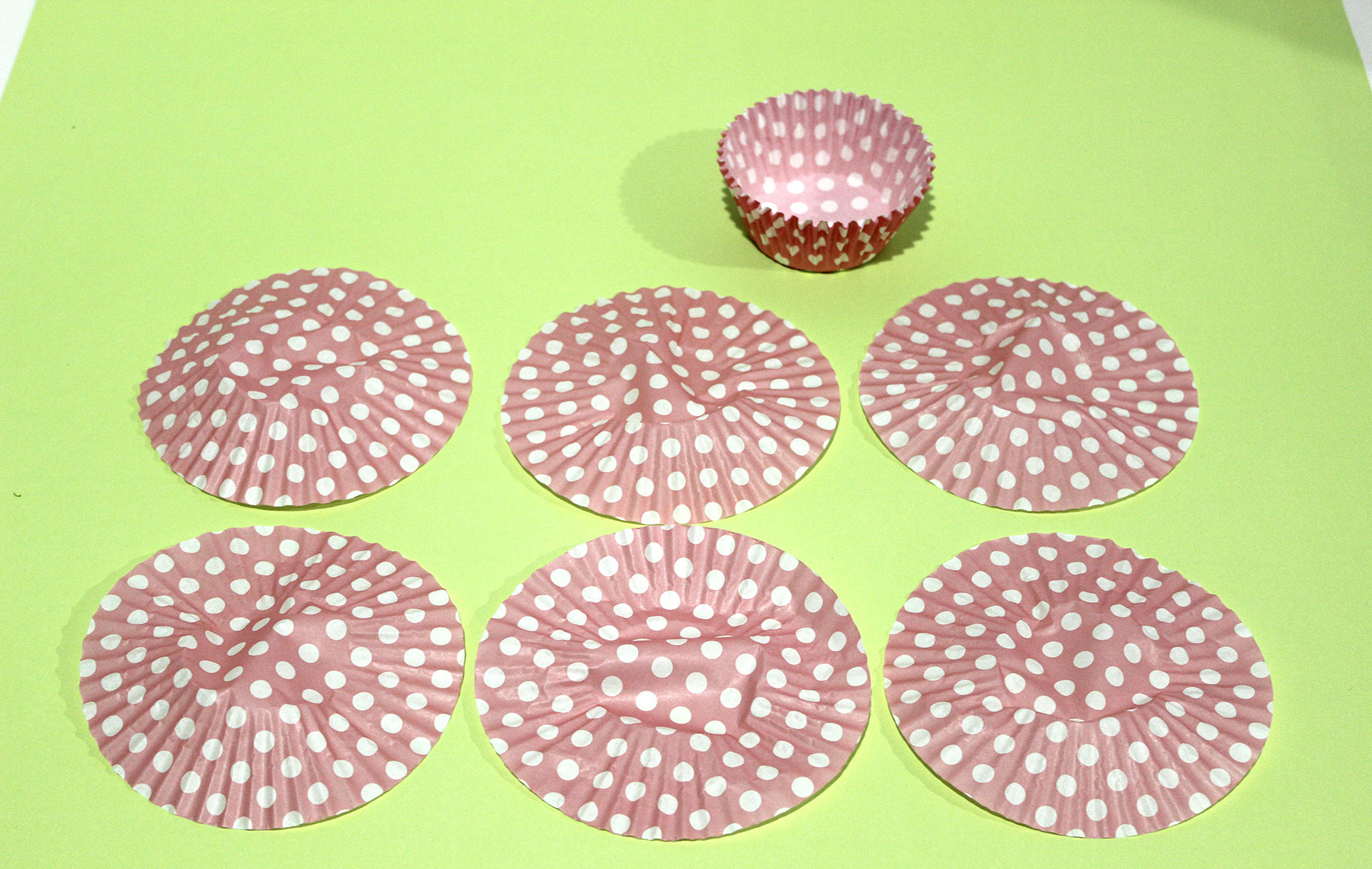
Last week in preparation for Shavuot, I shared a tutorial for making poppies out of tissue paper. If you thought they were easy to make, wait till you see these flowers made from colorful cupcake liners. The bountiful blooms look like carnations or peonies, and they come together in just a few simple steps. 

What you’ll need:
Cupcake liners
Hole punch
Pipe cleaners


1. For each flower, you’ll need six paper cupcake liners. Choose liners that have fun colors and patterns. Flatten each of the liners with the palm of your hand.


2. Fold the cupcake liners in half, and then in half again so they are in quarters. Fold them with the plain, or white, side facing out. 


3. Punch a small hole in the corner of the folded cupcake liner.


4. Thread a pipe cleaner through the holes of the six folded cupcake liners, with about four inches extending past the liners.


5. Bend the extended end of the pipe cleaner, and wrap it around the base to secure the liners.


6. Fluff out the cupcake liners to create the flower petals. 


Jonathan Fong is the author of “Flowers That Wow” and “Parties That Wow,” and host of “Style With a Smile” on YouTube. You can see more of his do-it-yourself projects at jonathanfongstyle.com.

Paper Flowers for Shavuot: Part 2 Read More »

Obituaries: June 7, 2019

Goldie Bemel died April 21 at 93.  Survived by daughters Barbara, Susie Rissien; son Brian; 2 grandchildren. Mount Sinai

Izrail Bikvan died April 18 at 73.  Survived by wife Stella; daughter Klara; brother Anrikh. Mount Sinai

Doris Eaker died April 16 at 84.  Survived by son Carl (Leslie) Ogden; 3 grandchildren; 2 great-grandchildren. Mount Sinai

William Louis Friedman died April 23 at 62. Survived by wife Jo; daughters Shana, Chava; father Albert; brothers John (Jean), Daniel. Mount Sinai

Helen Glenn died April 22 at 86. Survived by daughter Michelle Pav; son David (Shelley) Baker; 2 grandchildren. Mount Sinai

Sandra Helene Greenspoon died May 1 at 87. Survived by daughters Andrea Medina, Claudia (Michael B. Van Scoy-Mosher) Stone, Ronda (Jack Myers) Carnegie; 6 grandchildren; 2 great-grandchildren. Mount Sinai

Barry L. Horwitz died May 2 at 76. Survived by wife Marlene; sons Marc, Brad (Mindy), Michael (Natalie); 4 grandchildren; sister Diane. Mount Sinai

Regine Jaffee died April 22 at age 83. Survived by husband Martin; daughter Belinda; sons Rami, Sid.

Janet C. Kaufman died April 21 at 97.  Survived by daughter Deborah Covell; 2 grandchildren. Mount Sinai

Eileen Kestenbaum died April 16 at 81. Survived by daughters Terrie Rotter, Lisa Thomas. Mount Sinai

Hilda Kunstadt died April 29 at 92. Survived by sons Robert (Carole), Donald (Patti); 5 grandchildren. Mount Sinai

Leila Landau died April 22 at 90. Mount Sinai

Lev Lapidus died April 25 at 84. Survived by daughters Bella (Dmitri), Elvira (Boris) Kogosova; 4 grandchildren; 3 great-grandchildren. Mount Sinai

Lidia Lekhgolts died May 2 at 93. Survived by son Victor; 1 grandchild; 1 great-grandchild. Hillside

Eileen Peisner died May 2 at 83. Survived by husband Robert; daughters Julie, Laura; sons Edward, Steven (Helena); 7 grandchildren; 2 step-grandchildren. Mount Sinai

Steven Perry died April 20 at 82. Survived by wife Joan; daughter Leesa; son Gregory; 1 grandchild; sister Linda. Hillside

Sam Praw died April 17 at 90. Survived by wife Vicky; daughters Debbie (Eddie) Herbst, Ruthie (Hillel) Kellerman, Judy (Louis) Michelson; son Henry (Leanne); 15 grandchildren; 10 great-grandchildren; sister Frieda (Karl) Newman. Chevra Kadisha

Barbara Ronen died April 28 at 90. Survived by son Peter. Hillside

Jason H. Ross died May 1 at 86. Survived by wife Doris; daughter Lori (Rob Garcin); 4 grandchildren. Mount Sinai

Paula Sanders died April 21 at 66. Survived by daughter Lyndsay (Aaron) Nevins-Kay; sisters Rosemary Walker, Barbara (Chuck) Barnett; brother Mark. Mount Sinai 

Dina Sofer died April 22 at 91. Survived by daughter Miriam. Hillside

Marian Stearn died April 29 at 108. Survived by daughter Judith (William); 2 grandchildren; 4 great-grandchildren; brother Stanley (Lois). Hillside

Barbara Takamoto died April 27 at 84. Survived by daughter Leslie Stern. Mount Sinai

Pearl Tarnor died April 20 at 94. Survived by son Elisha (Susan Goldberg); 1 grandchild. Mount Sinai

Sol Taylor died April 11 at 87. Survived by wife Pearl; daughter Elana (Benjamin) Vorspan; son Benjamin (Niva); 9 grand-children; sister Myrna Haas. Chevra Kadisha

David Winters died April 23 at 80. Survived by sons Jonathan (Piano), Alexander; 1 grandchild; brother Marc. Mount Sinai 

Arnold Wishnick died April 27 at 76. Survived by wife Jaclyn “Jackie” Maduff; stepdaughter Wendy (Daniel Karen) Maduff; 1 grandchild; sister Audrey Greenberg. Mount Sinai

Lester Zola died April 24 at 87. Survived by daughter Barbara; sons Mark (Utta), Brian; 8 grandchildren; 4 great-grandchildren. Mount Sinai  

Obituaries: June 7, 2019 Read More »

Jews Awakened to Black Struggles in Deep South

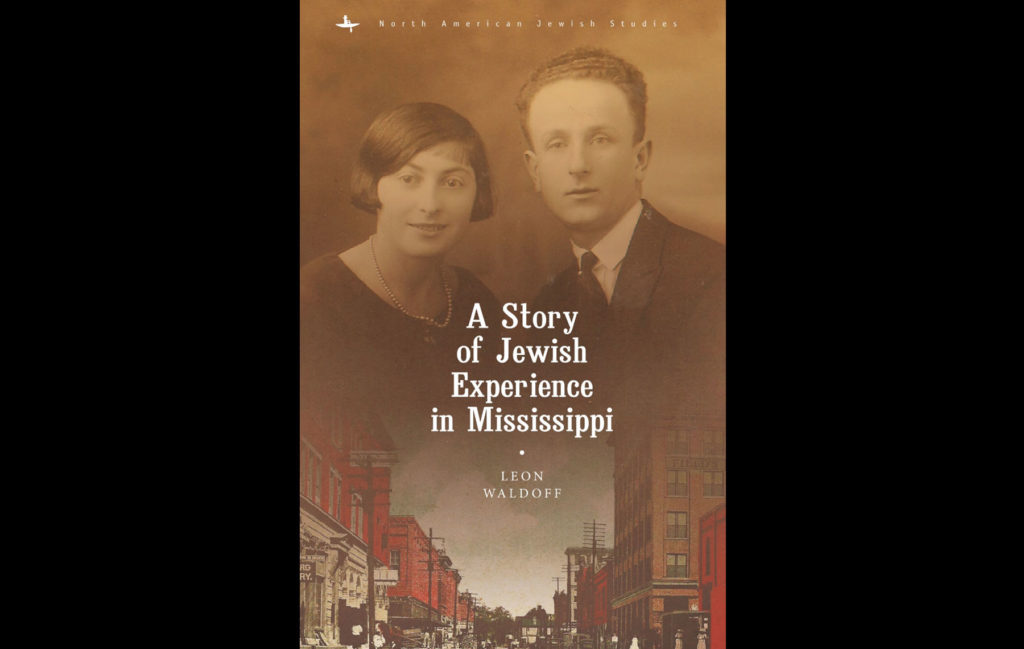
Not every Jewish immigrant from Russia and Eastern Europe who landed at Ellis Island ended up in Brooklyn or the Lower East Side. Some of them reached such unlikely destinations as the chicken farms of Petaluma and the frozen wastes of North Dakota. Relatively few of them, however, tried to make a new life in the heart of the Deep South. “A Story of Jewish Experience in Mississippi” by Leon Waldoff (Academic Studies Press) is a heartfelt but also meticulously researched and deeply insightful account of one family that did.

Waldoff, professor emeritus of English at the University of Illinois at Urbana-Champaign, spent his academic career in the study of Keats and Wordsworth, but he has not forgotten his own roots in the backwater town of Hattiesburg, Miss. His new book is a fascinating but unfamiliar variant of the Jewish American saga, one that is rooted in the letters his parents exchanged, first when they courted in the old country and then after they arrived in America, and the stories that were later told around the family table in Mississippi.

His parents managed to reach the United States in 1922, shortly before the tightening of U.S. immigration law “virtually closed the door” to Jewish immigrants from Eastern Europe, as Waldoff explains, “making it extremely difficult during the 1930s for Jews fleeing Nazi Germany to come here.” His mother’s family had already settled in Hattiesburg, and his father joined them with some trepidation: “Mississippi, from what they may have heard of it, and so far away, may have seemed an American Siberia,” Waldoff writes.

The Jewish community consisted of some 150 souls, and many of them earned a living as peddlers and merchants. “My father carried his merchandise in a pack on his back and suitcase in his hand,” Waldoff writes. “What was in it? Probably a very limited selection of dresses, blouses, gowns, underwear, pants, shirts, ties, shoes, sox, belts, suspenders, piece goods, patterns, thread and needles.” Whether the customer was white or black, however, the encounter carried the constant risk of misunderstanding and conflict.

“He had to be sensitive to the prejudices of whites and the feelings of blacks while trying to communicate in a language still strange to him as he had first heard it in the Bronx, often mixed with Yiddish words and inflections, now sounding so different in the slower speech, pronunciation, and idioms of the rural South, and even more strange in the different southern dialects spoken by whites and blacks,” Waldoff explains. 

By 1929, “Waldoff’s” was proudly displayed on a clothing store on Mobile Street in Hattiesburg, but the racial divide in the South continued to present challenges to the family business. By rigid tradition, for example, black customers were not allowed to use the changing rooms, although they could sit next to a white customer while trying on shoes. Not until he undertook the research for his book did Waldoff fully understand the unspoken rules that governed race relations in the Deep South.

“Precisely because they, too, were the targets of bigotry, some Jewish citizens in the South felt obliged to join in the racist assumptions and practices of their white neighbors and customers.”

“It’s here, in the silent, habitual adherence to the customs of segregation by both blacks and whites that I see at least a partial explanation of why I failed to see that blacks were not allowed to try on clothes before buying,” he writes. “I think I was so blinded by the segregationist culture in which we lived, despite my increasing awareness of its injustices as I grew older … that I still remained unaware of many of the daily humiliations that blacks were subjected to.”

Ironically, Waldoff points out the cruel interplay between racism and anti-Semitism. Precisely because they, too, were the targets of bigotry, some Jewish citizens in the South felt obliged to join in the racist assumptions and practices of their white neighbors and customers. “Given the many false notions about Jews and explicit expressions of anti-Semitism in the 1920s and 1930s, Jews in the South lived with ‘a pervasive sense of anxiety,’ ” he points out. “Although a tiny minority, their clothing and other retail businesses gave them a highly visible presence. They were viewed as ‘the eternal alien.’ ”

By the 1950s, the Jewish community in Hattiesburg felt the freshening winds of the civil rights movement that was manifesting itself across America. Waldoff credits the arrival of Rabbi Charles Mantinband in 1951 for alerting his community and his congregation to the challenge. Some congregants “wanted him to remain silent on the subject of civil rights,” Waldoff concedes, but it was also true that “many of his fellow rabbis in the South had the highest regard for him precisely because he did speak out despite a number of threats.” For Rabbi Mantinband, Waldoff writes, “segregation was ‘the supreme sin of our day’ and ‘as monstrous an evil as any in our Western civilization.’ ”                                                                             

The author is willing to ask hard questions of himself and his relations when contemplating how and why the Jews of Hattiesburg participated in the strange new world in which they found themselves upon arrival in the land of the free. He recalls, for example, the experience of attending minstrel shows where he “laughed at the puns and jokes and enjoyed the songs, still blind to the racist nature of the merriment.” Now he is able to take a more critical stance: “What would Jews in Germany or Poland have thought, I wonder, about a satirical equivalent of the minstrel shows I saw based on stereotypes of Jews?”

That empathetic question, of course, is biblical in its origins. We are taught in our tradition that we know the heart of the stranger because we, too, were slaves in Egypt. To his great credit, Waldoff suggests throughout his affecting book that the Jews in Mississippi and elsewhere in the Deep South could have and should have recognized their common cause with their black neighbors far sooner than they did. And yet, to the credit of the Jewish leaders and activists that he also writes about, Waldoff demonstrates that the Jewish community, once roused to action, joined the struggle with strength and good courage.


Jonathan Kirsch, author and publishing attorney, is the book editor of the Jewish Journal.

Jews Awakened to Black Struggles in Deep South Read More »

Chutzpah, Babka and ‘Shiva for Anne Frank’

“Where do I get the chutzpah to cosplay as Anne Frank?” asks writer and comedian Rachel McKay Steele in the opening moments of her one-woman show, “Shiva for Anne Frank.” 

This question is at the core of the play, one of more than 40 solo productions at this year’s Hollywood Fringe Festival. The balance between reverence and chutzpah definitely wobbles over the course of the show, as Steele imparts information about the famous diarist, and her own journey as a creative Jewish woman.

“It almost feels like [Anne Frank is in my] collective unconscious,” Steele told the Journal after a dress rehearsal. “I don’t remember learning who she was. I only remember knowing who she was.”

Throughout the production, Steele also explores some of the Jewish mourning rituals, for instance, covering a mirror — which she said she learned from watching the TV show “Transparent” — and eating a meal with the mourner, which she said was an example of “eating our feelings.” 

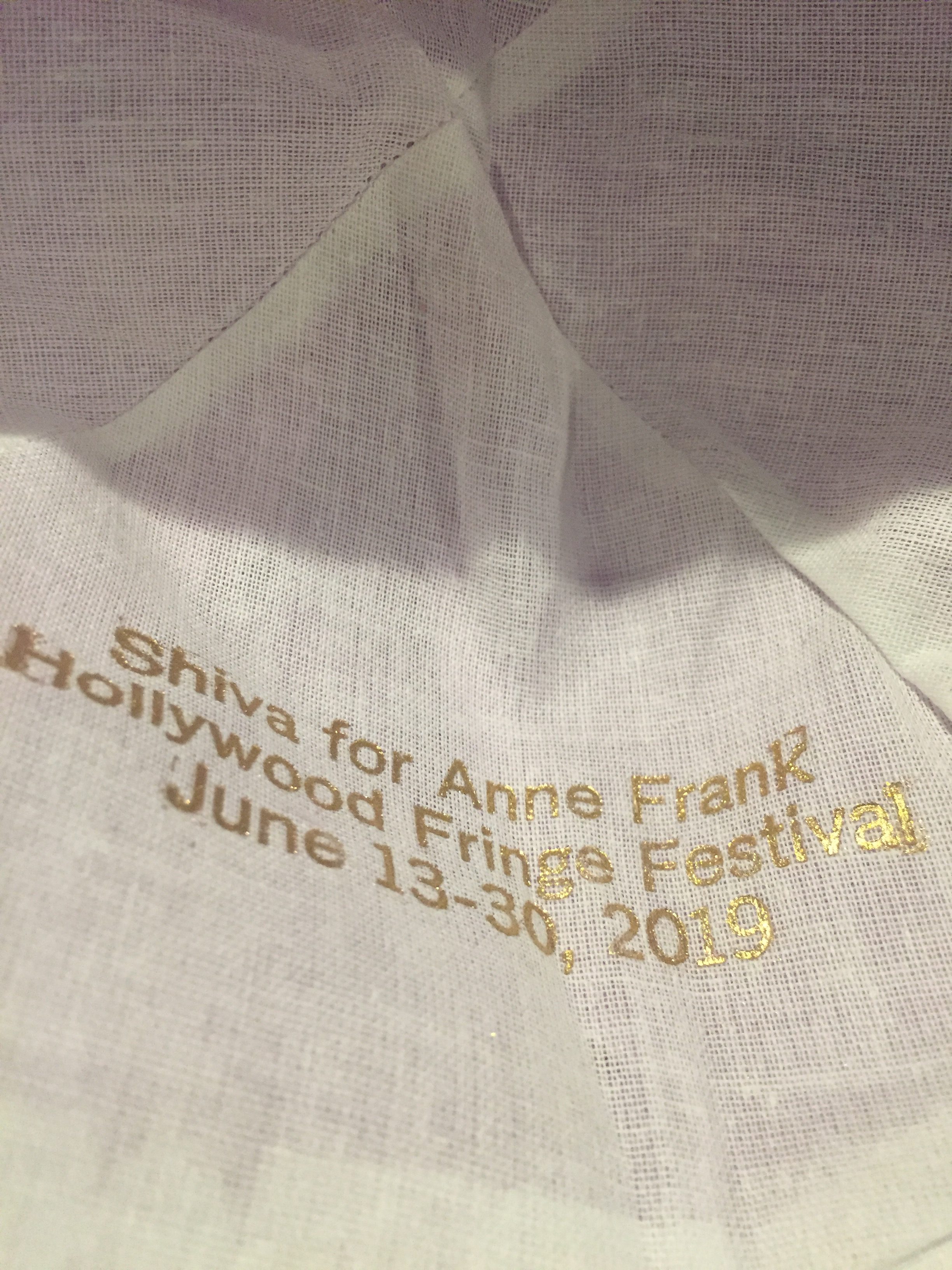
The stage is set to evoke the feeling of entering a shivah house: On one table sits a framed photo of Anne, a stack of programs (containing the mourner’s Kaddish in English transliteration) and several lavender kippot with the name of the show and its run dates stamped on their insides. The yarmulkes are more of a representation of a bat mitzvah (lavender was Steele’s bat mitzvah color) and she said she felt that a piece of Judaica at the show was necessary. 

“I chose to have a bat mitzvah because I was pulled to it. I also felt that way with this show,” said Steele, who who grew up secular in Charleston, S.C. “I’m figuring out what it means to me to be a Jewish woman. Doing this show, it’s like a whole new Torah portion. I’m looking at customs and what they mean to me as an adult. It’s an exploration of my Jewish identity. Theater can be a sacred space.”

The nosh area in the reception area at “Shiva for Anne Frank.” Photo by Esther Kustanowitz

Bagels, babka, rugelach and black-and-white cookies are set up at the entrance to the theater for audience members. 

“I would never invite people into a Jewish experience and not serve them food,” Steele said. “It’s a huge part of Judaism. Even before I delved into shivah customs, I wanted to serve Jewish food … a lot of my Jewish experience is around food,” she said, citing her mother’s brisket and her grandmother’s rugelach. 

Steele was prompted to create the show after comic Iliza Shlesinger gave a 2017 interview in which she claimed, “I think I’m the only woman out there that has a joke about World War II in my set.”  

“Anne wasn’t a saint. She was gloriously human. I want to celebrate not the abstract construct of a historical figure but the person, the writer and the girl.” — Rachel McKay Steele

Steele had always been doing jokes about Nazis, World War II and the Holocaust, she said, so she and a friend put together a standup show: all female performers doing only World War II jokes. She thought she might be able to do something as Anne Frank, began to do research on the internet and started to cry. She then bought a copy of Anne Frank’s diary, started reading and began writing what started out as “an ill-conceived six-minute bit” that became the “piece of theater” that became “Shiva for Anne Frank.” 

Steele presents portions of Anne’s narrative alongside her own experiences. In one segment, she speaks “about a very important, pleasurable sexual discovery of my adulthood” in graphic detail juxtaposed with some newly discovered excerpts from Anne’s diary.

“Rereading Anne’s diary and thinking about her discovering her own sexuality and her curiosity, I realized how thankful I am that I get to be a 34-year-old woman who loves and enjoys sex,” Steele said. “Sex can be a beautiful thing. But there’s a lot of societal messages and/or traumatic experiences that can get in the way.” She cited over-sexualization of young girls, a prevalence of sexual assault and date rape, attacks on reproductive rights, homophobia, transphobia and cultural shame surrounding sex as some of the culprits.

Another lost diary page reveals Anne’s attraction to one of her female friends. These recently uncovered texts made a huge impact on Steele, who said the omission was an example of the “erasure of queer narratives throughout history. The diary was heavily abridged by her father. She was treated as a little girl first and writer second. [But] Anne wasn’t a saint. She was gloriously human. I want to celebrate not the abstract construct of a historical figure but the person, the writer and the girl.”

Steele said reading Frank’s work influenced her to “stop judging myself and write my truth.” 

Inside of the giveaway kippah distributed at “Shiva for Anne Frank.” Photos by Esther Kustanowitz

While developing the show, Steele was shocked by the increase in what she called “open white supremacy” and anti-Semitism, including the shootings at a synagogue in Pittsburgh and at a Chabad in San Diego County. 

“I never saw a swastika in New York until after Trump was elected,” she said. “People are feeling empowered to do things like march and say ‘Jews will not replace us’ … emboldened by having a leader who traffics in hate.”  

She also drew parallels between American immigration policies during World War II and how immigrants are being treated now, noting Otto Frank’s attempts to acquire visas for his family. “So why didn’t the Jews leave earlier? They tried.”

“Comedy is tragedy plus time, but time between tragedies seems nonexistent” these days, Steele observed. “I never wanted this show to be as relevant as it’s become.”


“Shiva for Anne Frank” has a preview performance on June 9, then runs from June 13-30 at the Flight Theater at The Complex Hollywood, 6476 Santa Monica Blvd., Los Angeles, as part of the Hollywood Fringe Festival. Buy tickets here.

Chutzpah, Babka and ‘Shiva for Anne Frank’ Read More »

Documentary Goes Inside L.A.’s 1960s Music Scene

To many Angelenos, Laurel Canyon is merely a way to drive between Hollywood and the Valley, preferably not during rush hour. But in the mid-1960s, it was the headquarters of a seminal music scene — the California electrified folk rock made popular by the Byrds, the Beach Boys, Buffalo Springfield and the Mamas and the Papas. The documentary “Echo in the Canyon” explores the influence of these bands.

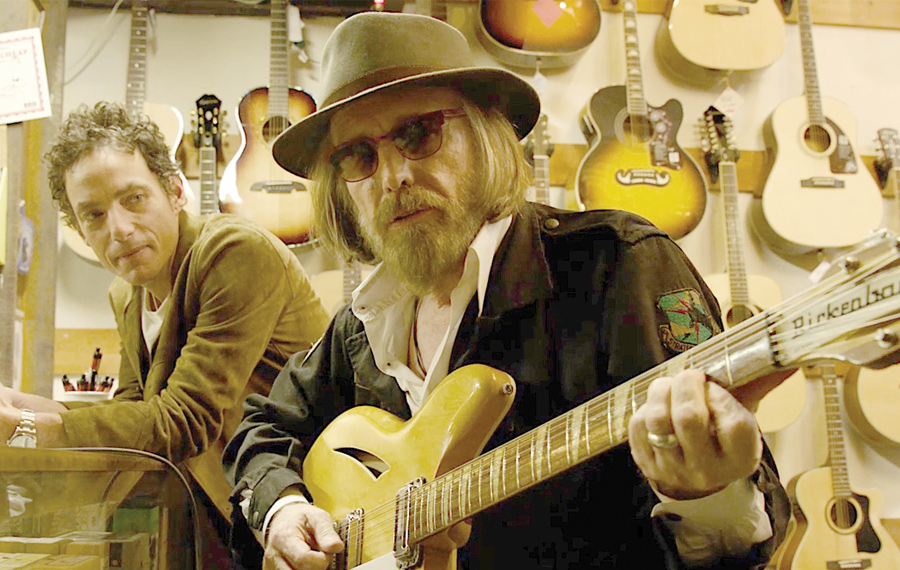
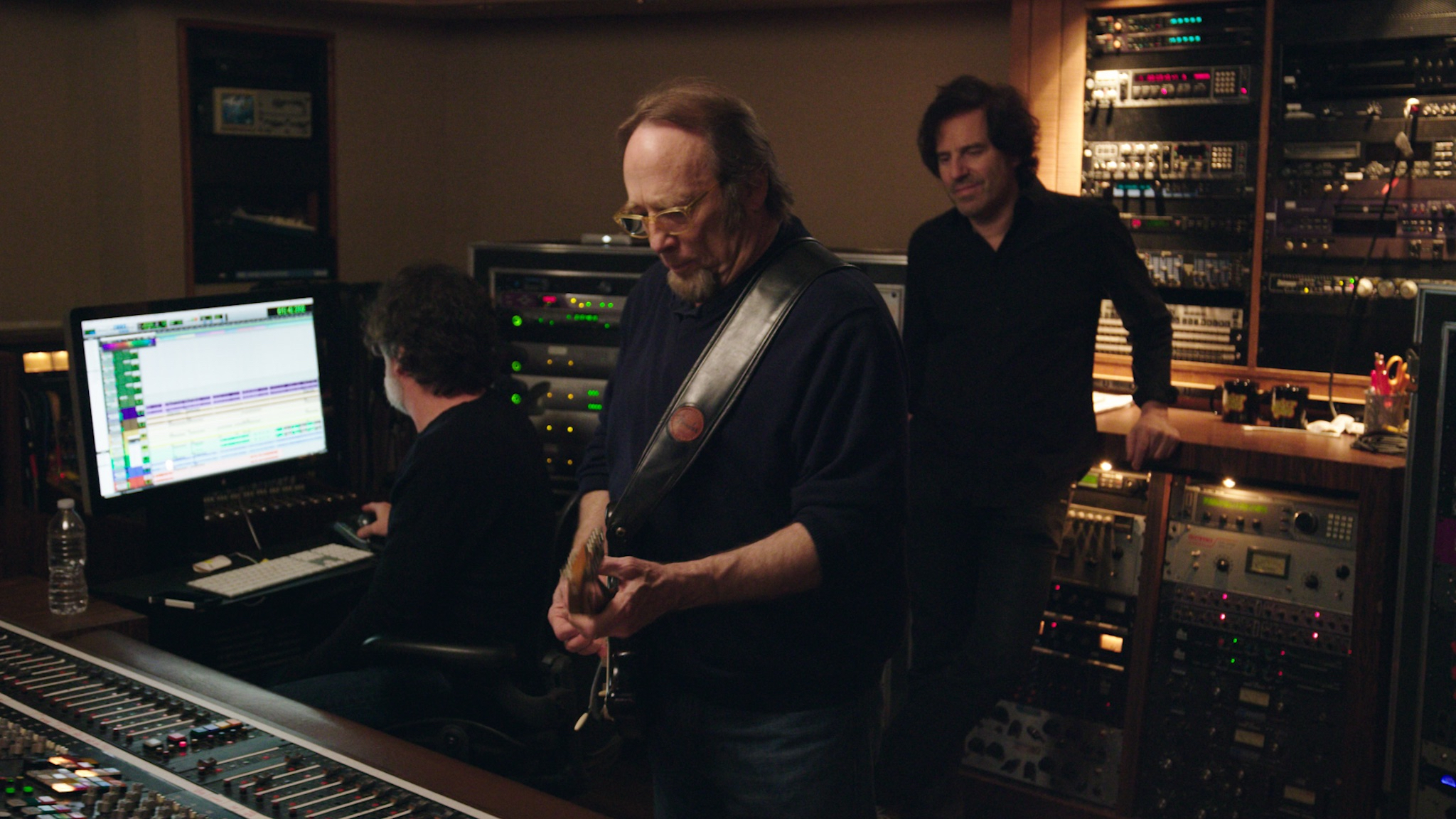
Singer-songwriter Jakob Dylan — the Wallflowers’ frontman and the son of Bob Dylan — interviews music legends Brian Wilson, Ringo Starr, Michelle Phillips, Eric Clapton, Stephen Stills, David Crosby, Graham Nash, Roger McGuinn, Jackson Browne and Tom Petty as he records an album that pays tribute to them with his contemporaries Beck, Fiona Apple, Cat Power, Regina Spektor and Norah Jones. 

“To me, the film is more about the echo than it is about the canyon,” director, producer and co-writer Andrew Slater told the Journal. “It’s really about the exchange of ideas in that period before big business took over. Each of these songs has an arc that goes back to somebody else. Stephen Stills writes ‘Questions’ because he heard Judy Collins write ‘Since You’ve Asked.’ Eric Clapton writes ‘Let It Rain’ based on hearing Stills’ ‘Questions.’ All of that is the foundation for popular music and it’s even more powerful today.” 

Photos courtesy of Greenwich Entertainment

Focusing solely on the music, Slater said, “I didn’t want to include the political and social implications of what was happening because I wanted to make a film that would transport people from the vicissitudes of their daily lives and transport them back to a simpler time in hopes that maybe they could take some of that kindness and community and bring it into their lives.” 

A first-time filmmaker, Slater didn’t initially intend to make a movie. As a journalist, artist manager and president of Capitol Records, he was looking for his next step. “I was managing an artist and playing music again,” he said. “I was looking for a project that I could be passionate about, not to work for the sake of working.”

“To me, the film is more about the echo than it is about the canyon. It’s really about the exchange of ideas in that period before big business took over.” — Andrew Slater

He and Dylan, friends for 33 years, set out to make a record in 2015 and filmed some recording sessions, then a concert, and the project expanded from there. Inspired by the milieu of the 1969 Los Angeles-set movie “Model Shop,” the pair was eager to revisit the influences of the past. And when Slater failed to find a director, he took on the role himself, using his writing, story-crafting, video-making, editing and producing skills.  

“The film could have been made a lot faster if we had been able to do a traditional filming schedule,” Slater said. “There was no one who didn’t want to do it; it was working around people’s schedules. I also wanted very specific settings. There are various ways to tell a story and I tried to do a combination of many things — interviews, the studio recording of a song, performing it live and talking to the person who wrote it.”

The documentary is dedicated to Tom Petty, who died in October 2017.

Ringo Starr and Jakob Dylan; Photos courtesy of Greenwich Entertainment

“He’s like the professor. He bridges the gap between the two generations,” Slater said. “He was an inexhaustible storehouse of knowledge and provides perspective between the people who are saying what was happening in ’65 and the people of Jakob’s generation who this music has influenced.” 

At the time the Laurel Canyon scene was flourishing, New York native Slater was living in Forest Hills, Queens, listening to the Laurel Canyon artists on the radio, fantasizing about “this beautiful, idyllic place” where they lived. He played guitar and watched documentaries such as “Woodstock” and “Monterey Pop,” since he was too young to attend concerts. “I was very passionate about music from the time I was young,” he said.

He remembers going to the Forest Hills Jewish Center and stopping in at the Pontiac dealership across the street. “I’d go in and sit in this Firebird convertible. When I was older and making money, I bought that car. It’s the car you see in the film,” he said. Although he isn’t an observant Jew, “I’m a very spiritual person,” Slater said. “I’m aware that there are things in the universe that I’m not in control of. My sense of spirituality is strong.”

Although he found out how difficult it is to make a documentary, “I learned that I love it as a form of expression and storytelling,” Slater said, adding that he’s eager to make another. “But you’re only able to do things if people believe in your ideas and believe they’ll make their money back. So we’ll have to see where this goes. 

“For me, it’s important to tell stories that are close to my heart. So it would be something that moves me emotionally and that’s probably in music,” he said. “I’ve learned that whatever subject you’re going to take on, you’ve got to like it, because it takes over your life.”


“Echo in the Canyon” is in theaters now.

Documentary Goes Inside L.A.’s 1960s Music Scene Read More »