
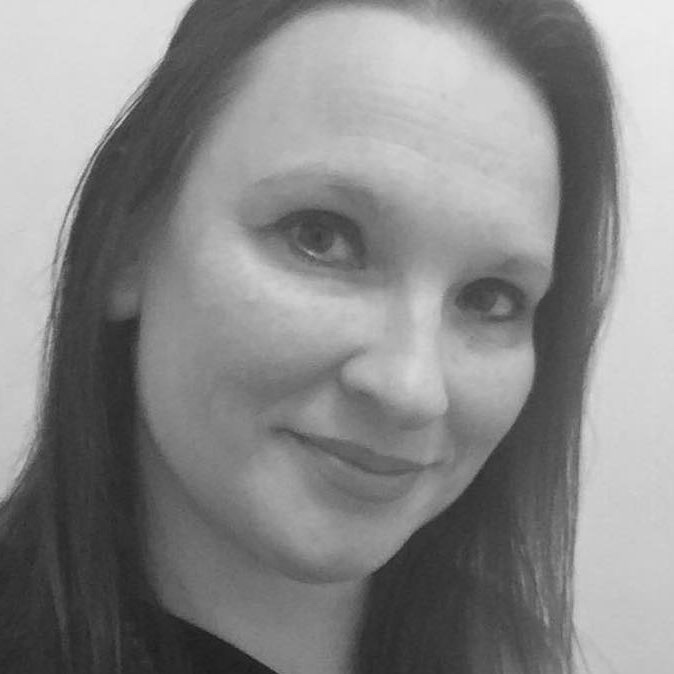

“Where do I get the chutzpah to cosplay as Anne Frank?” asks writer and comedian Rachel McKay Steele in the opening moments of her one-woman show, “Shiva for Anne Frank.”
This question is at the core of the play, one of more than 40 solo productions at this year’s Hollywood Fringe Festival. The balance between reverence and chutzpah definitely wobbles over the course of the show, as Steele imparts information about the famous diarist, and her own journey as a creative Jewish woman.
“It almost feels like [Anne Frank is in my] collective unconscious,” Steele told the Journal after a dress rehearsal. “I don’t remember learning who she was. I only remember knowing who she was.”
Throughout the production, Steele also explores some of the Jewish mourning rituals, for instance, covering a mirror — which she said she learned from watching the TV show “Transparent” — and eating a meal with the mourner, which she said was an example of “eating our feelings.”
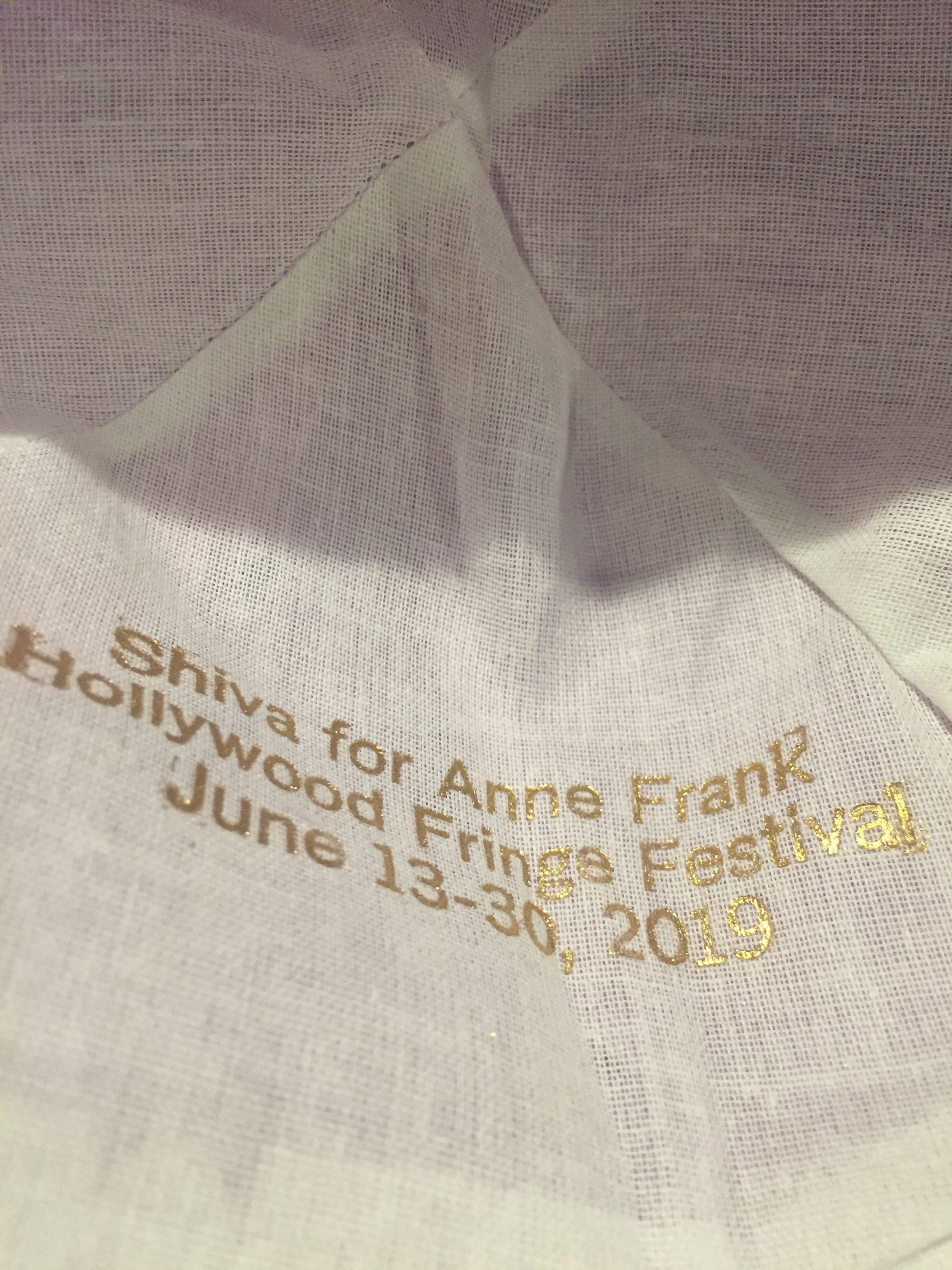
The stage is set to evoke the feeling of entering a shivah house: On one table sits a framed photo of Anne, a stack of programs (containing the mourner’s Kaddish in English transliteration) and several lavender kippot with the name of the show and its run dates stamped on their insides. The yarmulkes are more of a representation of a bat mitzvah (lavender was Steele’s bat mitzvah color) and she said she felt that a piece of Judaica at the show was necessary.
“I chose to have a bat mitzvah because I was pulled to it. I also felt that way with this show,” said Steele, who who grew up secular in Charleston, S.C. “I’m figuring out what it means to me to be a Jewish woman. Doing this show, it’s like a whole new Torah portion. I’m looking at customs and what they mean to me as an adult. It’s an exploration of my Jewish identity. Theater can be a sacred space.”

Bagels, babka, rugelach and black-and-white cookies are set up at the entrance to the theater for audience members.
“I would never invite people into a Jewish experience and not serve them food,” Steele said. “It’s a huge part of Judaism. Even before I delved into shivah customs, I wanted to serve Jewish food … a lot of my Jewish experience is around food,” she said, citing her mother’s brisket and her grandmother’s rugelach.
Steele was prompted to create the show after comic Iliza Shlesinger gave a 2017 interview in which she claimed, “I think I’m the only woman out there that has a joke about World War II in my set.”
“Anne wasn’t a saint. She was gloriously human. I want to celebrate not the abstract construct of a historical figure but the person, the writer and the girl.” — Rachel McKay Steele
Steele had always been doing jokes about Nazis, World War II and the Holocaust, she said, so she and a friend put together a standup show: all female performers doing only World War II jokes. She thought she might be able to do something as Anne Frank, began to do research on the internet and started to cry. She then bought a copy of Anne Frank’s diary, started reading and began writing what started out as “an ill-conceived six-minute bit” that became the “piece of theater” that became “Shiva for Anne Frank.”
Steele presents portions of Anne’s narrative alongside her own experiences. In one segment, she speaks “about a very important, pleasurable sexual discovery of my adulthood” in graphic detail juxtaposed with some newly discovered excerpts from Anne’s diary.

“Rereading Anne’s diary and thinking about her discovering her own sexuality and her curiosity, I realized how thankful I am that I get to be a 34-year-old woman who loves and enjoys sex,” Steele said. “Sex can be a beautiful thing. But there’s a lot of societal messages and/or traumatic experiences that can get in the way.” She cited over-sexualization of young girls, a prevalence of sexual assault and date rape, attacks on reproductive rights, homophobia, transphobia and cultural shame surrounding sex as some of the culprits.
Another lost diary page reveals Anne’s attraction to one of her female friends. These recently uncovered texts made a huge impact on Steele, who said the omission was an example of the “erasure of queer narratives throughout history. The diary was heavily abridged by her father. She was treated as a little girl first and writer second. [But] Anne wasn’t a saint. She was gloriously human. I want to celebrate not the abstract construct of a historical figure but the person, the writer and the girl.”
Steele said reading Frank’s work influenced her to “stop judging myself and write my truth.”
While developing the show, Steele was shocked by the increase in what she called “open white supremacy” and anti-Semitism, including the shootings at a synagogue in Pittsburgh and at a Chabad in San Diego County.
“I never saw a swastika in New York until after Trump was elected,” she said. “People are feeling empowered to do things like march and say ‘Jews will not replace us’ … emboldened by having a leader who traffics in hate.”
She also drew parallels between American immigration policies during World War II and how immigrants are being treated now, noting Otto Frank’s attempts to acquire visas for his family. “So why didn’t the Jews leave earlier? They tried.”
“Comedy is tragedy plus time, but time between tragedies seems nonexistent” these days, Steele observed. “I never wanted this show to be as relevant as it’s become.”
“Shiva for Anne Frank” has a preview performance on June 9, then runs from June 13-30 at the Flight Theater at The Complex Hollywood, 6476 Santa Monica Blvd., Los Angeles, as part of the Hollywood Fringe Festival. Buy tickets here.

































