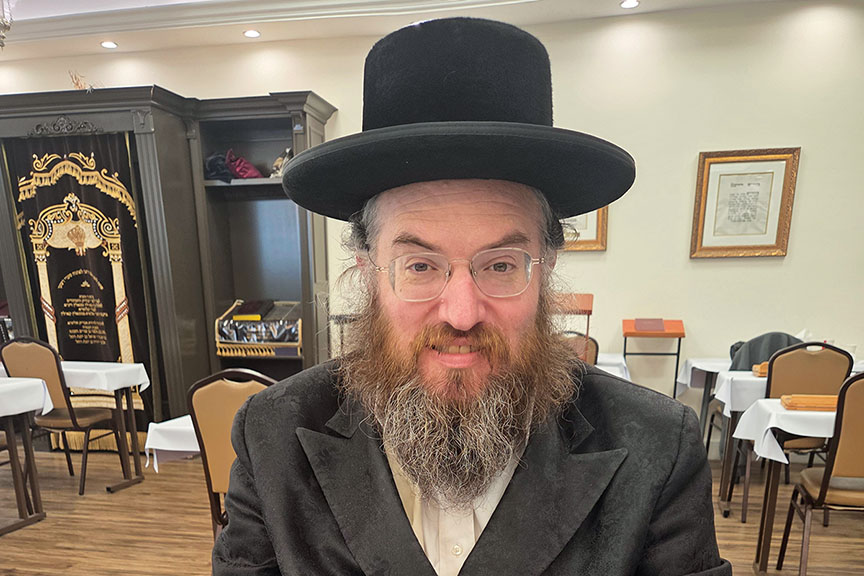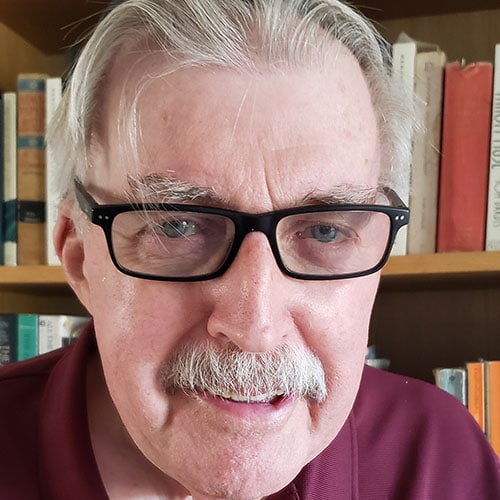
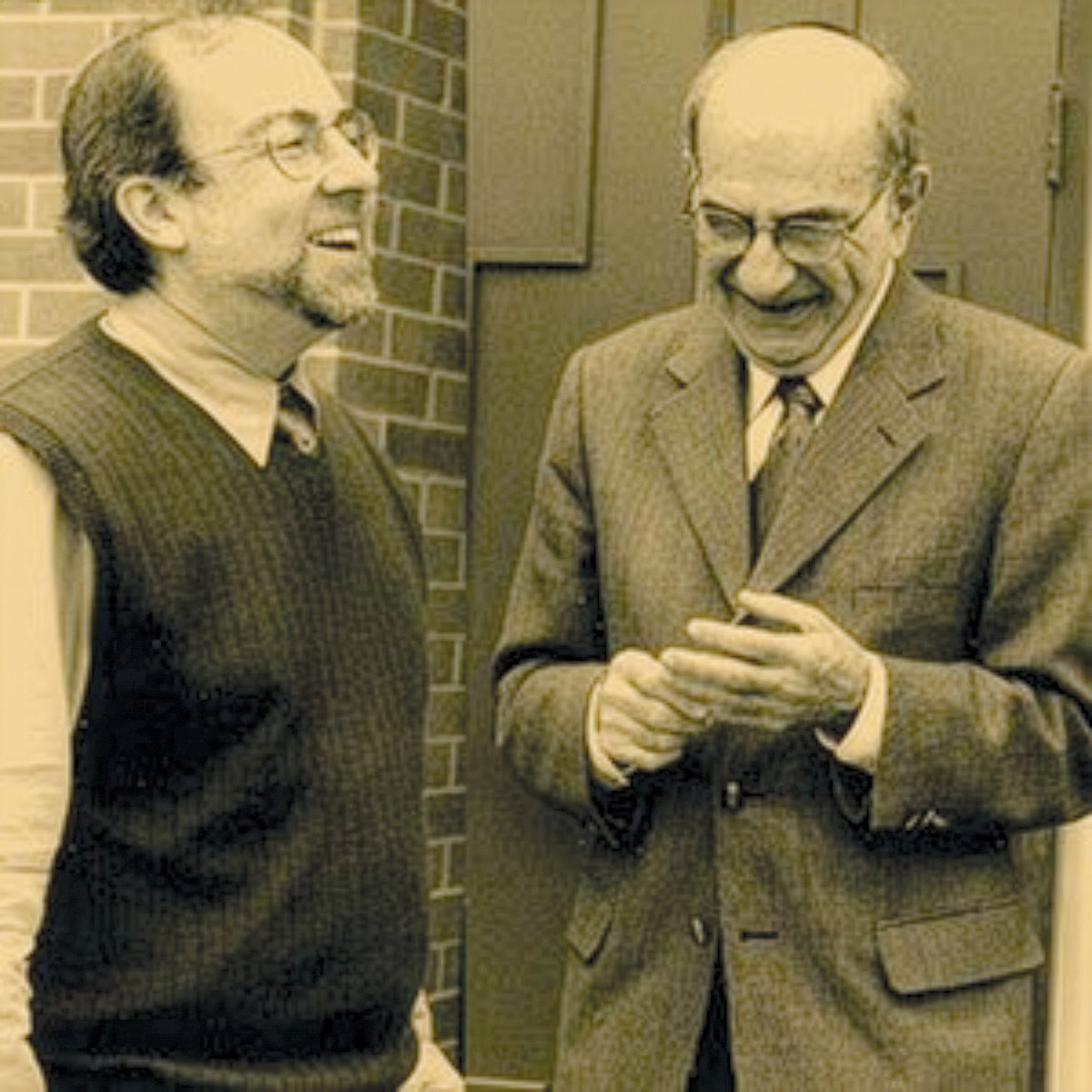
Rabbi Ed Feinstein has spent all but a decade of his 71 years in his only true Jewish home, Valley Beth Shalom, where the 16-year-old Feinstein met the recently-arrived Rabbi Harold Schulweis.
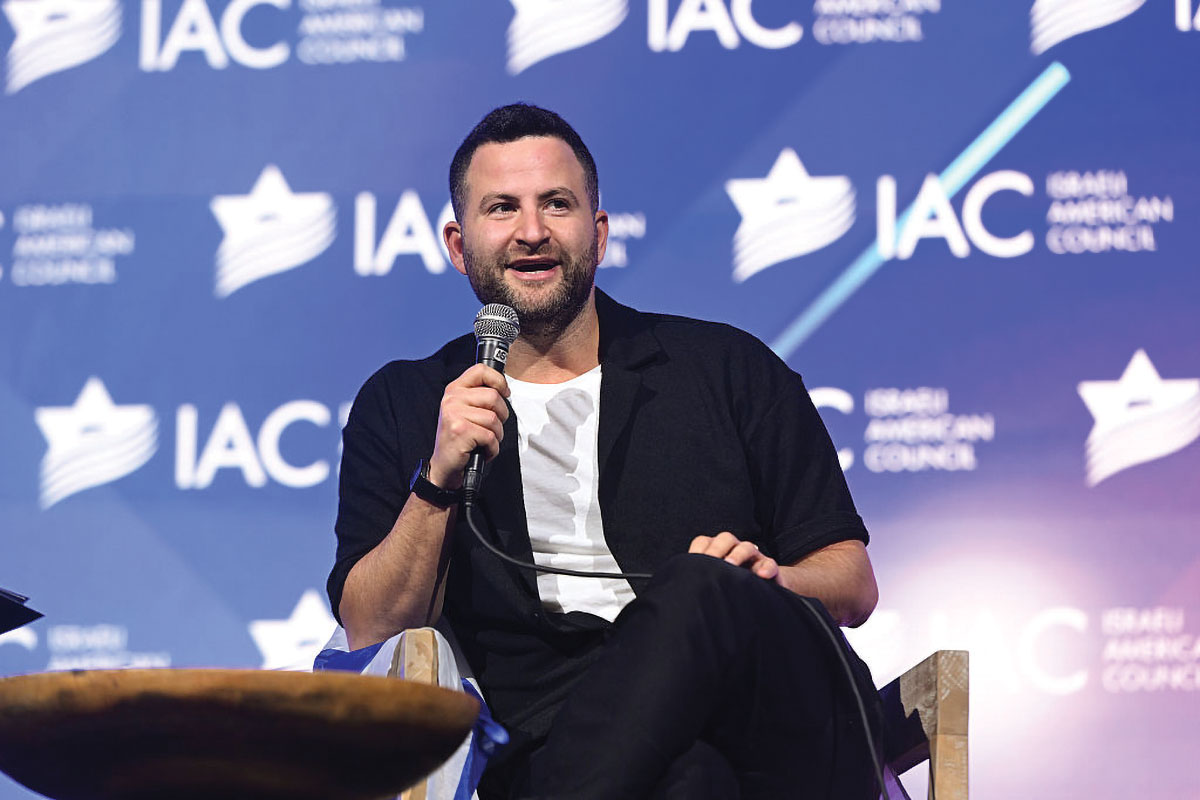
Last week Rabbi Feinstein explained how the Schulweis dynasty began at VBS, now it was his turn in the spotlight. He laughed frequently while describing how little he has changed. “I still have long hair and my desert boots from when I was a teenager,” he said. “I haven’t changed … I just don’t have hair anymore. That’s a problem. That’s God’s decision, not mine.
“But I am still the kid I was. Understand that I learned how to talk a little more smoothly than I did when I was young. And I learned the books, and I know how to cite the citations but I’m still that kid. I’m still full of questions. I’m still full of visions. I see my role as an educator is to give young people the power of imagination and permission to dream. That’s my job, within the Jewish tradition, which, I think, is a tradition of imagination and dreams and revolutionary ideas.
“I’m still that kid. No hair, but I’m still that kid.”
A Valley native, Rabbi Feinstein briefly reflected on his earliest lessons. “When I graduated from the seminary, my first job was in Dallas,” he said. “There was a wonderful soul in the synagogue, Phil Olian, a bachelor. Phil was the gabbai rishon, the ritual chairman. One day he took me aside. I was dressing like a college student. Phil said ‘I don’t want to take away your individuality, but people will listen to you more if you put a suit and tie on.’
“He actually took me to Neiman Marcus and bought me my first suit and tie as a rabbi. He was that kind of a soul. He became godparent to my kids because he was so good to them.
“Want to know something? He was not wrong. I so appreciated his gentleness and his goodness.”
But getting to know Rabbi Schulweis had the biggest impact on his life.
“The rabbinate had been on my mind,” he said. “What happened was, in the 1970s a group of young rabbis graduated from the seminary and came out to the West Coast to lead the community. Nina and I both were in youth groups, and we were affected by these people.” Among the names he mentioned were Stewart and Vicky Kelman, Joel and Fredi Rembaum, Michael and Roz Menitoff at Ramat Zion, Moshe and Lois Rothblum at Adat Ari El, Shelly and Gail Dorph, Elliot and Marlin Dorff. “This whole cadre of young, bright, imaginative rabbis was sent to LA by the Jewish Theological Seminary.
They became mentors, he said. “Rabbis, to me, always have been people ‘way up on a pulpit. They were always old guys with beards, and here was a group of people who were my peers. They were just a little older than us, and they were able to guide us. So that became the force that drew us into this work.
“Rabbi Schulweis was the catalyst of the whole thing. He was so powerful. Understand that when I first met him and sat with him – his son was in my class at Hebrew High – and we went over to sit with him one time, it was like sitting with God. He turned out to be just a lovely, lovely gentle human being. Once he got on the pulpit, he was amazing with explosive energy.
He had “mar-r-r-r-velous” teachers, playfully rolling the “r” – “Yitz Greenberg, David Hartman, Neil Gilman OBM at the Seminary, Eli Schochet, my rabbi in Canoga Park, wonderful soul. These were great teachers. But nobody’s oratory came close to Rabbi Schulweis.
“No one had the power to move an audience the way Schulweis did. Part of what distinguished him from the crowd was his style. But more than that, was the idea that we have a truth that is urgent: we, the Jewish people, have something to say to the world. We need to say it in a language the world can hear it.”
Rabbi Feinstein identified one of his mentor’s main gifts. “Schulweis always was able to see over the horizon,” he said. “He could see what was coming, what the culture needed, what we needed as a community. He always was coming up with new ideas. They always were pressing, things like what other people came up with later, but he already had thought them up and had begun to work on these things.
“This imaginative power, this prescience, this deep, deep conviction that Judaism has something urgent, critical, important to say. I have been so blessed in my life to have such great teachers.”
Rabbi Feinstein wrote a biography of Schulweis for his doctorate. Published when Schulweis turned 80, “we tried to figure how do you honor a man like that? We decided to have a symposium, and invited great teachers: Yitz, David Hartman, David Ellenson OBM and Harold Kushner. They all came here and we learned together, a remarkable experience.
“Then I decided, I know he is 80 and his health was beginning to show failure. I didn’t want to lose his voice. I arranged to work with a friend who does professional videos. We did 11 hours of interviews with Rabbi Schulweis. He was sitting in his office, and I was able to ask him about everything, his background, his family, about his philosophy, his experiences here in the synagogue, about everything.
“The idea was, we don’t have a videotape of Maimonides.”
Fast Takes with Rabbi Feinstein
Jewish Journal: Who is the public figure you most admire?
Rabbi Feinstein: Harold Schulweis, Jewishly speaking. And my teachers: David Hartman, Yitz Greenberg, Elliot Dorff – incredible people.
JJ: Favorite travel destination?
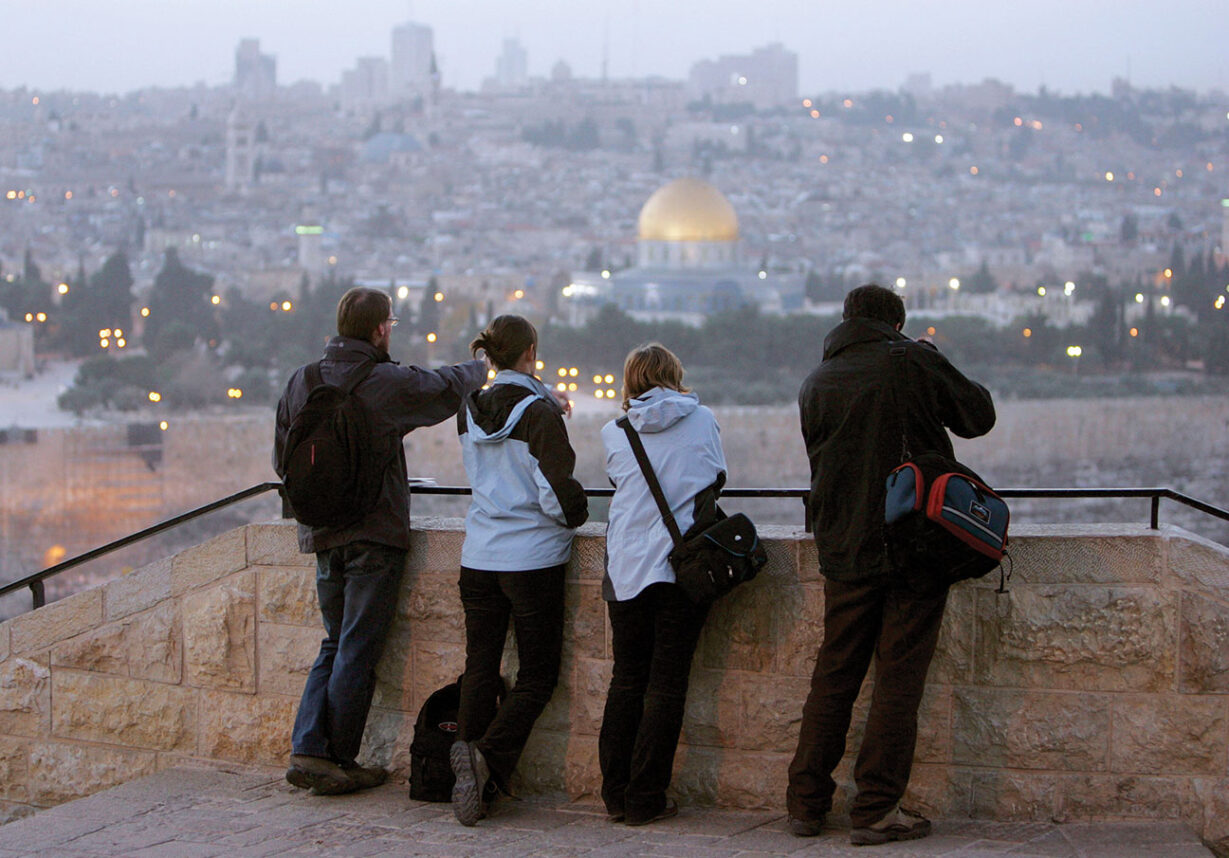
RF: I would say home. And I love Yerushalyim. Tel Aviv is such an exciting city, a city of imagination. Outside of Israel, Nina and I have spent wonderful times in London, and here, Santa Fe, N.M.
JJ: Anything about your life you would like to change?
RF: I want to live in a country safe for Jews.