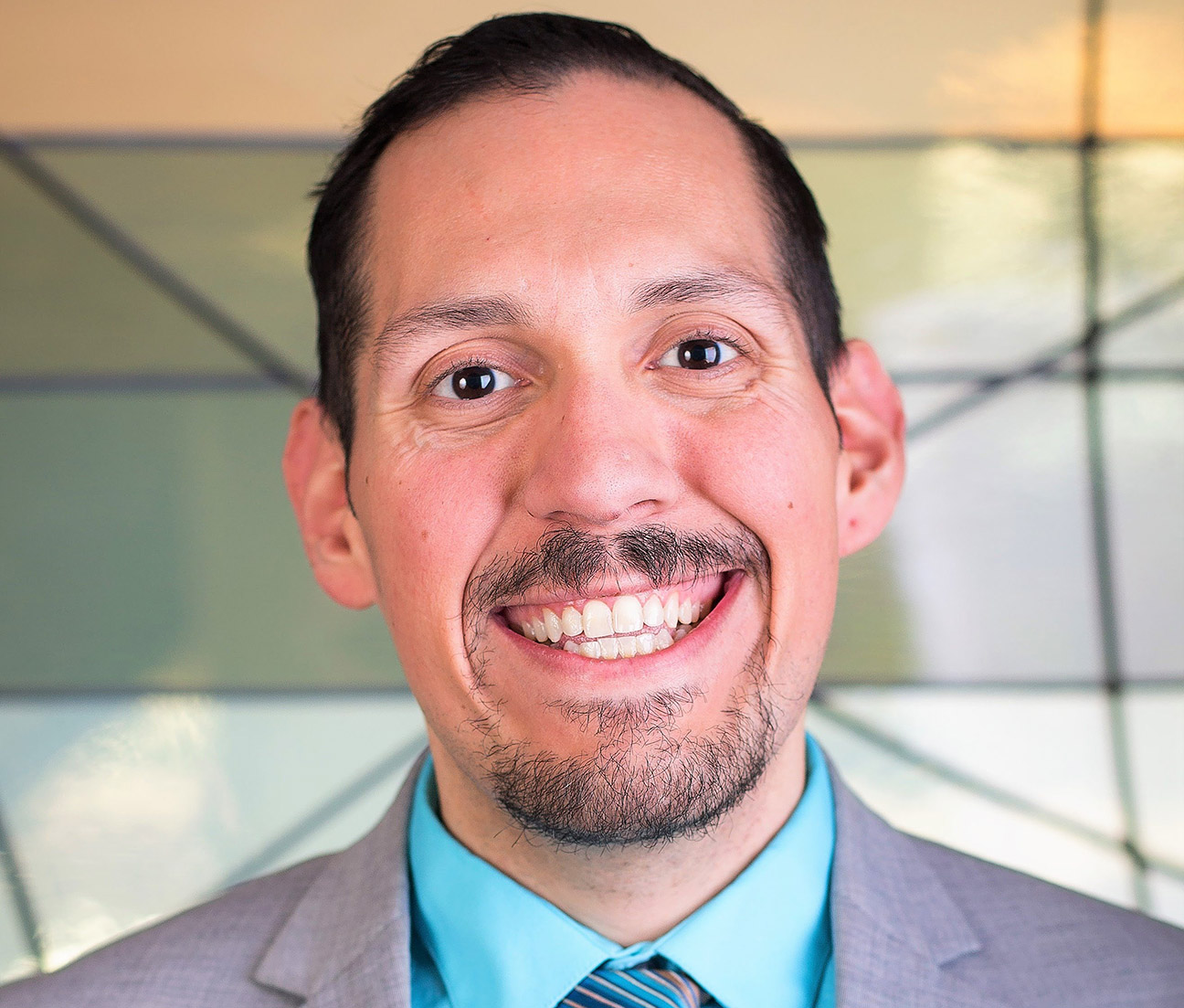
As Assistant Director of Israel Education for the Jewish Federation, Rabbi Micah Miller has a unique job: making friends for Israel in the non-Jewish school world by leading educators on an annual trip to the Jewish state.
Along with Federation Vice President Robert Hendlish and Debby Berman, assistant director of Community Outreach, Miller identifes candidates for the 10-day experience — a program started 20 years ago as a joint project of the Federation and the Archdiocese of Los Angeles — taking Catholic school teachers to Israel. Rabbi Miller said their job “is to give them a first-hand experience, what it is like to be in Israel. For 10 days, they get to see the country, hopefully learn a little bit, then return home and teach about Israel.”
As is usual, of the 22 persons on this year’s trip, only one was Jewish. “It is important that most are not Jewish,” Rabbi Miller said. “Hopefully, these trips will help us gain more allies. In view of all that has been going on in Israel,” he said, attracting 22 educators was satisfactory. “We are blessed so many educators want to go. We already have a long list of potential participants for next year.”
Before the mid-June trip departed, Rabbi Miller and the Federation hosted events where Jewish teachers and other rabbis lay the groundwork for learning about Israel and the Jewish people. “We try to give them background, but there is only so much you can do from here,” he said. And when they return home there is an ongoing alumni program where, among other topics, the teachers discuss antisemitism and what it means to be an ally in their school for Jewish students.
Micah Miller was born 37 years ago in Bogota, Colombia. He was adopted by Rabbi Mordecai Miller, who recently celebrated 50 years in the rabbinate, and his wife. Rabbi Micah grew up and fell in love with St. Louis, a significant Jewish community where his father served for 20 years. “Living there was great,” he said. “I love St. Louis. Nice Jewish population, very large. I went to a Jewish day school, and I had day school options. I remember going to the kosher butcher all of the time. We were so close that the owner gave my dad a key to the store. Having that type of access to food always was important for my family.”
The rabbinate seems to run in the family. His sister enrolled in rabbinical school, but detoured to pursue a master’s in education, although she works at a congregation in Palo Alto on “pretty much everything clergy-related,” Micah said. Micah and his sister each have a child and joke about which one will choose the rabbinate in the next generation. “It’s a big thing to be in a family business,” he said. Their parents strongly emphasized that education was crucial. That may explain why he loves being in a classroom. “Even when I was in high school,” he said, “I was teaching religious school, doing things like that. When I went off to New York for undergraduate, of course I found a synagogue and started teaching.”
How much does he love learning? “My father has always liked to study,” he said. “He’s a big Talmud guy. He would wake up at 4 in the morning and study.” When he was in rabbinical school, he and his father would wake up, FaceTime each other, and study Gemara together. “This was before Zoom.” But growing up, Micah never thought he would be a rabbi. “There were secular interests. It definitely was a back-and-forth struggle: Do I want to go into the family business? So I am a third-generation rav.”
Growing up, Micah never thought he would be a rabbi. “There were secular interests. It definitely was a back-and-forth struggle: Do I want to go into the family business? So I am a third-generation rav.”
But even with the rabbinate in his blood, he would sometimes doubt himself. “‘Am I going to be able to do it well?” And after Oct. 7, Rabbi Miller said, “a lot of rabbis, and Jews in general were, like, ‘What can I do?’ They were feeling helpless.”
He admitted, “That is how I felt, too. But when I had a chance to do this job, working in Israel education, I knew that was important, and it could be my way of giving back to Israel.”
His Federation posting, which started in April, is his third since ordination. For two years, he was an associate rabbi where his father previously served, and then came three more in the Atlanta suburb of Marietta.
Would he ever consider returning to a congregation? Rabbi Miller chuckled. “I don’t know,” he said. “I will wait and see how life plays out. I love my position here.” But, he added, “It’s unique to be out of congregational life when I spent so many years growing up in it.”
Asked if he’s ever considered making Aliyah, Micah mentioned he had talked to his mother about this recently, “I told her every time after I go to Israel, there is a period when I think ‘I could see myself living here.’ Noting Israel was his grandmother’s birthplace, he said, “I absolutely love it. Deep family roots.”
However, when he went to rabbinical school at American Jewish University and lived in Pico-Robertson, he fell in love with Los Angeles. “Walking down Pico felt a little like Israel,” he said. “I was excited the first time I walked into Ralphs and saw a kosher section. Amazing.”
As to the future, “I’m focusing on one day at a time, enjoying what I am doing.”
Fast Takes with Rabbi Miller
Jewish Journal: What is your next major goal?
Rabbi Miller: I want to increase the number of people we bring to Israel.
J.J.: Your proudest accomplishment?
RM: Getting my first position as a congregational rabbi was huge. Being in the same congregation in Minnesota where my father started his career – at Temple of Aaron – 45 years before, and being a father.
J.J. What do you do in your spare time?
RM: I like going to the beach. I like going to the gym to try and stay healthy and spending close time with loved ones.