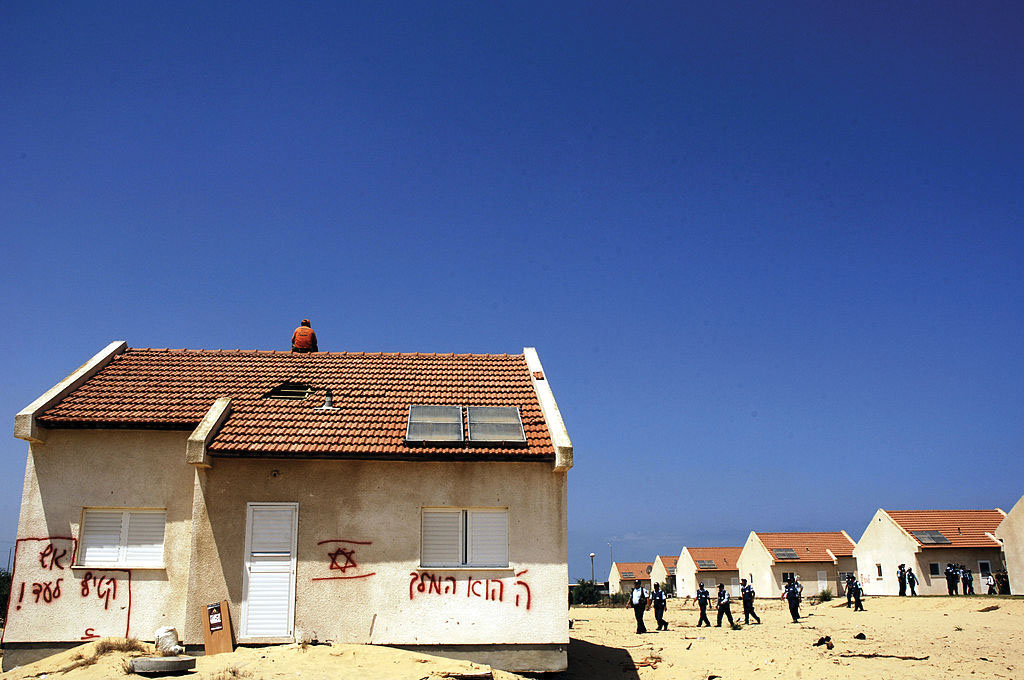
Steps away from USC, a bright pink billboard declares: “Being Jewish shouldn’t require campus security.” A similar sign stands just outside UCLA and outside other campuses. The message didn’t sit well with someone, who defaced one billboard with “End Zionism!” graffiti.
JewBelong, the nonprofit behind the campaign, posted a photo of the vandalized sign on Instagram with the caption: “A message about safety was met with hate. This is antisemitism.” The organization said it would replace the billboard.
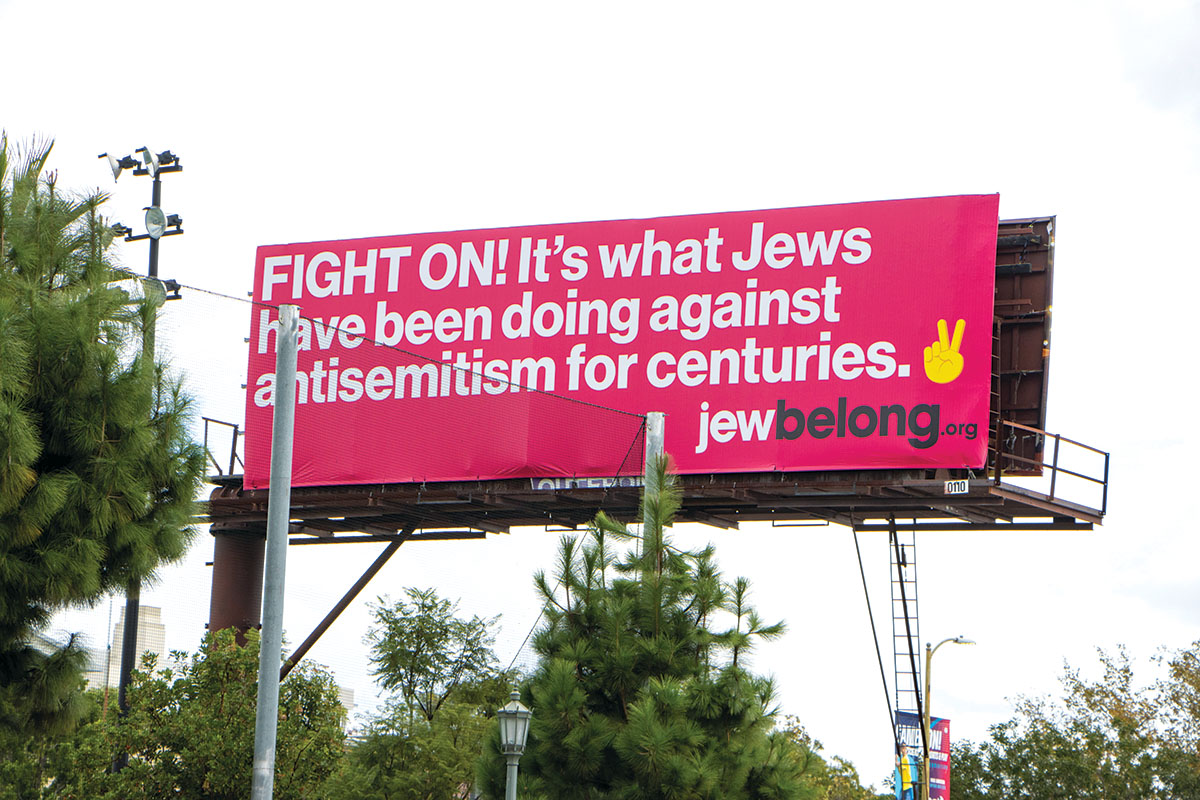
The hot-pink billboard campaign began five years ago with humorous messages: “So, you eat bacon? God has better things to worry about.” And “We don’t care which half of you is Jewish.”
With the rise of antisemitism in the United States, the message has shifted to more serious slogans such as: “Jewish students don’t need your pity. Just your spine,” and “If you think turbulence is scary, try wearing a Jewish star.”
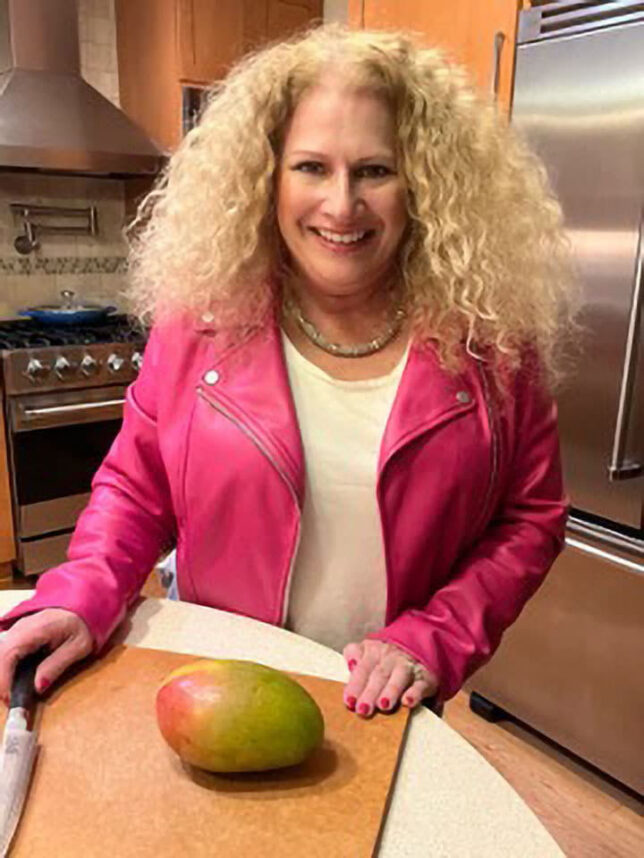
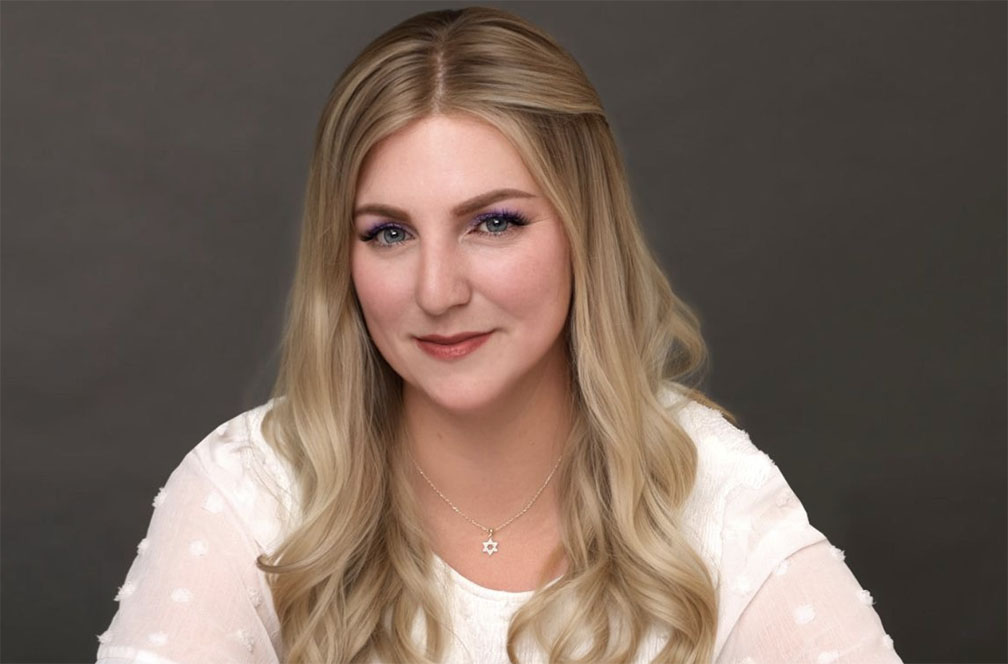
The goal of these billboards, co-founder Archie Gottesman told The Journal, is to raise awareness and get people talking about antisemitism. “Me and my co-founder Stacy Stuart were always sort of interested in what the world is talking about,” Gottesman said in a Zoom interview. “By the world I mean people who are not in the Jewish bubble, and billboards are a fantastic vehicle to speak with people who just don’t care that much about the issue and get them talking about it.”
Gottesman and Stuart approached the art of creating eye-catching, smart and provocative billboards almost like a science. They conducted surveys with non-Jewish participants, presented different messages, tested which ones resonated most and then placed them on billboards across the U.S.
“Most of our billboards aren’t in New York, LA or Florida. The goal is to be out of the echo chamber and to talk to the 98% of the population who is not Jewish, because that’s what the other side has done so well — I’m talking about the anti-Jewish and antizionists.”
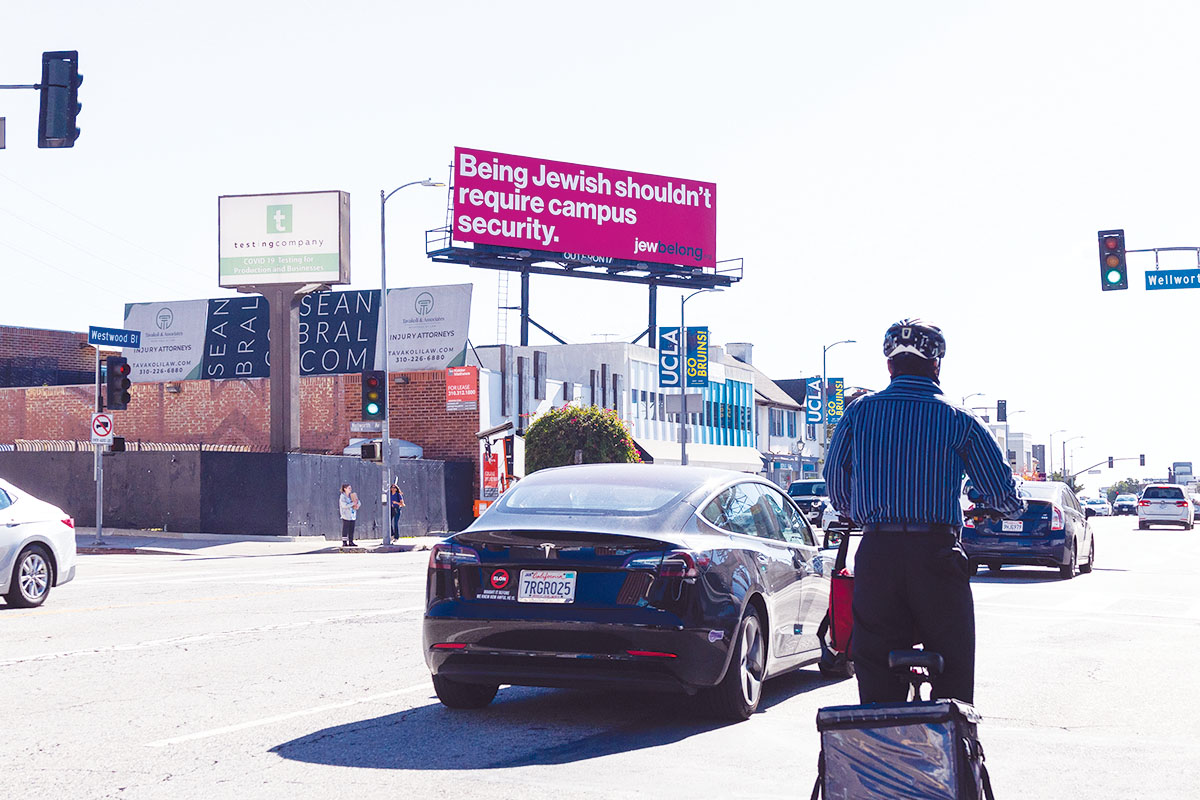
JewBelong has billboards in 42 states, including in places with small Jewish populations, such as in Tennessee, Ohio, Mississippi and Oregon — places where the average resident may not know any Jews and may be exposed to antisemitic rhetoric and misinformation.
“The sources we rely on for news, dictates the reality we see,” said Gottesman. “For example, my social media feed looks very different from someone else’s. The messages I’m getting really depends on which news media I’m watching. We’re almost living in separate news silos. So having those billboards might be the only way we can bring these messages to people who would never see them otherwise.”
Before Gottesman and Stuart founded JewBelong in 2017, they worked together in the self-storage business, Manhattan Mini Storage. They had billboards all over Manhattan that became known for their funny messages.
“We used any topic to get New Yorkers to look at our billboards and they did,” said Gottesman. “They were very successful. People didn’t always rent from us, but we always got inquiries because we were everywhere.”
The idea behind JewBelong was to make Judaism more accessible and welcoming, especially to people who feel disconnected from Jewish life, but a few years later, in mid-2021, the organization shifted toward explicitly combating rising antisemitism in the U.S. and began placing large, bright pink billboards.
The co-founders paid attention to the Black Lives Matter movement or Stop Asian Hate campaign and saw how well they were able to raise awareness. They got people talking by gaining attention through huge billboards and advertisements. It was difficult to ignore them. They wanted to do the same for Jews in America.
When asked how effective the billboards are, Gottesman said they receive a lot of positive feedback. Surveys also show how it influences people to think about antisemitism and understand how big the problem is. “People constantly reach out to us. Many say things like, ‘I’m from Tennessee, I’m not Jewish, but I love your billboard,’ or ‘I’m so happy to see the Jews are finally speaking out.’ So, we know we are reaching many non-Jews, which is our main goal.”
Recently, JewBelong started a NYC campaign featuring digital taxi toppers on 4,000 cabs, along with a large-scale physical billboard in the Bronx. One reads: “Totally willing to hide my Jewish star for a free bus ride,” referring to one of Mayor Zohran Mamdani campaign promises. “In the past two years I actively noticed that it’s not safe being Jewish in New York. I live in the West Village and there is still graffiti. The other day I was in a taxi with my daughter, who served as a lone soldier in Israel. I mentioned something about going to Israel and she hushed me. She didn’t want me to mention Israel.”
Despite her worry about the new mayor, Gottesman believes Jews in the U.S. have many allies in the Christian community. Some churches even said they wanted to collaborate with JewBelong on a billboard. A few churches in Colorado Springs reached out and asked how they can help, so she “went for an interview with a Christian network and the love that I felt there was incredible, people told me, ‘We are praying for Israel.’ It was amazing. They are worried about what’s happening to the Jewish community because they feel that’s what going to happen to the Christian community too.”
Not all billboards are approved by the companies that own them. One that read, “Let’s be clear, Hamas is your problem too,” was rejected. The word “Israel” also will not be found on any billboard, as it would likely be rejected as well.
Gottesman said there are still people who are unsure whether Hamas is a terror organization, despite its Oct. 7 (2023) attacks and its long-standing designation as such by the United States. That confusion, she argues, is part of a larger problem: the speed at which misinformation spreads and how easily people with little background knowledge can be mobilized.
“We are not shy saying that JewBelong believes in a safe and secure Israel,” Gottesman said. “What the other side has been skilled at, is being able to gather people to their side. Someone who couldn’t find Israel on the map is suddenly marching for ‘Free Palestine.’ It’s really important that the Jewish community and our allies speak out to those people we call the ‘mushy middle,’ those who don’t know and don’t care, but also aren’t aware.”
She often thinks about the conversations she had as a child when she learned about the Holocaust. She asked her parents and her grandma: “What did you do during the ’40s?” Wondering if they did anything while Jews in Europe were taken to the gas chambers.
They replied: “We didn’t really know.”
The truth is, she said, that “people didn’t do much, for whatever reason. They felt hopeless, kind of like today. But we are not hopeless when we know what’s going on,” said Gottesman. “I don’t have grandchildren yet, but when I will, and they ask me, ‘What did you do in 2026?’ I don’t want to say I didn’t do anything. We need good people not to stay silent.”