We took our show on the road this Passover. Thanks to the CDC’s guidance, my husband Ted and I loosened up and took our first post-COVID, double-vaccinated plane trip to Austin, Texas, where our son and his family live. It was time for our annual Pesach celebration — a seder put on by my husband and me, two old-school secular Jews whose goal is to entice grandchildren to forget about the Easter bunny for a minute and get them excited about plagues, dry crackers and chopped apples.
This time, we came prepared. Our grandkids, ages six and eight, are now old enough to follow a story and sit at the table longer than 10 minutes. Our anxiety to put on a great seder comes from the fact that our son Joe married Kate, a Catholic woman from North Carolina, who did not grow up around Jews. Honestly, no one does a more child-friendly Christmas or Easter holiday than my daughter-in-law. We’re talking glittery decorations, tons of toys, crafts activities that rival Martha Stewart and a cornucopia of candies. How can a Jewish grandma hope to compete?
When they first got married, I found Kate’s being Southern even more exotic than her Catholicism. Who ever heard of a grown woman wearing a pink sun dress with a ruffle? I was from the New York school of feminine style, epitomized by crisply tailored grey and black clothes, brought to life by an occasional splash of white. All body parts covered!
After a while I could see that our differences were mostly minor matters of style. When your children get married, your world and your family are supposed to expand, right? Plus they loved each other! As for religious differences, many of my friends were raised Catholic. Most had left the religious part of being Catholic behind, just as we had with Judaism, as they drifted into adulthood. I had a hunch that Joe and Kate would do the same.
Theirs was the first intermarriage in our small family. Since the theme of Joe’s Bar Mitzvah speech was, “I am not a Jew,” it wasn’t a big surprise. I wondered how questions of identity would be handled once children arrived, but I kept that to myself, like so many things.
Folklore says that a mother exerts more influence on matters like religion and childrearing, so I did not expect a lot of Yiddishkeit to seep into Joe’s new home. Like many secular Jews, Judaism is more or less boiled down to two holidays a year and a few artifacts that are tucked away in his home — a menorah, a tallit, a Bar Mitzvah Kiddush cup. And so, we arrived for the holidays this spring ready to give the children a dose of schmaltz.
We arrived for the holidays this spring ready to give the children a dose of schmaltz.
The seder was a huge success. Now that the kids are old enough to participate, we hit all the highlights. As always, Ted was in charge of the religious aspects of the seder. He brought cheerful Haggadot for everyone, with blank pages for the kid’s little fingers to color in. I brought my world-famous Charoset recipe — the one where there’s nothing weird, and finicky kids can pick out the raisins.
I asked Ted to let me kick off the celebration, since I’m known for my ability to throw a party. I immediately turned up the volume on my iPad and blasted the song “L’chaim” from the original cast recording of “Fiddler on the Roof.” The music may have been new to them, but when I grabbed my husband’s hand to dance a rollicking hora, they joined in with gusto, as did Joe. Afterwards, Kate got to ask her questions: What does “L’chaim” mean? and “What is Fiddler on the Roof?” Oy.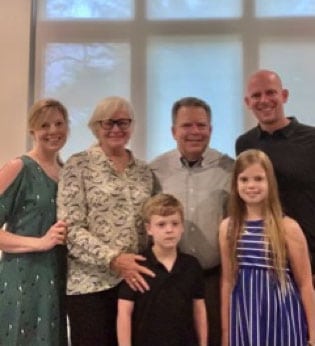
Unlike the old days, Ted led a condensed seder. We were both pleased when 6-year-old Finn knew why we eat the matzoh. And 8-year-old Piper knew another place where people were slaves, right here in the United States. It turns out that Joe and Kate had started reading the story of Passover with the kids in advance, so they had some time to digest the story.
At the table, we all raised our glasses of sparkling water and toasted to a better year. I got their attention by talking about what it means to me to be a Jew. I spoke about being a good person, helping others, always telling the truth (especially to your parents) and honoring books. All values the children could understand. Of course, when they each got $5 from grandpa for finding the afikoman at the seder’s end, they were dazzled. “That’s more than I’ve ever seen,” said Finn, his eyes shining.
To seal the deal, Piper, my baking partner, and I concocted a special dessert to end the meal on the right festive note. We had baked cream puffs that morning. After dinner, we all made a mess turning them into the French dessert Profiteroles — cream puffs filled with vanilla bean ice cream and drizzled with dark chocolate hot fudge sauce. Definitely not pesadich, but tons of fun. I guess you could say that the fruit doesn’t fall far from the tree. L’chaim!

Our Integrated Passover Seder
Helene Siegel
We took our show on the road this Passover. Thanks to the CDC’s guidance, my husband Ted and I loosened up and took our first post-COVID, double-vaccinated plane trip to Austin, Texas, where our son and his family live. It was time for our annual Pesach celebration — a seder put on by my husband and me, two old-school secular Jews whose goal is to entice grandchildren to forget about the Easter bunny for a minute and get them excited about plagues, dry crackers and chopped apples.
This time, we came prepared. Our grandkids, ages six and eight, are now old enough to follow a story and sit at the table longer than 10 minutes. Our anxiety to put on a great seder comes from the fact that our son Joe married Kate, a Catholic woman from North Carolina, who did not grow up around Jews. Honestly, no one does a more child-friendly Christmas or Easter holiday than my daughter-in-law. We’re talking glittery decorations, tons of toys, crafts activities that rival Martha Stewart and a cornucopia of candies. How can a Jewish grandma hope to compete?
When they first got married, I found Kate’s being Southern even more exotic than her Catholicism. Who ever heard of a grown woman wearing a pink sun dress with a ruffle? I was from the New York school of feminine style, epitomized by crisply tailored grey and black clothes, brought to life by an occasional splash of white. All body parts covered!
After a while I could see that our differences were mostly minor matters of style. When your children get married, your world and your family are supposed to expand, right? Plus they loved each other! As for religious differences, many of my friends were raised Catholic. Most had left the religious part of being Catholic behind, just as we had with Judaism, as they drifted into adulthood. I had a hunch that Joe and Kate would do the same.
Theirs was the first intermarriage in our small family. Since the theme of Joe’s Bar Mitzvah speech was, “I am not a Jew,” it wasn’t a big surprise. I wondered how questions of identity would be handled once children arrived, but I kept that to myself, like so many things.
Folklore says that a mother exerts more influence on matters like religion and childrearing, so I did not expect a lot of Yiddishkeit to seep into Joe’s new home. Like many secular Jews, Judaism is more or less boiled down to two holidays a year and a few artifacts that are tucked away in his home — a menorah, a tallit, a Bar Mitzvah Kiddush cup. And so, we arrived for the holidays this spring ready to give the children a dose of schmaltz.
The seder was a huge success. Now that the kids are old enough to participate, we hit all the highlights. As always, Ted was in charge of the religious aspects of the seder. He brought cheerful Haggadot for everyone, with blank pages for the kid’s little fingers to color in. I brought my world-famous Charoset recipe — the one where there’s nothing weird, and finicky kids can pick out the raisins.
I asked Ted to let me kick off the celebration, since I’m known for my ability to throw a party. I immediately turned up the volume on my iPad and blasted the song “L’chaim” from the original cast recording of “Fiddler on the Roof.” The music may have been new to them, but when I grabbed my husband’s hand to dance a rollicking hora, they joined in with gusto, as did Joe. Afterwards, Kate got to ask her questions: What does “L’chaim” mean? and “What is Fiddler on the Roof?” Oy.
Unlike the old days, Ted led a condensed seder. We were both pleased when 6-year-old Finn knew why we eat the matzoh. And 8-year-old Piper knew another place where people were slaves, right here in the United States. It turns out that Joe and Kate had started reading the story of Passover with the kids in advance, so they had some time to digest the story.
At the table, we all raised our glasses of sparkling water and toasted to a better year. I got their attention by talking about what it means to me to be a Jew. I spoke about being a good person, helping others, always telling the truth (especially to your parents) and honoring books. All values the children could understand. Of course, when they each got $5 from grandpa for finding the afikoman at the seder’s end, they were dazzled. “That’s more than I’ve ever seen,” said Finn, his eyes shining.
To seal the deal, Piper, my baking partner, and I concocted a special dessert to end the meal on the right festive note. We had baked cream puffs that morning. After dinner, we all made a mess turning them into the French dessert Profiteroles — cream puffs filled with vanilla bean ice cream and drizzled with dark chocolate hot fudge sauce. Definitely not pesadich, but tons of fun. I guess you could say that the fruit doesn’t fall far from the tree. L’chaim!
Los Angeles food writer Helene Siegel is the author of 40 cookbooks, including the “Totally Cookbook” series and “Pure Chocolate.” She runs the Pastry Session blog. During COVID-19, she shared Sunday morning baking lessons over Zoom with her granddaughter, eight-year-old Piper of Austin, Texas.
Did you enjoy this article?
You'll love our roundtable.
Editor's Picks
Israel and the Internet Wars – A Professional Social Media Review
The Invisible Student: A Tale of Homelessness at UCLA and USC
What Ever Happened to the LA Times?
Who Are the Jews On Joe Biden’s Cabinet?
You’re Not a Bad Jewish Mom If Your Kid Wants Santa Claus to Come to Your House
No Labels: The Group Fighting for the Political Center
Latest Articles
Mark Ruffalo Once Admitted the ‘Genocide’ Libel Fuels Antisemitism. Now He’s Doing It Again?
Some of My Best Friends Are Jewish: Mark Ruffalo and the Anatomy of a Modern Blood Libel
The Dark Side of DEI
Israel Derangement Syndrome Hits Montreal City Council
Creative Community for Peace Calls Mark Ruffalo’s Ellison Attack Antisemitic, Urges Hollywood to Stop Platforming Him
In Accusing Ellison of Complicity in ‘Genocide,’ Mark Ruffalo Echoes Ancient Tropes of Jewish Control
The Death of the Bucket List: Discovering the Art of Slow Travel in Portugal.
When You Go Out To War — A poem for Parsha Ki Teitzei
When you go out to war, be nice.
“Jerusalemites”
Chosen Links by Boaz spotlight
Did Josephus See Jesus as a Rebellious Son?
A Moment in Time: Looking Back, Moving Forward
A Bisl Torah — Repairs Reopen
Wounds reopen; repair is sometimes never really over.
Print Issue: The Silent Boycott | August 21, 2026
How Israeli academics are being shut out of the international academic world, and how UCLA professor Judea Pearl is fighting back.
Jacob and Esau Clash on the Cross Bronx Expressway in New Book
The novel is set in 1952 and centers on Jay deVenezia, a 23-year-old, six-foot-five-inch Italian Jew from the Bronx, and his older brother, Eric “Bud” deVenezia.
Israeli Rom-Com ‘Bloody Murray’ Balances Life and Art
“Bloody Murray,” whose first season is available on ChaiFlicks, stars Naomi Levov as Mo, better known as Murray, and Rotem Sela as her best friend and roommate, Dana.
Elon Gold’s ‘The Wedding Entertainer’ Up for Best Film at 2026 Ophir Awards
In addition to Best Feature Film, “The Wedding Entertainer” received nominations for Best Actor for Rand, Best Supporting Actor for Tal Friedman, Best Supporting Actress for Malky Goldman, Best Screenplay for Rand and Best Cinematography for Giora Bejach.
The Bad Data Behind the ‘Genocide’ Charge
Everyone has a direct stake in knowing that one of the most-cited evidentiary pillars in the international campaign against Israel is far shakier than its footnotes suggest.
In This Season: Renewing Our L.A. Jewish Community
In this, the season of our renewal, I am proposing a transformational agenda for our Los Angeles Jewish community.
There’s a Leek in the Bureka
Deliciously flaky and crispy with a satisfying creamy filling, these burekas are really easy to prepare.
Table for Five: Ki Teitzei
A Lost Sheep
The Silent Boycott
How Israeli Academics Are Being Shut Out of the International Academic World
Hit the Pause Button
The pause isn’t the absence of action; it’s a sanctuary in time.
Rosner’s Domain | The Repressed Question of Judea and Samaria
It is a challenge for which various solutions have already been tried and failed. Most of all, it is a challenge that doesn’t seem to have any prospect of being addressed anytime soon in a way that leads to a final resolution.
Presidents Have Always Lied — When Threatened by Assassins
Presidential security machinations, like presidential vacation time and decorating budgets, often serve as partisan Rorschach tests: rivals mock, while supporters defend.
Why I’m No Longer a Democrat
It is about refusing to allow partisan loyalty to make us silent when our own community is threatened.
Why I’m Staying in the Democratic Party
Nowhere is it written you have to agree with every position taken by every candidate running as a member of your party.
More news and opinions than at a Shabbat dinner, right in your inbox.