Introducing their annual Most Powerful List, Forbes declares: “There are 6.8 billion people on the planet. Here are the 68 who matter.”
Aside from the fact that that statement relegates some 6.799999 billion people to insignificant lemmings, there’s a figure even more disturbing than that: Forbes’ account of the 68 most powerful people on the planet includes a mere five women. That’s right: five. The amount you can count on one hand. Or with respect to this list, a pathetic 7% of the total.
So who are the women that made it into this impossibly exclusive club? German chancellor Angela Merkel tops the list at #6, followed by Sonia Gandhi, the head of India’s ruling Congress Party, who clocks in at #9. Dilma Rousseff, who was recently elected the first female president of Brazil comes in at #16, followed by U.S. Secretary of State Hillary Clinton at #20. And lastly, everyone’s favorite female mogul, Oprah Winfrey, nearly bottoms out the list at #64.
What the list proves, other than the fact that it’s a really silly thing—how exactly do you quantify power?—is that women are not nearly as “equal” on the world stage as we assume, and that the writers of the Forbes list were probably born in 1950. And as far as Jewish women are concerned, they’re not.
Jewish men, however, did just fine. According to JTA:
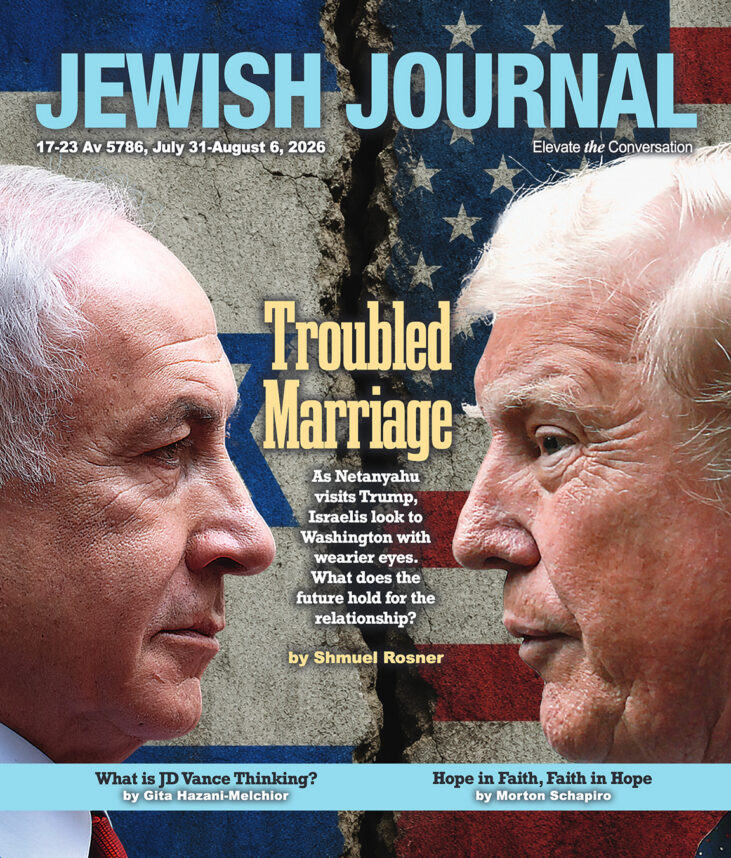
Ben Bernanke, chairman of the U.S. Federal Reserve, was ranked at No. 8; Sergey Brin and Larry Page, co-founders of Google, ranked No. 22; New York City Mayor Michael Bloomberg came in at No. 23 and Israeli Prime Minister Benjamin Netanyahu came in at 24; [o]ther Jewish businessmen on the list include Facebook founder Mark Zuckerberg, ranked No. 40, and Lloyd Blankfein, CEO of Goldman Sachs, at No. 42.
On the bright side, the only thing the United States is leading in these days is how many U.S. born women made the list. It’s only two, of course, but it’s a promising start, don’t you think?
The dark side of this already sad reality is that there a hundreds of millions of women in the world who still lack basic civil rights. They live in conditions so far from the corridors of power it seems frivolous to even suggest any woman is powerful when not every woman is free. The feminist movement still has a long way to go before women become “equal” in the eyes of the world, until more women make The Power List, and oppressed women everywhere gain the right to live with dignity. It will be interesting to see which happens first.