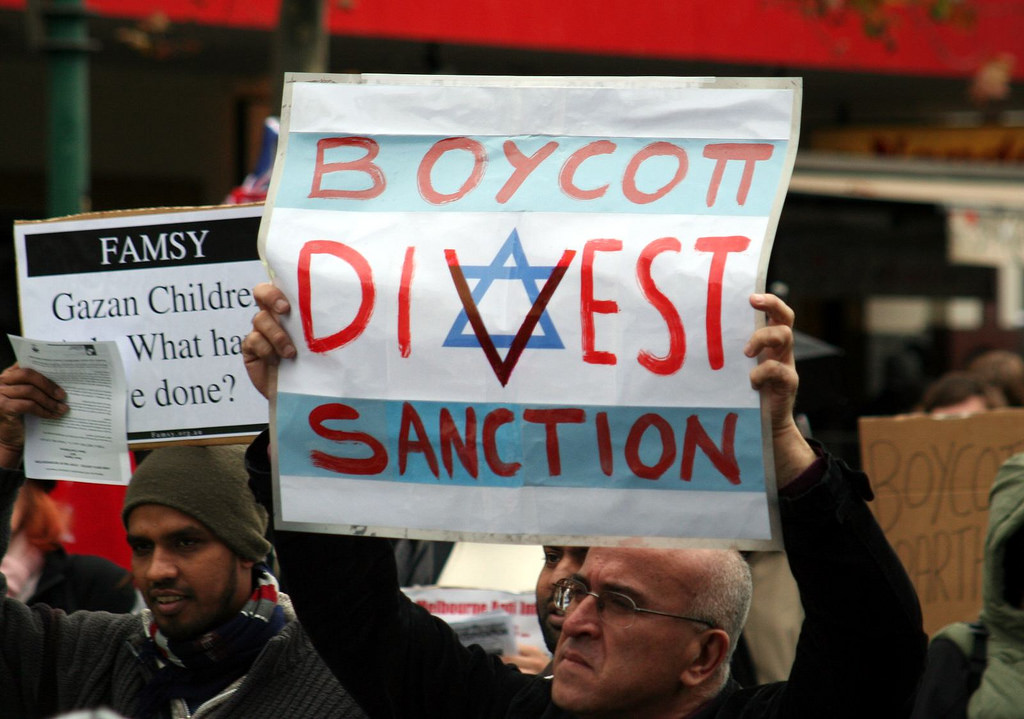
A new study from the AMCHA Initiative published on Jan. 8 suggests that college faculty who support the boycott, divestment and sanctions (BDS) movement utilize their classrooms to promote their views.
AMCHA Initiative co-founders Tammi Rossman-Benjamin and Leah Beckwith, who is also a UCLA professor emeritus, authored the study. They examined 50 course syllabi for classes related to the Israel-Palestinian conflict ranging from Fall 2008 to Spring 2019 in various schools across the country, including Columbia University, New York University and Pitzer College. Thirty-five of the course syllabi were from instructors who didn’t support BDS.
“All of the academic BDS-supporting instructors had a majority of their readings authored by BDS supporters, whereas only 2 of the 35 syllabi of non-BDS-supporting instructors had a majority of their course readings authored by BDS supporters, and none more than 60%,” Rossman-Benjamin and Beckwith wrote.
They also found that on average, 78% of the readings in pro-BDS instructors’ syllabi were pro-BDS authors; that figure was 17% for instructors who didn’t support BDS.
“This, in turn, strongly suggests that academic BDS-supporting instructors are using their Israel-related courses to promote a politically motivated, anti-Israel perspective,” Rossman-Benjamin and Beckwith argued.
The pro-BDS faculty who engage in such behavior are providing only one side of a complex issue to a class and can increase campus hostility toward Jewish and pro-Israel students on campus, they added.
“Indeed, AMCHA’s 2017 faculty report revealed that schools where academic departments held events with BDS-supporting speakers were twice as likely to have occurrences of student-produced anti-Zionist expression, and that such expression was itself very strongly linked to acts of Israel-related peer-on-peer harassment,” Rossman-Benjamin and Beckwith wrote.
They urged colleges and universities to implement policies that protect the classroom from being used as a vehicle for an instructor’s political views to condemn academic boycotts against Israel.
“It is up to academic departments and faculty senates to determine whether the promotion of one-sided, highly politicized course content is deemed a legitimate use of academic freedom, or an abuse of it,” Rossman-Benjamin and Beckwith concluded. “However, given the clear and present harm that such politicization can cause to our schools, our students and society, it is time for tuition and taxpayers, as well as state and federal legislators, to demand that faculty address this question forthrightly, and to hold them accountable for their answer.”