fbpx

January 8, 2020

AMCHA Study Suggests Pro-BDS Faculty Promote Their Views in Class

A new study from the AMCHA Initiative published on Jan. 8 suggests that college faculty who support the boycott, divestment and sanctions (BDS) movement utilize their classrooms to promote their views. 

AMCHA Initiative co-founders Tammi Rossman-Benjamin and Leah Beckwith, who is also a UCLA professor emeritus, authored the study. They examined 50 course syllabi for classes related to the Israel-Palestinian conflict ranging from Fall 2008 to Spring 2019 in various schools across the country, including Columbia University, New York University and Pitzer College. Thirty-five of the course syllabi were from instructors who didn’t support BDS.

“All of the academic BDS-supporting instructors had a majority of their readings authored by BDS supporters, whereas only 2 of the 35 syllabi of non-BDS-supporting instructors had a majority of their course readings authored by BDS supporters, and none more than 60%,” Rossman-Benjamin and Beckwith wrote.

They also found that on average, 78% of the readings in pro-BDS instructors’ syllabi were pro-BDS authors; that figure was 17% for instructors who didn’t support BDS.

“This, in turn, strongly suggests that academic BDS-supporting instructors are using their Israel-related courses to promote a politically motivated, anti-Israel perspective,” Rossman-Benjamin and Beckwith argued.

The pro-BDS faculty who engage in such behavior are providing only one side of a complex issue to a class and can increase campus hostility toward Jewish and pro-Israel students on campus, they added.

“Indeed, AMCHA’s 2017 faculty report revealed that schools where academic departments held events with BDS-supporting speakers were twice as likely to have occurrences of student-produced anti-Zionist expression, and that such expression was itself very strongly linked to acts of Israel-related peer-on-peer harassment,” Rossman-Benjamin and Beckwith wrote.

They urged colleges and universities to implement policies that protect the classroom from being used as a vehicle for an instructor’s political views to condemn academic boycotts against Israel.

“It is up to academic departments and faculty senates to determine whether the promotion of one-sided, highly politicized course content is deemed a legitimate use of academic freedom, or an abuse of it,” Rossman-Benjamin and Beckwith concluded. “However, given the clear and present harm that such politicization can cause to our schools, our students and society, it is time for tuition and taxpayers, as well as state and federal legislators, to demand that faculty address this question forthrightly, and to hold them accountable for their answer.”

AMCHA Study Suggests Pro-BDS Faculty Promote Their Views in Class Read More »

Experts Talk BDS, Journalist Souad Mekhennet

FRI JAN 10

Rimonim Shabbat
Celebrating multiple generations of its San Fernando Valley-based community, Valley Beth Shalom (VBS) holds a Rimonim Shabbat service and dinner for adults and children. Children are encouraged to attend and enjoy VBS’ new “prayground,” designed for young ones during services. 5 p.m. dinner. 6:30 p.m. Rimonim Shabbat service. Dinner: $28 adult members, $32 general, $12 children ages 5-12. No charge for ages 4 and under. Valley Beth Shalom, 15739 Ventura Blvd., Encino.

Shabbat with Muslims
Celebrating the relationship between Temple Beth Am’s Pressman Academy and the Islah Academy, the communities come together for a Shabbat Sovev service — sitting and singing in the round — and community dinner. Afterward, Rabbi Chaim Tureff of Pressman and Islah Imam Jihad Saafir engage in dialogue, followed by a Q&A session. 4:45 p.m. Shabbat Sovev service. 6:15 p.m. community dinner. $20 adults, $16 children ages 2-12. Temple Beth Am, 1039 S. La Cienega Blvd., Los Angeles.

SAT JAN 11 

“Is Religion a Bad Thing for Humanity?”
Drawing on the wisdom of Great Britain’s former Chief Rabbi Jonathan Sacks, Sephardic Temple Rabbi Tal Sessler continues his monthly post-service “Shabbat Torah Chat.” In “Is Religion a Bad Thing for Humanity?” Sessler cites Sacks’ perspectives on the challenge of religious fundamentalism and violence that is religiously inspired. 8:30 a.m.-noon services. All Shabbat classes take place after services and Kiddush. Free. Sephardic Temple, 10500 Wilshire Blvd.

Shabbat for Young Families
If you have little ones, Beth Jacob Congregation looks forward to welcoming you to its Young Professional Families with Little Ones luncheon. The guest speaker is Rabbi Elimelech Goldberg, selected as a CNN Hero in 2014 for his work in founding Kids Kicking Cancer. Meanwhile, children’s programming will be available. 9 a.m. Shabbat services. $35 per adult, $15 per child. Ages 2-and-under are free. Beth Jacob Congregation, Rubin Hall, 9030 W. Olympic Blvd., Beverly Hills.

SUN JAN 12

“Under the Jello Mold”
Picture an envelope with the words, “In case of death. Love, Mom.” Actress, playwright and Temple Isaiah member Jennie Fahn performs her touching and hilarious award-winning one-woman play, “Under the Jello Mold,” at Temple Isaiah. In this comedy about the end of her mother’s life, Fahn reveals the unlikely location of her mom’s post-mortem instructions and her mother’s biggest secret. Light snacks and a Q&A session with Fahn follow the performance. 4-6 p.m. $18. Temple Isaiah sanctuary, 10345 W. Pico Blvd.

Sunset Healing Service
Adat Ari El provides a safe and friendly space away from the onslaught of weekday traffic and noise at its Sunset Healing Service. The Conservative Valley Village synagogue’s service includes mediation, soothing music and healing strategies for coping with life’s difficult realities. 7 p.m. Adat Ari El, 12020 Burbank Blvd., Valley Village.

Jerusalem Youth Chorus
Billed as a choral and dialogue program for Israeli and Palestinian youth, the Jerusalem Youth Chorus headlines a Valley Beth Shalom concert that includes the Los Angeles choral group Tonality, whose themes address social justice, and singer and actress Ari Afsar. The Youth Chorus was formed to inspire singers and audiences around the world to work for peace, justice, inclusion and equality. 7 p.m. $15-$25. Valley Beth Shalom, 15739 Ventura Blvd., Encino.

MON JAN 13 

Jewish Security Town Hall
In the wake of the rapid rise in the number of anti-Semitic attacks across America, the community convenes for the Pico-Robertson Jewish Security Coordination and Town Hall. Business owners and concerned community members are encouraged to attend. The focus of the discussion is retail businesses. Location of the meeting is provided only to registrants. 8:30-11:30 p.m. Free. Register at eventbrite.  

TUE JAN 14

“All the President’s Men”
“All the President’s Men” screens at the Skirball Cultural Center. Among their best-remembered roles, Robert Redford and Dustin Hoffman play Bob Woodward and Carl Bernstein, the journalists who investigated the break-in of Democratic National Committee headquarters in the Watergate Office Building, which ultimately led to the resignation of President Richard Nixon. This is part of the Skirball’s series of free Tuesday afternoon screenings. 1:30 p.m. Free. Skirball Cultural Center, 2701 N. Sepulveda Blvd.

Souad Mekhennet

An Evening with Souad Mekhennet
German journalist Souad Mekhennet discusses her experiences interviewing Middle East terrorists with Jewish Journal Publisher and Editor-In-Chief David Suissa and Rabbi Abraham Cooper, associate dean of the Simon Wiesenthal Center (SWC). Besides her interviews with al-Qaida, Taliban and ISIS killers, Mekhennet, a national security correspondent for The Washington Post, explains her role in helping solve the case of a Nazi war criminal who had gained safe haven in Egypt. SWC will present Mekhennet with its International Leadership Award. 7:30 p.m. program with reception to follow. Free, registration required. Museum of Tolerance, Peltz Theater, 9786 W. Pico Blvd.

Sholem Aleichem Short Stories
In the century since his death, the life and stories of Sholem Aleichem have become increasingly glamorized. Shomrei Torah Synagogue Rabbi Richard Camras reads from and discusses Aleichem’s stories. In the first of two nights of short stories, Camras shares “Tevye’s Daughters,” in which the central character from the musical “Fiddler on the Roof” tells Aleichem about his seven daughters, five of whom play leading roles in his stories. In the conclusion of the short stories series on Jan. 21, Camras reads from Etgar Keret’s
“The Bus Driver Who Wanted To Be God.” 8-9:15 p.m. Free for synagogue members, $10 general. Shomrei Torah Synagogue, 7353 Valley Circle Blvd., West Hills.

Saba Soomekh

What is the BDS Movement?
How much do, or should, you know about the 15-year-old anti-Israel boycott, divestment and sanctions (BDS) movement? Two experts from the American Jewish Committee, Saba Soomekh and Zev Hurwitz, pose this and related questions this morning in an open-to-the-public class at Sinai Temple. Their discussion is titled “What Is the BDS Movement and How Do We Address This Issue With Our Children?” Light breakfast provided. 8-9 a.m. Free. Sinai Temple, 10400 Wilshire  Blvd.

WED JAN 15

“A Year with Mordecai Kaplan”
As part of American Jewish University’s “Big Ideas, Bold Future” series, Rabbi Bradley Shavit Artson shares the wisdom of Mordecai Kaplan, a renowned thought leader and Jewish giant of the 20th century. In his new book, “A Year With Mordecai Kaplan: Wisdom on the Weekly Torah Portion,” Steven Carr Reuben, rabbi emeritus of Kehillat Israel in Pacific Palisades, selects a quote from each weekly Torah portion, applies Kaplan’s insights and follows with a story from his long career. 7:30 p.m. $15. American Jewish University, 15600 Mulholland Drive.

Alice Hoffman

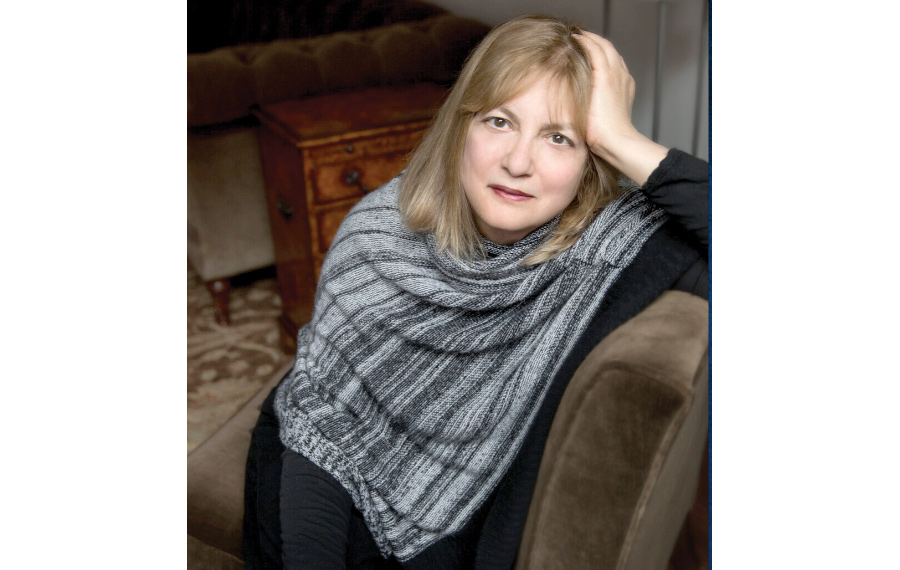
Alice Hoffman
In Alice Hoffman’s new novel, “The World That We Knew,” set in wartime Berlin, Hanni Kohn knows she must send away her 12-year-old daughter to protect her from the Nazis. The worried mother, daughter of a rabbi, creates a mystical creature sworn to protect her daughter. Discussing the book, Hoffman appears at the Museum of Tolerance and engages in conversation with Deborah Thompson, formerly Hoffman’s research assistant and now manager of the museum’s bookstore. Refreshments along with a book sale and signing follow the program. 7 p.m. Free. RSVP required. Museum of Tolerance, Peltz Theater, 9786 W. Pico Blvd.

Israeli Ensemble
The renowned Israeli family ensemble Colin Schachat and Sons performs with special guest Cantor Netanel Baram. The L.A. University Festival Orchestra, led by musical director Tomer Adaddi accompanies them. 7:30-9:30 p.m. $36 balcony, $72 risers, $125 preferred seating, $200 includes pre-show reception. Beverly Hills Synagogue, 9261 Alden Drive, Beverly Hills. For tickets, email concert@yinbh.org.

THU JAN 16

Jews and 2020 Elections
With only 10 months until the presidential election and less than one month before the voting begins with the Iowa caucuses, this evening at Wilshire Boulevard Temple features three writers offering their insights on the race for the White House. Former Journal columnist Danielle Berrin, Wall Street Journal national religion reporter Ian Lovett and author Steven Windmueller, a longtime leader in the Jewish community, share their views. A Q&A session follows. RSVP requested. 7:30 p.m. Free. Wilshire Boulevard Temple Irmas (Westside) Campus, 11661 W. Olympic Blvd.


Have an event coming up? Send your information two weeks prior to the event to ryant@jewishjournal.com for consideration. For groups staging an event that requires an RSVP, please submit details about the event the week before the RSVP deadline.

Experts Talk BDS, Journalist Souad Mekhennet Read More »

Educator Awards, Jewish Symphony Event, AMIT

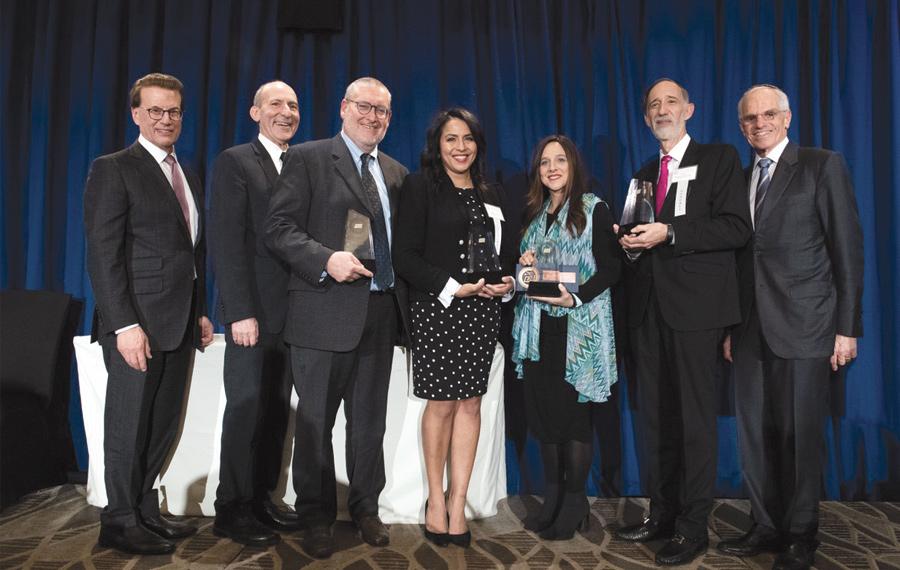
The 30th annual Jewish Educator Awards (JEA) luncheon, organized by the Milken Family Foundation and BJE: Builders of Jewish Education, was held on Dec. 17 at the Luxe Sunset Boulevard Hotel.

The event celebrated 2019 JEA recipients Michelle Andron, general studies principal at Emek Hebrew Academy; Eric Hartung, a science teacher at Pressman Academy at Temple Beth Am; Rabbi Abraham Lieberman, a Judaic studies teacher at Shalhevet High School; and Nelly Wisner, a transitional kindergarten/kindergarten general studies teacher at Beth Hillel Day School.

Luncheon attendees included Lowell Milken, chairman and co-founder of the Milken Family Foundation; Gil Graff, executive director of BJE: Builders of Jewish Education; and Richard Sandler, executive vice president of the Milken Family Foundation.

According to a Milken Family Foundation statement, JEA was established to “provide public recognition and an unrestricted $15,000 cash award to teachers, administrators and other education professionals in the greater Los Angeles area who have made significant contributions to excellence in BJE-affiliated schools.”


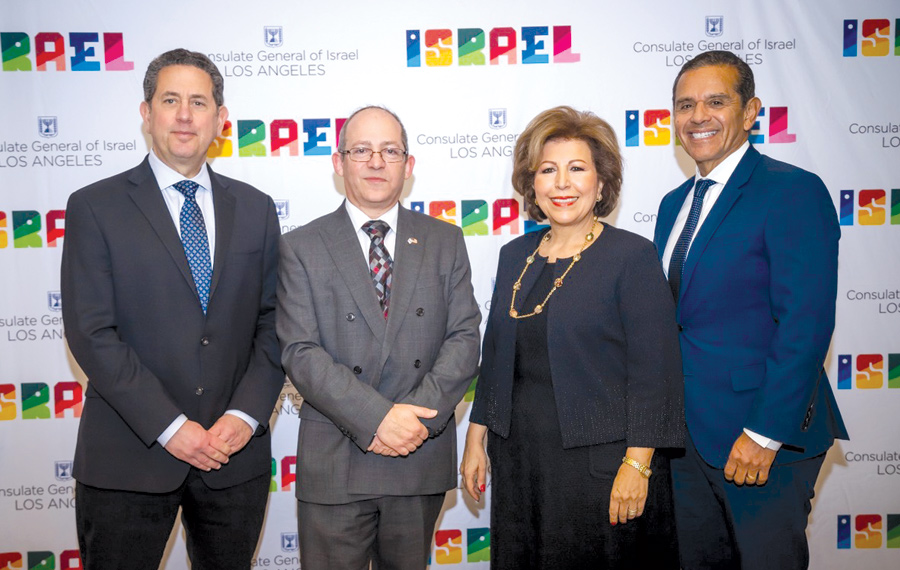
From left: Richard Hirschhaut, Hillel Newman, Susan Azizzadeh and Antonio Villaraigosa attend “Finding Common Threads” at Sinai Temple. Photo by Linda Kasian

The Consulate General of Israel in Los Angeles held a Dec. 12 community event at Sinai Temple in memory of more than 850,000 Jews who were forced out of Arab countries and Iran during the 20th century. 

The event — “Finding Common Threads From the Middle East to the West” — commemorated those who were forced to flee from their homes and leave the countries where their ancestors had lived for millennia, solely because of their Jewish identity. 

The consulate partnered with the American Jewish Committee (AJC),
Iranian American Jewish Federation and 30 Years After to organize the event,
which included a discussion with Pastor Ricardo Escobedo of Christians United for Israel; Penina Meghnagi, a Jewish refugee from Libya; and Saba Soomekh
of AJC. 

Keynote speaker and former Los Angeles Mayor Antonio Villaraigosa talked about his childhood in Boyle Heights at a time when people from all nationalities resided in the area.

“It used to be the Ellis Island of L.A. There was a big Jewish community there [along with] Mexican, Chinese and Japanese communities and they all lived in harmony,” Villaraigosa said.

Consul General of Israel in Los Angeles Hillel Newman said in his opening speech that he hoped that the evening would enlighten untold narratives and bring people together. 

The evening included a musical performance of Middle Eastern music by Chloe Pourmorady, Liran Shalom, Yoni Arbel and Asher Levy.

— Ayala Or-El, Contributing Writer


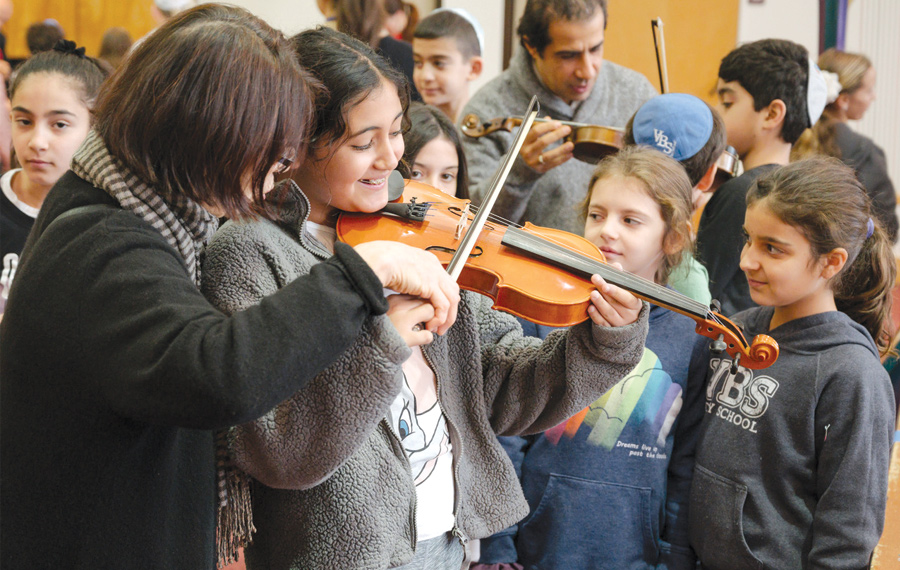
Los Angeles Jewish Symphony’s annual education program, “A Patchwork of Cultures,” drew over 1,000 students from L.A. public schools. Photo courtesy of L.A. Jewish Symphony

The Los Angeles Jewish Symphony’s (LAJS) annual education program, “A Patchwork of Cultures: Exploring the Sephardic-Latino Connection,” was held on
Dec. 2-3. 

More than 1,000 students from Los Angeles public schools participated in the program, which featured a series of workshops that celebrate the deep cultural ties between Sephardic Jews and the people of Latin America, promoting respect for diversity through the recognition of those similarities. 

The program culminated in two concerts featuring guest artist Cantor Marcelo Gindlin of Malibu Jewish Center & Synagogue. The concerts and workshops were free to students and schools and completely underwritten by grant funding.

Before the concerts, students were treated to an “instrument petting zoo,” during which they handled and played instruments with the guidance of students from de Toledo High School and members of the symphony. The event received positive coverage from the Spanish-language press thanks to the partnership with Fuente Latina, a nonprofit dedicated to promoting Jewish stories to Spanish-speaking media, including a story on Univision and a feature in La Opinión. 

Teacher Bernie Contreras of Vaughn Next Century Learning Center spoke to La Opinión, praising, “[the] opportunity to listen to music, live with a culture that is different from ours and see what we have in common that can unite us in these times.”

The LAJS was founded in 1994 under the leadership of Noreen Green, the group’s artistic director and conductor. It is the only symphony orchestra outside of Israel dedicated to the performance and preservation of orchestral works of distinction that explore Jewish culture, heritage and experience. Their music education programs have reached more than 20,000 students since 2001.

“We were thrilled by the attention we received in the Spanish media,” Green said. “Thank you to Fuente Latina for reaching out and coordinating that coverage, as well as to city of Los Angeles Department of Cultural Affairs, the Music Performance Trust Fund and all of our funders who made this project possible.”


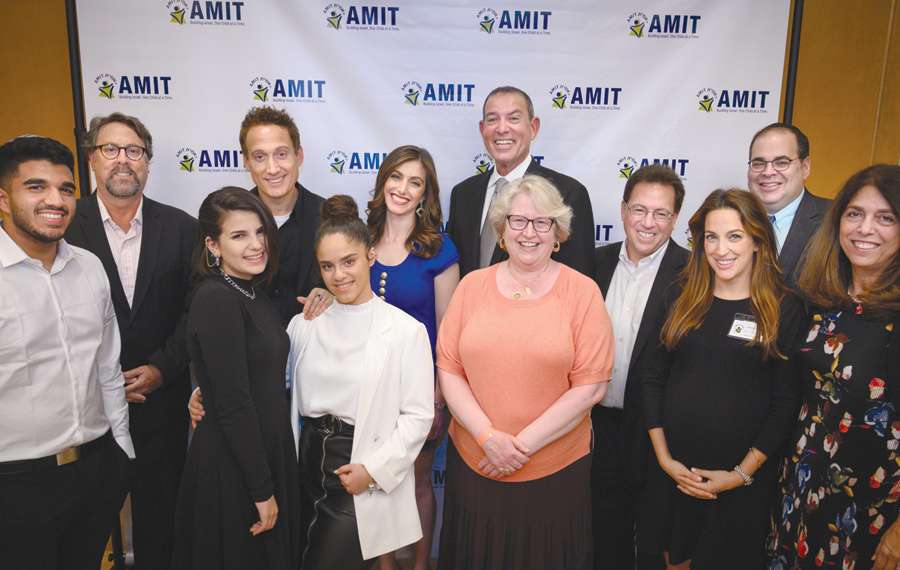
AMIT Student Ambassadors from Israel, AMIT L.A. leaders and comedian Elon Gold (back row, third from left) share an evening of laughter and inspiration in support of an education network in Israel. . Photo by Curtis McElhinney.

More than 150 guests joined AMIT Student Ambassadors from Israel and comedian Elon Gold at the Olympic Collection to share an evening of laughter and inspiration and to honor community members Douglas Williams, CEO of Williams Service Corp., and television writer Leslie Schapira for their support and leadership.

The Nov. 19 evening’s laughter was delivered courtesy of Gold, and included appearances by AMIT student ambassadors who gave musical performances and shared the impact that AMIT has had on them. Gold said that he gave it his all knowing how important AMIT is to ensuring the success of future generations in Israel.

AMIT, an educational network in Israel, provides innovative, Jewish values-based education that has impact more than 36,000 children, 70% of whom live on the socioeconomic or geographic periphery, according to AMIT. 

The group is active in Los Angeles under the leadership of AMIT Western Region Director Liron Yadin.


Want to be in Movers & Shakers? Send us your highlights, events, honors and simchas.
Email ryant@jewishjournal.com.

Educator Awards, Jewish Symphony Event, AMIT Read More »

Israeli Musical Innovator Idan Raichel on Inspiration and Innovation

Idan Raichel, a pioneer of Israeli world music, has collaborated with more than 150 international musicians as part of his “Idan Raichel Project” with performances in Arabic, German, Spanish, Amharic, French and other tongues. He also has performed with headliners Dave Matthews, India. Arie and Alicia Keys, as well as Portugal’s Ana Moura, France’s Patrick Bruel, Italy’s Ornella Vanoni, Germany’s Andreas Scholl and Mali’s Vieux Farka Touré.

The singer, producer and composer is also one of his homeland’s most renowned recording artists. Since its release in 2019, his “unity ballad,” “Shevet Achim V’Achayot,” co-written with Doron Medalie, composer of Netta Barzilai’s 2018 Eurovision hit, “Toy,” has racked up more than 25 million YouTube views.

Earlier hits have well surpassed that. Among them, “Im Telech” expresses vulnerability with the lyrics, “If you go, who will hold me like this?”

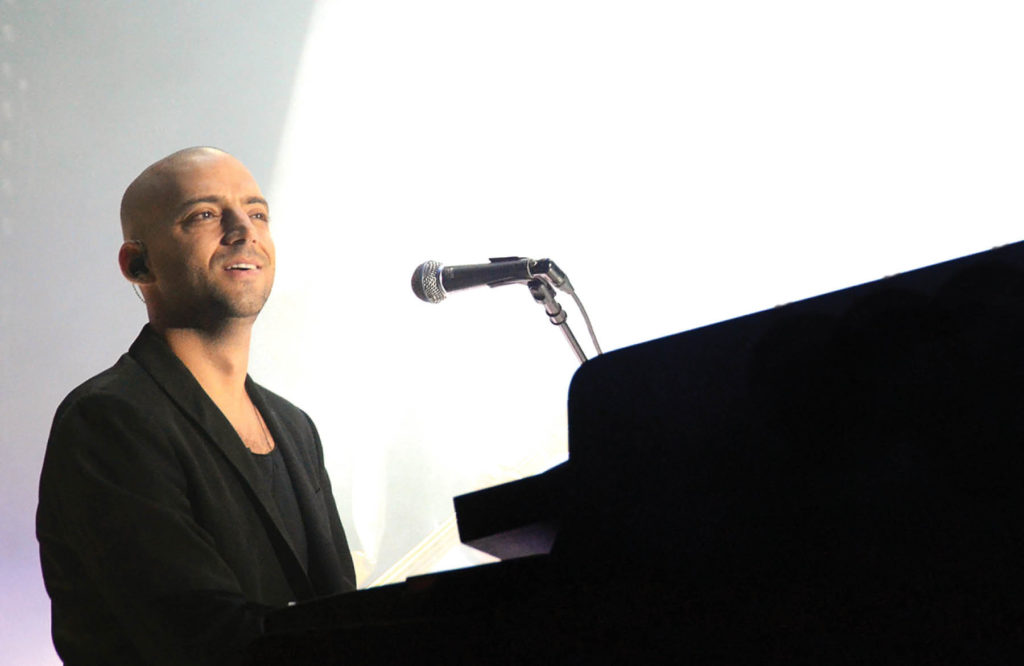
Most recently, Raichel appeared — solo — for an evening of conversation, when he also played piano and sang some of his hits at the December 2019 Limmud Festival in Birmingham, England. 

Raichel, 42, who grew up in Kfar Saba, first learned to play the accordion, which he calls “the most uncool” instrument. 

Jewish Journal: You now play the accordion onstage. What changed?

Idan Raichel: Accordion is one of the greatest instruments for world music. It kept my ears, eyes and heart open to music all over the world. And yes, I got back to it in my 20s and I’m still playing it now. If you bring your truth one way or another, that is the most important thing. Even if it will not beat Beyoncé on the charts, at least you know you put your stamp and your heart on the microphone.

JJ: What did you love about serving in the Israel Defense Forces band?

IR: I was making concerts every day for different army troops all over Israel. Playing for soldiers, you’re contributing to your country. And soldiers are the most honest audience after kids, because if you don’t play well, you’re wasting their time. It was a really nice experience.

JJ: For years, you grew massive dreadlocks. Suddenly, they disappeared. How did that happen?

IR: Being inspired by music from all over the world, my look was also inspired from different places. Of course, I shaved my head every day in the army. The dreadlocks were kind of a fashion statement. And then to just change, and not to depend on the look, but to have a unique style of music, was more important to me. Once we were about to have our first baby, my partner Damaris [Deubel], thought, “Maybe it’s also time to change the look?”

JJ: How did you meet Damaris?

IR: Backstage. I actually met her father first — a music teacher in Vienna. He bought my CD for his daughters. That was their first introduction to my music. They came to my concert in Vienna. Then I met them backstage and then we kept in touch. We know each other already for 10 years.

“If you bring your truth one way or another, that is the most important thing. Even if it will not beat Beyoncé on the charts, at least you know you put your stamp and your heart on the microphone.”

JJ: How does fathering your daughters, Phillipa, 5, and Salome, 4, impact your music?

IR: A lot of songs I write are about them. I don’t see myself touring anymore for half the year. It’s just choices. But “Everything is everything,” as [recording artist] Lauryn Hill said. It’s what it is. And it’s beautiful. And I accept everything with love.

JJ: How did working with young Ethiopian immigrants influence your music?

IR: The experience of being a counselor in a boarding school was a really important year in my life right after the army to understand Amharic culture in Israel, new immigrants and the identity of youngsters who came from East Africa to the Western world, and their family structure turning upside town, with kids supporting the family. It affected my music a lot because suddenly I had the impact of different elements in my music. I grew up listening to Israeli music and not African music, and especially not East African music. So all of this was really amazing.

JJ: What inspires your songwriting?

IR: My songs are always inspired by stories. Sometimes it’s a story I’ve heard from parents, a friend or a lover from the past, or it can be from my lady, or it can be fictional. It’s always important to keep it personal and real.

JJ: What are some of your most meaningful or personal songs?

IR: All of them are pretty much personal because [they’re] coming from my heart. The most meaningful are songs sung in school. If kids in Florida are learning Hebrew by learning “Bo’ie” [“Come”], it’s a great honor. If kids in kindergarten are singing in their end-of-the-year party my song “Lifnei Sh’Yigamer” [“Before It Ends”], it makes it very meaningful.

JJ: What gives your songs their emotional force?

IR: Less is more. Sometimes people say, “I miss you like this and like that,” and “I love you like that and the moon and flowers” and people find it may be too simple to say, “I love you, I miss you,” and just to expose your heart and your vulnerability. And if you’re writing from this point of view, it will reach people’s hearts.

JJ: When “Bo’ie” debuted on Israeli radio, the Idan Raichel Project became an overnight sensation. What inspired the song?

IR: “Bo’ie” is the very first song that I wrote. It was almost like praying in a very spontaneous way, my feeling and interpretation about love, being direct: “Come with me, without any places or target, or thinking about happiness. Just come with me, hold my hand and walk this long way together.”


Lisa Klug is a freelance journalist and the author of “Cool Jew” and “Hot Mamalah: The Ultimate Guide for Every Woman of the Tribe.”

Israeli Musical Innovator Idan Raichel on Inspiration and Innovation Read More »

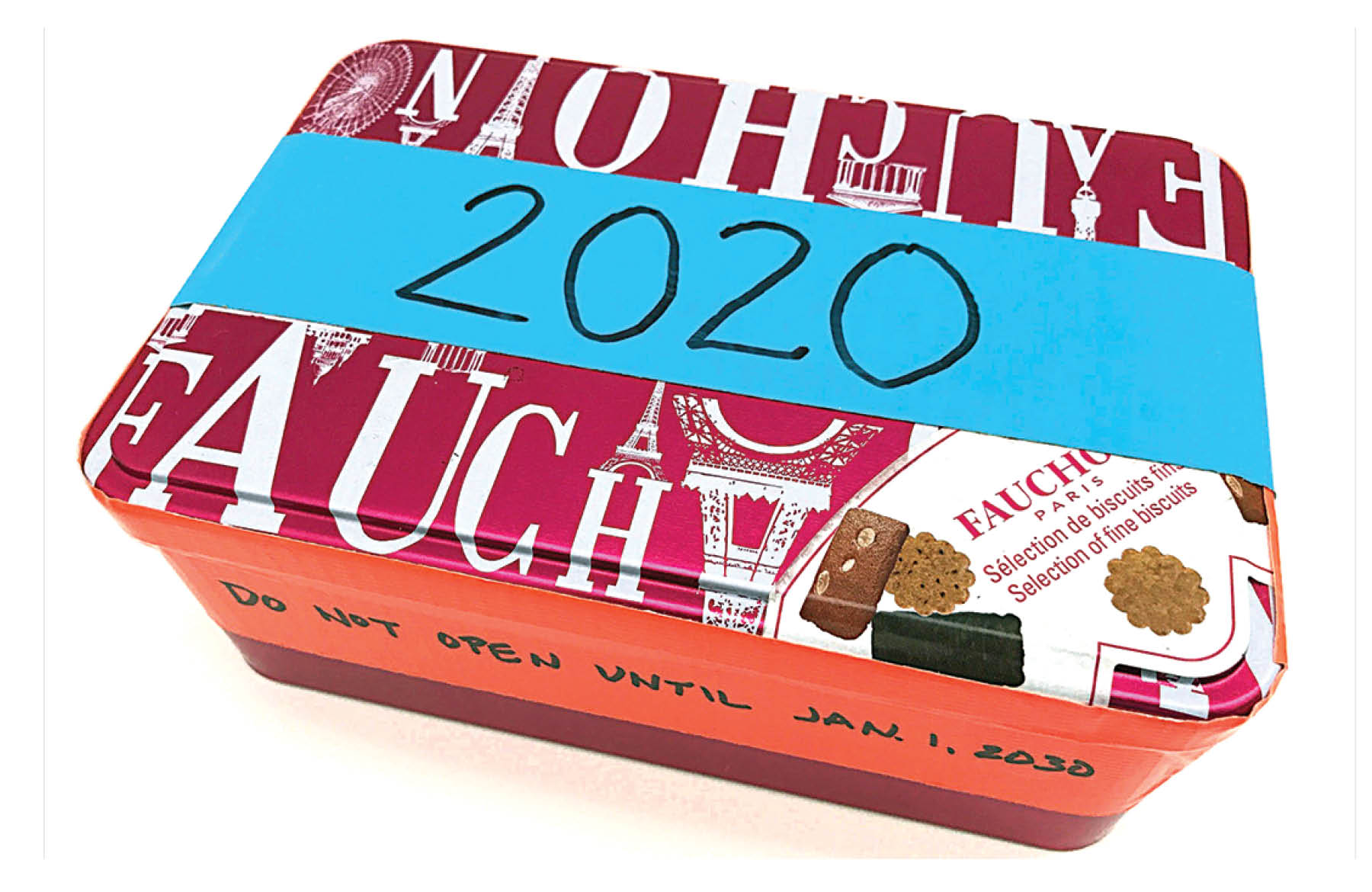
Make a 2020 Time Capsule

While I was visiting my mom over the winter break, she had me go through old boxes of mine in the garage that had not been touched since my college days. I had a wonderful trip down memory lane as I rediscovered photos, letters from friends, party invitations and former class assignments. Even the tiniest, seemingly insignificant jotting on a piece of paper held sentimental value. If only I had kept mementos from every period of my life.

As the decade of the 2020s begins, I thought it would be as good a time as any to start a tradition of creating time capsules — boxes filled with reminders of the past year. This would be a great activity for young and old alike, and you can fill your capsule with whatever is important to you. Include a CD of your favorite songs, a journal or appointment book, ticket stubs, greeting cards, boarding passes, newspaper clippings or even pay stubs. A nifty idea would be to write a letter to your future self, sharing your hopes for the years to come.

What you’ll need:
Cookie tin
Mementos
Duct tape
Marker


1. A cookie tin is an ideal container for your time capsule, as it is much sturdier than a cardboard box. (This project is a great excuse to eat cookies so you can get the tin.)


2. Fill the tin with all the mementos you wish.


3. Seal the lid shut with duct tape so you aren’t tempted to peek in through the years.


4. With a marker, write down the current year and the date you want to open the time capsule.


Jonathan Fong is the author of “Flowers That Wow” and “Parties That Wow,” and host of “Style With a Smile” on YouTube. You can see more of his do-it-yourself projects at jonathanfongstyle.com.

Make a 2020 Time Capsule Read More »

NYC Councilman Says Media, Politicians Are ‘Festering Hate Against My Community’

New York City Councilman Kalman Yeger blamed the media and politicians for emboldening the rise of anti-Semitism in the city in a Jan. 8 speech before the city council.

Yeger said that the media and politicians are perpetuating “an ‘us vs. them’ message against Orthodox Jews. You did this. When you deliberately paint a portrait of Orthodox Jews as backward members of society, who don’t vote how you like, don’t do what you want, don’t educate our children how you wish, you did this.”

He added that some attended the Jan. 5 “No Hate, No Fear” march “spend the other 364 days of the year festering hate against my community.”

Yeger went onto criticize the notion that the problem at hand was tolerance.

“The notion that a ‘lack of tolerance’ is at issue, as if Orthodox Jews are so heinous that our presence in society is something to be tolerated, is grotesque,” Yeger said. “We have the right to live in our city like anyone else. We have the right to go about our day without being assaulted. We’re not doing this to anyone. You’re doing this to us.”

The city councilman asked those attending the city council meeting if they had ever witnessed a Jewish student assault someone on a street in New York City. “Why is that never discussed, how we raise our children to be honorable, intellectual, decent members of society, how we are kind to one another?” Yeger said.

Yeger didn’t name any specific names, but he urged those who have promulgated divisive rhetoric against Jews to show solidarity with the Jewish community for 365 days a year, not just one day at a march.

“Leave us alone and let us be part of this city,” Yeger concluded.

Yeger, who as served on the city council since 2017, was removed from the City Council’s Immigration Committee on April 1 after tweeting, “Palestine does not exist” on March 27.

According to New York City Police Department data released on Jan. 2, anti-Semitic hate crimes increased 24% from 2018 to 2019 in New York City.

Quotes courtesy Hamodia transcript.

NYC Councilman Says Media, Politicians Are ‘Festering Hate Against My Community’ Read More »

Charlie Noxon, Son of Emmy-Winning Producer, 20

Charles “Charlie” Noxon, the son of Emmy Award-winning TV producer Jenji Kohan (“Weeds,” “Orange is the New Black”), and writer and journalist Christopher Noxon, died from injuries sustained in a skiing accident in Utah on Dec. 31. He was 20.

Noxon was on a trip with family members, including his father. The Summit County Sheriff’s Office said Noxon was on an intermediate-level trail but authorities declined to cite the cause of the accident, according to The Hollywood Reporter. TMZ reported Noxon fell, then was flown via helicopter to a local hospital, where he later was pronounced dead.

IKAR, where Noxon became a bar mitzvah, emailed its congregants that Noxon, a Los Angeles native and graduate of Harvard-Westlake, was a junior at Columbia University in New York. He also appeared in an episode of “Weeds” in 2008. 

His parents, who divorced in 2019 after 21 years of marriage, told The Hollywood Reporter, “He was questioning, irreverent, curious and kind. Charlie had a beautiful life of study and argument and travel and food and razzing and adventure and sweetness and most of all love. We cannot conceive of life without him.”

His father also told TMZ, “Our hearts are shattered. The clichés about moments like this are true, it turns out. The one about life forever changing in a split second, about the fact that we are all bound up in a web of love and loss, about the primacy of community in times of unfathomable tragedy.”

Noxon also is survived by his siblings Eliza and Oscar; grandparents; aunts, including TV producer and writer Marti Noxon (“Sharp Objects” and “Glee”); uncles, including writer and producer David Kohan (“Will & Grace”); and cousins.

“We will miss his sweet smile, piercing questions, and big heart. We already do,” his father told CNN.

Noxon’s funeral was held on Jan. 5 at Temple Israel of Hollywood and he was buried at Mount Sinai, Hollywood Hills.

Charlie Noxon, Son of Emmy-Winning Producer, 20 Read More »

Yiddish Is Alive and Well in New Anthology

If “The Joys of Yiddish” were not already the title of a beloved book by Leo Rosten, the phrase would be ideal to describe what is celebrated in the pages of a newly published anthology of Yiddish writing in English translation, “How Yiddish Changed America and How America Changed Yiddish,” edited by Ilan Stavans and Josh Lambert (Restless Books).

Rosten is one of the contributors whose work was selected for inclusion in “How Yiddish Changed America,” and Stavans and Lambert praise him as “a humorist who became famous for his efforts to codify ‘Yinglish’ — the blend of Yiddish and English that became common in midcentury America.” But they also point out that Rosten’s book was condemned by Irving Howe as “a catalog of kitsch,” and one periodical nominated Rosten for “a ‘shanda’ award.”

Stavans and Lambert, both accomplished scholars, aspire to something far more substantial than the Yiddishisms and Jewish jokes that have come to be associated with Yiddishkayt in American pop culture. Lambert is the academic director of the Yiddish Book Center and teaches American literature at the University of Massachusetts, and Ilan Stavans is the Lewis-Sebring Professor of Humanities, Latin American and Latino Culture at Amherst College.

“The aim of this book is to present a very different picture of Yiddish, true to its history, as a language and culture that is — like the Americans who spoke, read and created in it — radical, dangerous and sexy, if also sweet, generous, and full of life,” they explain in a preface to their collection.“[I]t irritates Yiddishists that the language is fetishized, especially by people who don’t speak it.”

It’s notable that Lambert works at the Yiddish Book Center, whose mission is to recover and preserve “Yiddish and modern Jewish literature and culture,” and much of what we find in “How Yiddish Changed America” is drawn from its archives. One of the stated goals of the two editors is “to reflect how, around the turn of the twentieth century, Yiddish culture in New York emanated from a community whose first concern was survival, and who had to decide what that struggle for survival implied about politics, ethics and culture.”  

The collection is divided into six thematic sections, and each entry is accompanied with a “brief contextual headnote,” but Stavans and Lambert declare that their “animating hope” is that readers will “make connections between its heterogeneous content, browsing and skipping and finding surprises everywhere.” My favorite section, by the way, is “Eat, Enjoy, and Forget,” which includes such gems as “Kosher Chinese?” by Matthew Goodman, a colloquium on “Craving for Rugelach,” and a lexicon by Asya Vaisman Schulman titled “On Bagels, Gefilte Fish, and Cholent.”

“How Yiddish Changed America” offers an astonishingly rich and diverse selection of poems, stories, memoirs, essays, plays, letters, conversations, recipes and reminiscences, as well as drawings, cartoons and posters by Yiddish artists, each one refracting a different point of view and a different point of light.

The collection begins with “A Ghetto Wedding,” a short story by Abraham Cahan, the editor of the Forward, and ends with “Camacho’s Wedding Feast,” a vignette by Alberto Gerchunoff, who is described as “the grandfather of Jewish Latin American literature.” In between these two bookends, the reader is offered an astonishingly rich and diverse selection of poems, stories, memoirs, essays, plays, letters, conversations, recipes and reminiscences, as well as drawings, cartoons and posters by Yiddish artists, each one refracting a different point of view and a different point of light.

The contributors include many familiar names, including Howe (“The First Shock,” an excerpt from “World of Our Fathers”), Cynthia Ozick (an essay titled “On Sholem Aleichem’s Revolution”), Allen Ginsberg (a poem titled “To Aunt Rose”), Emma Goldman (a speech titled “Against Marriage as a Private Possession”), Sholem Asch (a scene from a play titled “God of Vengeance”), Michael Chabon (an excerpt from “The Yiddish Policeman’s Union”) and, of course, Isaac Bashevis Singer (the famous short story titled “The Cafeteria” and an essay on “How Does It Feel to Be a Jewish Writer.”) Singer looms so large that he is given a kind of group eulogy in an “appreciation” under the title “Literature, It’s Like Orgasm!” Among those who contribute their memories of the great man are our own Kenneth Turan, film critic at the Los Angeles Times, UCLA Yiddish professor Janet Hadda (of blessed memory) and Aaron Lansky (the founder of the Yiddish Book Center).

Some contributors may be new to the reader, but they bring a fresh perspective to Yiddishkayt. Naomi Seidman, the Chancellor Jackman Professor in the Arts at the University of Toronto, for example, asks a provocative question in the title of her essay, “Is Hebrew Male and Yiddish Female?” She is grappling with the fact that Yiddish was regarded in some Jewish circles as a secondary language that was suitable for “women and simple people” who could not read Hebrew, but she rejects the “sexualized perceptions about Hebrew and Yiddish” and decries the “myth of Yiddish ‘femininity.’ ”

Jeffrey Shandler, chair and distinguished professor of Jewish studies at Rutgers University, offers an illuminating essay on the modern use of Yiddish by Chasidic Jews in “Shopping for Yiddish in Boro Park.” He points out that Yiddish books and recordings are readily available, but the purveyors and purchasers of these items use Yiddish as a lingua franca only because Hebrew is the loshn-koydesh, the holy language. “Indeed, the Hasidim who speak Yiddish do not celebrate the language as the fountainhead of a wide-ranging, thousand-year-old Ashkenazic heritage that embraces labor movements and avant-garde poetry as well as Hasidism,” Shandler writes, “and they are suspicious of efforts to cultivate Yiddish for its own sake.”

Often, we are shown the arc that flashes across history as when Daniel Kahn, a musician and actor, adapted a Yiddish song by Mordechai Gebirtig, a victim of the Holocaust, into “March of the Jobless Corps,” a protest song inspired by the Occupy Wall Street movement:

So we’ll sing a marching song
For a land, a world of justice
Where no cop or boss can bust us
There’ll be work for every hand
In a new & better land

Stavans and Lambert are compelled to confront the fact that the native speakers of Yiddish were very nearly exterminated during the Holocaust. As Singer famously observed when he accepted the Nobel Prize for Literature in 1978, “I am sure that millions of Yiddish-speaking corpses will rise from their graves one day and their first question will be: ‘Is there any new Yiddish book to read?’ ”

But, like Singer, they insist on reasons to be optimistic. The best example is their observation in passing that Singer “is still the only Yiddish writer to win the Nobel Prize.” The word “still” captures the irony, melancholy, wit and courage that are all qualities of Yiddishkayt. Against all odds and in defiance of history, Stavans and Lambert are suggesting that, before the Messiah comes, it might happen again. 


Jonathan Kirsch, author and publishing attorney, is the book editor of the Jewish Journal.”

Yiddish Is Alive and Well in New Anthology Read More »

Leah Cypess on Daf Yomi and ‘No Day Without Torah’

Every day for 7 1/2 years, Jews around the world partake in Daf Yomi — reading a page of the Talmud daily. Then, when they’re finished, they attend a siyum, which honors the completion of the learning. 

In 2012, more than 90,000 Jews gathered at MetLife Stadium in New Jersey to hold a siyum organized by Agudath Israel of America. And this year, on Jan. 1, thousands met again at MetLife to celebrate another Daf Yomi cycle. 

To educate Jewish children about the Daf Yomi tradition, Silver Spring, Md., author Leah Cypess recently released “No Day Without Torah,” (Menucha Publishers). The book follows the life of Rav Meir Shapiro, who was born in the late 1800s and founded Daf Yomi. Cypess is also the author of secular young adult novels and Jewish books on Purim and the Spanish Inquisition.

The Journal spoke with Cypess (whose pen name is Leah Sokol) about why this book is important, and her reverence for the Daf Yomi program. 

Jewish Journal: How long have you been writing? 

Leah Cypess: I’ve been writing for as long as I can remember. I have it on record that when I was 8 years old, I told my grandmother that I was going to be an author when I grew up. I started submitting my short stories to magazines when I was 15, and I wrote and sent my first book out when I was 17. 

JJ: You write fiction under the name Leah Cypess. What are those books about?

LC: I write young adult and middle-grade fantasy novels for the mainstream market. My first book to be published was my young adult novel “Mistwood,” [which was] published by HarperCollins in 2010. “Mistwood” is about a shapeshifter trapped in the form of a human girl. [My other book] “Nightspell” is about a castle where many of the inhabitants are ghosts, and “Death Sworn” and its sequel, “Death Marked,” are about a sorceress forced to train a cult of assassins.

JJ: Why did you decide to write “No Day Without Torah”?

LC: “No Day Without Torah” started with a question. I knew Daf Yomi was relatively new and I wondered how it had gotten started and managed to take off and become established so incredibly fast. My research only increased my amazement at what an incredible accomplishment it was, and the more I read, the more I wanted to popularize the history in the form of a children’s book.

JJ: How did Daf Yomi start?

LC: Well, that’s what the book is about. Essentially, it was the brainchild of Rabbi Meir Shapiro, a Polish Chassidic rebbe, who introduced it at one of the meetings of the nascent Agudath Israel organization in the early 20th century. The idea took hold of people’s imaginations and became almost immediately popular.

JJ: Are kids encouraged to do Daf Yomi or do you only start at a certain age?

LC: In my experience, children are not encouraged to do Daf Yomi in its classic form. Learning an entire page of Talmud a day is quite an undertaking. But there are offshoots of Daf Yomi in other areas that children are often encouraged to do. The most common, I believe, is the idea of learning the laws of lashon harah (refraining from gossip) every day, and repeating that cycle each year.

JJ: What ages is the book designed for?

LC: The book is an early reader, most appropriate for first graders or second graders.

JJ: Where can people find “No Day Without Torah”?

LC: I’m happy to say that I’ve seen it in most of the Judaica bookstores where I’ve gone to subtly check out whether it’s there. 

JJ: What do you hope kids and adults get out of it?

LC: I’m a firm believer in the importance of history, and I think it’s always valuable for people to understand the origins of the things we do and believe. So mostly, I hope that people come to understand how Daf Yomi came to be. I also hope to share my admiration for Rabbi Meir Shapiro and encourage adults to read more about him. There was so much in my research that I had to leave out to create a narrowly focused children’s book — and to inspire kids with the knowledge that one person with one idea has, in so many ways, transformed the Jewish world.

JJ: Why is Daf Yomi a meaningful tradition to you?

LC: I have to admit that I have never personally learned Daf Yomi. For people who do, I think it is the learning itself that’s the most meaningful. For me, what makes Daf Yomi meaningful is, actually, its history. [It’s] the fact that something so innovative could arise so late, relatively speaking, in Jewish history and yet become so significant and entrenched for so many people.

Leah Cypess on Daf Yomi and ‘No Day Without Torah’ Read More »