fbpx

January 8, 2020

Justice From the MQ-9 Grim Reaper

Would the United States government have been within its legal rights to assassinate Osama bin Laden if it had possessed intelligence that bin Laden intended to launch strikes against U.S. targets in the Middle East, or near Washington, D.C., and New York?

In November 1990, the FBI raided the New Jersey home of suspected Meir Kahane assassin El Sayyid Nosair — an early known al-Qaida associate — during which the Feds discovered evidence al-Qaida had plans to blow up New York City skyscrapers. At that stage, the 9/11 attacks were merely a glint in bin Laden’s eye, although after the February 1993 World Trade Center bombing, it was clear al-Qaida plans were sustained and serious. Should the government have targeted bin Laden back in 1990?

Officially, the U.S. is opposed to the targeted killings of known enemies, and bin Laden was not killed in the years between that FBI raid and the horrific terrorist attacks of Sept. 11, 2001. However, there are exceptions, later enshrined in the 2001 Authorization for Use of Military Force (AUMF) law, which states “the Constitution empowers the President to protect the nation from any imminent threat of violent attack.” But even that law is open to interpretation. Who gets to define the words “imminent” and “violent”?

When they happen, preemptive targeted killings usually are remote and of limited public interest. If they are reported at all, they barely register as part of the 24-hour news cycle. That all changed on Jan. 3 with the targeted killing by the U.S. of Gen. Qassem Soleimani in Baghdad.

Soleimani was commander of the Quds Force, a secretive branch of Iran’s elite Islamic Revolutionary Guard Corps. He was a man used to the tensions and stresses of warfare, having come through the Iran-Iraq War of 1980-88. After the war, he emerged as one of the most powerful men in the Islamic Republic of Iran, a shadowy but feared military leader who, for the past 20 years, was one of the closest confidants of revolutionary Iran’s Supreme Leader Ali Khamenei.

Since at least 2003, when the United States and its allies besieged Iraq and took out then-President Saddam Hussein, Soleimani had been at the center of Shiite Islam’s attempts to assert itself and establish foreign strongholds in the fluid situation that unfolded after the Iraq War. In Lebanon, Yemen, Syria, Afghanistan and Iraq — a geographical area that has come to be known as the Shia Crescent — the charismatic Iranian strongman built relationships with local militias and helped guide strategies. Soleimani also funded them, enabling local Shiite ascendancy, and fostering chaos and violence wherever he operated.

Last week, Soleimani was in Syria, where over the past few years, he consistently has been on hand to help President Bashar Assad brutally beat back rebel Syrian forces and reclaim key cities and towns from under their control. But early last week, events in Iraq suddenly demanded his attention: first with the killing of an American military contractor by a proxy Shiite militia; then with a firm U.S. response against the perpetrators; and finally, with sustained violent attacks against the U.S. Embassy compound in Baghdad.

Intimately involved in the planning behind the Shiite insurgency, Soleimani made the decision that he needed to be on the spot and flew the short distance between Damascus and Baghdad, arriving at Baghdad airport shortly after midnight. Within minutes, he was in a convoy of cars leaving the airport heading toward the city. His journey was cut short when missiles launched from an MQ-9 Reaper American drone slammed into his car and another one in the convoy of six, incinerating both cars and everyone inside them.

Information soon emerged that the strike had been authorized by President Donald Trump, not just in response to Soleimani’s involvement in the brazen attacks on the U.S. Embassy, but in light of further attacks on U.S. diplomats and military personnel Soleimani was suspected of planning. His killing was intended to prevent future attacks.

It did not take long for the condemnations to erupt. According to some experts, rather than calm things down, this assassination would inflame the local situation and perhaps have international repercussions. But military and diplomatic concerns aside, quite a number of legal and constitutional experts questioned the legal basis for the targeted killing. Professor Mary Ellen O’Connell of Notre Dame Law School, was quoted in The Atlantic as saying, “Preemptive self-defense is never a legal justification for assassination. Nothing is. The relevant law is the United Nations Charter, which defines self-defense as a right to respond to an actual and significant armed attack.”

Professor Oona A. Hathaway of Yale Law School, also quoted in The Atlantic, said the drone strike “raises many legal issues, but one of the most significant … is that President Donald Trump ordered the strike without so much as informing Democratic leadership in Congress, disregarding Congress’s essential role in initiating war.” Meanwhile, former Harvard Law School Professor Alan Dershowitz was unequivocal in defending the preemptive strike. “There is little doubt that President Trump acted lawfully — under both domestic and international law — in ordering [Soleimani’s] death,” he wrote in The Wall Street Journal.

As a rabbi, whenever people come to me for advice, I tell them that I am happy to offer advice with the understanding that I am not a lawyer, accountant, doctor, psychologist, psychiatrist, therapist or financial adviser. In other words, my advice is based on my rabbinic training, my knowledge and experience of Judaism, and of Jewish ethics and Jewish law.

My views on the Soleimani killing are based on my expertise in Jewish law. What does the Torah and the Talmud have to say, if anything, about preemptive assassinations? The relevant principle is summarized in a phrase of four Hebrew words: הבא‭ ‬להורגך‭ ‬השכם‭ ‬להורגו (“If someone comes to kill you, rise up and kill him [first].”) The first source for this is in the Torah. In Numbers 25:17, God instructed Moses to attack the Midianites and kill them; although the Israelites were not formally at war with the Midianites, as implacable foes of the nascent Jewish nation, the Midianites were looking for an opening to attack the Jews and massacre them. As a defensive strategy, they were killed before they killed us.

This edict was formalized in the Talmud (Sanhedrin 72a) and established as Jewish law for all time. If there is intelligence that confirms someone is actively planning credible lethal attacks, this would be sufficient grounds to preemptively kill that person. Israel has been at the forefront of this strategy for decades, beginning with the Six-Day War in 1967, and later, with the targeted killing of PLO and Hamas terrorist leaders whose lives were consumed with the destruction of Israel and the murder of Jews.

Over the past few days, I have not heard a dissenting voice regarding Soleimani’s murderous and malicious intent toward U.S. citizens and U.S. assets. Whether or not Soleimani’s death will stop Iran in its tracks and make the world a safer place is a question for military and diplomatic experts. Whether or not President Trump was within his rights to order Soleimani’s death is a question for legal and constitutional experts. But as a rabbi, I can state absolutely and unequivocally that under Jewish law, Soleimani was a legitimate target for assassination — and was for many years.


Rabbi Pini Dunner is the senior rabbi at Beverly Hills Synagogue. Professor Alan Dershowitz will speak at Beverly Hills Synagogue on Feb. 15.

Justice From the MQ-9 Grim Reaper Read More »
Voices Raised in Song

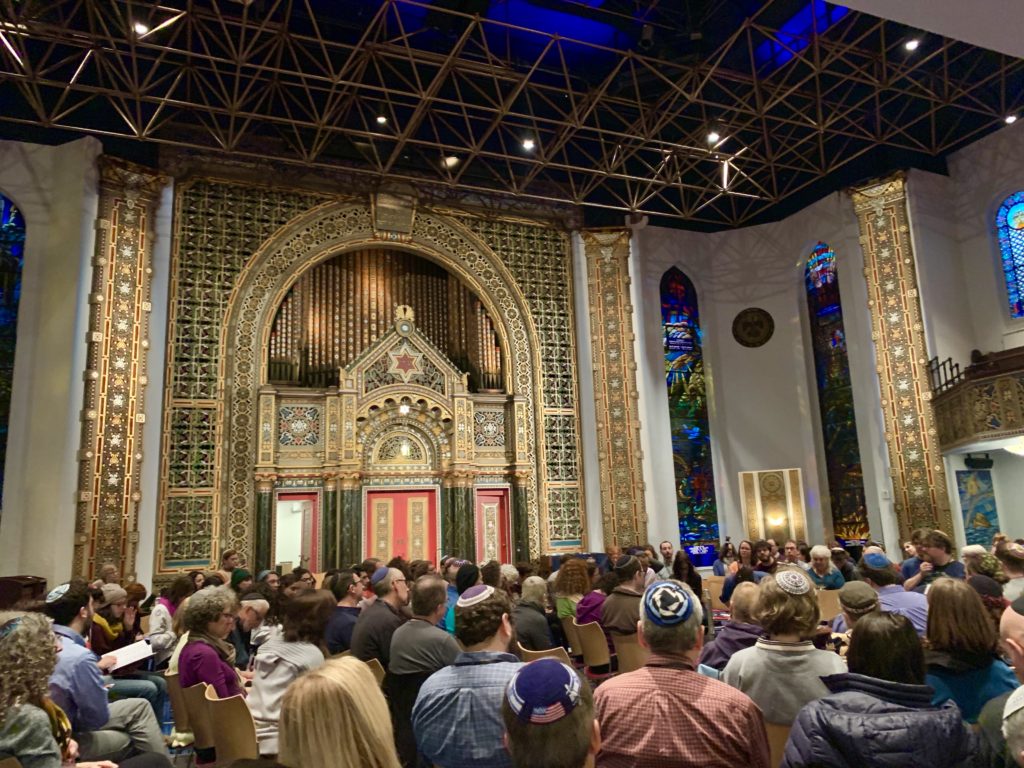
On the first night of Hanukkah, 230 Jews stood in concentric circles filling the sanctuary at Manhattan’s Congregation B’nai Jeshurun, singing together.

They sang for an hour, broke for candle lighting and a dinner of latkes and baked ziti, then gathered again for more singing from the Rising Song Institute’s Rising Song Intensive (RSI). They were led in soulful, slow versions of “Shir HaMaalot” and “Gesher Tzar Me’od” by Joey Weisenberg, a leader and creator of the new nigun movement, and Rabbi Yosef Goldman, another Jewish singer-songwriter who recently debuted an album.

As the pace picked up, Russ Agdern energetically stomped his feet along with the beat. Agdern is a founder and prayer coordinator of Shir HaMaalot, a popular monthly Friday night chavurah in Prospect Heights, Brooklyn. “Singing with other people really fills me up to do the other work I do in the world,” said Agdern, 42, who by day is an organizer for the Reform movement. He has been to every RSI since 2012. 

For Agdern, this is the work of his heart. “I want to be a better service leader and there are a lot of really great teachers” at RSI, he said. “I love learning about Jewish music and new melodies, things I can use for prayer and other song spaces.”

Goldman added singing is powerful because “people have a core need to belong, to feel part of something meaningful and through group singing, especially nigunim, where barrier of language is removed, people can connect to something greater than themselves. There’s something inherently prayerful about the experience.” 

RSI and its parent, Rising Song Institute, are run by Hadar Institute, on Manhattan’s Upper West Side. Hadar holds adult Torah learning programs and this year added a rabbinical ordination track. The Rising Song Institute was added two years ago although the intensive program began in 2011.

“Interest has been growing steadily for 15 years, for as long as I’ve been teaching,” said Weisenberg, the prolific and charismatic singer-songwriter who is an RSI co-founder and leader. “For us, it’s an opportunity to get a lot of voices into the game, about what we can all make together.”

Only 23 people participated in the first RSI in 2011. The following year there were 29. 

There’s nothing new about Jewish music as a way to draw people together. Debbie Friedman, z”l, transposed the structure and simplicity of American folk music onto Jewish texts, creating a hugely popular body of work, as did Rabbi Shlomo Carlebach. The tradition dates back to biblical times.

There are a few other programs around the country: Let My People Sing in Connecticut, is independent and meets at the end of the summer, with a focus on social justice. Song Leader Bootcamp in St. Louis MO. meets in February, geared toward Jewish educators, and Hava Nashira, in Milwaukee WI. co-founded by Friedman, is a Reform movement song leading conference.

RSI draws college students to people long collecting Social Security, and mostly laypeople like Agdern along with a few professional worship leaders, like cantors. Participants come from around the corner and from as far away as Florida and Winnipeg, Canada.

“Through group singing, especially nigunim, where barrier of language is removed, people can connect to something greater than themselves.”
— Rabbi Yosef Goldman

Viva Hammer traveled from Sydney. She leads Jewish prayer gatherings around the world, and came to learn “methods to get people who are otherwise not accustomed to joining the leader in song more participating. Prayer needs to be song. Without song, prayer is practically empty,” she said.

Christmas Day was the retreat’s last day. The concluding public concert filled B’nai Jeshurun’s Moorish sanctuary to capacity with more than 700 people for a performance by Weisenberg, Goldman, Deborah Sacks Mintz and the Hadar Ensemble. 

Young adults and seniors alike were on their feet, dancing to familiar words of Jewish music set to new melodies, a sense of oneness permeating the space as those in attendance enjoyed making what is old, new again.


Debra Nussbaum Cohen is a journalist in New York City.

Voices Raised in Song Read More »

Stop Scapegoating Zionist Jews for American Racism

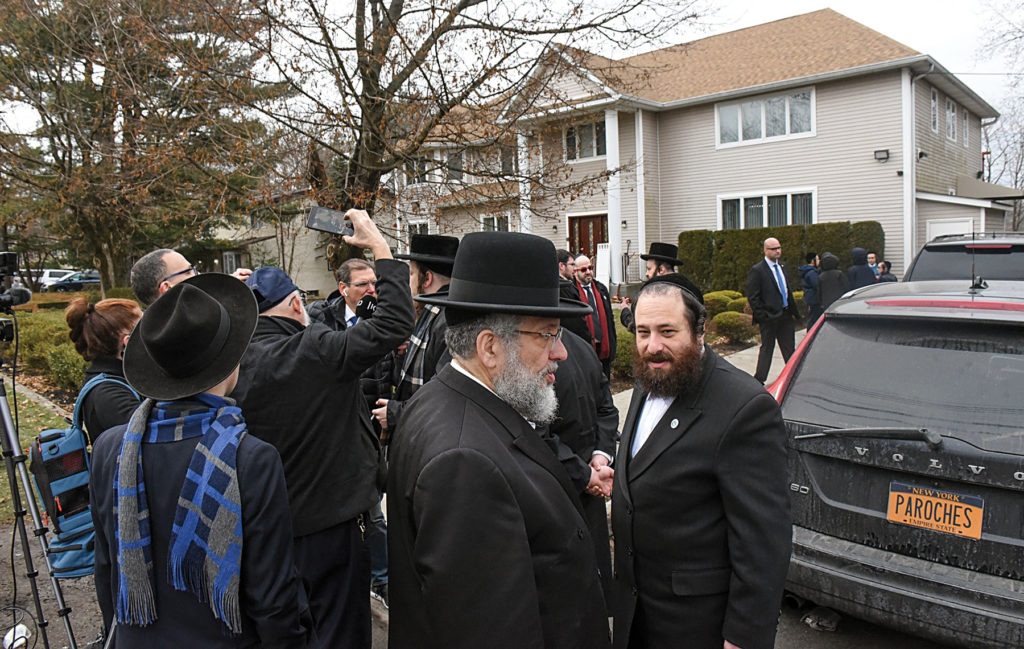
The Monsey attack at a rabbi’s home during his Hanukkah celebration, where a man wielded a machete, comes after a surge of recent anti-Semitic incidents in New York City. Witness Aron Kohn, who was in the rabbi’s home, recalled, “We saw him pull a knife. … It was about the size of a broomstick. He started attacking people right away.”

Federal prosecutors said the suspect, Grafton E. Thomas, who was charged with stabbing five Jewish people in a hate crime, had searched online in the weeks before the attack for “German Jewish Temples near me” and “Zionist Temples.”

This was not the first time in December that an anti-Semitic terror attack had started online, sparked by anti-Zionisim. Social media posts tied to the suspected Jersey City kosher supermarket shooter, David Anderson, pushed anti-Semitic conspiracies. Comments on a post linked to Anderson talked about the belief that Jews were using the police to further a violent agenda against black people.

This conspiracy theory, which makes Israel a scapegoat for U.S. police brutality against blacks, was developed and distributed by anti-Zionists. One of the most prominent anti-Israel groups, Jewish Voice for Peace (JVP), marketed a mass campaign called “Deadly Exchange” to disseminate this talking point. JVP claimed Israel was the root of anti-black police brutality such as “extrajudicial executions, shoot-to-kill policies, police murders and racial profiling.” This document spread quickly and supported the theory that Jews are responsible for modern-day racism in America.

This conspiracy theory was furthered by the anti-Zionist co-chairs of the Women’s March. Former co-chair Linda Sarsour called the Anti-Defamation League (ADL) “an organization that takes police officers from America to Israel, funds their trips, so they can be trained … and then they come back here and do what? Stop and frisk, killing unarmed black people across the country.” Another former co-chair, Tamika Mallory, took it a step further. The activist demanded people boycott Starbucks because it planned to enlist in the ADL’s anti-bias training, claiming in a tweet that the ADL is “CONSTANTLY attacking black and brown people.”

The violence in Jersey City and Monsey were committed by virulent haters of the Jewish state.

Mallory was widely criticized for failing to condemn the anti-Semitic leader of the Nation of Islam, Louis Farrakhan, whom she lauded. Farrakhan is the author of “The Secret Relationship Between Blacks and Jews,” a book released in 1991 by the Nation of Islam that asserts Jews dominated the Atlantic slave trade.

In other words, it was the classic version of this modern anti-Zionist conspiracy, that Jews are responsible for racism in America, which is the same notion KKK grand wizard David Duke promoted.

All of the aforementioned has done nothing to convince JVP leadership to stop promoting its anti-Semitic conspiracy theories, which led to the shedding of Jewish blood on synagogues’ floors. In fact, JVP has doubled down and absurdly featured Sarsour as the leader of a recent rally against anti-Semitism, drawing many anti-Zionists.

Mainstream media made a special effort to ignore these facts, instead connecting “expansion of Hasidic communities into New York’s suburbs” to the “flare-ups of rhetoric that some say is cloaked anti-Semitism” as the Associated Press reported. But if “gentrification” and not anti-Semitism is driving the attacks on Orthodox Jews in Brooklyn, why aren’t we seeing any hipsters with smashed Kombucha bottles? Evidently, the answer is that it is more complicated than a lazy talking point.

Notwithstanding the background on the assailants, it’s imperative we realize these attacks are not just anti-Semitic, but anti-Zionist in nature. The violence in Jersey City and Monsey were committed by virulent haters of the Jewish state, the latter of which sought out a pro-Israel house of faith to attack.

The era of claiming one is “not anti-Semitic, just anti-Zionist” is gone. We no longer can afford to hold philosophical debates about the validity of this ideology and its place in our community. Anti-Zionist organizations, their rhetoric and online incitement have furthered the wedge between black and Jewish communities — and it has cost us lives. We must put human lives first, before any more blood is spilled.


Hen Mazzig is an Israel-based writer, international speaker and social activist from Tel Aviv. Follow him: @HenMazzig. 

Stop Scapegoating Zionist Jews for American Racism Read More »

My Country Is Burning

I love a sunburnt country,
A land of sweeping plains
Of rugged mountain ranges,
Of droughts and flooding rains.
— Dorothea Mackellar (1885-1968)

Every Australian kid was taught “My Country,” this stunning poem about the beauty of the Antipodean landscape. These four lines are the most famous from the much longer poem that effortlessly captures this extraordinary land.

I grew up in this sunburnt country. In Sydney. And today it is burning. As of Jan. 7, 25 people and 500 million animals had been killed. More than 13.5 million acres had been burned and more than 1,400 homes had been destroyed. 

What you can’t fathom — not if you haven’t lived in Australia — is the enormity of what has been lost; the sheer depth and breadth of Australia’s unique flora and fauna; of species that are found nowhere else in the world. 

Summers were always hot. Endlessly so. Brutal humidity. We’d want to run barefoot in the grass but summer grass always contained bindi-eyes, a uniquely Australian burr, that would mercilessly stab at the tender soles of your feet. But summer also brought out the large, lazy goannas and the blue-tongued and frilled-necked lizards that would bask and broil on smooth river rocks, sunscreen be damned. 

As a kid, my family built a house overlooking the beautiful Australian bush. We had a wooden veranda that always left slightly rust-colored marks on our hands. In the summer, my father would place chunks of raw meat on the veranda railing, and we’d watch, delighted, as the kookaburras guffawed and cackled and swooped low to feast in front of us. 

The galahs with their deep rosy breasts and rosellas with their high plumage would sit in the trees, turning the brown landscape into a whirl of deep, primary colors. We’d visit wildlife sanctuaries where we could pet koalas, feed kangaroos and pretend to be brave as emus came up, glinted at us with their steely eyes, craned their long necks and peck-peck-pecked seeds out of the little paper bags of food you could purchase for a few cents. 

What you can’t fathom — not if you haven’t lived in Australia — is the enormity of what has been lost; the sheer depth and breadth of Australia’s unique flora and fauna.

Australia’s national colors are green and gold. Green for the eucalyptus leaves of the gum trees. Gold for the wattle flowers. It was the wattles’ soft, delicate, bright yellow balls that for me always heralded the onset of summer. Their scent was intoxicating. The way they’d fluff up and disintegrate in your fingers. And then there were the gum trees. If you were patient, you could pluck a gum tree leaf and gently pry apart the stem. You’d be rewarded with a tiny, thin sap of eucalyptus and if you could split it just so, you could put that gum leaf between your lips and turn it into a whistle. Long, hot summer days were just the time to hone those whistling skills. 

It was also the time of year to explore the flora; the huge blood-red waratah flower, the crimson bottlebrush, the purple canopies of jacaranda trees. At night, the cicadas would call out endlessly. The fat Christmas beetles would spin around displaying their tinsel-colored wings. And the mosquitoes (mozzies) would dive-bomb you all night. 

At the beginning of the school year in January, we’d bake and broil like jacket potatoes in silver skins. We’d physically peel ourselves off our seats, legs red-streaked and slick with sweat underneath our cotton school uniforms. 

But every Aussie kid knew that eventually that oppressive heat would break. And when it did, there was nothing more glorious than a summer storm. Huge, pelting drops of rain. Or even hail. The size of golf balls. And we would run outside and shriek and spin and dance. And when the rain subsided, everything smelled fresh and clean and new in a way that only the Australian landscape can. 

But now, that land is scorched. So much of that flora and fauna is gone. And all that is left are the memories we carry and the hope that we can repair some of the damage. Please donate to relief efforts if you can.


Kelly Hartog is the Journal’s managing editor.  

My Country Is Burning Read More »

A Glimpse of Zion

Five years ago, when librettist Ben Kaplan and composer Alex Weiser began discussing the idea of creating an opera about Theodor Herzl, “the palpable fear of anti-Semitism in the United States was a distant memory,” Kaplan wrote in his program notes. “Sadly, that is no longer the case,” he told me. “And that fear of physical threat, so deeply felt by Herzl at the time, is now increasingly felt by Jews today, here in New York and around the world.”

The opera they created, “State of the Jews,” recently premiered at the 14th Street Y. Not being a huge opera fan, I was curious about the subject matter-art form combination. But the answer was clear in the opening scene: The public shaming of Alfred Dreyfus, a Jewish French army captain falsely accused of treason in Paris, 1895. The tension builds as the chanting of the crowd intensifies. One side chants: “Jewish traitor! Death to Dreyfus!”

Herzl, covering the trial as a journalist, tries to process the gravity of the moment with the backdrop of rising nationalist movements and escalating pogroms. It’s a tense and dramatic scene, showing how opera can express an event’s hyper-emotionality. 

The wild — savage — chants also felt uncomfortably too familiar: anti-Semitic protests on campuses, public shaming on social media, call-out culture in general.

In the late 1800s, Herzl prophetically saw a harsh yet hopeful reality for the Jewish people: It was time to go home. Yet Kaplan and Weiser, both of whom are directors at the New York-based YIVO Institute for Jewish Research, also wanted to explore the complex, imperfect human behind the figurehead. So the more intimate drama is the relationship between Herzl and his wife, Julie. Julie considered herself a proud Austrian and thought her husband’s political activism was destroying their lives. She didn’t even want him to publish his groundbreaking book that changed the course of history: “The Jewish State.”

Theodor Herzl prophetically saw a harsh yet hopeful reality for the Jewish people.

The story focuses on the final six months of his life when, knowing he’s sick, Herzl furiously travels to Russia, Rome and London to shore up support. Heated arguments ensue over Britain’s provisional offer to settle Jews who were in immediate danger in Uganda.

One of the most moving scenes is at the home of Ben Jacob in Verki, Russia. “He wrote a book that set our minds on fire,” Jacob proclaims, “a vision for the future. It spoke to our souls, made us feel brave. He built this movement, unparalleled in history, to bring us back to life, unite us all in dignity, after centuries of shame. Seven years ago, he lifted our heads high and honored us — showed us our redemption, the power of our ancient race.”

And then, young supporters from Vilna softly march in, singing “Hatikvah.”

A visibly moved Herzl responds: “I can tell you we are close. I have caught a glimpse of Zion.”

But the father of political Zionism was also an absentee father of his children and spent all of the family’s money on the political movement he ignited. It was sad to watch, but we’re now fairly used to the fact that many of our greatest leaders, artists and thinkers were also deeply flawed. “Prophets are not saints — they’re human,” Israeli writer Ruby Namdar said at a panel after the performance. “We don’t do saints in our culture.” 

Sadder for me was how unhappy Herzl was when he died of a heart condition in 1904. He never saw the results of all his hard work; he thought it was all for nothing.

“The questions that plagued Herzl and his contemporaries are very much alive for us as Jews living in New York City today,” Weiser wrote in the program notes. “How much should our Jewishness define us? What is the best way to fight anti-Semitism? Where is the future of the Jewish people?”

Kaplan and Weiser now are working on mounting a full production of the opera, and the Herzl Center in Jerusalem is planning to bring it to Israel. 

 “Herzl haunts me not because he had all the solutions, but rather because he felt others’ plight, and tried with a characteristic boldness and brashness to ease it,” Kaplan wrote. 

“And this haunting — it’s as if a spirit from history is whispering in our ears: Judge me if you want, but I did what I thought I could in my own time, now what will you do?”

Indeed.


Karen Lehrman Bloch is an author and cultural critic living in New York City.

A Glimpse of Zion Read More »

Democrat Congressmen Raise Concerns Over NY School Hosting Speaker Comparing Israel to Nazis

In a January 7 letter to private New York educational institution Ethical Culture Fieldston School (ECFS), Reps. Josh Gottheimer (D-NJ) and Max Rose (D-NY) raised concerns about the school hosting a speaker who compared Israel to the Nazis.

The letter was addressed to ECFS school head Jessica Bagby, and Fieldston Upper’s principal, Nigel Furlonge. The congressmen cited a December article from Tablet reporting that Columbia Law School lecturer Kayum Ahmed gave a presentation in the school’s main auditorium in November about apartheid.

During the question-and-answer session, Ahmed reportedly said, “Xenophobic attacks are a shameful part of South African history, but in some ways, it reflects the fluidity between those who are victims becoming perpetrators. I use the same example in talking about the Holocaust. That Jews who suffered in the Holocaust and established the State of Israel today — they perpetuate violence against Palestinians that [is] unthinkable.”

Gottheimer and Rose wrote that Ahmed’s remarks troubled them, pointing out that under the International Holocaust Remembrance Alliance (IHRA) definition of anti-Semitism, “By drawing comparisons between the Holocaust and the State of Israel, these statements misrepresent current events while devaluing the horrors of the attempt to eliminate European Jewry. We must object to such abhorrent ideas being excused or becoming normalized.”

They concluded the letter with a list of demands for the school.

“As Jewish members of Congress dedicated to combatting anti-Semitism, we would like to understand how such a speaker could be invited to address ECFS students, what steps the school has taken to hold those responsible accountable, how the school has communicated to students and parents that such rhetoric is unacceptable, and how ECFS will implement processes to prevent future incidents,” Gottheimer and Rose wrote. “We also encourage you to work with groups like the Anti-Defamation League (ADL) to pursue dedicated programming to better educate students, faculty and administrators about the Holocaust and anti-Semitism in order to remedy the situation.”

According to the ECFS website, the school teaches grades Pre-K-12 on campuses in Manhattan and the Bronx; Ahmed spoke at the Bronx campus. The Tablet report states some Jewish students who attended Ahmed’s lecture “registered the moment with fear and confusion.” Parents of Jewish students who heard about the comment were similarly “shaken and outraged.”

ADL CEO Jonathan Greenblatt told the conservative news site Washington Free Beacon in November, “To blame the victim in this manner was really outrageous and these virulent views — saying that Jews who escaped the Holocaust are now the perpetrators of injustice — has no place in our society and certainly not in our schools where we’re educating young people.”

He added, “To be entirely clear, it is OK to criticize the policies of the Israeli government, but it is profane to use the Holocaust to demonize the Jewish people.”

ECFS and Ahmed did not respond to the Journal’s requests for comment.

Democrat Congressmen Raise Concerns Over NY School Hosting Speaker Comparing Israel to Nazis Read More »

As Anti-Semitism Rises, A New NY Bail Law Comes Under Attack

NEW YORK (JTA) — When New York’s state legislature passed a landmark reform bill last year barring judges from setting bail for minor offenses, it was targeting crimes like turnstile jumping and petty theft. Sponsors said those kinds of offenses should not result in lengthy pretrial jail stints.

But the law, which took effect on Jan. 1, comes at a time of spiking anti-Semitism in New York. The kinds of wrongdoing the law exempts from bail — namely, most misdemeanors and some nonviolent felonies — include many of the low-level crimes that have sown fear in Jewish communities across Brooklyn in the last few months: verbal accosting, vandalism and minor assaults. (Felonies like the recent stabbing at a rabbi’s home in Monsey are still subject to bail.)

So faced with an epidemic of attacks on Jews that continues to defy easy definition, some lawmakers want to change the new law and allow judges to decide whether to set bail for suspects charged with hate crimes. Assemblyman Simcha Eichenstein, whose district covers the heavily Jewish Brooklyn neighborhoods of Midwood and Borough Park, introduced legislation in the State Assembly on Thursday that would do just that.

“Hate crime perpetrators are driven by an inner, hateful passion that is irrational and uncompromising and, quite frankly, oftentimes unstoppable,” Eichenstein told the Jewish Telegraphic Agency. “So the reality is that these hate crime perpetrators are a lot more likely to repeat, and therefore I think it is important to create a separate category for hate crime perpetrators and give the judge the discretion on a case-by-case basis.”

On Tuesday, Eichenstein’s effort got a boost when New York Gov. Andrew Cuomo, who supported the bail reform law, said he now supports allowing judges to set bail on hate crimes charges.

“The system’s reforms are no doubt a work in progress which we will be discussing this session,” Rich Azzopardi, a senior adviser to Cuomo, said in a statement to local media.

Supporters of the bail law are pushing back, saying that because rich defendants were always able to avoid jail time by posting bail, economic status — as opposed to type of crime — will become the primary factor in determining who is held in custody. On Tuesday, a coalition of left-wing Jewish groups — including Bend the Arc, Jews for Racial and Economic Justice, and Truah: The Rabbinic Call for Human Rights — released a statement saying the reform aimed to correct “a justice system that criminalizes poverty and perpetuates racial injustice.”

“I understand people, when we’re afraid, we just want to do anything that makes us safer,” New York City Public Advocate Jumaane Williams, who supports the abolishing of bail for low-level crimes, told JTA on Sunday. “Sometimes we don’t think about the consequences. Anti-Semitism, unfortunately, has been rising and elevating and getting worse throughout the past year. Bail reform happened two days ago, so it’s hard to see what the correlation is.”

Eichenstein acknowledges that some reform of the bail system was necessary. But his and others’ criticism of the law has given a boost to a chorus of law enforcement officials who opposed the bail reform all along, saying it would put dangerous criminals back on the street right after their arrest.

“This is an ill-conceived law masquerading as reform,” said Ed Day, the county executive of Ramapo County, where Monsey is located, at a press conference with police officers in November. “This law is nothing more than a criminal-friendly exercise that will endanger our communities.”

Critics of the bail law have cited the case of Tiffany Harris, who was arrested on Dec. 27 for assaulting three Jewish women in Crown Heights, Brooklyn. She was charged and released the next day, then assaulted someone else on Dec. 29, after which she was released again. She was arrested for a third time on Dec. 31 for missing a court-mandated appointment with a social worker, and was sent to be evaluated at a hospital.

Rep. Lee Zeldin, a Republican Jewish congressman from Long Island, called the law a “disaster” based on Harris’ example.

“A bigger, stronger example should have been made of this violent anti-Semitic criminal, not the opposite,” Zeldin tweeted. “Neither weakness, ignorance or pandering are going to help here to stop the rise in violent anti-Semitic attacks.”

Harris’ case does not track neatly on to criticisms of the bail reform law. Her three arrests — and two of her releases — took place before it took effect, and only her first arrest was due to a hate crime. The second assault was not deemed a hate crime. Her lawyer, Lisa Schreibersdorf, said in a statement that sending Harris to the hospital instead of prison was an example of “exactly what the new bail laws were designed to do.”

Speaking to JTA, Schreibersdorf said she opposes efforts to change the new law because she believes people should not be imprisoned before they have a chance to state their case at trial.

“It is always wrong to hold people in jail before their trial, and the government understood that and they eliminated that possibility for misdemeanors and low-level felonies,” she said. “If you roll it back based on charges or allegations, by saying OK, well, they’re accused of this, what you’re basically saying is you want to have punishment before trial.”

Jonathan Greenblatt, the CEO of the Anti-Defamation League, backs bail reform but also supports judges having discretion on bail when it comes to hate crimes. He said that anti-Semitism should be in a different category than other misdemeanors.

“I believe in criminal justice reform, and when a 12-year-old jumps a turnstile or a 15-year-old shoplifts a pack of chewing gum from the bodega, I don’t think they should have to post hundreds of dollars of bail,” he said. “But when you assault someone in the places where they pray, on the streets where they live, in the homes where they celebrate, bail should be on the table.”

As Anti-Semitism Rises, A New NY Bail Law Comes Under Attack Read More »

NAACP Suspends Official Who Said ‘The Hasidics Are Generally Not Too friendly’

NEW YORK (JTA) — A local NAACP official in New Jersey has been suspended from his position for six months after giving a speech castigating Orthodox Jews in Jersey City and the largely Jewish city of Lakewood.

James Harris, the chair of the education committee for the Montclair, New Jersey branch of the civil rights organization, has apologized for his remarks.

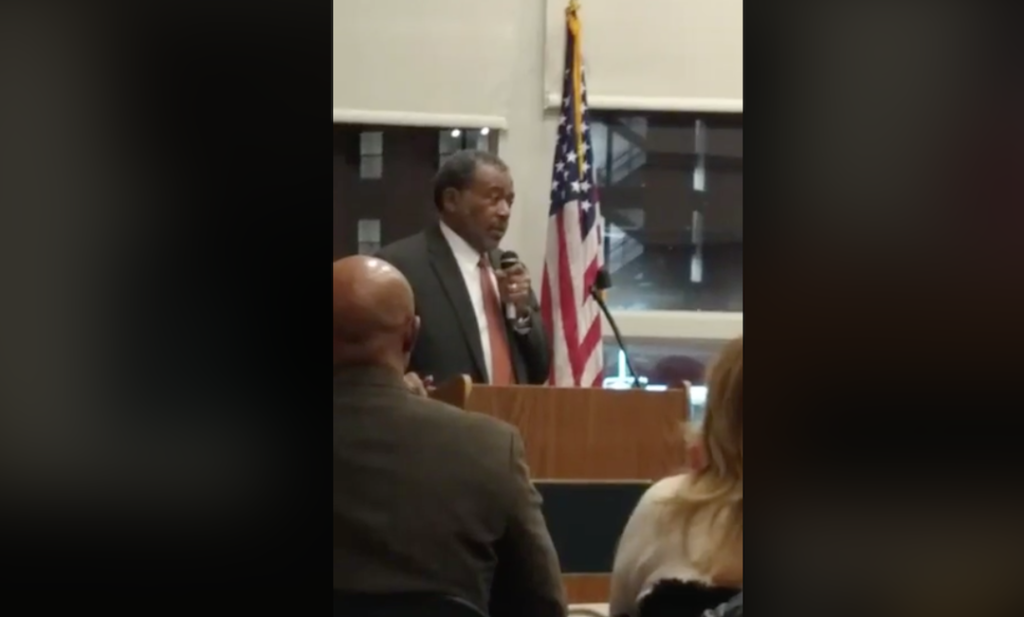
Harris gave a speech at a Dec. 30 community meeting on gentrification in which he called Hasidic Jews unfriendly and blamed Hasidic Jewish developers for pressuring longtime residents of African-American neighborhoods to sell their homes, which he said has happened in Brooklyn and Lakewood as well.

Haris said that African-Americans in Jersey City and in Montclair live in “fear of being replaced by these strangers who really aren’t friendly.”

“How many people are familiar with the Hasidics?” he said. “The Hasidics are generally not too friendly to anybody other than themselves. So, some stress started to develop because people remember Brooklyn and Lakewood. Are we going to be displaced by these people who are not all that friendly?”

Later, he pushed back at the notion that criticizing Israel or Jewish people is necessarily anti-Semitic. He had not mentioned Israel previously in his speech.

“I found out that people are very, very quick to label anything that’s critical of Israel or the Jewish as anti-Semitic,” he said. “Excuse me, if the facts are facts it doesn’t necessarily make it anti-Semitic.”

He also urged people in the audience to “to go on their cell phone and look up the word ‘semitic.’ What is a semite? Look it up in the dictionary. You’d be surprised.”

Harris, who also serves as president of the New Jersey Association of Black Educators, claimed that the Lakewood Jewish community “controls” the local Board of Education as well as the City Council, and said that the school board drained funding from the local public schools. He said that the board apportioned $15 million for busing to Jewish private schools.

“The Jewish community controls the Board of Education and the City Council but they spend huge amounts of money sending kids to the yeshiva, and they gutted the budget for the black and Latino students who are left in the public schools,” he said.

On Tuesday, the president of the Montclair NAACP, Al Pelham, announced that Harris was suspended for six months. In his statement, Pelham noted that the group’s mission is to secure equal rights and well-being for all people.

“Some of Mr. Harris’s overall comments and tone that evening were in clear contradiction of the NAACP’s mission and thus the Montclair Branch condemns them,” Pelham said, according to the publication Montclair Local. “There is much work to be done regarding the many issues facing the Montclair Public Schools and the branch does not want this unfortunate issue to be a distraction.”

Harris apologized for the remarks, and expressed his condolences for the victims of the shooting at a Jersey City kosher supermarket, which had taken place about three weeks before his speech. He said his remarks did not represent the NAACP or the New Jersey Association of Black Educators.

“I would like to express my sincere regret and apologize for the remarks I made about the Hasidic community and the development of Montclair, NJ,” he said in a statement, according to Montclair Local. “My personal statement was meant to focus on the impact of gentrification on lower socioeconomic communities in Montclair, NJ. Instead, I used a regional example of Lakewood, NJ real estate and public education funding. Unfortunately I used terms and examples that have been interpreted as anti-Semitic.”

Over the weekend, Montclair Mayor Robert Jackson condemned anti-Semitism and racism, and announced that he would convene a meeting of African-American clergy and rabbis to address “the incendiary cloud hanging over our community at the moment.”

Heinous incidents nationwide, and in Jersey City and Monsey in particular, shocked and sickened all of us,” he said in a statement on Jan. 4. “However, recent developments have made it abundantly clear that there is much work to be done, even in our beloved Montclair. Hate, bigotry, racism, anti-Semitism, and intolerance have no place anywhere and particularly in our community and as a community we will work tirelessly to ensure that they are addressed head-on and rooted out.”

NAACP Suspends Official Who Said ‘The Hasidics Are Generally Not Too friendly’ Read More »

Five Things to Know about Qassem Soleimani 

Only in the President Donald Trump era of politicized everything can the United States target and kill an Iranian mass murderer and elicit as much outrage as celebration.

Before I’m accused of being a short-sighted warmonger, let me state that the Jan. 3 killing of Iranian Quds Force leader Qassem Soleimani was a bold risk. But as someone who escaped Iran, I processed the news differently than most Americans: I treated myself to a piece of cake and then proceeded to worry about the future.

Soleimani was the Iranian angel of death. A 2008 message he sent to then-U.S. Gen. David Petraeus in Iraq defined his power with terrifying clarity: “Dear General Petraeus: You should be aware that I, Qassem Soleimani, control Iran’s policy for Iraq, Syria, Lebanon, Gaza and Afghanistan. And indeed, the ambassador in Baghdad is a Quds Force member.”

Trump designated the Quds Force a foreign terrorist organization in April 2019, the first time the United States assigned that label to a foreign government entity.

This crucial moment in U.S.-Iran relations requires context, which the following facts aim to offer:

Did Soleimani pose a danger to Americans?

Soleimani had American blood on his hands; since 2003, 608 American service personnel were killed by Iranian proxies in Iraq, some at close range. He loved the fight, and his commitment was rivaled only by his savagery. A senior Kurdish official told The New Yorker in 2013, “When we say no [to Soleimani], he makes trouble for us. Bombings. Shootings.”

Some have alleged that Soleimani’s death was the equivalent of a sovereign state assassinating the U.S. secretary of defense, but such parallels are misleading. The secretary of defense is a civilian; authorities said Soleimani was traveling throughout the region planning “to make a significant strike against Americans” when he was killed at Baghdad International Airport in a precision airstrike from an American drone. Five other Iranians reportedly were killed in the strike. Abu Mahdi Muhandis, an Iraqi who commanded the Iranian-backed Kataib Hezbollah group, also was killed.

Presidents George W. Bush and Barack Obama reportedly declined the option to kill Soleimani during their terms, deeming it too risky. 

Was Soleimani a revered general?

To the regime and the Quds Force of the Islamic Revolutionary Guards Corps (IRGC), Soleimani was an esteemed military leader, but in reality he was the world’s highest ranking leader of a terrorist army. In his final malicious undertaking before his death, Soleimani orchestrated an attempted takeover of the U.S. Embassy in Baghdad. The mob scrawled “Soleimani is our leader” on an embassy wall. You can bet that Supreme Leader Ali Khamenei won’t be pressing anyone to write his name on American property anytime soon.

Soleimani helped direct Bashar Assad’s hideous war in Syria, in which half a million people have died. And he visited terrorists abroad whom Iran bankrolls — including a visit to Beirut to oversee Hezbollah’s war against Israel in the summer of 2006.

Armed with a sixth-grade education and a violent hegemonic ideology, Soleimani planned, executed and financed murder in Syria, Iraq, Yemen, Lebanon and Gaza.

Following Soleimani’s assasination, New York Times columnist Thomas Friedman wrote that Soleimani belonged to a group of “self-promoting military frauds who conquer failed states and make them fail even more.”

Are Iranians in deep mourning over Soleimani’s assassination?

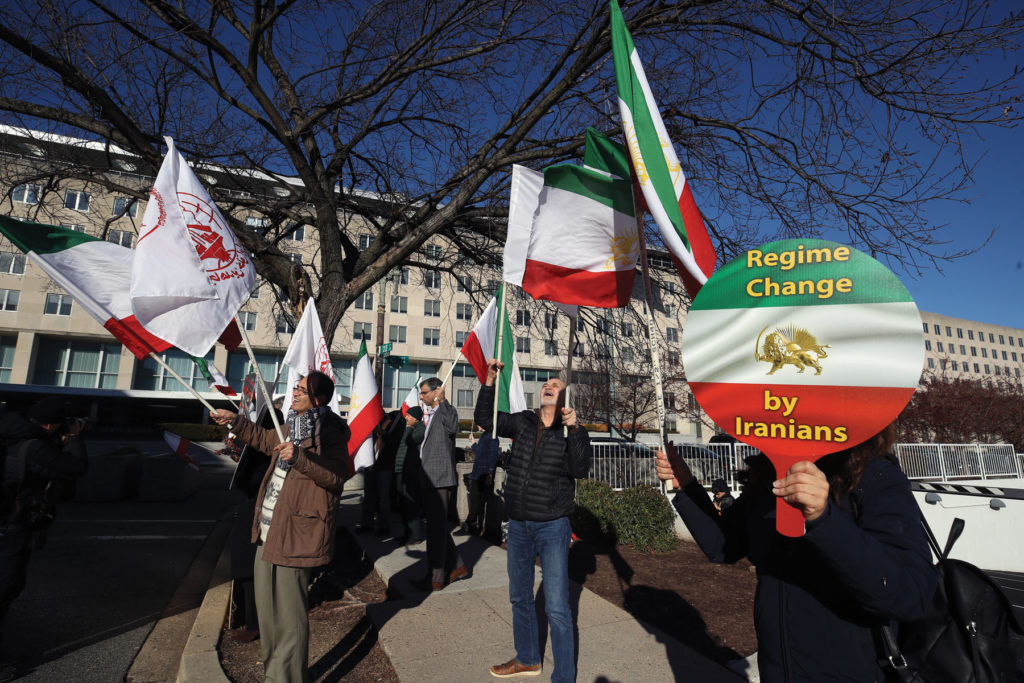
Many Iranians loathed Soleimani,  primarily because he spent their hard-earned money funding terrorists abroad. The regime ordered dozens of bakeries to close their doors temporarily because too many Iranians were rushing to buy sweets with messages celebrating Soleimani’s death. When I asked a Tehran resident (via social media) how average Iranians were responding to the news, he said, “So many people are happy, because maybe this means that someday soon, we will actually be free of these leaders.” How incredible that Soleimani’s death symbolizes a step toward freedom, not war.

Naturally, the regime is grieving, and Soleimani’s remains were paraded in a coffin around Iranian cities as a powerful propaganda symbol. But as Iranian journalist Masih Alinejad recently tweeted, “Soleimani was a warmonger. He was no hero to average Iranians who chanted against the country’s support for Hezbollah and Hamas.” In fact, “No money, no gas, screw Palestine!” was a favorite slogan of protesters during the 2019 uprising in Iran, in which more than 1,500 people were butchered.

Was Soleimani responsible for the killing of Jews?

Many Jews were butchered by Hamas or Hezbollah, including Ehud Goldwasser and Eldad Regev, who were abducted (and murdered) by Hezbollah in 2006. That incident incited the Hezbollah war, which resulted in the deaths of nearly 200 Israelis. After Soleimani returned from overseeing the Hezbollah attacks, he sent a message to U.S. commanders in Iraq: “I hope you have been enjoying the peace and quiet in Baghdad. I’ve been busy in Beirut.” 

The IRGC is violently obsessed with Israel. In Persian, even the name of the force, “Quds,” means “Jerusalem,” which the fighters have vowed to “liberate.”

Will Iran and the U.S. go to war?

I don’t believe the U.S. will go to war with Iran but I’m certain that Iran will increase violence in Iraq, and that likely will endanger American service personnel, diplomats and innocent Iraqis. Perhaps Iran will weigh closing the Strait of Hormuz, the world’s most important choke point, which will force the U.S. to send more naval vessels to the Persian Gulf and drag an impotent Europe, which often capitulates to Iran, into the conflict. Maybe Soleimani will be more dangerous as a martyr than a general. But just ask anyone whose loved one was maimed or killed on Soleimani’s orders, whether in Syria; Iraq; Yemen; Israel; Nairobi, Kenya; Lagos, Nigeria; or New Delhi, and he or she will tell you that the region is better off for not having Qassem Soleimani calling the shots anymore.


Tabby Refael is a Los Angeles-based writer and speaker. 

Five Things to Know about Qassem Soleimani  Read More »

Trump Says No Casualties in Iran Strike, Announces New Sanctions

President Donald Trump announced in a Jan. 8 speech that there were zero casualties in the Jan. 7 Iranian strike on Iraq and that his administration will be implementing further sanctions on the regime.

Iran had launched a rocket strike on Iraqi military bases in Erbil and Al Asad that housed American troops in response to the United States killing Iranian Gen. Qassem Soleimani in a precision airstrike at Baghdad International Airport on Jan. 3.

“No Americans were harmed in last night’s attack by the Iranian regime,” Trump said. “We suffered no casualties. All of our soldiers are safe and only minimal damage was sustained at our military bases.”

He added: “Iran appears to be standing down, which is a good thing for all parties concerned and a very good thing for the world.”

Trump proceeded to defend his decision to kill Soleimani, commander of Iran’s elite Quds Force, arguing that he was responsible for the deaths of thousands of American soldiers and was planning to attack United States military personnel.

“By removing Soleimani, we have sent a powerful message to terrorists: If you value your own life, you will not threaten the lives of our people,” Trump said.

The president then said that his administration will be imposing more sanctions on the Iranian regime until it ceases its aggression in the Middle East as well as its support for terror. He also urged Britain, France, Germany, Russia and China to join the U.S. in exiting from the 2015 Iran nuclear deal.

“We must also make a deal that allows Iran to thrive and prosper and take advantage of its enormous untapped potential. Iran can be a great country,” Trump said. “Peace and stability cannot prevail in the Middle East as long as Iran continues to foment violence, unrest, hatred and war.”

Quotes courtesy Washington Post transcript

Trump Says No Casualties in Iran Strike, Announces New Sanctions Read More »