Was Yossarian, the central character in Joseph Heller’s “Catch-22,” Jewish?
It may be late in the day to explore that literary question, but to adherents of the 1960s counter-culture, who regarded reading “Catch-22” as a rite of passage and Yossarian as an icon, the answer was of some import.
Author Heller did not make the search for clues any easier by having Capt. John Yossarian of the U.S. Army Air Force claim to be an Assyrian in “Catch-22,” and an Armenian in the sequel, “Closing Time.”
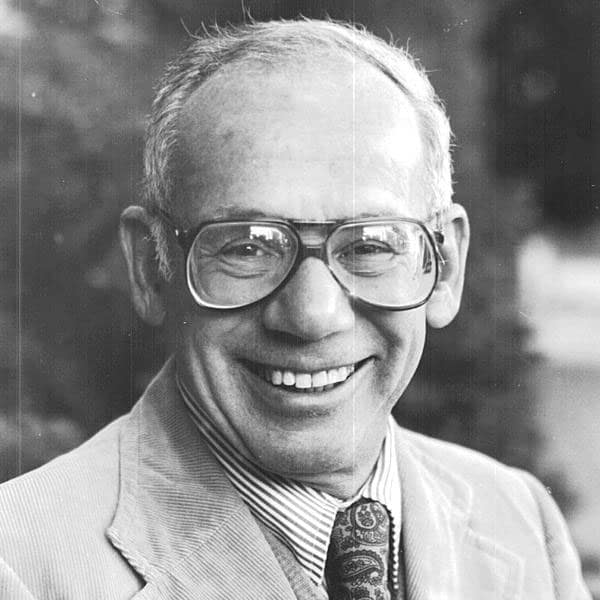
However, thanks to a private letter auctioned off last month (November) in Los Angeles, Heller himself clarified the point, though in his characteristically ambiguous style.
In the postscript to a 1972 letter, addressed to Prof. James Nagel at Northwestern University, Heller wrote, “Yossarian isn’t Jewish and was not intended to be. On the other hand, no effort was expended to make him anything else.
“He is largely an extension of my own sensibility and I am [Jewish].”
Heller, like his fictional alter ego, was a B-25 bombardier in World War II and stationed on an island off the Italian coast.
As the squadron’s missions escalated in numbers and death toll, one of Yossarian’s crewmates seeks to be relieved of flying duty and sent home on grounds of insanity. But making such a request to escape likely death was obviously a rational move, so he was diagnosed as sane and told to keep flying.
The book’s title quickly entered the general and psychological vocabulary to denote a no-win or double bind situation, and the term was considered a close relative to George Orwell’s “double think” in his novel “1984.”
Heller’s 1972 letter to Nagler, together with a later note to the same academic, was put up for bids by the Nate D. Sanders auction house and sold for $4,884.
In the second letter, written in 1974, Heller reflected on the mood of the early World War II years. “How did I feel about the war when I was in it?” he wrote. “In truth, I enjoyed it, and so did just about everyone else I served with, in training and even in combat.
“What is hard to get across to younger people today is that after the attack on Pearl Harbor, there was virtually no opposition to the war in this country…I was young, it was adventurous, there was much hoopla and glamour.”
Heller, born in Brooklyn, started writing “Catch-22” in 1953 under the original title of “Catch-18.” But shortly before its publication in 1961, “Milo 18,” Leon Uris’ novel about the Warsaw Ghetto Uprising, reached book stores, and Heller changed his title to avoid confusion.
He died in 1999 at 76.