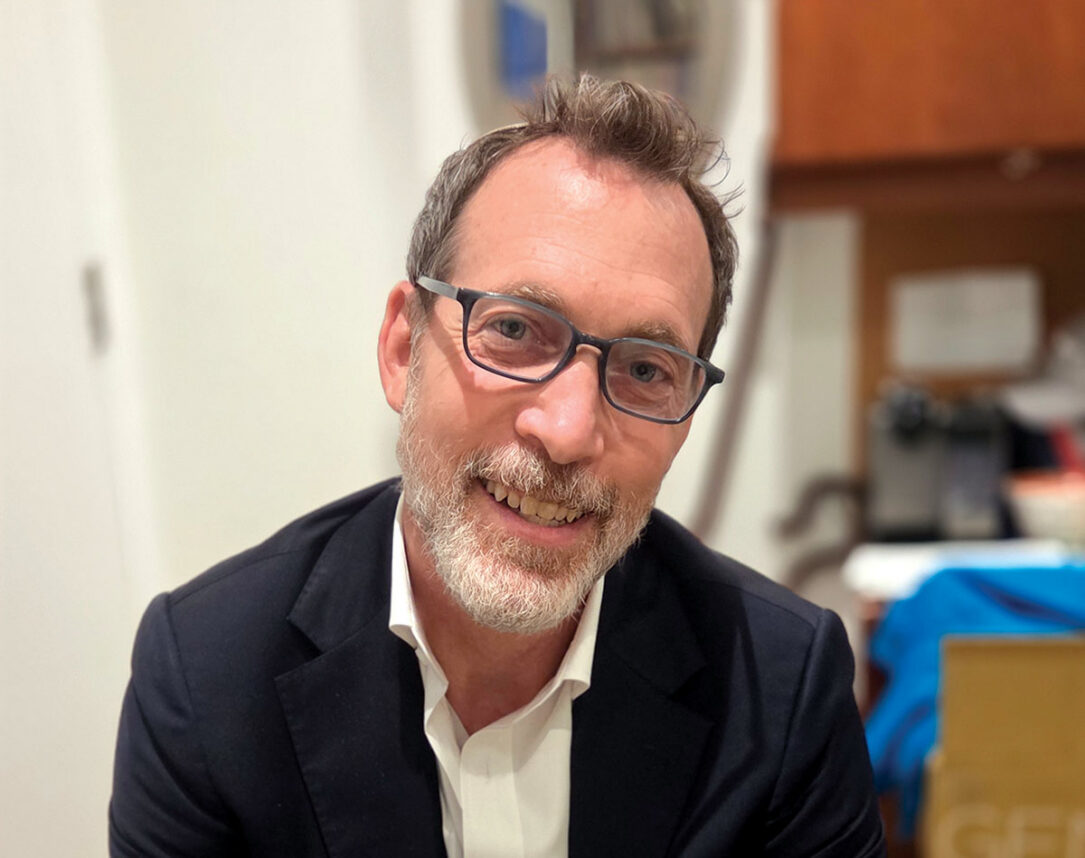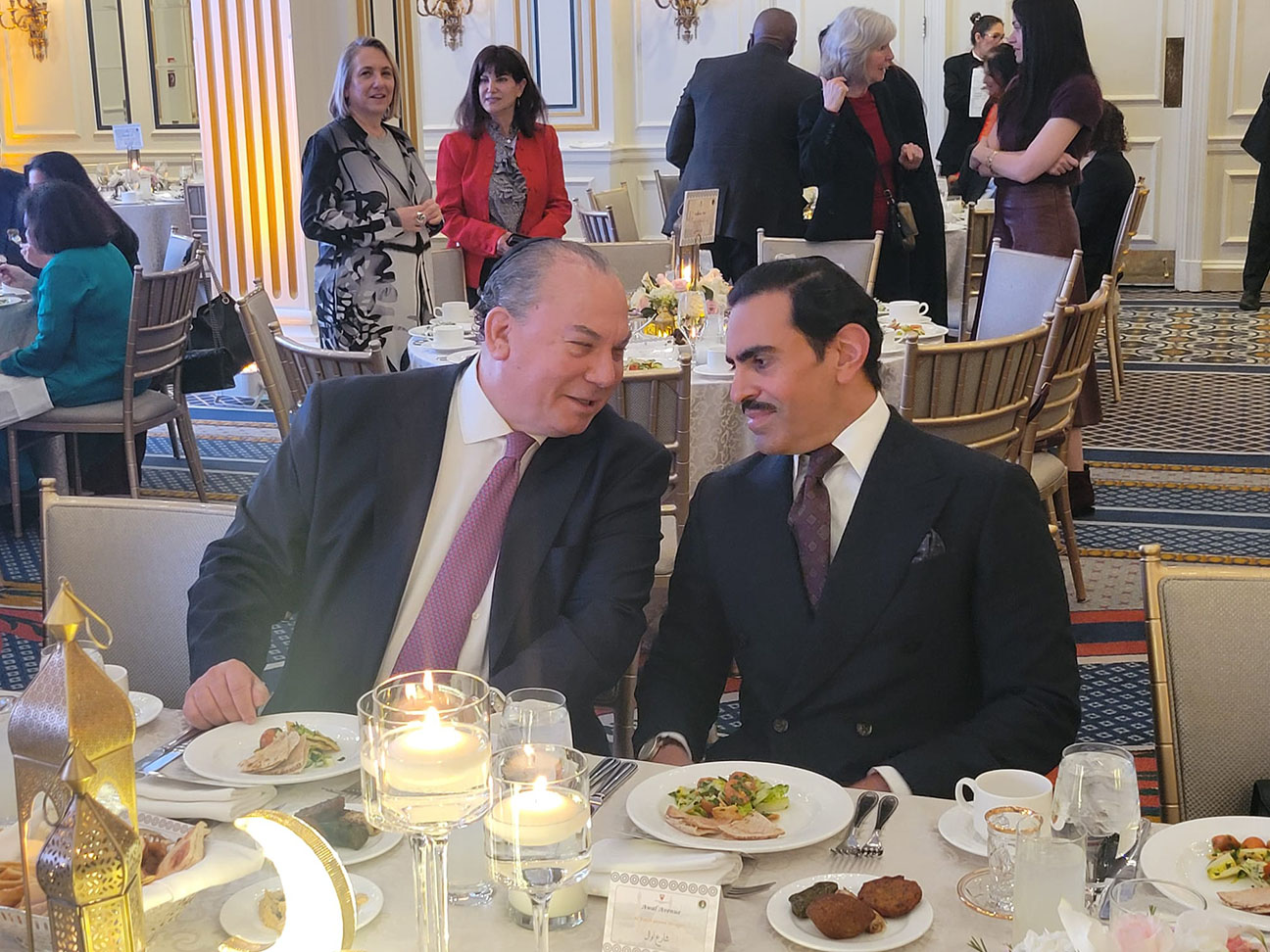
When Iran fired a salvo of missiles at civilian targets in the Gulf States, including the United Arab Emirates, Bahrain, Qatar, Saudia Arabia, Kuwait Jodan, Oman and Cyprus, those nations were not surprised. Rabbi Marc Schneier recently met with ambassadors from some of those countries for Iftar, when Muslims break the Ramadan fast.
Schneier, the founder of the Hampton Synagogue on Long Island, founded the Foundation for Ethnic Understanding in 1989. It was originally geared to build the Black-Jewish Alliance in America, but over the past 15 years has looked to foster Muslim-Jewish relations. Schneier has also serves as a consultant to Bahrain and Qatar.
“I got a sense that the counties were aware of what Israel and the United States were going to do,” Schneier told the Journal. “They may have expected some retaliation against U.S. bases but not at civilian targets.”
An Iranian Shahed-136 kamikaze drone struck very close to the Burj Khalifa in Dubai, another hit an airport in Azerbaijan. The UAE’s air defenses have mostly proven strong. Iran has fired 189 ballistic missiles and more than 900 drones against the country, which six people reportedly killed. The most successful attack by Iran killed six U.S. soldiers at Port Shuaiba in Kuwait.
But as for the Gulf States, Schneier says Iran miscalculated; they “thought the response of the Gulf States would immediately pressure (President) Trump to put an end to the attacks and they thought he would,” he said. “Within the greater Islamic world, one can differentiate between good and evil. It was not unconditional solidarity for Iran and its regime. They did not think members of the GCC would side with America and Israel.”
“Iran thought the response of the Gulf States would immediately pressure (President) Trump to put an end to the attacks and they thought he would. … Within the greater Islamic world, one can differentiate between good and evil. It was not unconditional solidarity for Iran and its regime. They did not think members of the (Gulf Cooperation Council) would side with America and Israel.”
In an Op-ed in Arab News, Schneier wrote: “This aggression, which is intended to intimidate nations in the region, is producing the opposite effect, as we sat together in a spirit of cooperation and shared concern for the future of the Middle East.”
There’s been some hope that, down the road, Saudi Arabia, and other countries would join the Abraham Accords, that joined the UAE, Bahrain and Morocco with Israel in an historic partnership. Reports were that Saudi leader Mohammed Bin Salman was close to possibly joining before Oct. 7, 2023 and there would be domestic pressure in his country against it after the war in Gaza.
“I don’t think we’ll see any expansion of the Abraham Accords until the Palestinian issue is addressed,” Schneier said. “It can be addressed with the future of Gaza. There will need to be some focus on economic advancement and opportunities for Palestinians.”
Schneier is holding out hope for that best-case scenario, though much is unclear at this juncture.
“The best possibility would be a change in the regime and a democratic and free Iran,” he said. “But I am not a prophet with a crystal ball. It would be best for America, Israel and the Gulf States.”
Schneier, believes the king of Bahrain keenly understands the harm Iran wants to do if it has the capabilities.
“He lamented to me the constant threat he felt from Iran,” he said. He is aware of a their ability to “wreak havoc and create upheaval within Bahraini society, whether it’s the Iranians themselves or one of their proxies, and I think that’s a sentiment felt by several Gulf States.”
The Iftar meeting was a powerful experience, he said. Schneier was the only rabbi sitting with ambassadors of from Kuwait, Qatar, Saudia, Saudia Arabia, and Turkey as well as others. The event was hosted by Shaikh Abdulla Bin Rashid Al Khalifa, the Ambassador of the Kingdom of Bahrain to the United States.
“From an interfaith and interreligious perspective, I celebrated an evening with ambassadors who are Muslim believers and not only did we sit as the children of Abraham in the common faith, but in light of the attack from Iran, we recognized we had a common goal,” he said. My experience has shown it’s about our destiny and bonds of concerned compassion for caring for one another.”