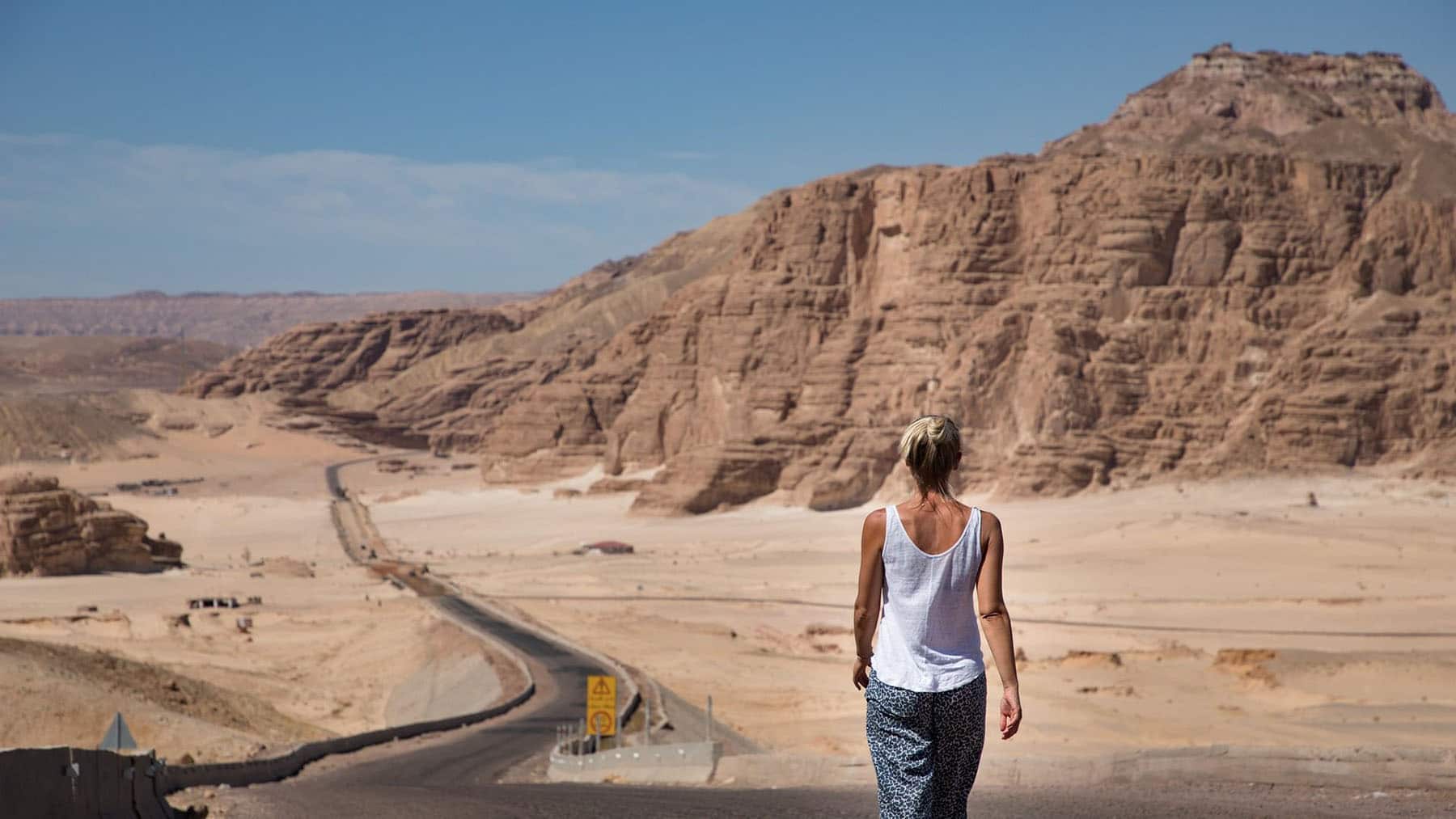
(The Media Line) Hundreds of Israelis flocked to the Egyptian border crossing early Tuesday morning, hoping to be one of the lucky few allowed to enter the Sinai Desert for a prized holiday vacation after nearly a year of total lockdown.
“We have to take a few days off. After an entire year of closures and stress, there’s no chance we’d stay when we finally have an option to take a break,” Anat, 28, who plans to leave for her trip on Thursday, told The Media Line.
According to the Israeli government’s decision from last week, only 300 visitors will be allowed to leave the country each day and go vacationing in the beloved desert oases of the Sinai, traditionally a favorite holiday destination for Israelis.
To enter Egypt, visitors must present either a vaccination certificate or a certificate of recovery from the coronavirus issued by Jerusalem’s health ministry, on top of a valid negative COVID-19 test.
Upon returning to Israel, citizens will be asked to take two tests, on each side of the border.
Hundreds of would-be travelers have protested in recent weeks, after Israel’s international airport and border crossings with neighboring Jordan were opened while the Egyptian crossing remained shuttered.
Last week, Jerusalem’s government finally announced the border would be open in time for Passover, the Jewish holiday which, ironically, commemorates the Israelites escape from Egypt over 3,000 years ago.
After the two countries signed their historic peace accord in the early 80s, the sparsely populated Sinai Peninsula, situated between Israel’s southern desert and Egypt’s bustling mainland, became a darling among Israelis, especially during the summer and spring holidays.
“We’ve gone every year for Passover vacation, for I think nearly ten years now,” Ofer, 39, who has reserved an entry into Egypt for his family for later this week, told The Media Line.
“Last year we couldn’t go, because of the restrictions. It was tough, but when the vaccinations arrived, we knew we would go down there this time,” he said.
Yet Israeli tourists may have more to fear than a locked border crossing or the still-raging pandemic.
On Monday, Israel’s National Security Council (NSC) published its semiannual assessment of global terror threats to Jews and Israelis traveling abroad.
According to the travel advisory, “Iran is expected to continue pursuing its intention of harming Israeli targets in the near future,” similar to the attempted attack near the Israeli embassy in India in January.
The arenas most likely to be chosen for such activities, the NSC projects, are Gulf nations which have recently signed normalization accords with Jerusalem and have subsequently become coveted tourist attractions for Israelis, and the Sinai Peninsula.
“It should be reminded that the recent year has seen explicit calls by ISIS leadership to its operatives in Sinai and in Syria to target Israelis,” the report concluded.
“We have to take a few days off. After an entire year of closures and stress, there’s no chance we’d stay when we finally have an option to take a break.”
Yet vacationers at Israel’s southern border will not be denied their holiday.
“They put out their report every year, so what?” Anat said dismissively. “It’s just to cover themselves. We’re going to a recognized campsite, we know the people there, we’ve been there before. I’m not worried.”
Israel over the past few weeks has largely been rid of the scourge of the coronavirus, chiefly due to the mass vaccination effort of its citizens.
Nearly 5 million Israelis have received both vaccine doses required to achieve over 90% immunity from the virus, bringing the nation’s morbidity rate down sharply.
The test positivity test has dropped to under 2% over the past week, as the number of hospitalizations, severe cases and new infections have also all declined rapidly.
“It’s our own freedom celebration,” said Anat, referring to the Jewish Passover holiday which marks the Jews’ exodus from slavery in Egypt to liberty in their homeland.
“We deserve it, don’t we?”