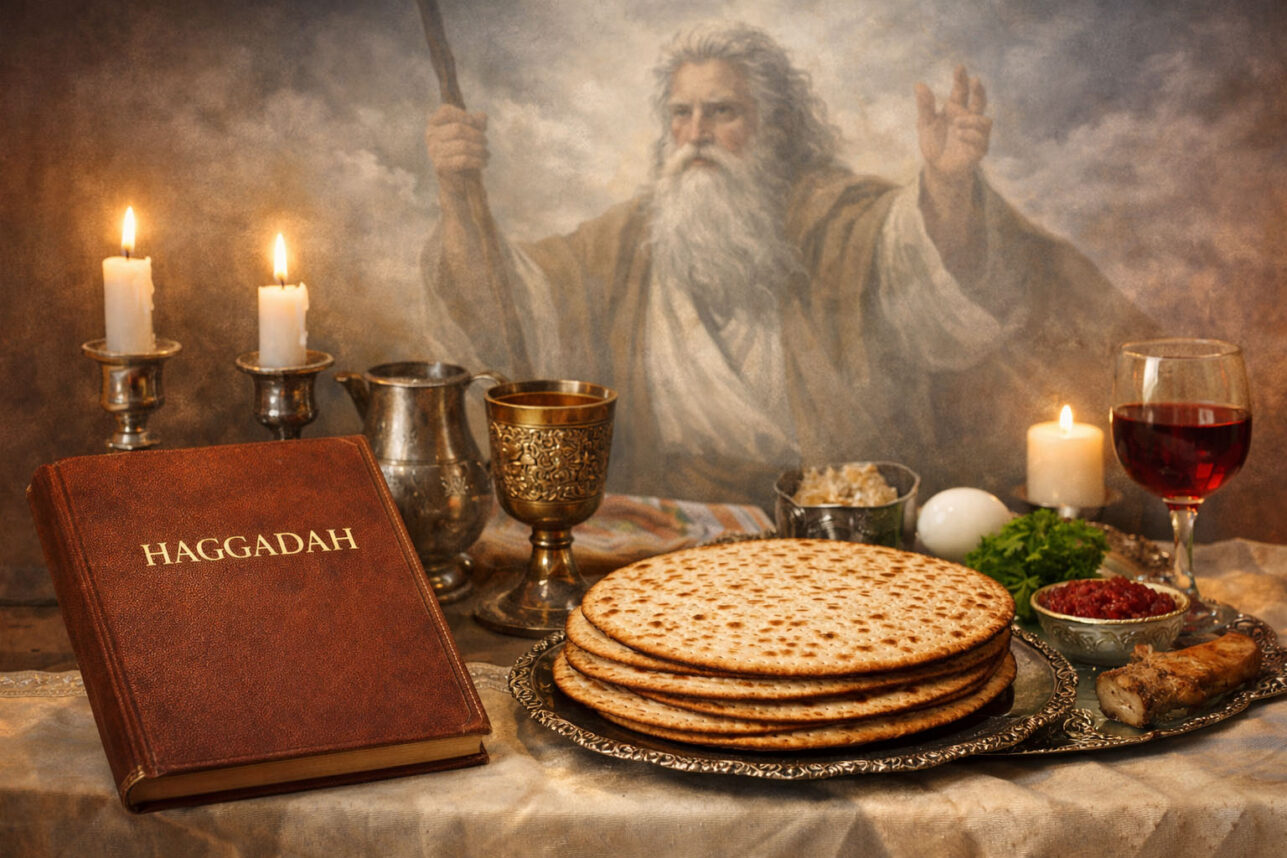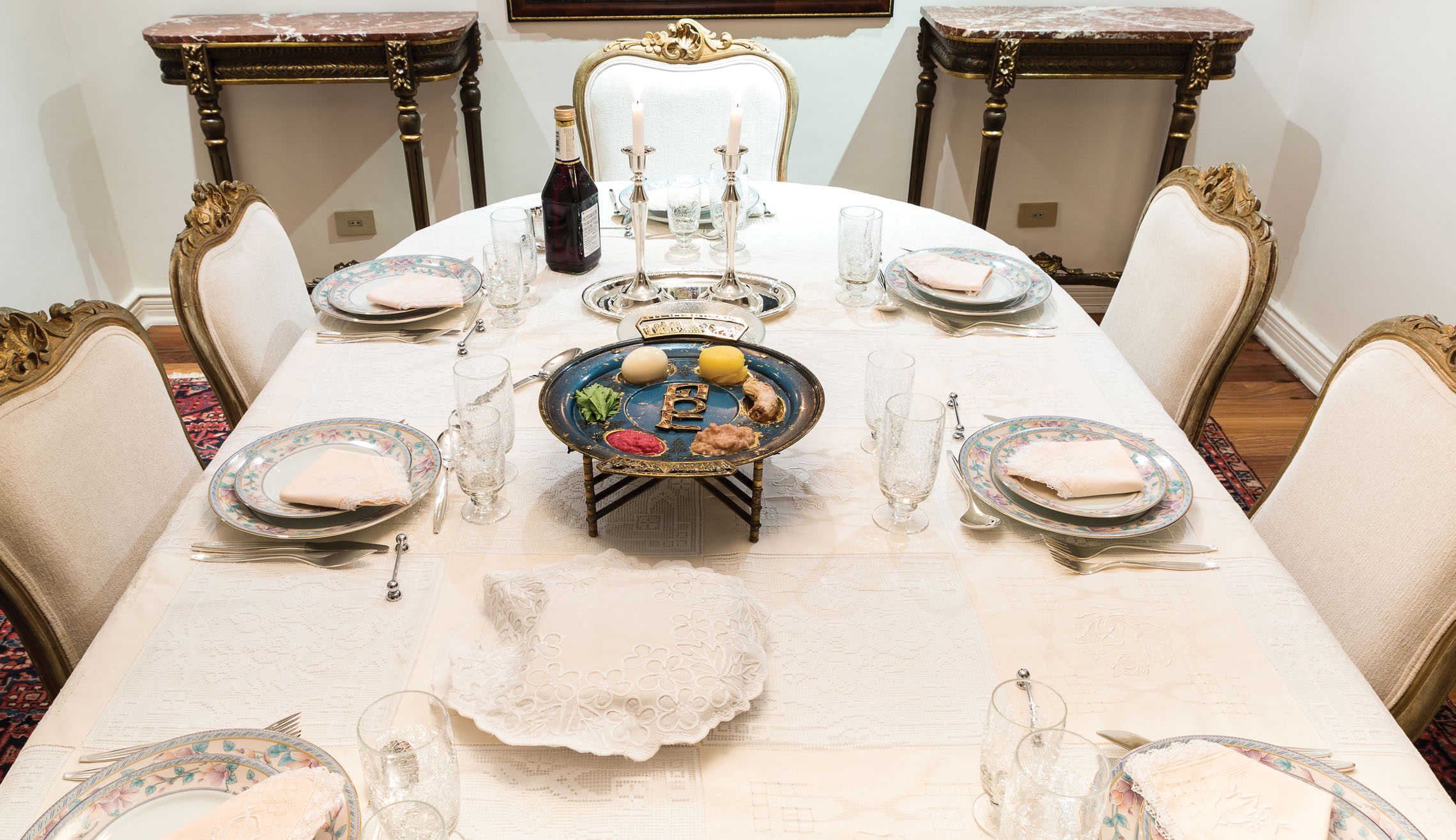
As with any transformative historical event, especially ancient religious ones, boundless new interpretations are added, contemporary rituals and insights are developed. The springtime holiday of Passover illustrates the point.
Passover’s biblical motif celebrates the Jews’ physical liberation from Egyptian slavery. With time and reevaluation, the exodus from Pharoah’s captivity has expanded to include not just the Jews’ emancipation, but emancipation for all humanity. All human beings are entitled to live freely, and unenslaved.
Passover’s concept of universal freedom has broadened further still. No longer does the holiday speak exclusively of physically-chained servitude. It now canvases the potential enslavement to one’s work, popularly termed “golden handcuffs.” Or, it might refer to the enslavement of unhealthy relationships, or peer pressure, or social media.
Abstaining from eating, or possessing leavened products during the week-long Passover observance has morphed into the metaphoric removal of anything that might inflate one’s ego. The humble, flattened matzah bread, eaten throughout the holiday, has become a dietary plea to unclog one’s spiritual arteries as well.
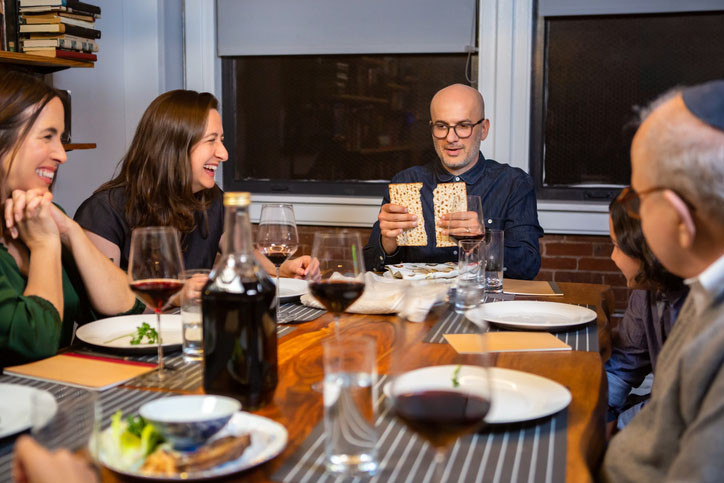
But for all the new and varied rituals and interpretations that continue to broaden one’s understanding of Passover, a key element to the holiday is often overlooked: a dining table. Passover, at its core, is an educationally rich, linearly structured, candle-lit dinner, dished out around a dining table.
Patterned after the fourth-century Greek symposium, the unfolding Passover meal, adorned with wine, good food, entertainment and discussion was most likely served on individual dining tables. Each person reclined in front of the modern-day equivalent to a TV dinner, or dining table.
While Passover lasts seven days, for most, the holiday’s chief attraction takes place on the first night. That’s when the Passover story is discussed while seated around a dining table. What’s more, the Passover meal is typically commemorated in one’s home, ideally, not in a synagogue, or church.
Christians who embrace Passover hold to the synoptic Gospels’ view that the Passover meal was Jesus’ Last Supper. The meal took place while gathered around a dining table. Leonardo da Vinci’s artistic rendering of the Last Supper includes a prominently arranged dining table where Jesus and his 12 apostles gathered to observe Passover.
It’s easy to underestimate the importance of a dining table, as it’s seen by most as simply a functional piece of furniture. The author Bill Bryson in his book, “At Home: A Short History of Private Life,” highlights the development of the dining table. He describes the table’s origins as a rectangular wooden board that hung on the wall when not in use. Bryson claims the word “board” came to mean both the dining surface and the meal. Think of the expression “room and board,” denoting a place to stay, with food included. When used, the board was placed on diners’ knees for meals.
More than a useful piece of furniture, the Passover table also represents a contrarian challenge to the Bible’s Exodus narrative. Reclining around a dining table, as participants are instructed to do, an important message is conveyed: “Sit down, relax. There’s no need to rush through the night.”
The Passover table also represents a contrarian challenge to the Bible’s Exodus narrative. Reclining around a dining table, as participants are instructed to do, an important message is conveyed: “Sit down, relax. There’s no need to rush through the night.”
The Jews who left Egypt bolted out of their homes, panic-struck. So much so, the biblical story teaches, their bread didn’t have sufficient time to rise. Hence, the flattened bread called matzah. The Jews of the Bible didn’t have the privilege to sit and luxuriate over the holiday meal comfortably seated at a dining table — of any sort.
The Passover table serves yet another function — a visual reminder of those who are absent, and for what reason. Empty seats tucked under a dining table might signify family members and friends who live out of town. Perhaps, they represent children away at college. Not uncommonly, however, empty seats at the Passover table denote those who are no longer alive, or those who are estranged.
As such, Passover can provide an opportunity to invite individuals with whom one shares sharp disagreements to join in the Passover rite, gathered around a dining table. Here, a table is transformed into a platform for peace. Much like the one depicted in Psalm 23:5, “You set a [dining] table before me in the presence of my enemies.”
To the Psalmist, a dining table is a metaphoric bridge that can potentially bring estranged family and friends closer together by seating them across from one another.
Depending on the context, the Hebrew word for a dining table can also mean an altar. Both a dining table and an altar are imbued with spiritual heft. But a dining table, unlike the long defunct historic altar, is a spiritual object frequently unnoticed — taken for granted.
At night, gathered around a dining table, the holy week of Passover begins. Passover is moored in thousands of years of tradition and customs. New insights and rituals are constantly emerging. None of which could have occurred without one essential element: a dining table.
Michael Gotlieb is rabbi of Kehillat Ma’arav in Santa Monica.