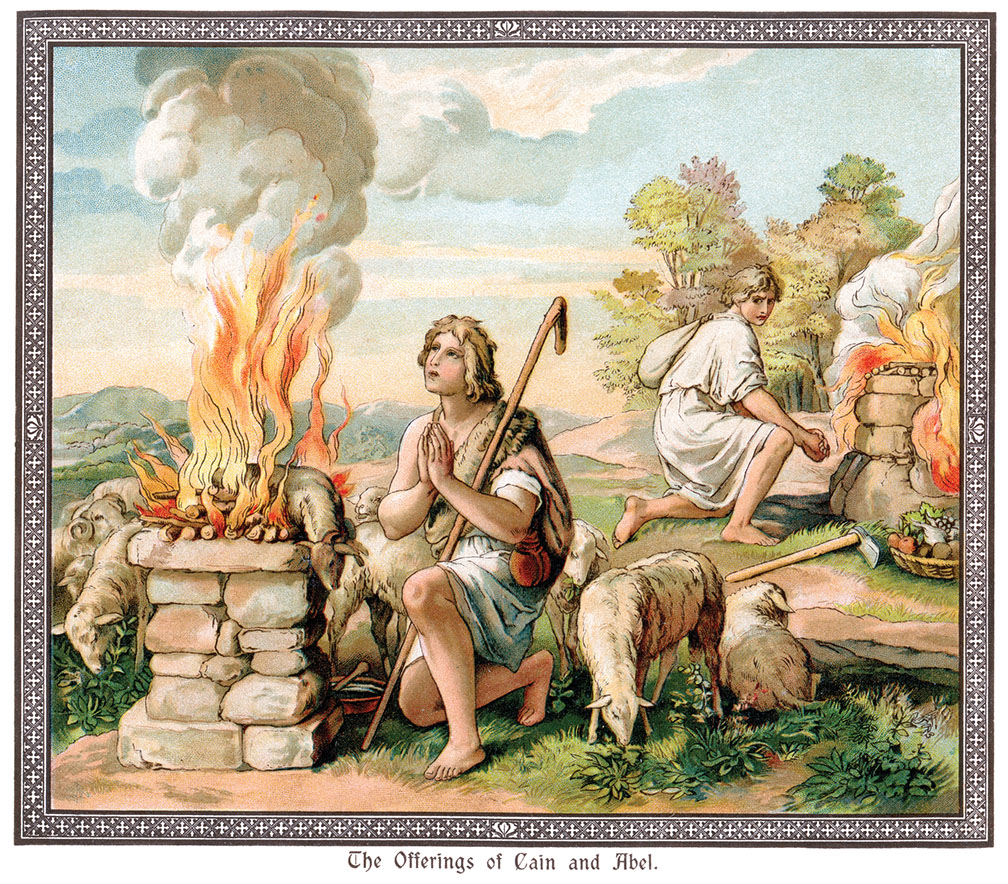
In Genesis (chapter 4), Cain and Abel offer sacrifices to God. Abel’s is accepted and Cain’s is not. Cain is angry. God explains to him that Cain has a choice: “Surely, if you do right, there is uplift. But if you do not do right, sin crouches at the door, its urge is toward you, but you can be its master.” Immediately following that encounter, Cain kills his brother.
The Biblical text is rich with great symbolic meaning, carrying a fundamental moral lesson. It takes place at the beginning of time and carries a universal message: Cain and Abel were not Jewish. The first Jew was Abraham who came generations later. Hence, the message is for all humankind and all eras.
Something went wrong with Cain’s offering. There is no explicit reason given but the text does state that Cain’s offering was from “the fruit of the soil” whereas Abel brought “the choicest of the firstlings of his flock.” The implication is that Abel’s offering was the object of painstaking effort, an offering from his best, a heartfelt gift, whereas Cain’s was perfunctory and insincere.
In any event, the life lesson is that God does not rebuke Cain or take offense. Rather, He explains to Cain that if he can create a relationship with the Divine (“if you do right”), then he can benefit spiritually (“uplift”). The choice is left to Cain. He can choose his own path. It is a moral test.
For reasons unexplained, Cain impulsively chooses to murder his brother and, worse, when confronted by God, he utters the outlandish response, “Am I my brother’s keeper?” God does not respond to his question but does condemn Cain for his action. The first murder in history was a conscious choice. There was a clear, moral and humane alternative. God does not even dignify Cain’s response with an answer but leaves the answer to us, the readers: Yes, Cain, you were your brother’s keeper, as we are all our brothers’ keepers in God’s eyes.
The alternative to the spiritual uplift that was offered to Cain was “sin crouching at the door.” That phrase is unique. It appears nowhere else in the Bible. What crouches at the door? Something ominous, threatening, dangerous. Almost like an animal of some type, or a monster. These are the characteristics of sin and immorality, of which murder is just one example. Why at the door? Because the door is the entry point of one’s home, a symbol of one’s intimate, private space. If you choose to sin, you are internalizing something evil and making it part of your way of life.
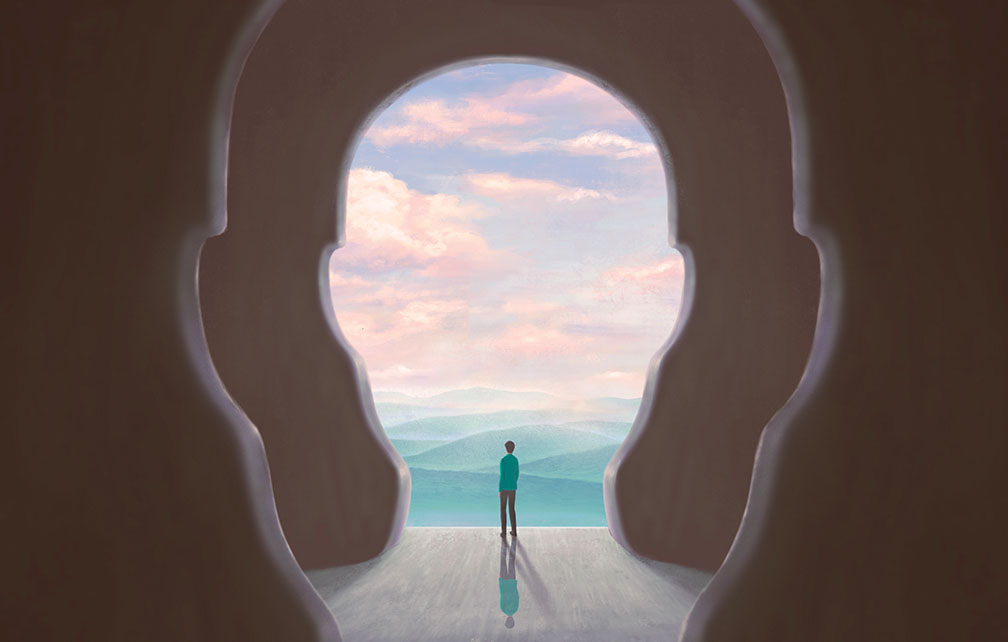
Its “urge is toward you” means that immorality in the form of hatred is a strong and commanding force. Yet the final words are positive and hopeful: “But you can be its master.” God states explicitly that He has endowed humankind with the power and the will to rule over their emotions and to establish the good, to love and respect the Other. Free choice, yes, but with the clear idea of human agency for good.
The story appears in the Bible before the birth of Judaism and its “children,” Christianity and Islam, because it is a statement about universal truth and morality that applies to every religion and every person. Murder is the most egregious of immoral acts and is condemned forcefully and unequivocably.
In his magisterial book “Not in God’s Name” – the subtitle is “Confronting Religious Violence” – Rabbi Jonathan Sacks explains how all Jewish, Christian and Islamic antagonism throughout the ages is the result of sibling rivalry – from Cain and Abel, Isaac and Ishmael, Jacob and Esau and Joseph and his brothers. This adversarial relationship is based on the idea that if one wins, the other loses, resulting in hatred and even death.
He demonstrates how the Torah is not a zero-sum game. Isaac and Jacob may well be the bearers of the divine covenant, but Ishmael and Esau are blessed and respected, not rejected. In this interpretation of the text, all are included and none are excluded.
All who embrace Abraham “must aspire to live like Abraham … jihad, barbarism, terror, murder are pagan ideas and have no place in monotheism.” Isaac’s and Ishmael’s descendants became enemies because they did not understand that all were descended from the same family and were meant to live in peace with one another fully blessed by God.
That is why there are two covenants – one given to all humankind asserting our common humanity and one given to the Jewish people in our specific identity. Both are essential.
Cain was not rejected by God before he chose violence, and neither were any of the major figures in these stories in the Torah, most importantly Ishmael and Esau. God may choose but he does not reject.
The lesson that God may choose but does not reject is critically important. No, it is essential: there will be hatred and violence now, and in the future, as it was in the past, as long as we refuse to recognize the face of God in the Other, as long as we do not acknowledge that all humans are due respect and dignity. Violently imposing religion on others never succeeds in the long term because it perverts religion and is sacrilegious.
Feeling blessed instead of rejected allows one to see the face of God in the Other. Understanding that everyone is part of the human family reverses the horror of Cain’s jealousy, rage and inhumanity.
The story of Cain and Abel is the archetype of sibling rivalry and all the grief that flows from it. It constitutes a critical and fundamental lesson – we are all children of the covenant with the opportunity to serve each other and to serve God. We are, indeed, each other’s keeper. The path to peace and harmony is clear. May it not be forever the path not taken.
Dr. Paul Socken is Distinguished Professor Emeritus and founder of the Jewish Studies program at the University of Waterloo