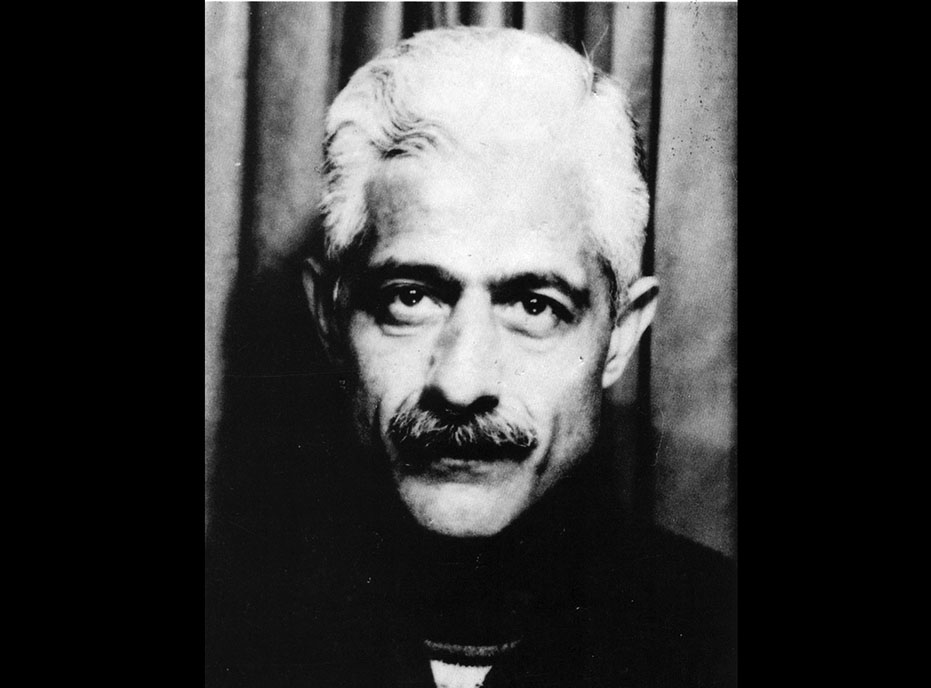

As moviegoers flock to theaters to watch “Avatar: Fire and Ash,” the newest exploits of the Na’vi tribe, it’s worth revisiting a long-forgotten tribal tale — the story of Solomon Bibo, the Jewish Indian chief.
As Sandra Lea Rollins documented in a 1969 issue of the journal “Western States Jewish History,” Solomon Bibo was born in Prussia on August 29, 1853, in Brakel, Westphalia, Prussia, the sixth of 11 children. His father was a cantor. When Solomon was 13, two of his brothers left to settle in New Mexico, which in 1848 had recently become part of the United States. After working for local Jewish pioneer merchants, the older Bibo brothers moved to the village of Ceboletta, where they set up a trading post in order to exchange goods with the Navajos. In 1869, at the age of 16, Solomon Bibo left Europe and joined his brothers.
As Rollins recounts, “Solomon Bibo became a naturalized citizen of the United States in 1875. He never completely mastered the English language, but he did speak Spanish quite well and through his trade with the Indians, he became fluent in the Keres language of Acoma. This in itself was a feat which few white men could claim at that time.”
The three siblings developed positive reputations for fairness in their dealings with the local Native Americans, with the Bibos encouraging them to improve their farming techniques. The brothers also got deeply involved in mediating the disputes over land ownership that arose between the Indians and the Mexican residents of the area, who for years had sought to take Natives’ lands.
Solomon developed a particularly strong relationship with the Acoma tribe. In 1882, he arrived at their pueblo (village) and set up a trading post. There he helped them fight their legal battles to restore their traditional lands.
In 1884 the Acoma offered Bibo a 30-year lease to their land, in exchange for payment, protection of their cattle, chasing away squatters and mining the coal under the Acoma lands. Per the agreement, he would pay the tribe a royalty of 10 cents per ton for each ton extracted. Pedro Sanchez, the U.S. Indian agent from Santa Fe, learned of the deal and, jealous of the success of what he derisively called the “rico Israelito” (rich Jew), tried to get the federal government to void the lease.
Solomon’s brother, Simon, rose to his defense. Simon petitioned the Board of Indian Commissioners in Washington, stating that his brother Solomon’s “intentions with the Indians are of the best nature and beneficial to them – because the men, women and children love him as they would a father and he is in the same manner attached to them.” In 1888, convinced, the Indian agent for New Mexico responded, “To the people of the pueblo of Acoma, having confidence in the ability, integrity and fidelity of Solomon Bibo … I hereby appoint [him] governor of said pueblo.” Solomon Bibo, German Jew, had become the tribal chief.
In 1885, Solomon married a local Acoma woman, Juana Valle, granddaughter of the previous head of the Acoma Pueblo. Juana, who had been raised Catholic, observed the Jewish faith and raised their children as Jews. In 1898, Solomon and Juana moved to San Francisco, where he invested in real estate. There, according to an article by Gordon Bronitsky in New Mexico Magazine, “Solomon regularly attended High Holy Day services, and most of the couple’s friends were Jewish. At least one son, Carl, was bar mitzvahed, at the Bush Street Temple, Congregation Ohabai Shalom.”
Solomon Bibo died in 1934, Juana in 1941. America’s only known Jewish Indian chief and his wife are interred in the Home of Peace Mausoleum of Temple Emanu-El in Colma, California.
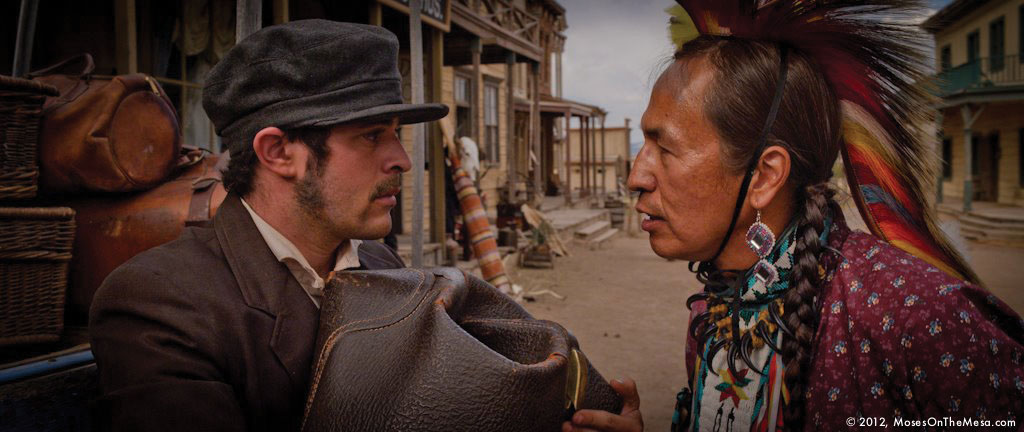
A movie about Bibo, “Moses on the Mesa,” won Best Short Film at the Orlando Film Festival in 2013. While no doubt its box office receipts weren’t on par with an “Avatar” blockbuster, Bibo’s commitment to his native biblical tribe, alongside his leadership of the Acoma, is, at least to me, a story of faith more fascinating than the Na’vi’s latest adventure.
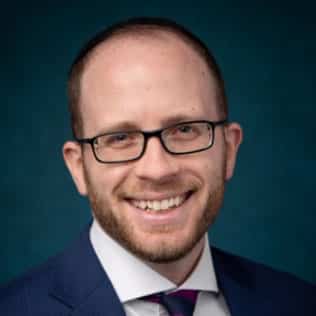
Rabbi Dr. Stuart Halpern is Senior Adviser to the Provost of Yeshiva University and Deputy Director of Y.U.’s Straus Center for Torah and Western Thought. His books include the newly released “Jewish Roots of American Liberty,” “The Promise of Liberty: A Passover Haggada,” “Esther in America,” “Gleanings: Reflections on Ruth” and “Proclaim Liberty Throughout the Land: The Hebrew Bible in the United States.”